PRODUCT TECHNOLOGY

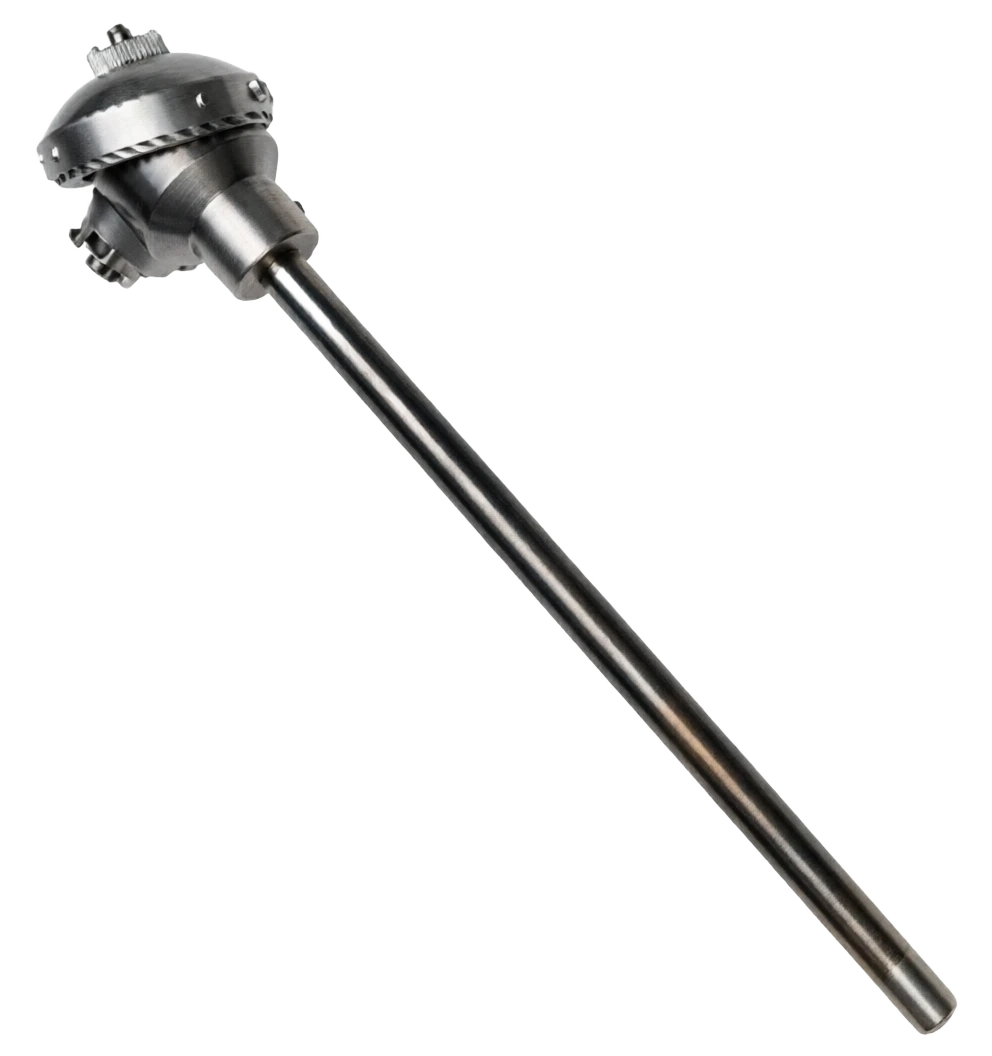
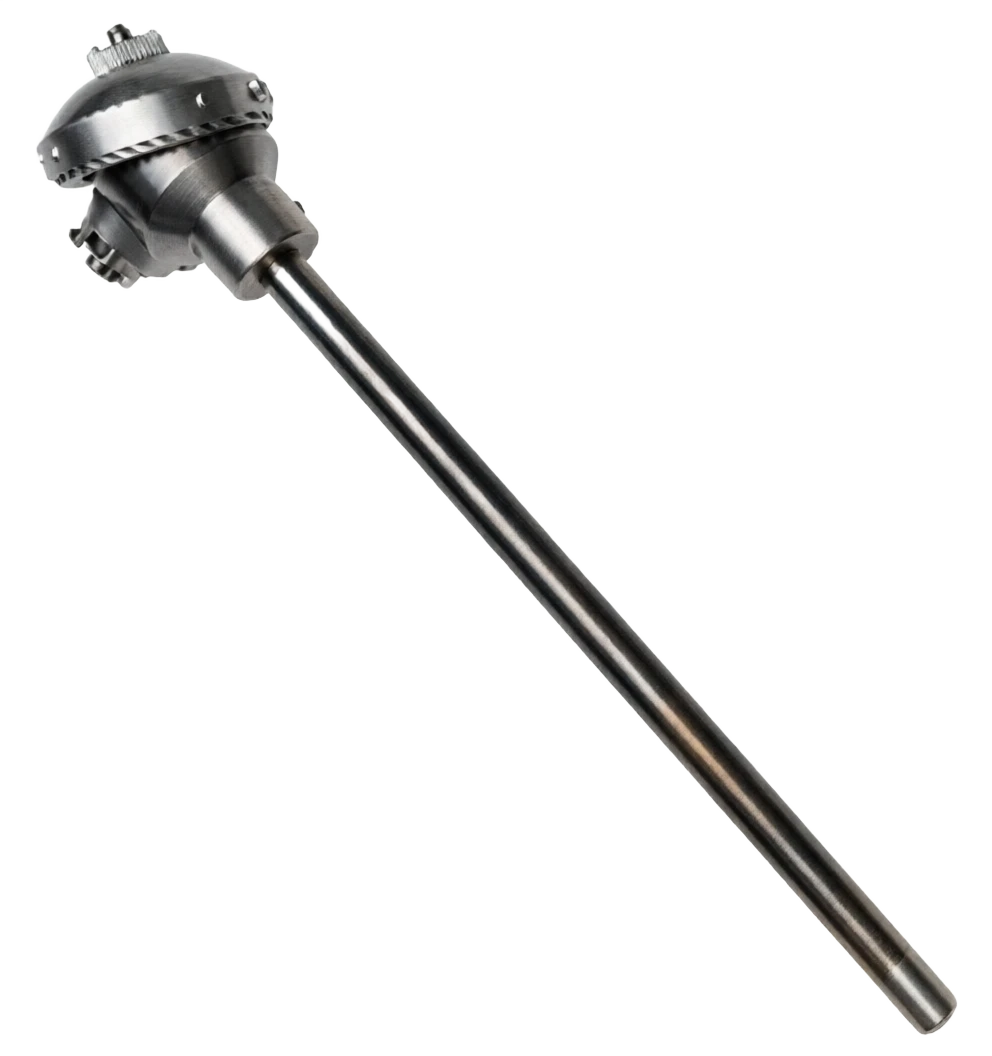
A packaged thermoelectric doll.

Operating principle

- Thermal dolls. - The principles of work.

When two different stages of conductor (thermal electrodes A and B) are interconnected to form closed circuits, the heat-power EAB (T, T0) is generated in the circuits at different points of temperature, the size of which depends only on the bipolar material and the temperature of the two ends, not related to the length of the electrode, the size of the condensed circuit. This phenomenon was discovered by the German physicist Sebeck in 1821 and is known as Seebeck Effects, which is the physical basis for thermoelectrical thermometry. The mediocre type is usually based on standard material (spectrum) specified by IEC 60584, such as type K (NiCr-NiSi), type N (NiCrSi-NiSi), type E (NiCr-CuNi), type J (Fe-CuNi), etc. Thermal power is associated with temperature through I.

  1. 01

    1 • Ice bathing 0 ℃ The ice water mixture is very high, for laboratory use.

  2. 02

    2 • Bridge Compensation Act; incorporated PN Compensation for the temperature bridge road ±0.5 ℃ It's a field mainstream.

  3. 03

    3 Compensatory Guide Method Q. Extension of the cold end to the Temperature Stability Branch ±1 ℃, economic utility

  4. 04

    4 . Software Compensation Act . PLC/DCS Inline Temperature Sensor Reimbursement . ±0.3 ℃, System Level

Packaged thermoelectric doll selection support

Provide survey missions, media and installation conditions and obtain product configuration advice.

Contact us
· Technical description

TECHNOLOGY & APPLICATION

Understand the principles, the exact selection.

From measurement principles to field applications, the technical characteristics and selection elements of the assembly thermoelectric dolls are understood.

01

TECHNICAL GUIDE

Overview

The most classic and widely used thermoelectric pyrotechnic form of industrial process temperature measurement is the Industriaal Assembly Thermocouple, WR series, which is made up of a combination of separate components such as sensory elements (even + insulation), metal protection tubes, wire boxes, wire terminals, process connections, etc. The assembly structure has the advantage of being in situ repairable, reversible and highly standardized compared to the integrated lifting structure of thermal electron voltage.

It originated in the early s when industrial industries in Europe and America emerged, initially in live versions, which were only assembled as thermoelectric dolls. With the release of IEC60584 international standards, the assembly thermoelectric dolls form a complete standardized system of the form from the fraction number (K/N/E/J/T/S/R/B), the form of the structure ( straight/angled/convene), the protection of the piping material to the process connection (screech/Fran/cardset), which is the most widely covered variety of the industrial thermometer tables.

Main technical characteristics

General description · Serial number / CharacteristicsCross-reference
Serial numberCharacteristics
1Modular assembly: wiring, protective gear, wire box, process connection stand-alone parts, to be replaced separately
2Site maintenance: no return to the plant, low cost of transportation
3High Standard: Meet IEC 60584 / IEC 61515 International Standards
4Temperature range width: -200 ~ + 1800 °C, determined by fraction and protective stock
5Structure solid: Metal protective condom withstands 10~30 MPa pressure
6Good switching: standard wire boxes, screws installed, replacement maintenance convenience
7Extended Communications: Package Transmitters Support Hart / MODBUS / PROFIBUS
8Selective flexible: 8 fractional + multiple protective material + multiple process connectors
02

MEASUREMENT PRINCIPLE

Operating principle

2.1 Thermal electrical effects of Sebek

When two different stages of conductor (thermal electrodes A and B) are interconnected to form closed circuits, the heat-power EAB (T, T0) is generated in the circuits at different points of temperature, the size of which depends only on the bipolar material and the temperature of the two ends, not related to the length of the electrode, the size of the condensed circuit. This phenomenon was discovered by the German physicist Sebeck in 1821 and is known as Seebeck Effects, which is the physical basis for thermoelectrical thermometry.

The mediocre type is usually based on standard material (spectrum) specified by IEC 60584, such as type K (NiCr-NiSi), type N (NiCrSi-NiSi), type E (NiCr-CuNi), type J (Fe-CuNi), etc.

Measurement formulaClick to see the big picture
E(t) = c0 + c1·t + c2·t2 + c3·t3 + ... + cn·t^n

Thermal power is associated with temperature through IEC. 60584 Standard scale is established, expression is multiple: E(t)= c0 + c1 ·t + c2 ·t² + c3 ·t³ + … + cn·t^n

2.2. Structure rationale for assembly

The core feature is "screw-up", which connects components by thread, pressure, welding: a measurement end (hot end): welding at the top of a bi-pouppolymers to form a temperature-measurement node (arc/laser welding/welding) and is located at the top of the protective tube by insulation;

Medium Sector Insulation

Aluminium oxide porcelain / porcelain tube separation is positive and negative, avoiding short circuits;

Cold-end seal

(b) The insulation of epoxy or ceramics by the wires when they are removed from the end of the protective tube and sealed with the bottom of the wire box;

Switchbox.

(b) The cold end transitions to external compensateable conduits or integrated transporters through the tile end;

Process Connection

The protection tube bottom is connected to the device by screws / Frank / card.

2.3 Cold-end temperature compensation

Thermal power output of the thermoelectrically-relative (T) and cold-end (T0) with the display instrument expected to be at 0°C

The cold end must be compensated for because of the absolute temperature value of the baseline.

2.4 Workflow

Motion of work · Serial number / Compensatory methodCross-reference
Serial numberMethod of compensationRationalePrecision
1Ice bathing.Cold end in 0 °C ice water mixtureIt's very high. It's for the lab.
2Bridge Compensation ActInline PN Automatic Compensation for the temperature bridge road± 0.5 °C, field mainstream
3Compensatory route methodExtend the cold end to the temperature stabilizer with a same-point guide.± 1 °C, economic utility
4Software Compensation MethodPLC/DCS Inline Temperature Sensor Reimbursement± 0.3 °C, system level
StepsActions
①On site temperature, poaching, protection of pipe conductor, poaching of end-end doll welding points.
②Weld point temperature differentials E (T, T0)
③Thermal power follows the dots, the cold end, the compensatory lead, the end of the line.
④Transmitters converted to IEC 60584 fractions ⁇ 4-20 ma / Hart
Motion of work . Step / ActionCross-reference
StepsActions
⑤Signal to DCS / PLC display, alarm, record, control
⑥Overscale / breakup trigger alarm and send a malfunction signal
⑦The main protection tube is under constant pressure.
03

PRODUCT STRUCTURE

Product structure

3.1 Main structural components

3.2 Structure forms (5 classes)

3.3 Output mode

Analysis of strengths and weaknesses

4.1 Main advantages

4.2 Main shortcomings

Measurement end (hot)

Functional description: Welding nodes at the top of the doppelgangers Usage Node, common material/specifier: arc welding / laser welding / welding

Insulation.

Functional description: Separating positive and negative poles to avoid short circuits Usual materials/specify: high pure aluminium oxide / mallite porcelain

Ichic.

Functional description: core of Sebek heat power generation, commonly used materials/specifications: K/E/J/N/S/R/B ( ⁇ 0.5~3 mm)

Metal protection tube

Functional description: Air-conservation, oxidation, anti-pressure, common materials/specification: 316L / 310S / Inconel 600 / GH3030

Porcelain / Porcelain

Functional description: Insulation and support of the medium sector Common materials/specification: high pure aluminium oxide 99% / Morese porcelain tubes

Cold end seal

Functional description: tail seal, insulation, waterproofing Usable material/specification: epoxy resin / ceramic glue / silicon rubber

Bottom of the connector box

Functional description: Sealed fixed-concentrating guide entrances Common materials/specifiers: aluminium alloy / stainless steel / engineering plastics

Connecting box caps

Functional description: protection line end, easy to maintain Usual material/specify: Aluminium alloy / stainless steel / IP65 ~ IP68

Connector End

Functional description: Twirling to compensate guidance Usual material/specify: ceramic endpoint / nickel plating copper endpoint

Process connection

Functional description: Installed in pipe / packagings Common materials/specifications: screws G1/G2, Frank DN25~100, card sets

Transmitters (optional)

Functional description: Integrated signal conversion Usual material/specification: 4-20 mA + Hart / bus

Deck / Warning

Functional description: Identified fraction, temperature, length Common material/specify: stainless steel / aluminium alloy engraving

Form

Name of component: Structural characteristics Functional description: Typical application Usual material/specification:

Straight

Name of component: Protection tube installation along axle straight lines, most common structure Functional description: Pipe / Tank / Reactive temperature Usual material/specifier:

Angular / 90°

Name of component: Protection tube and wire box with an angle of 90° to facilitate the installation of side walls Functional description: Small space / Side installation / Curver

Cone

Name of component: protection of tube end cone, response faster Function description: high accuracy temperature / response time high used mass/specifier:

Multi-dot

Name of component: A protective tube containing multiple filaments (2/3/4) Functional description: multipoint co-location / average temperature measurement Usage/specification:

Active French

Name of component: Process connection is active Frank, which allows for the reconciliation of depth of insertion Functional description: the field needs to be adjusted frequently for depth of insertion Common mass/specification:

Output Type

Name of component: signal form Functional description: load capacity Usual material/specify: typical application

mV Direct Output

Name of component: Original Thermal Power Force 0~50 mV functional description: passive signal Usage material/specify: short distance direct number list

A second-line system 4 - 20 mA

Name of component: Ringed power supply, superseding HART functional description: RL ⁇ (V-12) / 0.02 Usual material/specify: mainstream industrial site

Trilinear 4-20 MA

Type of signal: Independent power circuits Load capacity: RL ≤ 600 times Typical application: high temperature and noise

Hart Protocol

Signal form: 4-20 MA+ numeric two-way load capacity: need hand-manufacturing typical application: parameter remote grouping

MODBUS RTU

Signal form: RS-485 Digital communications Load capacity: maximum 32 nodes Typical application: multiple instrument network

PROFIBUS-PA

Signal form: bus-type essential security Load capacity: inherently safe environment Typical application: chemical DCS integration

1

Advantages: modular assembly: wiring, protective gear, wire box, process-connected stand-alone components, which can be replaced separately

2

Advantages: On-site maintenance: no return to the plant, low cost of transportation

3

Advantages: high standardization: meeting IEC 60584 / IEC 61515 international standards

4

Advantages: The temperature range is wide: -200 ~ +1800 ℃, covering medium- and high-temperature mainstream work

5

Advantages: good switching: standard switchboxes, process connections, replacement maintenance convenience

6

Advantages: compatibility is good: it can be accompanied by multiple fractional wiring and multiple modes of output

7

Advantages: Extended Communication: Accompanying Transmitters Support Hart / bus / MODBUS

8

Advantages: structural strength: metal shield against pressure, bend, earthquake

9

Advantages: Medium price: Low cost compared to S/R/B twirl K/N/E

Disadvantages and use restrictions

1

Disadvantages: Slower response: thicker metal shield than a hyphenated electrometallic device, response time 5~60 s

2

Disadvantages: Large size: thicker standard assembly diameter than a tiara

3

Disadvantage: Weighter: metal shield + wire box is not suitable for light quantification scenario

4

Disadvantages: Cold end compensation required: Miscompensation leads to ±1 ~3 °C system error

5

Disadvantages: Compensating the cost of the guide: Specially compensated guide is 3-8 times more expensive than normal guide

6

Disadvantages: Poor bending: high metal protection rigidity not suitable for bending installation

7

Disadvantages: Mechanical impact sensitivity: Cube insulation vulnerable to shock

8

Disadvantages: Rigorous installation requirements: need to correctly select the fractional number, compensate for the guide, depth of installation

9

Disadvantages: Not applicable to strong vibrations: Vibration environments can easily cause the tile insulation to break

04

APPLICATIONS

Application area

Because of its structural maturity, high standardization and simplicity of maintenance, it is one of the most widely applied temperature sensors in industrial temperature measurements.

Specific applications include:

5.1 Typical application cases

One or more. 600 MW Accelerator boiler overheated steam pipe

Temperature 540 °C, pressure 25 MPa, with a G1 thermoelectric peddle of type K, which is associated with the long-range formation of Hart ' s transmitter;

Large petrochemical catalyzed fissioner

Temperature 480~520°C, medium containing catalyst oil, with a combination of K-style thermoelectric dolls + 316L protective + Frank NN50;

Average heat segment of a steel plant heating furnace

Temperature 1200 °C, mediums of steel and furnace gas, using type S assembly thermoelectric dolls + high aluminium ceramics + active flange structures;

Vaccination of liquid bacteria by a pharmaceutical plant

Temperature 121 °C, pressure 0.15 MPa, with a combination of thermoelectric dolls of type E + sanitary Tri-Clamp interface + Hart transmitter;

Semiconductor dispersing furnace

Temperature 800 ~ 1100 °C, medium for gas protection + silicon tablets, with N-conformed thermoelectric dolls + high pure aluminium oxide insulation + KF Frank.

Electricity / Fire

Typical work conditions: heaters, reheaters, water temperature, medium: steam, flue gas, water supply

Oil / Chemical

Typical work conditions: reaction pads, distillation towers, storage tank temperature for media: gas, organic solvents, acid alkaline

Metal / Steel

Typical work conditions: heat furnaces, casts, steel-rolling temperatures

Glass / Boiling

Typical: glass kilns, ration tracks, fire escape furnaces for media: glass fluid, compost, air

Cement / Building Materials

Typical: rotary kilns, decomposition furnaces, americium chillers, representing mediums: clinker, flue gas, cement powder

Paper / Mulp

Typical: Steambuster, dryer, black liquid recovery, representing medium: black liquid, steam, baking tank

Thermal treatment

Typical work: Defrozen furnaces, silhouette furnaces, silhouettes, representing mediums: metal, gas, oil

Pharmaceuticals/ Food

Typical: Reaction, Episode, CIP Cleaning, for media: Pharmacy, Vapour, Cleaning.

Electronic / Semiconductor

Typical: proliferation furnaces, CVDs, sinterers, representing media: silicone, protective gas, vacuum

Environment / Environment

Typical work: waste incineration, flue gas treatment, biomass, medium: fly ash, smoke, biomass particles

05

TECHNICAL SPECIFICATIONS

Technical Parameter Table

6.1 Complete machine parameters

6.2 Protection of pipe materials and temperature

  1. 01

    Select Table

7.1 Naming rules

Typical naming rule

WR-K-316L-G1-1000-IP65-Hart

7.2 Recommendations for Common Models

  1. 01

    Selection Guide

8.1 Selective Steps

8.2 Typical Work Status Recommendations

8.3 Selective care

The above is a summary of the complete configuration of the thermoelectric doll. The actual selection should combine the process parameters, medium properties, installation modalities, life-cycle costs, etc.

Technical Parameter Table · Parameter Category / Parameter NameCross-reference
Parameter CategoryParameter NameSpecifications
Sensor typeSensor typeK/ N/ E/ J/ T/ S/ R/ B, press IEC 60584
Temperature rangeTemperature range200 ~+1800 ℃, by fraction and protective stock
Accuracy classAccuracy classI ± 1.5 °C or ± 0.4%t; II ± 2.5 °C or ± 0.75%t
I'm just a little bit more of a silk.I'm just a little bit more of a silk.Φ0.5 / Φ1.0 / Φ1.5 / Φ2.0 / Φ3.0 mm
Protection tube materialProtection tube material1cr18Ni9Ti / 316L / 310S / Inconel 600 / GH3030/ High Aluminium
Insulation materialInsulation materialAluminum peroxide high 99% / Morese valor / Morese valor
Junction boxJunction boxAluminium/ stainless steel/ engineering plastic IP65/IP68
Connector EndConnector EndCeramic / Nickel Platinum
Process connectionProcess connectionSnacks G1/G2, M27, NPT, Frank DN25~100, card sets, active Frank
Insertion depthInsertion depth100~3000 mm, custom
Response timeResponse Time t635~60 s (3~10 mm)
Pressure resistancePressure resistance10~30 MPa (subject to condom specifications)
Ingress protectionIngress protectionIP55 / IP65 / IP67 / IP68
Ambient temperatureAmbient temperature40 ~ +85 °C (wirebox)
Environmental humidityEnvironmental humidity0~95% RH, no condensation
Anti-shock resistanceAnti-shock resistance10~30 g,10~500 Hz
Insulation resistanceInsulation resistance≥ 100 M time@100 V (Ill-Swire-to-Ball)
Resisting voltageResisting voltageAC 500 V / 1 min
Cold junction compensationCold junction compensationInternal / External / Software / (optional)
Protect the tube's outer diameter.Protect the tube's outer diameter.Φ8 / Φ12 / Φ16 / Φ20 / Φ25 mm
ChiefChief200~3500 mm, custom-made
WeightWeight0.5 ~ 5 kg (depending on specifications)
MaterialsHigh temperature toleranceCharacteristicsTypical applications
1Cr18Ni9Ti870 ℃Economics for AllGeneral industry
316L925 ℃Algebra-resistant corrosionChemical / Food
310S1030 ℃High temperature resistant to oxidationHeat/ boiler
Technical parameter table · Material / Maximum temperature toleranceCross-reference
MaterialsHigh temperature toleranceCharacteristicsTypical applications
Inconel 6001150 ℃It's a high temperature corrosive.Chemical high temperature component
GH30301100 ℃High temperature alloyAviation / Gas turbines
High aluminium porcelain tubes1700 ℃Super-temperature and oxidation.Glass / Hot Warm
Technical parameter table . Part bit / codeCross-reference
PartCodeMeaning
1WRPackaged thermoelectric doll code (Industry Industries)
2K / E / J / N / S / BPeriod: K/E/J/N/S/B, etc.
3316L / 310S / Inconel600Metal protective tube material
4G1 / G2 / DN50Process Connection Specification
51000 mmInsert Depth L(mm)
6Straight / Angle / ConeStructure form
7IP65 / IP68Ingress protection
8mV / 4-20mA / Hart / MODBUSOutput Method
9Φ16 / Φ20Protection of tube diameter (mm)
10Single / DoubleNumber of wires
Technical Parameter Table . Serial Number / ModelCross-reference
Serial numberModelSpecifications DescriptionTypical applications
1WR-K-316L-G1-1000-IP65- 4-20mAK/ 316L / G1 / 1m / IP65 / 4-20mAGeneral industrial process temperature
2WR-K-310S-DN50-IP65-Ha rtK/ 310S / Frank NN50 / IP65 / HartFire boiler steam pipe
3WR-N-Inconel600-G2-150 0N / Inconel 600 / G2 / 1.5 mHigh temperature of the temperature oxidation medium
4WR-E-316L-M27-800-IP68Type E / 316L / M27 set / 0.8m / IP68Pharmaceutical reaction draught temperature
5WR-K-321-G1-1000-Wirele ssK/ 321 / G1 / 1 m/ Wireless HartInconvenient wiring area temperature
6WR-S-Aluminium high-golden-G2-2000S / High Aluminium / G2 / 2mGlass kiln temperature
7WR-J-316L-G1-600-angJ / 316L / G1 / 0.6m / Angular 90°Revert atmosphere temperature
8WR-K-310S - Activity Frank-1500 - IP67Type K / 310S / Active Frank / 1.5m / IP67Refining unit temperature
9WR-K-Inconel 600-DN80-Dipple 2000-PAK/ Inconel 600 / DN80 / Double / 2m / PROFIBUS-PAMultipoint temperature integration
Technical parameter table · Step / Selective considerationCross-reference
StepsSelection
①Confirm temperature range: lowest / maximum temperature Selected fraction number (K/E/J/N/S/R/B)
②Confirming medium characteristics: corrosivity, oxidity, reductiveness, flow speed
③Selection of Plumber Protection: Select 316L/310S/Inconel by medium corrosiveness and temperature
④Determination of depth of insertion: by pipe length 1/3~2/3
⑤Select process connection: screw / Frank / Kale / Active Frank
⑥Select the installation structure: Straight / Angular / Cone / Multipoint
⑦Select output mode: mV / 4-20mA / Hart / MODBUS / bus
⑧(b) Determination of the level of protection: IP55 / IP65 / IP67 / IP68
⑨Select the number of ids: single / double (redundant / average temperature)
⑩Accounting for life cost: combined procurement + maintenance + shutdown loss
Technical parameter table . Work / TemperatureCross-reference
WorkTemperatureMediaRecommended fraction numberRecommended protective gear.
Fire boiler overheater540~5 70High temperature steamK310S
Petrochemical reactor300~5 20Gas + CatalystKInconel600
Metal-heated furnaces900~1 200Steel + stove gasSHigh aluminium china
Glass kiln1200~ 1500Glass liquid + flue gasS / RHigh aluminium china
Cement rotary kiln1300~ 1450Clinker + FrozenS / BHigh aluminium china
Paper evaporation150~1 80Black liquid + steamK / E316L
Pharmaceutical antibacterial fumes110~1 25+ SteamE / K316L
Thermal processor700~9 50Metal + Protect GasK / N310S
Food sterilization80~95CIP Purge LiquidE / K316L Health level
Technical parameter table . Work / TemperatureCross-reference
WorkTemperatureMediaRecommended fraction numberRecommended protective gear.
Semiconductor diffusion800~1 100Silicon + Protect GasN / KAluminium peroxide high
Serial numberAttention
1Temperature range should reserve ±10% surplus to avoid being in full range for a long period
2Inconel 600 / Haq Alloy protection should be preferred for the strong corrosive medium
3Revert atmosphere first type J to avoid K/ N oxidizing drift
4The compensatory guide must be used for the corresponding fraction, not the common copper line
5No assembly recommended for vibrating, no plaque or paste recommended
6The wiring box should be protected by a level of protection on the ground.
7Periodic calibration: recommended for standard thermoelectric doll field comparison for every 6-12 months
8Transport installations need to be particularly sensitive: the insulation of ceramics is fragile and impact avoidance
9Avoiding extreme cold temperature fluctuations, otherwise cold-end constant temperatures or software reimbursement
10Electromagnetic environment recommends the selection of shielding to compensate for the conductor or integrated transmitter