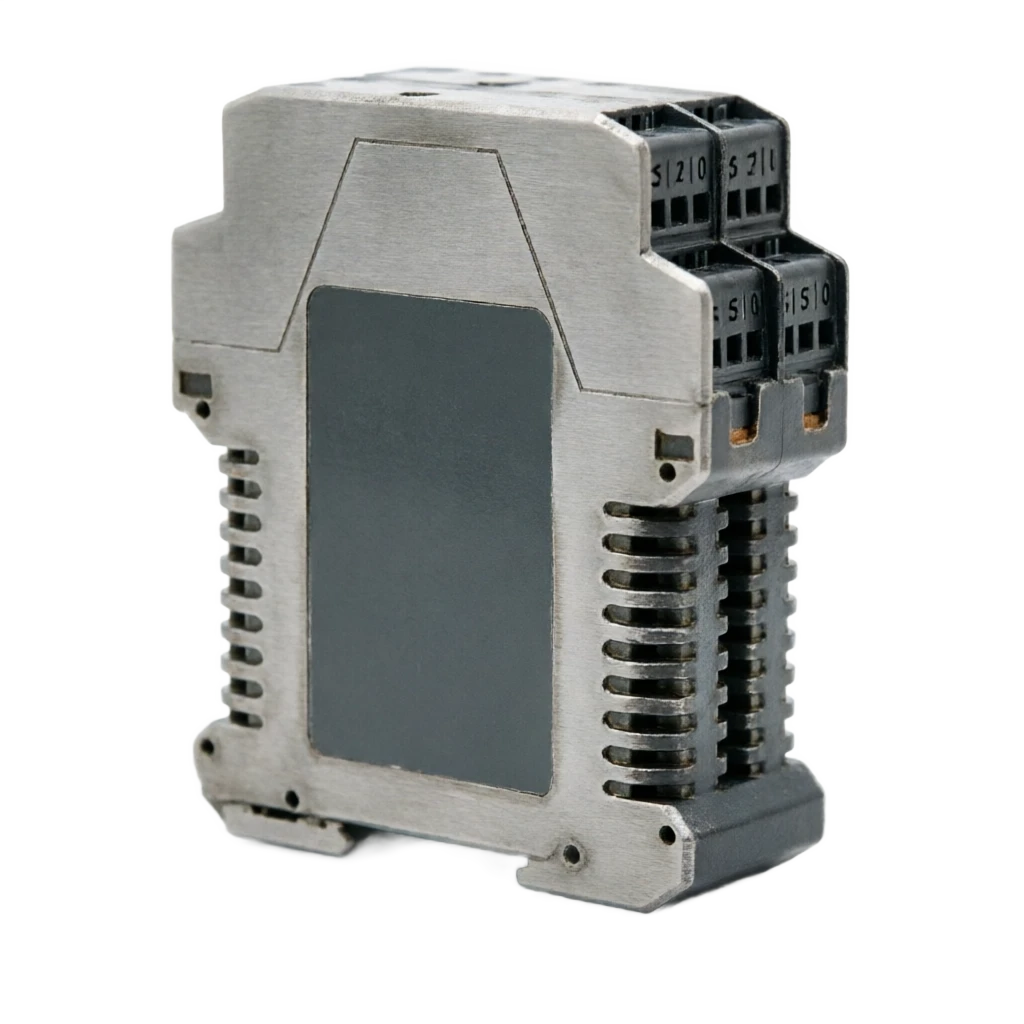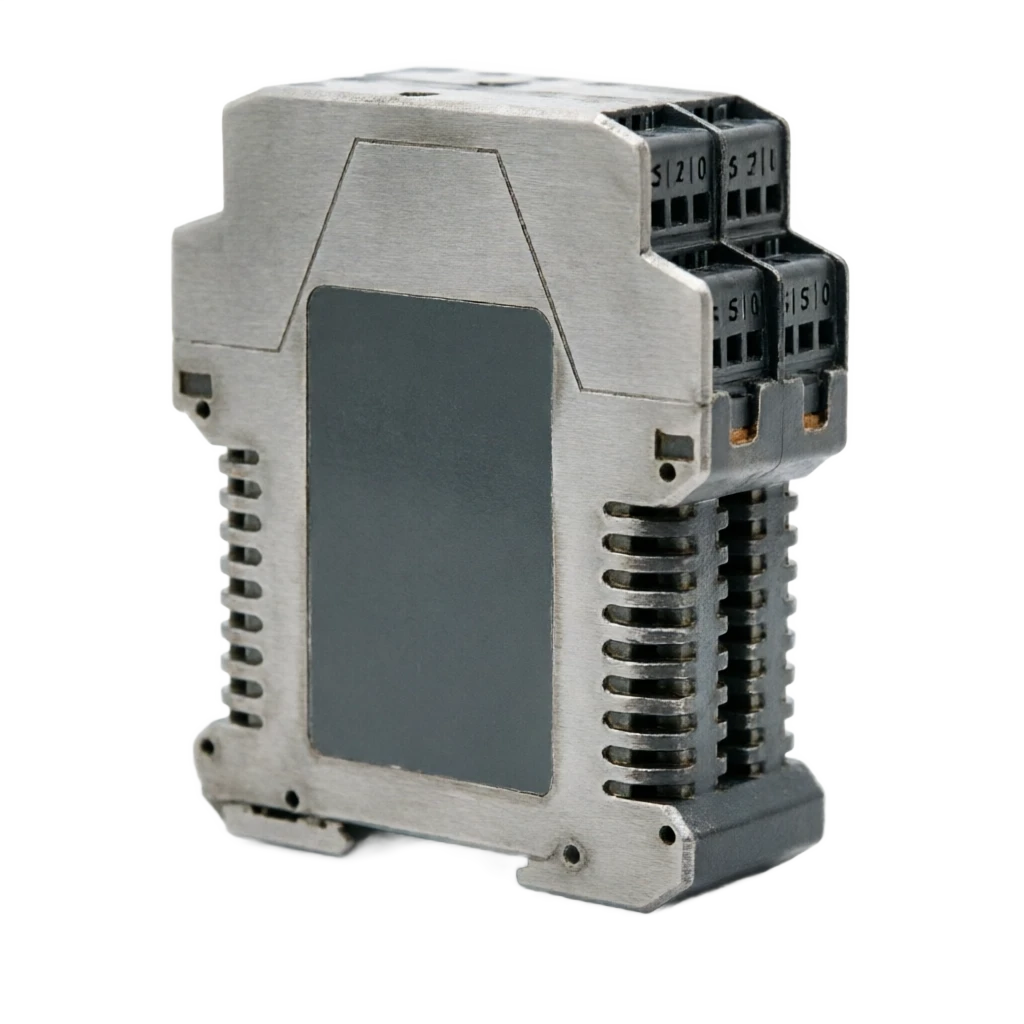
PRODUCT TECHNOLOGY

Programable thermal resistance (thermal voltage) into the separation fence

Operating principle

Programmable thermal resistance (thermal voltage) enters the separation fence.

The work of the temperature input programmable separation fence is spread around the five links of "Restricted energy, poignant signal access, polysign processing, poachable transformation, poachable output." This section is based on the three angles of "Standside of the site inside the fence, and control side" and ends with three key calculations of "RTD Self Heating Depression + TC Cold End Compensation + Programmable Grouping". The site side consists of two tasks of the essence: this is a limit energy and temperature signal access. This amplifier is the same as Part 71: Uo / Io / Po / Co / Lo Five-Direct Group and Ui / Ii / Pi / Ci / Li for on-site sensors shall meet the five-variable range. Temperature signal access is the core feature of this section - RTD

  1. 01

    2 Internal fence: signal processing + DC/DC floating + quarantine transformer

  2. 02

    3 Control side: signal reduction + HART overpass + alarm output

  3. 03

    05℃ has to choose the "Incentive Reverse Elimination" or low-incentive current (0.5mA) model.

  4. 04

    RTD Type . Pt100 0°C 100 times . IEC 60751 Standard

Programable thermal resistance (thermal voltage) input separation fence support

Provide survey missions, media and installation conditions and obtain product configuration advice.

Contact us
Programable thermal resistance (thermal voltage) input barrier Technical Note

TECHNOLOGY & APPLICATION

Understand the principles, the exact selection.

From measurement principles to field applications, the technical features and selection elements of the programmable thermal electrical resistance (thermal voltage) input fences.

01

TECHNICAL GUIDE

Overview

1.1 Product definition and attribution

Essentially safe interface equipment with thermal resistance (Pt100, Pt1000, Cu50, Cu100, Pt50 etc.) or thermal electromechanical doll (type K/E/J/T/N/S/R/B) in the hazardous area is tasked with four tasks: side energy (detonation), control side isolation (anti-fault), signal conversion (temperature #4-20mA), programmable formation (human input).

In the Industrial Process Automation Pyramid, the fence is located in the field instrumentary (temperature sensor) and control layers (DCS/PLC)

Between, the core of the backway interface family, the temperature end.

Its " programmable" feature is the key to distinguishing from the single-point separation fence - a device that covers the functions of multiple traditional single-point separation fences, through a combination of organized software or key-to-key switching fractions, ranges, units, blockages, alarm thresholds, is the preferred option for the streamlining and modification of inventories.

1.2 Family division of labour

1.3 Three paragraphs of the development history

(1) Single-degree exclusive period (1990s)

Each fraction number is separated by a single fence (one Pt 100, one K...), with high inventory pressure and complex replacement of the retrofitting project.

(2) Double-column Selection Period (2000s)

Support through DIP dialup 2 ~ 4 Spectrometer (Specific-Specific) Pt100 / Pt1000 / K / S), mainstream plant e. g. P+F KFD2 The first of these is the launch of representative products by MTL, PR Electronics.

(3) Programmable full-scale period (2010s~)

HART / USB / Key-based shape, a single one covering IEC 60751 all RTD + IEC 60584 all TC8 ~12 and integrating alarm, accumulation, operation, etc.; entry of the national brands of Nanjing, Shenzhen Mantel, and Const.

1.4 Relationship to Part 64/71

Part 64, "Segregated security fence", is a generic overview covering all product categories of the detection end, control end, temperature end, switch end; Part 71, "Input detection fence", is the depth of its "4-20mA input detection" branch;

This is the programmable depth of its "temperature end" branch, which is composed of "general ⁇ detection ⁇ temperature" three tracks: 64 for "doing everything" generic; 71 for "allocation + measuring" transmission circuits;

This is for the "Unable Input + Remote Group + Multi-Sensor Mixing" temperature circuit.

  1. 01

    Programable thermal resistance (thermal doll) enters a separation fence (hereinafter referred to as "the temperature input programmable barrier" or "RTD/TC" is installed in a safe zone control room (DCS/PLC)

  2. 02

    The separation fence, simulation of the input cards, monitors, recorders)

General · Membership / DutiesCross-reference
MembersDutiesCorresponding scene
Programable RTD/TC input fence (this article)Thermal resistance/thermal electrocution input + isolation + energy limitation + programmableMulti-point Mix / Remote Grouping / Inventory Streamline
Part 64 Segregated Security Fence (General-Present)Cover all items of detection/control/temperature/maskGeneric project type-selection
Part 71 Input detection fence (4-20mA)Specialise in second-/ fourth-line transvestite 4-20mA input testingSecond-line transmitter distribution + detection
47th S.V. (head)Sensor + Interpret integrated field instrumentIntegrated on-site temperature measurements; head installation
46th Smart Modem (Cellboard)Multi-road switching + reconciliation + output (non-motor-driven)Multi-road temperature in the cabinet is monitored centrally
Zina security fence (alternative)Zina D.C. + P.O.T.Traditional programmes, with reliable land-based systems
02

MEASUREMENT PRINCIPLE

Operating principle

The work of the temperature input programmable separation fence is spread around the five links of "Restricted energy, poignant signal access, polysign processing, poachable transformation, poachable output." This section is based on the three angles of "Standside of the site inside the fence, and control side" and ends with three key calculations of "RTD Self Heating Depression + TC Cold End Compensation + Programmable Grouping".

2.1 On-site side: Beneficial energy and temperature signal access

The field side consists of two essentially related tasks.

This is an acquistic energy that is connected to a temperature signal. This is the same as under 71: Uo / Io / Po / Co / Lo Five-Direct Group and Ui / Ii / Pi / Ci / Li for on-site sensors must meet the five-variable range.

Temperature signal access is the core feature of this section - RTD access

2 / 3 / 4 line is optional, and 4 line measure maximum accuracy (±0.05℃ level) to eliminate wire resistance; 2 TC access: mV thermal power (mV) measure, by IEC 60584 Check out the score (type K/E/J/T/N/S/R/B VIII); 3 CJC Autocompensation: Plugged on the endboard Pt100 Measure the endpoint temperature, press IEC60584 Get the cold end back from room temperature. 0℃ ; 4 Block and ground: double winch + 1 touch, avoid 50 Hz work with a common pattern of interference.

  1. 01

    2 Internal fence

    Signal processing + DC/DC floating + Isolating transformer

The fence is made up of four parts.

1 RTD Constant Flow Source - Typical 1 mA ( Pt100 Self-heating 0.05℃ /mW-bound) , too much incentive to heat up, too little incentive noise to low; 2 High Precision ADC - 24 -bit ⁇ ADC (valid) 18 ~ 20 b. b. b., mV-grade thermal power and m-grade resistance;

Microcontroller MPU - run-point scale, linearization, CJC, compensation, heat-up correction, storage of programmable parameters;

4 Separators — power isolation — signal isolation sharing of magnetic cores, isolation of resistant pressure ≥ 1500 Vrms / 2500 Vpk; 5 DC/DC floating space — provides surface-work power on the side of the site and avoids ground circuits.

The electronic restricted flow circuit is usually protected by a three-part chain of "Zina + limit flow IC + self-recovered insurance": the output current is restricted to Io (typically 25-30 mA), fuses are melted when short circuits are broken and self-recovered when failure breaks;

This "reciprocation" makes it impossible for the fence to export currents beyond the limit value even if the cable is short.

  1. 01

    3 Control Side

    Signal restore +HART overpass + alarm output

The key to the control side is to convert the temperature signal from the internal processing of the fence to the 4-20mA output + HART digital signal.

The accuracy of the signal is usually better than that of the ±0.1% FS (generally the error of the ≤1 / 4 sensor), so that the separation fence error is usually ignored in the system accuracy budget.

HART faxes the ±0.5mA FSK signal superimposed on 4-20mA to be removed from the simulation layer and re-engineered to output on the control side 4-20mA to achieve the bridge of the "field side of HART control side of HART". High bandwidth separation fence (typical 500 Hz ~ 10 kHz channel bandwidth) guarantees that the HART signal is not distorted and that the HART handheld can be accessed at any point on the control side to complete the group/diagnostic/parameter reading and writing.

2.4 Critical calculation (i) - RTD Self Heating Depression

Engineering experience

High accuracy temperature (single)

  1. 01

    05℃ has to choose the "Incentive Reverse Elimination" or low-incentive current (0.5mA) model.

Otherwise, the budget will be depleted.

2.5 Critical calculation (ii) - TC Cold End Compensation

CJC-K-type TC is 1

1 Maps are temperature errors; the Seebeck coefficient for Type E TC is higher (60 μV/°C), and CJC errors are magnified to 1.5 times. Therefore, the application of Type E TC should pay particular attention to the temperature parity of the end subsector.

2.6 Critical computing (iii) — programmable grouping three-tiered structure

Programmable grouping structures in three layers

①

Physical layer (field side)

The fractional selection (8 ~ 12 type RTD/TC), the linear selection (2 / 3 / 4 system), and the range of inputs (mV/m/m/ °C). 2 Algorithmic Layer (inside the fence): linear processing (IEC) 60751 / 60584 The scale table, the CJC calculation, the self-heating correction, the detachment filter, the unit conversion, the alarm threshold. 3 Communications layer (control side): HART communication (reading and writing two-way parameters), Modbus/USB/key grouping, relay/LED alarm output, 4 - 20mA Output corresponds.

Engineering value of the three-layer architecture

"Physico Layer" determines what sensors to connect to;

"The algorithm determines accuracy and stability;

"Communication Layer" determines maintenance.

The selected programmable separation fence should examine three layers of capability simultaneously - many low-cost products are programmed only in the physical layer, with low algorithmic accuracy, no HART transmission in the communications layer, and real engineering value is reduced.

The working principles . Parameters / SymbolCross-reference
ParametersSymbolTypical valueAnnotations
RTD TypePt1000℃ 100 ΩIEC 60751 Standard
Incentives to currentsI1 MA (typical)Too much motivation to heat up; too little stress, low faith.
RTD BarrierR~100 Ω(0℃)Temperature coefficient 0.385 times/°C
RTD UsageP = I²R0.1 mWPt100 1 MA time of effort
Self-heating effectΔT = P × S0.05℃S is the RTD self-heating factor (approximately 0.5°C/mW)
The working principles · Check item / end-temperatureCross-reference
CheckpointEnd TemperatureMethod of compensationPrecision after compensation
Automatic CJC (Pt100)25℃Inline Pt100 Test Endpoint Check IEC 60584 Table Amend±0.2℃ (0 ~ 50℃ endend)
Manual CJC25℃User type the port temperature value± 0.5°C (Manually set for readable schools)
The outer ice point is off, CJC.0℃Ice point slots or thermostat modules± 0.05°C (high precision scenario)
CJC Shortness Principles25℃Short-link TC input end, output should indicate the end temperatureOn-site receiving and inspection techniques
03

PRODUCT STRUCTURE

Product structure

The temperature input programmable separation fence consists of "Physico Layer 10 Component + Software Layer 10 Module".

The physical layer provides the material base and the software layer provides the intellectual and compliance capability.

3.1 Ten components of the physical layer

3.2 Ten modules on the software floor

3.3 Five-type morphological distribution

1. Shells

Core component / Specification: PA66 Flame Retardation / DIN 35 mm track Function description: Mechanical Intensity + Flame Retardation UL94-V0

2. Connector end

Core widget / Specification: Power + On-site + Control + HART End Functional description: colour coding distinction; 2.5 mm² screwdriver

3. CJC Endboard

Core component / specification: Temperature Bronze + Inline Pt100 functional description: Cold-end compensation core; End sub-temperature even

4. DC/DC floating power supply

Core component / Specification: 24 V ⁇ Floating Field 24 V Functional description: floating side of the site working power

5. Limited access

Core component / specification: Zina + restricted flow IC + self-recovered insurance Functional description: three series of protections for this AC

6. RTD Heat Source

Core component / specification: 0.5/1/2 MA Optional functional description: RTD channel incentive; weighing on heat

7. High precision ADC

Core Component / Specification: 24-bit ⁇ -ADC (effective 18-20 bit) Functional description: μV class TC/ m level RTD measurement

8. Separators

Core component / Specification: Power + Signal Shared Magnetic Core Function Description: Isolated Pressure 1500 Vrms / 2500 Vpk

9. MMU + Watchdog

Core widget / Specification: ARM Cortex + Self-inspection Functional Description: Speculation Table + CJC + Self-heating fixes

10. HART Modem

Core Component / Specification: A5191HRT / HT2012 Functional Description: FSK Modem/ Modem; Channel Bandwidth ≥ 10 kHz

Module

Core component / Specification: Function Description: Achieving Technology

1. Score sheet

Core component / Specification: IEC 60751 / 60584 fraction conversion Functional description: Multi-part + Retrospect

2. Linearization

Core widget / Specification: Non-linear amendments (Callendar-Van Dusen) functional description: high-level multiple-plug values

3. CJC Calculator

Core component / specification: End temperature automatic compensation functional description: Pt100 temperature measurement + IEC 60584 back

4. Self-heating correction

Core widget / Specification: Incentive Reverse Elimination Method Functional description: Double measure to take the average

5. Denied filters

Core widget / Specification: Digital Low-Flow Filter (0.1~60 s) Functional description: IRR / FIR optional

6. Unit conversion

Core component / specification: °C/ °F/K Interchange Functional description: Project Volume Conversion

7. Warning threshold

Core component / Specification: HH/H/L/L/L Level IV Functional description: relay or LED output

8. Range migration

Core widget / Specification: A cap-down arbitrary function description: 4-20mA for any temperature range

9. HART Communications

Core component / Specification: Two-way Parameter Reading and Writing Functional description: HART 5/6/7 Compatibility

10. Disorder diagnosis

Core widget / Specification: Breakline / Shortway / Overstep Functional Description: NAMUNE 43 / NE 107

Form

Core component / Specification: Number of Channels Functional description: Temperature range representative machine type / scene

Tight Single Channel

Core Component / Specification: 1 Function Description: −200 ~ +1800℃ P+F KFD2-UFC- Straight into Mode / Single Point Critical Path

Two channels stand alone.

Core component / specification: 2 Functional description: -200 ~ + 1800°C Redundant temperature measurement / master readiness switch

8 High density of channel

Core component / Specification: 8 Functional description: -200 ~ + 1800 °C for high density collection for small and medium items

16 Access bus power

Core component / Specification: 16 Functional description: -200 ~ + 1800 C Power Railway bus / Large project

04

TECHNICAL GUIDE

Advantages and disadvantages

4.3 Implicit trade-offs for single-species programmable vss

Although the unit price of the programmable separation fence is higher than that of the single-point special-purpose fence 30 ~ 50%, the total cost of the project is often lower - "One programmable" instead of "5 ~ 10 " , with reduced spare parts inventory, procurement costs and training costs.

Precision implicit trade-offs

Title ±0.05℃ Usually it means " 25℃ Room temperature + 4 Line Pt100 + 1 mA Incentives "ideal conditions."

Actual

1 Self-heated - 1 mA Incentives to heat up. 0.05 ~ 0.2℃ , high precision requires "incentive reverse" elimination; 2 CJC Error - Gradient of the K-TC end zone 1℃ Temperature error 1℃ , so the endboard must wait for the thermo-block design + the fan forced convection; 3 Interception and Response - Long Interdiction Time to contain Noise but to respond at sacrifice, Fast Process Target to Short or Unstop Ninni.

4.1 Eight major strengths

Everything you can enter.

Advantage: A single-dimensional separation fence covering 8-12 RTD/TC fractional numbers

Remote Grouping

Advantage: HART/USB/Keys, no machine to unload

Streamlining of inventories

Advantage: one model replaces multiple single-dimensional models 8 ~ 12 Spare parts

Change friendship.

Advantages: On-site toggle fractions without having to replace hardware

Ben's energy limit.

Advantage: Electronic limit flow + Triple protection from re-insure

Unequal level of power.

Advantage: transformer separation separates the site from the control side. ≤ 1 Ω)

HART Passage

Advantages: Special HART Modem, channel bandwidth ≥ 10 kHz contrast object: low end separation fence (bandwidth narrow leads to the distortion of HART)

High Precision

Advantages: ±0.05℃ RTD / ±0.1℃ T.C. ±0.2℃ The separation fence.

Disadvantages

High unit price

Disadvantage: 24-bit ADC + MMU + HART, unit price: $800 ~ $3,000 Response strategy: amortization of multi-channel machines; offset by a streamlining of stocks

Form needs training

Disadvantage: HART DD library + software tools are diverse

Low-end programmable as a tumble

Disadvantage: Physical layer programmable but low algorithm precision Response: Real algorithm indicator; alert to "false programmable"

Long cable reserves are limited.

Disadvantage: Co ⁇ Ci + Ccable, Lo ⁇ Li + Lcable Response: Long-range Selection Co/ Lo Larger; Low Ci/Li Sensor

Multiple Passages Timed

Disadvantage: Time-to-time change in time for establishment (0.5 ~2 s/channel) Response strategy: fast process inappropriate; multi-channel parallel machine type

Not applicable to certain

Disadvantage: The old model without HART channel does not apply to WirelessHART node Response: New design HART 7 / WirelessHART fit

Programmation error risk

Disadvantage: Error-modification fraction number leads to measurement error Response policy: argument lock + permission rating + modified record

05

APPLICATIONS

Application area

5.1 Six Typical Applications

5.2 Detonation of blast-proof partitions

5.3 Overview of industry distribution

The programmable temperature input fence broadly presents the pattern of " petrochemical 30% + chemical 25% + power plant 20% + gas 10% + pharmaceutical/food 10% + other 5% " by industry distribution. The petrochemicals and chemicals are the two main battlegrounds, the former focusing on high temperature response + blast protection, and the latter on low temperature storage tanks + all-power input; The electricity industry has a continuing demand for the K-type assembly TC entry inspection, and programmable characteristics help to mix the K/E scene.

Refinement reaction draught temperature

Target detected: Response multi-point temperature measurement (K + Pt100 mixed) Key function of this fence: programmable + altruistic input + HART remote grouping

The power plant boiler overheats.

Target detected: Key function of this fence: programmable + high precision + SIL2 authentication

Water slot in chemical tank area

Target detected: Pt100 average thermometer Key function of the fence: programmable + this Antenna limit + long cable compensation

Zone clean for pharmaceutical response

Target detected: Health Pt100 + Reaction temperature Key function of this fence: programmable + high accuracy + HART bi-directional

Metal-heated furnaces

Target detected: High temperature temperature of TC type S/R/B Key function of this fence: programmable + High temperature CJC + High precision

Renovation/reducing of stocks

Target detected: Multitype Sensor Mixer Project Key function of this fence: programmable + remote grouping + no dismantling

Explosive-proof partition

Target: Media category Key function of this fence: Authentication requirements

Zone 0

Target detected: IIA / IIB / IIC T4~T6 Key function of this fence: ia (highest security) [Ex a Ga] IIC T4~T6 Ga

Zone 1

Target detected: IIA / IIB / IIC T4~T6 Key function of this fence: ib level [Ex ib Gb] IC T4~T6 Gb

Zone 2

Target detected: IIA / IIB / IIC Key functions of the fence: iC level or non-incorporated blast prevention [Ex ic Gc] IC or non-explosive type

21/22 Dust in Sector

Target detected: Dust environment Key function of this fence: DIP A/ B level [Ex iAD] or DIP authentication

06

TECHNICAL SPECIFICATIONS

Technical Parameter Table

6.1 Generic versus precision horizontal comparisons

6.2 Passage density and power supply

6.3 Thermal electrical resistance channel parameters

6.4 Thermal electro-mechanical channel parameters

  1. 01

    Select Table

7.1 Eight-bit selection table

7.2 Example of option (i) - Refining Reaction Multi-Perfect Temperature

7.3 Example (ii) — high accuracy of the boiler overheater at the plant

7.4 Example (iii) — Zone temperature of pharmaceutical response clean

7.5 Example of option (iv) — multisensor mixing for retrofit projects

  1. 01

    Selection Guide

8.1 Six-step selection

8.2 List of eight typical pits

8.3. Fourth category acceptance chain

The small programmable thermal electrical resistance (thermal voltage) input fence is the "temperature-end all-power gate" of the industrial process-based blast-proof system, which is tasked with "all-power input + limit + quarantine + signal conversion + programmable grouping" five elements. This section is organized around two types of sensors: RTD and TC, comparing 64 generics to 71 input detections, clarifying the product community division of the temperature end vs generic vs detection end; Gives key engineering issues such as RTD self-heating, TC cold end compensation, programmable three-layer architecture and binds it with a 8-bit selected sheet and a 8-class pit shelter list.

Family division of labour

  1. 01

    GAB interfaces are placed in the separation fence (Page 64, Port 71, Port 73 temperature programmable);

Integrated in situ temperature measurements to smart temperature adapters (head of section 47); • Centralized temperature in the cabinet to the smart modem (PART 46); Handheld smart operator (Page 51)/ dryer furnaces on site; • Backtracking of the 38th Validation Simulator / The 39th End Process Validation.

Key selection discipline

  1. 01

    Sensor Type Confirmed

    RTD / TC / One for all-power option; 2 ) All checks of this Ang5 parameter: Uo/Io/Po/Co/Lo

One of the five variants is not an option; 3) RTD Self-heating Control: High Precision 0.5 MA or Incentive Reverse Elimination; 4) CJC endpoints, such as thermometers: elimination of temperature gradients 1:1; 5 ) HART channel bandwidth ≥ 10 kHz: Otherwise, the handheld connection is not valid; 6)

The Pyrometric Arguments Locked

- The pre-emptive formation.

This is the product group for the Common + Test + Temperatures, which is part of the Common + Test for the 64th and 71st input test.

The temperature end continues to unfold, and the backway family works depths in the temperature area.

Technical Table of Parameters · Parameters / Generic TypeCross-reference
ParametersGenericPrecisionEngineering
Precision±0.1℃±0.05℃measure-level circuit selection precision;process control generic
Warm.±0.005%/℃±0.0015%/℃The temperature changer chooses the precision type
Programmable capacityDIP Dial 2-4HART/USB full scoreMultipoint HART Full Scale
Supporting fraction numbers2~4 species8~12 speciesPt100 + 8 TC/ All RTD + All TC
Uo / Io / PoUo = 25.2 V / Io = 28 mA / Po = 0.7 WUo = 25.5 V / Io = 30 mA / Po = 0.8 WTypical value, reference manufacturer label
Co / LoCo = 0.1 μF / Lo = 3 mHCo = 0.2 μF / Lo = 5 mHLong Cable Canner Area High
Separatizing pressure.1500 Vrms (basic) / 2500 Vrms (enhanced)2,500 Vrms (standard)The grid-trenching man. 2500 Vrms.
HART ChannelDouble-direction transmissible, bandwidth 10 kHzDouble-crossing + Double-direction parameter written, bandwidth 25 kHzComplex group selection precision
ParametersSingle channelDual Channels8 channel16 channel
Number of single channels12816
Width (mm)12.517.5105210
Single weight (g)1101609001800
Power modeIndependent 24 VendIndependent 24 VendPower Rail power supplyPower Rail power supply
Single channel usage1.0 W1.2 W0.8 W0.8 W
Typical unit price ($)1000~25001500~35005000~120009000~20000
Apply sceneThe key circuit is isolated.Two circuits together.High density of small and medium-sized projectsLarge project high density + bus power
Technical Table of Parameters . Parameters / Typical ValuesCross-reference
ParametersTypical valueAnnotations
Support typePt100 / Pt1000 / Cu50 / Cu100 / Pt50IEC 60751 + National flag
Measurement range0~400 ΩOverwrite Pt100 Pantemosphere
Line2/3/4 Linear programmable4 Maximum Linear Precision
Accuracy⁇ (0.002% reading + 1 m)4 Linear Measurements
Incentives to currents0.5 / 1 / 2 mA programmablePress Self Heating / Noise
Self-heating error≤ 0.05℃ @ 1 mAHigh-end support incentive reverse elimination
Litres compensation4 Wireless Automatic Elimination2/3 Reimbursement of cable software
Technical parameter table · Scan speed / 0.3~1 s/channelCross-reference
Scan speed0.3~1 s/channelFaster than TC (no CJC waiting)
Technical Table of Parameters . Parameters / Typical ValuesCross-reference
ParametersTypical valueAnnotations
Supporting the fraction numberK / E / J / T / N / S / R / BIEC 60584 Full compatibility
Measurement range−10~100 mVT.C. All-temperature.
Accuracy⁇ (0.0015% Read + 0.5 μV)24-bit ADC-level precision
CJC Precision±0.2℃ (0 ~ 50℃ endend)K TC Impact 1:1
Inter-channel insulation≥ 10 GΩ / 200 V- It's high-pressure.
Coming inhibition≥ 140 dB (50 Hz)Anti-grid interference
Serial Cursor≥ 60 dB (50 Hz)Work-time suppression
Line compensationAutomatic / Manual / Exterior Point OffCompensatory error correction of the lead line
Scan speed0.5~2 s/channelInclude relay action + ADC sample
Technical Parameter Table . Bits / Options / ValuesCross-reference
bitsOptions / ValuesSelected Elements
1. Number of corridorsSingle/biple/8/16Key return list/two; small and medium items selected 8; large items selected 16 + Power Railway
2. Type of inputRTD / TC / RTD+TC almightyMulti-degree hybrid RTD+TC altruistic
3. Programming capacityDIP/ Dialup / HART / USBRemote group selection HART/USB; field dial-up DIP
4. Precision levelUniversal ± 0.1°C / Precision ± 0.05°CMetric-level selection precision; process control selection generic
5. Explosive-proof level[Ex ia Ga] / [Ex ib Gb] / [Ex ic Gc]By blast-proof partition; Zone 0 for ia; Zone 1 for ib
6. SIL CertificationNone / SIL2 / SIL3Safelock Backroad Selection SIL2/3; normal Backway Selection is not certified
7. HART PassageWrite one / two / two-way argumentsA two-way writing type for remote grouping parameters is required
8. InstallationDIN Track / On-siteControl chamber cabinets for guidance tracks; field IP65/IP67 for site type
ParametersScenario RequirementsSelect Result
Number of channels8 Point Reactions to Busan Temperature8 High density of channel
Input typeK+Pt100 MixedRTD+TC altruistic
ProgrammableRemote GroupingHART full-scale
PrecisionProcess control ± 0.1°CUniversal Type ± 0.1°C
Fireproof.Zone 1[Ex ib Gb] IIC T4
HARTRemote grouping requiredDouble-direction parameter writing type
ParametersScenario RequirementsSelect Result
Number of channelsKey Wall Temperature 4 Point4 Channel Independence or 8 Channels
Input typeType K TCTC Channel + programmable
PrecisionMeasurement level ± 0.05°CPrecision ± 0.05°C
Warm.High temperature environment±0.0015% / °C precision
Fireproof.Non-explosive zoneNon-explosive (in the chamber cabinet)
SILWall temperature protection chainSIL2 Authentication Type
ParametersScenario RequirementsSelect Result
Number of channels16 response packages16 Channel + Power Railway
Input typePt100 HealthRTD Channel + programmable
PrecisionResponse temperature ± 0.1°CUniversal Type ± 0.1°C
Technical Parameter · Health / CIP CleansCross-reference
HealthCIP CleansNickel plating PCB + Preservative
HARTHandheld frequent groupingDouble-direction parameter writing type
CommunicationsAMS Asset ManagementEDD/DTM Full Version
ParametersScenario RequirementsSelect Result
Number of channels32 Point Mixed Temperature32 Channels, two. 16 Channels.
Input typeMixed for K/E/J TC + Pt100RTD+TC altruistic + remote grouping
ProgrammableIn situ toggle fractionalHART/USB Full-Specific Type
InventoryI hope there's less spare parts.Single model instead of multiple single fractions
HARTRemote grouping saves peopleWrite two-way arguments to + permission lock
ComplianceJJG Certificate CheckMeasuring compliance + fast-tracking
Technical parameter table · Steps / Key issuesCross-reference
StepsKey issuesDecision points
1. Type of inputRTD/ TC/ Mixed;Specific NumberDetermine RTD channel / TC channel / altruistic input
2. Programming optionsDIP/ Dialup / HART / USBRemote group selection HART/USB; field dial-up DIP
3. Precision levelMetric / Process Control / Secure Chain LevelMeasurement±0.05℃; Process±0.1℃; Lock SIL
4. Explosive and SILi / ib / ic + SIL LevelBy partition with IEC 61511
5. Passage densityBatch size / Channel balance1.5 times the 5-year business growth
6. Databases and dataRemotely organized / Asset Management / Data setSelect HART Two-Direct + EDD/DTM
A trap.phenomenaResponse
Error selecting RTD-only to pick TCTC signal access no TC channel causing damage or no outputSelect RTD / TC / almighty by Sensor Type
Ben An's five-variable slip.Uo/Io/Po Three, leaking Co/Lo causing long-range bombingFive full checks; long cables must be accounted for as a storage capacity
Self-heating error uncontrolled1 MA Incentived Pt100 Self Heated 0.2°CHigh-precision 0.5 ma or incentive reverse elimination
CJC error not controlledEnd subsector temperature gradients large CJC error 1:1 into temperature measurementThreadboard, etc., + Fan Forced Conveyment
The fractional number is wrong to formError-pointing error in measurementArguments lock + permissions rating + changes the record
HART Channel Bandwidth is insufficientHandheld connects with a broken time, parameter values blinking≥ 10 kHz; high-end 25 kHz
The retrofit project misused the new scaleThe original Pt100 project misused the K-type TC fraction numberCheck the original sensor fraction number by point
Insufficient channel density pre-setFirst 8 tunnels will be expanded to 32 in a year.Estimated at 5 years of growth; 1.5 - 2 times the margin of the corridor
LinkAuthentication contentTools/ Methods
- To the receipt and inspection.Model / blast-proof sign / Serial number / Boxing listCheck purchase orders;checking the validity of SIL certificates
Install acceptance and inspectionLine polarity / Tight Twirl / Label spacingTwisting wrench; visual and graphic reconciliation
Electron debugging24 V Power / CJC Short Test / HART CommunicationShort-link TC endend, output should indicate the endr temperature; handheld group reading and writing
Back to Road University.Consistency of sensor signals with DCS displayPt100 Standard third tranche of electrical resistance (Standard III) 0℃ / 100℃ / 300℃ ); TC Standard MV 3