PRODUCT TECHNOLOGY

Preserve thermal electrocution

Operating principle

- Preservative thermoelectric dolls - The principle of working

When dissimilar conductors A and B form a closed circuit with junctions at different temperatures, they generate a thermoelectric voltage EAB(T, T0). It depends on the electrode materials and junction temperatures, irrespective of electrode length or diameter. The Seebeck effect, discovered by the German physicist Seebeck in 1821, is the basis of thermocouple measurement. The thermocouple uses standardized IEC 60584 wire pairs, including K (NiCr–NiSi), N (NiCrSi–NiSi), E (NiCr–CuNi) and J (Fe–CuNi).

  1. 01

    1 • Infra-replacement reimbursement for the trans-transmitters Pt100 Automatic compensation . ±0.1 ~ ±0.5 ℃ Mainstream

  2. 02

    2 Compensatory Guide Method QSystem Compensatory Guide extension cold end to instrument room ±1.0 ~ ±2.5 ℃

  3. 03

    3 . Software Compensation Law PLC/DCS Second Reimbursement ±0.3 ℃, System Level

  4. 04

    4 • Ice bathing 0 ℃ The ice water mixture is very high, for laboratory use.

Preservative thermoelectric doll selection support

Provide survey missions, media and installation conditions and obtain product configuration advice.

Contact us
Pyrotechnic thermoelectrics Technical Note

TECHNOLOGY & APPLICATION

Understand the principles, the exact selection.

From measurement principles to field applications, the technical characteristics and selection elements of the preservative thermoelectric doll are understood.

01

TECHNICAL GUIDE

Overview

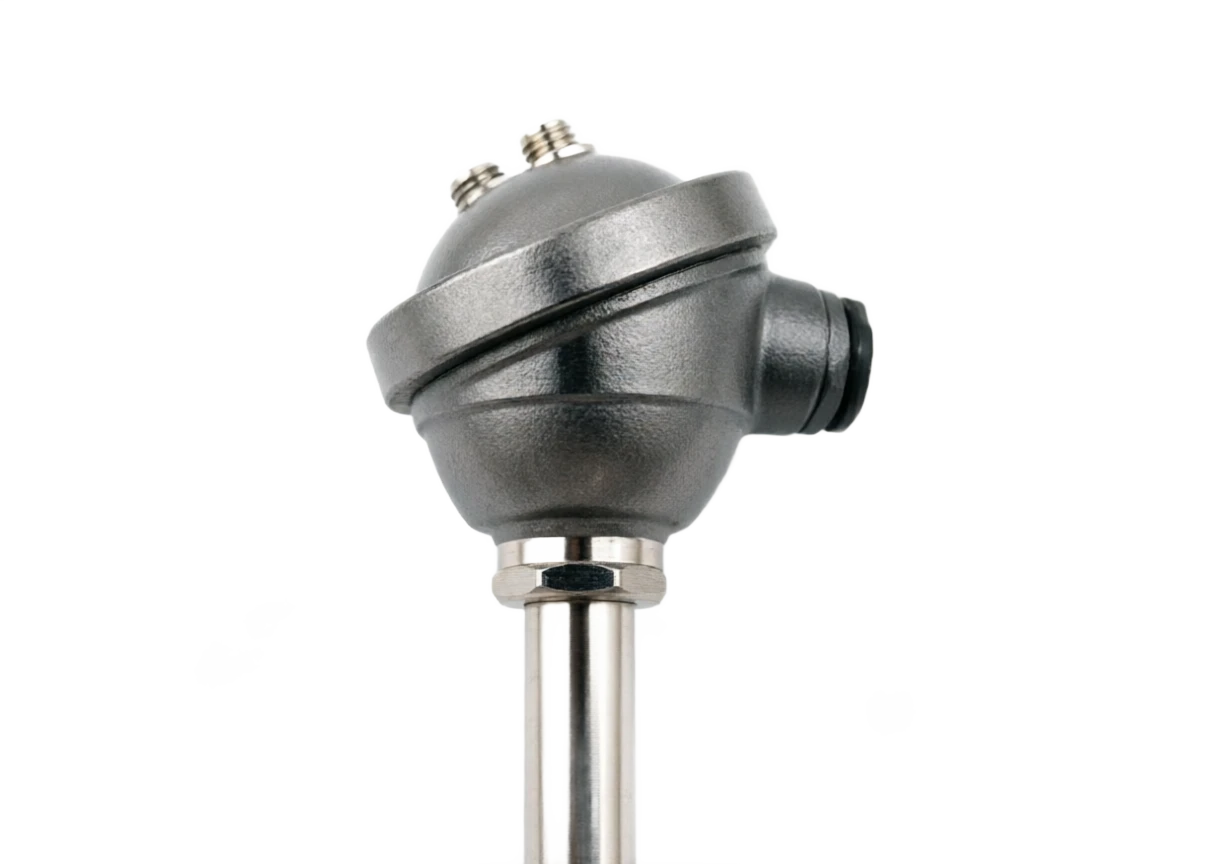
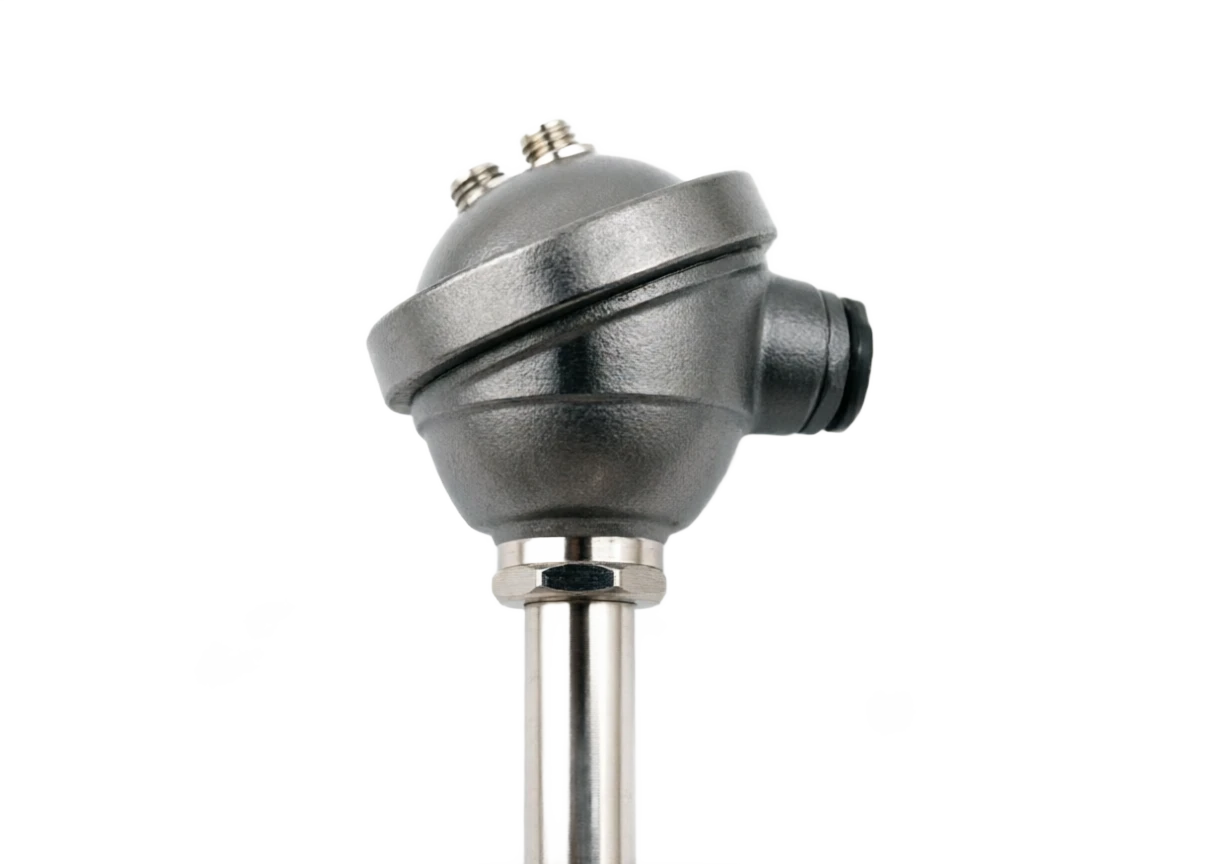
The AH-Corrosion Thermocouple, WR F series is the special structural form of industrial thermoelectric dolls designed to corrosive medium conditions. The core feature is the addition of a corrosive barrier to the metal shield of the conventional thermal electromechanical dolls, which can be either integrated in a liner of fluorinated plastics such as PTFE/F46/PFA or a precious metal shield such as Haq alloy C-276/ titanium/ tantalum/Monnell, completely isolating the sensory plume from the external corrosive media.

It originated from the urgent need for instrument lifetimes in the chlor-alkali, hydrometallurgical and phosphorous refertilizer industries of the 60 era of the last century. The conventional 316L stainless steel shield is corrosively pierced for weeks in media such as hydrochloric acid, wet chlorine gas and rare hydroflonic acid, resulting in double losses in temperature detection failure and parking repair. After the maturity of PTFE spray and liner processes in the 1960s, the preservative thermoelectric dolls gradually became the standard thermometers for chlor-alkali, hydrlurgy, electroplating industries.

Main technical characteristics

IndustrialAnti-

General description · Serial number / CharacteristicsCross-reference
Serial numberCharacteristics
1Strong resistant to corrosion: hydrochloric acid, rare sulphate, wet chlorine gas, rare hydroflouric acid, strong alkyl, organic solvent
2Dual protection: fluorinated plastic liner + metal shield, completely isolated from corrosive medium
3Options for multiple scenarios: PTFE / F46 / PFA / Hax alloy / titanium holster
4Temperature range: -200 ~ + 260 °C (PTFE liner); -200 ~ + 1100 °C (alloy cover)
5Process maturity: Implementation of HG/T 20592 / Hg/T 20593 / ASME B16.5 standard
6Use temperature width: -200 ~ + 260 °C (fluorinated plastics); -200 + 1100 °C (alloys)
7Structural Diversity: Straight / Angular / Cone / Insert / Circulation / Silent
8Sealed: Fluorine rubber O-ring / PTFE filler / graphite filler multiple sealing methods
02

MEASUREMENT PRINCIPLE

Operating principle

2.1 Thermal electrical effects of Sebek

When two different stages of conductor (thermal electrodes A and B) are interconnected to form closed circuits, the heat-power EAB (T, T0) is generated in the circuits at different points of temperature, the size of which depends only on the bipolar material and the temperature of the two ends, not related to the length of the electrode, the size of the condensed circuit. This phenomenon was discovered by the German physicist Sebeck in 1821 and is known as Seebeck Effects, which is the physical basis for thermoelectrical thermometry.

The thermocouple wire pairs follow IEC 60584, including Type K (NiCr–NiSi), N (NiCrSi–NiSi), E (NiCr–CuNi) and J (Fe–CuNi).

Measurement formulaClick to see the big picture
E(t) = c0 + c1·t + c2·t2 + c3·t3 + ... + cn·t^n

Thermal power is associated with temperature through IEC. 60584 Standard scale is established, expression is multiple: E(t)= c0 + c1 ·t + c2 ·t² + c3 ·t³ + … + cn·t^n

2.2 Preserving isolation principles

The core principle is "double isolation plus chemical inertia."

1 PTFE liner: set the entire PTFE tube on the inside of the metal shield and form 1.5 ~ 5 mm Fluorinated plastic liner thick. The PTFE C-F key can be as high as 485 kJ/mol and is highly chemically inert and only eroded by molten alkalin metals, trifluorochloride, high temperature fluorine gas;

Alloys Package

(b) Selecting precious metals such as Haq Alloy/Turium/Turn as a cover, relying on the corrosion resistance of the alloy itself to media erosion;

Complex

(a) Metal exterior + PTFE internal liner/ spray/bread, combined with structural strength and chemical inertity, is the mainstream industrial programme;

sealed quarantine.

The cold end, the wire box, the cable entrances are resealed using the fluoro-rubber O-cycle, PTFE fillings, and the waterproof cable interface (IP67/IP68).

2.3 Cold end compensation and preservation connections

The cold end also requires compensation, but because the trunking box is often outdoor or wet, it must be cosmetic (additional)

Strong plastic / aluminium alloy spray 316L stainless steel) and waterproof cable interfaces:

2.4 Workflow

IndustrialAnti-IndustrialAnti-

Motion of work · Serial number / Compensatory methodCross-reference
Serial numberMethod of compensationRationalePrecision
1Infra-replacement reimbursement for transmitterIntegrated temperature adapter built into Pt100 automatic compensation±0.1 ~ ±0.5 ℃, mainstream
2Compensatory route methodThe same fraction compensation guide extends cold end to the instrument room±1.0~±2.5 ℃
3Software Compensation MethodPLC/DCS Second indemnity± 0.3 °C, system level
4Ice bathing.Cold end in 0 °C ice water mixtureIt's very high. It's for the lab.
StepsActions
①Process temperature → heat conduction through the PTFE liner → metal sheath → MgO → thermocouple hot junction
②Weld point temperature differentials E (T, T0)
③Thermal power follows the dots, the cold end, the corruptionproof wire box, the compensatory guidance.
Motion of work . Step / ActionCross-reference
StepsActions
④Transmitr cold end compensation + linear 4-20 ma/ Hart output
⑤Signal to DCS / PLC display, alarm, record, control
⑥Excess / Breaks / Trigger a malfunction signal, instrumentation to safety
⑦PTFE liner ageing or damage ⁇ Precautionary replacement at 3-5 year cycle
03

PRODUCT STRUCTURE

Product structure

3.1 Main structural components

3.2 Classification of Preservative Forms (5 categories)

3.3 Preservative packaging and appropriate media

IndustrialAnti-IndustrialAnti-

Measurement end (hot)

Functional description: Welding nodes at the top of the dove wire Common mass/specification: arc welding/ laser welding

Insulation.

Functional description: Separating positive and negative poles to avoid short circuits Usual materials/specify: high pure aluminium oxide / mallite porcelain

Ichic.

Functional description: core of Sebek heat generation, commonly used materials/specifications: K/E/J/N ( ⁇ 0.5~3 mm)

Metals protection (Inner Layer)

Functional description: Supporting PTFE liner, mechanical pressure Usual material/specify: 316L / 304 stainless steel

PTFE / F46 liner

Functional description: Chemical inertity separator, strong acid resistance base, common material/specification: PTFE 1.5 ~ 5 mm, F46 1 ~ 3 mm

Metals protection (outside)

Functional description: Anti-mechanical damage, anti- wear and tear, common materials/specification: 316L / Haq alloy C-276

Preserve seals

Functional description: Cold end, cable entrance sealed to protect against tides Common material/specifiers: Fluorine rubber O / PTFE fillout

Corruptorproof connector box

Functional description: Seal protection, easy to maintain Usual material/specifiers: enhanced plastic / aluminium alloy spray / 316L

Connector End

Functional description: Twirling to compensate guidance Usual material/specify: ceramic endpoint / nickel plating copper endpoint

Process connection

Functional description: Installed in pipe / container / device Usual material/specify: Frank / screw / live Frank

Waterproof cable connection

Functional description: Compensatory guidance entrance seals Usual material/specifiers: PG11 / PG13.5 / M20 IP67

Integrated Transmitters (optional)

Functional description: mV ⁇ 4-20 MA signal conversion Usual material/specifier: Hart / MODBUS / PROFIBUS-PA

Forms of corruption

Name of component: Structural characteristics Functional description: application of condition Usual material/specify:

PTFE Total liner

Name of component: Total wall of metal protection burned PTFE liner Functional description: hydrochloric acid, rare sulphate, wet chlorine gas, strong alkali (≤260 ℃)

F46 Liner

Name of component: F46 (polyperfluoroethylene) liner, good processing Functional description: Sulphuric acid, nitrate amalgamated acid, organic solvent (≤200 ℃) Common material/specification:

PFA liner

Name of component: PFA (tetrafluoroethylene-perfluoroalkyl ethylene ether co-polymer) liner Function description: high-purification reagent, semiconductor wet process (≤260 ℃) Usual material/specification:

Alloy cover.

Name of component: Haq alloy C-276 / titanium / tantalum / Monar protection device Functional description: High temperature and strong corrosive (≤1100 ℃) Usual material/specifier:

Complex

Name of component: Metals protection + PTFE inner liner + Triple protection for anti-corrupt coating Functional description: ultra-heavy condition: Enriched hydrochloric acid, wet chlorine gas, organic solvent Common material/specifier:

Serial number

Name of component: protective/sline material Functional description: use of temperature Usage of materials/specify: application medium

PTFE liner

Functional description: 200 ~ + 260 °C Common material/specifications: hydrochloric acid, rare sulphate, hydroflouric acid, wet chlorine gas, strong alkalin, organic solvent

F46 Liner

Use temperature: 200 ~ +200 ℃ Applicable media: sulphuric acid, nitrate, mixed acid, alcohol, ketone

PFA liner

Use temperature: 200 ~ +260 ℃ Application medium: high purity reagent, superpurified water, semiconductor CMP liquid

Haq Alloy C-276

Use temperature: 200 ~ +1100 ℃ Application media: Enriched hydrochloric acid, wet chlorine gas, hypochloric acid, sulphuric acid

Haq Alloy B-2

Use temperature: 200 ~ + 900 °C for media applications: pure hydrochloric acid, rare sulphate, phosphate

titanium alloy TA2 / TC4

Use temperature: ~ 200 + 400 °C for the mediums applicable: wet chlorine gas, nitrate, acetate, ammonium chloride, strong alkali

tantalum Ta

Use temperature: 36 ~ + 400 °C Applicable media: Wang water, hydrates, nitrite, phosphate, sulphuric acid

Monel 400

Use of temperature: 200 ~ +500 ℃ Applicable media: hydrofluoro acid, hydrofluorocarbons, seawater, rare sulphate

316L + coating

Use temperature: 200 ~ +600 ℃ Application medium: medium corrosive: rare acid, rare base, organic solvent

04

TECHNICAL GUIDE

Advantages and disadvantages

IndustrialAnti-

Product advantages

Strong for corruption.

Specific: PTFE / Haps alloy / titanium / tantalum can withstand almost all industrial acid, 316L unmeasured corrosive conditions

Options

Specific: PTFE / F46 / PFA / Haps alloy / titanium / tantalum options, available for combination selection by medium, temperature, cost

Temperature range wide

Specific: PTFE class -200 ~ +260 ℃; Haq alloy type -200 ~ +1100 ℃, covering most industrial corrosive conditions

Long maintenance period

Specific: PTFE liner life of 3-5 years (for strong corrosive work) and alloy cover life of 5-10 years

Process maturity

Specification: 50+ years of high standardization in chlor-alkali, phosphorus refertilization, hydrometallurgy applications

Structural diversification

Specific: Straight / Angular / Convey / Circulation / Silent / Carpentry, fit for various packaging shapes

Integrated Transport

Specific: Integration with Hart / MODBUS / PROFIBUS to simplify the wiring to improve reliability

Seal secure.

Specific: Fluorine rubber O-cycle + PTFE filler + waterproof cable interface, IP67/IP68 protected outdoor use

Disadvantages and use restrictions

Higher cost

Response: PTFE liner complex, Haq alloy / titanium / tantalum material expensive, unit price 3-10 times more than a packaged thermoelectric doll

Temperature limit (lined)

Response: ≤ 260 ℃ in PTFE / F46 / PFA liner, after which the alloy cover is changed

PTFE Aging Equity

Response: PTFE will age and make it more fragile in high temperature (>200°C), radiation, organic solvents long-term impregnation; preventive replacement will be required for 3-5 year cycles

Weak mechanical strength.

Response: the lining is not resilient to severe mechanical shocks; the transport installation is required to avoid hard-core collisions; the proposed protective tube is added

Response time is slightly slower

Response: PTFE transport coefficients are 0.25 W/(m K) 30 ~ 100 times slower than pure metals; alloys are required for strong response situations

No contact with high temperature melting, alkalin metal.

Response: PTFE will be eroded by sodium, potassium, fluorine; such conditions will require alloying condoms

05

APPLICATIONS

Application area

Using the dual protection of PTFE liners and alloys, it is widely applied to the following corrosive industrial scene: Industrial Anti-

Chlor-alkali industry

Typical application scenarios: electrolytic cells, chlor gas wash towers, hydrochloric acid absorbent towers, rare sulfate storage tanks Selector: PTFE liner + Haq alloy, type K/E, ⁇ 16/ ⁇ 20

Sulphur acid / phosphorus re-fertilization

Typical application scenario: rare sulphate storage tanks, phosphate response Zi, wet phosphate extraction slots Selected element: F46 liner + Hapsy Alloy B-2, K/N

Hydrometallurgical

Typical application scenarios: leaching, reservoir, electrolytic sedimentation, extraction towers Selected elements: PTFE / PFA liner, K/E type, circulation structure

Pesticides / dyes

Typical application scenarios: sulfide response, nitrogenic response, organic solvent storage tanks Selected elements: PTFE / F46 liner, K/ E, horn / straight

Medicine / pesticide intermediate

Typical application scenario: chlorinated, fluorinated, hydroflonic acid storage tanks

Plasma / Surface Treatment

Typical application scenarios: chrome plating, nickel plating, acid sluice, passivation cells Selected elements: PTFE / titanium protection, T/K type, leaching

Frozen devulcanization (FGD)

Typical application scenario: absorbent towers, plasma cycling pumps, gypsum boxes. Select point: PTFE liner + Haps alloy, type K/E

Semiconductor / Panel

Typical application scenario: wet-carving tanks, CMP grinding fluid, superpurified water storage tanks Select point: PFA liner (high purity requirement), K/E/T type

Wastewater treatment

Typical application scenarios: Central and Slurry, Condensation, Slut digestion, Acid Waste Water Regulating Pools Selected elements: PTFE liner + 316L, K/E type, input

Ocean/ Salting

Typical application scenario: desalination of seawater, evaporation of halogenated water, mannitro crystallizers Selectorial elements: titanium / Monnar, K/T/E

06

TECHNICAL SPECIFICATIONS

Technical Parameter Table

6.1 Overall technical indicators

6.2 Combined comparison of different preservative materials

IndustrialAnti-

6.3 Pressure resistance level (in French/ screw size)

IndustrialAnti-

  1. 01

    Select Table

Model Naming Rules (cf. JB/T 9238)

W (temperature instrumentation) R (thermal electrode) F (reserve) □ (specific)- □ (outside)- □ (porservation form)- □ (insert depth)- □ (process connection)- □ (output)

7.1 Selecting by Media

7.2. Type by temperature and pressure

7.3 Type by Output

IndustrialAnti-

7.4 Type by industry

IndustrialAnti-

  1. 01

    Selection Guide

8.1 Selection Processes

the selection shall be determined in the following order:

8.2 Selecting with a normal assembly / accelerator thermoelectric doll

8.3 Preservative medium - material quickness survey

hydrochloric acid (at any concentration + at any temperature)

Preferred PTFE liner, secondary HCR C-276, disabled 316L / 304;

Industrial Anti-2 Sulphuric acid (fresh) ≤70% ): F46 Liner / Hapsy Alloy B-2 ; Enriched Sulphuric acid (>90%): carbon steel is selected using 316 L (carbon steel is more economical) at short notice;

Nitrate (at any concentration)

Titanium TA2 / F46 liner; high temperature enriched nitrate: tantalum ta;

Hydrofluoroacid acid (at any concentration)

Monel / PTFE liner; glass, silicon-containing materials are disabled;

Wet chlorine

titanium TA2 (preferred)/PTFE liner; 316L fast-colored in wet chlorine gas;

6 Sodium hydroxide (ODP) ≤50% )

Nickel / PTFE liner; HYLBL: pure nickel / infranickel alloys;

Organic solvents

PTFE / F46 liner; ester / ester / alcohol / hydrocarbons are largely non-corrosive;

8 Royal water (alphate + nitrate) 1

3) tantalum Ta (only reliable); prohibition of all stainless steel;

Seawater / Halogen

titanium TA2 / Monnar; 316L is available but at high risk of erosion;

Plutonium reagent / Semiconductor

CDA class PFA liner, metal ion leaching < 1 ppb.

8.4 Installations

PTFE liner to avoid hard-pression, shock, squeeze and use protective tubes during transport;

The installation of a francile bolt shall be balanced and secured to avoid the fragmentation of the liner ' s single-side receptor;

3 Measurement end leachation depth ≥ 50 mm , PTFE liner slows the heat more deeply;

Avoiding chronic presence at the interface of liquid gas in the medium (dry and wet inter-interoperation acceleration liner ageing);

5 The switch box and cable connection must be made IP67 and above, humid environment recommended IP68 ;

6 High Temperatures ( >200 ℃ (b) Work priority is given to the alloy cover type, which is exacerbated by the ageing of the PTFE liner;

tantalum amplifiers are strictly prohibited from exposure to hydroflutic acid and pyrotransmol nitrate (with free fluoride);

8 Corrosive engineering proposal for the establishment of spare parts storage and preventive replacement cycles 3 ~ 5 (a) Years;

9 Appearance check of the liner at stoppage and thickness if necessary (PTFE thickness decline) 30% It has to be replaced.

8.5 Maintenance element

— End of document —

Technical Table of Parameters . Parameter Item / Parameter ValueCross-reference
Parameter ItemParameter Value
Product implementation standardsIEC 60584 / GB/T 18404 / JB/T 9238 / HG/T 20592
Sensor typeK/ N/ E/ J/ T (recommended K/ E for corrosion resistant adaptation)
Temperature range200 ~ +260 ℃ (PTFE / F46 / PFA liner); -200 ~ +1100 ℃ (Alloy protection)
Accuracy classI (±0.4% ⁇ t ⁇ or ±1.5 ℃); II (±0.75% ⁇ t ⁇ or ±2.5 ℃)
Insulation resistance≥ 1000 M times; high temperature (maximum working temperature) ≥ 5 M times
Metals, protective material304 / 316 L / Hapsy Alloy C-276/ titanium TA2/ titanium TC4 / tantalum Ta/ Monnar
Liner materialPTFE (Pyrotetrafluoroethylene) / F46 / PFA / ETFE
Threads of the linerPTFE 1.5~5 mm;F46 1~3 mm;PFA 1~3 mm
Liner ProcessWhole sinter (maximum temperature 260 ℃) / Spray (≤180 ℃) / Bread (≤200 ℃)
Pressure ratingConstant pressure / 1.0 MPa / 1.6 MPa / 2.5 MPa / 4.0 MPa / 6.4 MPa (at Frank level)
Vibration resistance10~500 Hz / 2~5 g(IEC 60068-2-6)
Ingress protectionPIP65; waterproof cable connection IP67/IP68
Line Modend-line/ rd-line/ th-line
Cold junction compensationInline Pt100 / Soft Compensation / Ice Bathing
Output signalmV / 4-20 mA / Hart / MODBUS / PROFIBUS-PA / Foundation Fieldbus
Use temperature (wirebox)40 ~ + 85 °C (enhanced plastics); -40 ~ + 120 °C (316 L)
Relative Humidity5% ~ 95% RH, no condensation
Storage temperature40 ~ +85 ℃, dry and ventilated
General Insert Depth500 / 1000 / 1500 / 2000 / 3000 / 5000 mm or custom
Process connectionFranc (HG/T 20592 / ASME B16.5)/ screw / cascading / living flanc
Life expectancyPTFE liners 3-5 years; alloys 5-10 years; decay by medium and temperature
Weight (reference)⁇ 16/1000 mm approximately 1.5 kg; ⁇ 20/1000 mm approximately 2.5 kg (lined)
Preservative materialMaximum temperatureSuitable mediaCostLife expectancy
PTFE liner260 ℃Strong acid alkalin, organic solvent, wet chlorine gasMedium3-5 years
F46 Liner200 ℃Sulphur acid, nitrate, ol, ketoneMedium2~4 years
PFA liner260 ℃High purity reagents, semiconductor CMPMedium High4-6 years
Technical parameter table · Preservative material / maximum temperatureCross-reference
Preservative materialMaximum temperatureSuitable mediaCostLife expectancy
Haq Alloy C-2761100 ℃Enriched hydrochloric acid, wet chlorine gas, mixed acidHigh5-10 years
Haq Alloy B-2900 ℃Pure hydrochloric acid, phosphateHigh5-10 years
Titanium Alloy TA2400 ℃Wet chlorine, nitrate, alkalin, seawaterMedium High5-8 years
tantalum Ta400 ℃Wang water, strong hydrochloric acid, strong sulphuric acidVery high.8-15 years
Monel.500 ℃Hydrofluoro acid, seawater, rare sulphateMedium High5-8 years
Flange specificationPN6PN10PN16PN25PN40
DN151.8 MPa2.0 MPa2.5 MPa4.0 MPa6.4 MPa
DN251.8 MPa2.0 MPa2.5 MPa4.0 MPa6.4 MPa
DN501.8 MPa2.0 MPa2.5 MPa4.0 MPa6.4 MPa
DN801.8 MPa2.0 MPa2.5 MPa4.0 MPa6.4 MPa
DN1001.8 MPa2.0 MPa2.5 MPa4.0 MPa6.4 MPa
Technical parameter table · Media type / Recommended embalming formCross-reference
Media TypeRecommended forms of corruptionRecommended fraction numberOuter
hydrochloric acid (≤30%)PTFE liner / Hapsy Alloy C-276K / EΦ16 / Φ20
Sulphuric acid (≤70%)F46 Liner / Hapsy Alloy B-2K / EΦ16 / Φ20
Nitrate (≤65%)titanium TA2 / F46 linerK / EΦ16 / Φ20
Hydrofluoro acid (≤40%)Monnar / PTFE linerK / EΦ16 / Φ20
Wet chlorine gastitanium TA2 / PTFE linerK / EΦ16 / Φ20
Sodium hydroxide (≤50%)Nickel / PTFE linerK / EΦ16 / Φ20
Organic solventsPTFE / F46 linerK / EΦ16 / Φ20
Seawater / Halogentitanium TA2 / MonnarK / TΦ16 / Φ20
High purity reagentsPFA liner (high purity level)K / E / TΦ12 / Φ16
Wang Water / Enriched hydrochloric acidtantalum Ta (specialized)K / EΦ16 / Φ20
Work temperatureWork stress.Recommended forms of corruptionRecommended fraction number
200 ~ 0 ℃Constant pressure ~4.0 MPaPTFE liner / titanium TA2T / E / K
0 ~ 200 ℃Constant pressure ~6.4 MPaPTFE / F46 / Haq AlloyK / E / J
200 ~ 260 ℃Constant pressure ~4.0 MPaPTFE / PFA / Hapsy AlloyK / E
260 ~ 400 ℃Constant pressure ~2.5 MPaHaq Alloy C-276/ titanium TA2K / N
400 ~ 600 ℃Constant pressure ~1.6 MPaHaq Alloy C-276/ MonnarK / N
600 ~ 1100 ℃Constant pressureHaq Alloy C-276K / N / S
Output MethodApply sceneConnectSupporting instrument
mV Direct OutputShort distance, temporary measurementsLine 2Numeric / DCS mV card
4-20 MA Two-line SystemMainstream industrial sitesLine 2DCS / Loger
4-20 mA + HartRemote Grouping / ParameterisationLine 2Hart Handheld
MODBUS RTUMultiple instrument network / RS-485Line 4PLC / Industrial gateway
Technical Parameter Table · Output Method / Applies sceneCross-reference
Output MethodApply sceneConnectSupporting instrument
PROFIBUS-PAChemical's Essentially Safe Integration2 busDCS / Asset Management System
IndustriesTypical mediumRecommended ModelCondoms/lines
Chlor-alkaliWet chlorine, hydrochloric acid, base baseWRFK2-PTFE- ⁇ 16-KPTFE + 316L
Phosphorus retuffRare phosphate, rare sulphate, fluorine silicateWRFK2-F46- ⁇ 16-KF46 + Hapsy Alloy
HydrometallurgicalRare sulphate, leachate, electrocutionWRFE2-PTFE- ⁇ 16-EPTFE + Hapsy Alloy
PlatinumChromium plating, nickel plating, acid washingWRFT2-TA2- ⁇ 16-TTitanium TA2
Frozen devulcanizationlimestone slurry, rare sulphateWRFK2-PTFE- ⁇ 16-KPTFE + Hapsy Alloy
SemiconductorCMP liquid, diluted HF, super-purified waterWRFT2-PFA- ⁇ 12-TPFA Purity
PesticidesOrganic solvents, sulfideWRFK2-PTFE- ⁇ 16-KPTFE + 316L
Medical intermediatesChlorinated, fluorinated, organic solventsWRFE2-Monel- ⁇ 16-EMonnell.
Technical parameter table · Step / ConsiderationsCross-reference
StepsConsiderationsDecision points
①Media TypeAcid / base / salt / organic solvent / wet gas / seawater, determining preservative material
②Media concentration and temperatureStrong acid alkalis: PTFE / Haps alloy; high temperature: alloy holstery
③Work stress.Constant pressure: liner type; medium pressure: Franc grade + double liner
④Pureness of media requirementsHigh purity reagent / Semiconductor: PFA liner; common chemical: PTFE liner
⑤Temperature range< 260 °C: PTFE / F46 / PFA liner; > 260 °C: alloys
⑥Response timeHigh response requirement: alloy cover; general response: liner
⑦Insertion depthPackaging 1 / 3 height; Pipe ≥ 1 / 3 diameter; location of the centre of the tank
⑧Process connectionFrank/ screw / carp/ condom Franc; by process and pressure
⑨Output MethodmV / 4-20 maA / Hart / bus; press DCS interface
⑩Maintenance cyclePTFE liners 3-5 years; alloys 5-10 years; establishment of preventive replacement plan
ComparativePreserve thermal electrocutionA packaged thermoelectric doll.- Thermal dolls.
Preservative capacityPTFE / Hapsy Alloy / titanium / tantalum, strong acid alkali316L General conditions, impatiable, strong acid base316L / Inconel common corrosive, strong corrosive need to be fined
Temperature range200 ~ +1100 ℃ (conservative material)200 ~ +1800 ℃200 ~ +1300 ℃
Response speedAlloys are faster; PTFE is slowerMedium ( ⁇ 16~25)Quick (0.5 ~ 8 suit)
Pressure resistanceHighest 6.4 MPa by FrankGeneral 10-30 MPaAffordable 50 MPa+
Life expectancyPTFE 3 ~ 5 years; alloy 5 ~ 10 years2 ~ 5 years (conventional)5-10 years (sealed structural advantage)
CostHigher (PTFE / Hax Alloy)Low (standardized products)Medium height (integrated lifting process)
ConstructionStraight/ corner/ cone/ circulation/ static pressure/ carcassStraight / Angle / Cone / Multit/ Active FrankHead opening / shelling / insulation / flat cone, bendable
Apply sceneStrong acid / strong alkali / wet chlorine / organic solventGeneral IndustryA narrow space, bending paths, high pressure, vibrations.
Technical parameter table · Periodic / Maintenance contentCross-reference
CycleMaintain ContentCriteria for judgement
Each shiftInspection: Indicator temperature, record curveA deviation from historical values ⁇ ±2%
MonthlyThe wire box is sealed, waterproof, ground-checked.No water, no no movement.
QuarterlyInsulation resistance test (500 V mega-e Table)≥ 1000 M times
BiannualVerify: On-site vs./ Standard BodingI Within the grant
AnnualAppearance examination (heat, crack, colour) in the embalming linerPTFE liner thickness decline < 20%
Life expectancy by life expectancyPTFE liner replaced for 3-5 years; alloys replaced as requiredBy medium and temperature decay