PRODUCT TECHNOLOGY

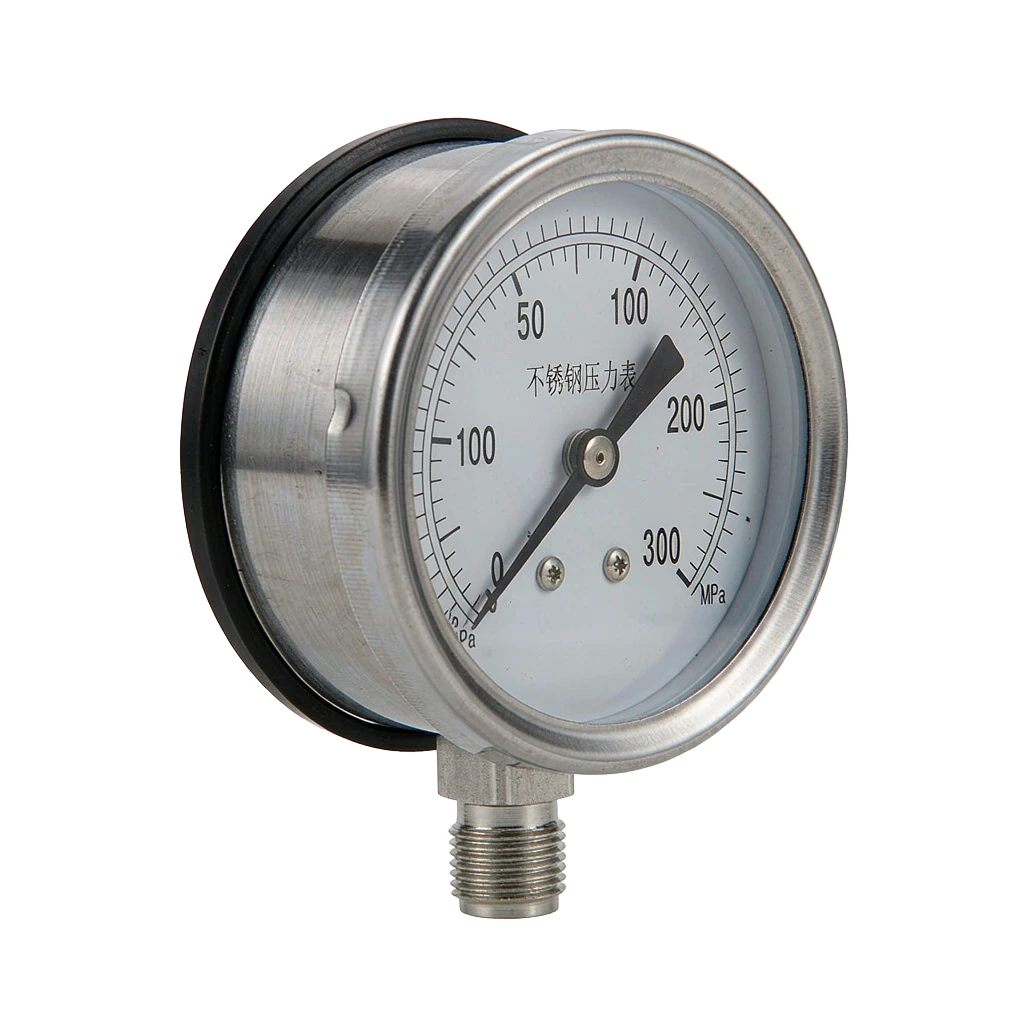
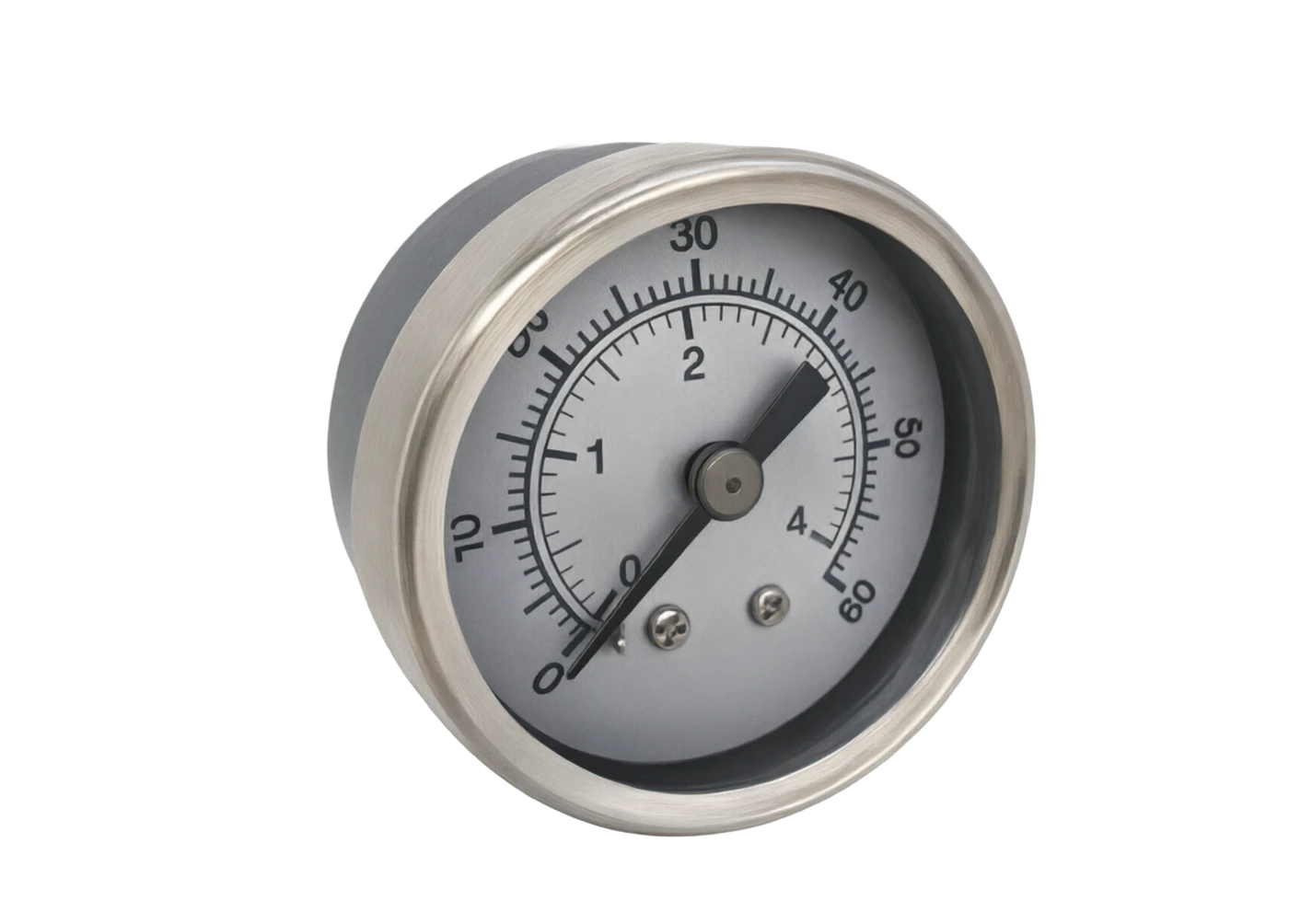
The stainless steel pressure sheet.

Operating principle

The stainless steel pressure sheet.

The measurement principle is fully consistent with the normal pressure table (Boden tube pressure table) - based on the principle of receptivity of the elastic element, distinguishing between seismic work mechanics only: the char is filled with glycerine/silic oil, liquid blocker absorbs vibration energy, stabilizes the pointer, lubrication cores, and the charge is separated from the corrosive environment by the inside of the surface and the combination of "shock resistance + preservation" effects; Use pressure rules: 3/4 for static pressure to measure upper limit values and 2/3 for the transfer load to measure upper limit (in strict control consistent with the principle of 2/3 ~1/2 for the normal pressure table).

  1. 01

    Sensitive elements are stainless steel waved tubes (C, transected ellipses), one end is connected to the process medium (fixed end) and the other end is closed (free end);

  2. 02

    The measured medium pressure is working on the internal cavity of the boden tube, with the elliptical cross-section circled and the wall generating a revolving stress;

  3. 03

    The ring force stretches the C-shaped tube outward and produces a shift of the free end (2~5mm);

  4. 04

    (a) The transposition of the rods and the twirling of the stainless steel core (shoring gear-centre gear) to the pointer rotation angle (approximately 270° tectonic disc);

Support for stainless steel pressure table selection

Provide survey missions, media and installation conditions and obtain product configuration advice.

Contact us
A stainless steel pressure table.

TECHNOLOGY & APPLICATION

Understand the principles, the exact selection.

From measurement principles to field applications, the technical characteristics and selection elements of stainless steel pressure sheets are understood.

01

MEASUREMENT PRINCIPLE

Measurement principle

The measurements are fully consistent with the normal pressure table (Boden tube pressure table) - based on the principle of elastic element receptor deformation, with the distinction only

It's the material upgrade that brings in corrosive resistance. Work process:

  1. 01

    Sensitive elements are stainless steel waved tubes (C, transected ellipses), one end is connected to the process medium (fixed end) and the other end is closed (free end);

  2. 02

    The measured medium pressure is working on the internal cavity of the boden tube, with the elliptical cross-section circled and the wall generating a revolving stress;

  3. 03

    The ring force stretches the C-shaped tube outward and produces a shift of the free end (2~5mm);

  4. 04

    (a) The transposition of the rods and the twirling of the stainless steel core (shoring gear-centre gear) to the pointer rotation angle (approximately 270° tectonic disc);

  5. 05

    Pressure corresponds to the corner of the pointer, with direct reading of the dashboard; Resilient repositioning of spring tubes after unpressure, pointer returns zero (wire removes teeth). Key characteristics description range-to-place transfer: low pressure band approximate linearity, and full range linearity in precision design meets the 1.0 ~2.5 level accuracy; (a) Measurement baseline: surface pressure; Vacuum - 0.1-0 MPa, pressure vacuum - 0.1-2.4 MPa;

Quick-shock-resistant working machine

(b) Filled in glycerine/silic oil, absorbing vibration energy by liquid blockers, stabilizing the pointer, lubricating core, and placing the inside cavity in isolation from the corrosive environment with the dual effect of "shock resistant + preservation";

Use pressure rules

The static pressure is used to measure the upper limit 3/4 and the transient load to measure the upper limit 2/3 (consistent with the principle of 2/3 ~1/2 of the normal pressure table).

02

PRODUCT STRUCTURE

Structure

2.1 Basic structures (total stainless steel configuration)

2.3 Series specifications

Common diameter 60, 100, 150, 200; basic YB (total stainless steel), suffix B is usually a seismic/filled liquid type.

Connect (direct contact mode)

Material/description: 304SS / 316SS, arc welding with clinker arc, no copper

Spring tube (Bordone tube)

Material/descripts: 316 LSS (mainstream, best for erosion resistance); 304 (economic); historical card Nos. 1Cr18Ni9Ti, 0Cr18Ni12Mo2Ti

Machine core

Materials/descripts: 304SS / 316SS (normally copper alloy, all copper removed from stainless steel table)

Puller/stealer

Materials/description: stainless steel

Shell

Material/descript: 304SS / 316SS, shell construction, release after partitioning (release pressure when the boden tube breaks)

Watch glass

Materials/description: organic glass, secure double glass

Pointer

Materials/description: stainless steel (general)

Seal

Materials/descriptions: trimonitrile, tfloro (PTFE), fluorine rubber

Filling fluid (shock resistant)

Materials/description: 98% glycerine (conventional), silicate oil (temperature/food resistance), fluorine (environmental options for strong corrosive)

Interface screw

Materials/descripts: M14x1.5, M20x1.5, G1/4, G1/2, ZG, 1/2 NPT, etc.

Classification

Materials/description: Type Description

Press the shock.

Materials/description: normal type of shell unfilled

Material/description: Seismic Resisting (YB-B/YB) Console and surface arc welding, shell-filled silicon oil, seismic level V.H.4

Press installation

Materials/descripts: Unlimited / Axes Uncorbed (Z) / Rim (T/TQ/ZQ/ZT)/ Carp (U) with normal pressure table

Press the shell to be fully secured.

Material/description: Safe shell tectonics + release of excretion on the back of the shell to prevent frontal glass damage

Special coating

Materials/description: shell spray PTFE Polytetrafluoroethylene (PTFE)

03

TECHNICAL GUIDE

Advantages and disadvantages

3.1 Advantages

Strong corrosive (core advantage)

The contact media are partially copper-free, 316L spring tube +304/316 links are long-term resistant to weak acid, weak alkalis, salts, low-corrosive media with chlorine ion and oceanic atmosphere, and to detect and detect the erosion of the media and the environment;

Better healthy.

(a) The stainless steel surface is clean, clean of copper ion contamination, suitable for the medium cleanliness required by industries such as food, medicine, etc.;

Precision better than normal table

(a) Levels 1.0 (general table, level 1.6/2.5) while maintaining the options for levels 1.6, 2.5;

It's both seismic and seismic.

(a) Filled with acoustic welds, which are completely sealed, and are suitable for the site of the industrial mine (earthquake-resistant V.H.4) with a large vibration and corrosive media;

Use temperature range

-40 ~ 200℃ (part of model), better than normal table (≤70 ~ 150℃);

Full seal, high protection level.

(a) Earthquake-resistant IP64, which is resistant to water spatters, dust, wet heat;

Long life, good stability.

(a) stainless steel elastic elements resistant to fatigue, stainless erosion and long-term drift;

Security structures

(b) Safety shell + excretion partition, when the boden tube breaks, the medium releases backwards and protects the operator;

No power, no security.

Pure mechanical structure, applicable to blast-proof areas (general non-electric instrumentation);

Ocean/outdoor adaptation

The best option for high-salt-mog environments such as marine platforms, ships, drilling wells, etc.

3.2 Disadvantages

Prices above normal pressure table

(b) The cost of stainless steel materials and processing is high, at a price of about 2 ~ 5 times the normal table for copper cores;

Not for a Noxidation Media

Not applicable to external strong oxides such as chlorine, nitrate and perchloride (stainless steel is subject to a point/resort corrosion in such media, with a change of diaphragm pyramid pressure table or Haps alloy/tonic material);

High pressure scale limited

(a) The upper limit of the conventional mass range of stainless steel boding tubes 60~160 MPa (viewer), which still requires a special table for alloy steel at hyper-high pressure;

Still mechanically in place.

(b) No remote transmission, no access to DCS/PLC (requires a remote change of pressure transmitter or electrical point type);

Limited precision limit

Level 1.0 is the upper limit, and precision pressure sheets/digital pressureometers are still required for precision verification;

Temperature Additional Error exists

About 0.4%/10°C at 20 ± 5°C, and the high temperature medium still needs a rainbow straw/dispersor;

Flexible after-effects and mechanical wear

Long-term use is still subject to periodic review (not exceeding 1 years);

Seismic-resistant charge maintenance

The charge sheet is subject to a possible mistification at high temperatures and increased viscosity at low temperatures, with an impact indicator for the extreme temperature to be replaced by silican oil/fluorine;

The molybdenum difference needs to be noted.

304 and 316 / 316 L. Different levels of tolerance, with the wrong mass (e.g. chlorine medium) 304 (c) The early corrosion of the carbide;

Weight greater than normal

stainless steel density is higher than copper alloy and the surface is slightly heavier (with a frame carrying consideration).

04

APPLICATIONS

Application area

Not applicable

(b) The environment of strong oxides (re-demonstration/special alloys) such as chlorine, nitrate and perchloride; (a) A high concentration of alkaline strong acid (modified diaphragm pressure table + PTFE diaphragm); Direct contact with high temperature media (wine-breathers/dispersors); (b) The need to teleport control (reform pressure transmitters); High precision verification (re-engineering/digital pressureometers).

Chemical/refining oil

Typical applications: weak corrosive chemical medium, acid-alkali solution (recent), pump export of salt water and pipe pressure monitoring

Food/beverages

Typical applications: process water, CIP system, vapour (wine-blowing tubes), monitoring of medium pressure such as sugar fluid (stainless steel meets sanitary requirements)

Medicine/biological

Typical applications: fermentation tanks, pure water systems, pharmacological pipe pressure monitoring

Marine engineering/ships

Typical applications: Marine oil platforms, drilling platforms, saline-mog environmental pressure measurements (advanced scene) in ship-dipsage systems

Water treatment/environmental protection

Typical applications: sewage, drug-added systems, desalination of seawater, pool circulation water pressure monitoring

Heat supply/refrigeration

Typical applications: heat exchange stations, frozen water, cooling water systems (results-proofing conditions)

Outdoor/honorful environment

Typical application: sites of severe environmental corrosion, such as high temperature, high humidity, dust and rain (stunny-resistant seal)

05

TECHNICAL SPECIFICATIONS

Technical Parameter Table

Technical parameter table · Item / ParametersCross-reference
ItemParameters
Measurement principleResilient deformation of stainless steel springs (Boden tube) and mechanical magnification pointer indicator
Measure ObjectNon-corrosive liquids, gases, vapours (weak corrosives, salt, wet thermal environment) for stainless steel
Model SeriesYB (total stainless steel pressure table); YB-B/shock resistant (filled oil)
Normal diameterΦ60、Φ100、Φ150、Φ200
Accuracy classLevels 1.0, 1.6, 2.5
Measurement range (pressure)0~0.1 to 0~60MPa (conventional), selected to 0~160 MPa
Measurement range (vacuity)0.1~0MPa; Pressure vacuum - 0.1~2.4MPa
Precise material316 LSS (mainstream); SUS304; 1cr18Ni9Ti / 0cr18Ni12Mo2Ti (old card)
Console/core/shell materialConsole: 304/316SS; core: 304/316SS; shell: 304/316SS
Interface screwM14×1.5、M20×1.5、G1/4、G1/2、ZG、1/2 NPT
Media/User of Temperature40°C ~ 200°C (vision type); charged environmental temperature - 25~70°C, unfilled - 40~70°C
Use pressure rulesQuiet pressure, ⁇ Measurement ceiling 3 / 4 ;convert load ⁇ measures ceiling 2 / 3
Earthquake-resistant levelV.H.4 (shock resistant)
Ingress protectionQuestilization IP64
Filling fluid (shock resistant)Glycerine 98% (conventional), silicon, fluorine (optional)
Seal materialTrimonitrile, TFL, fluorine
Watch glassOrganic glass, double glass with safety
Security structuresSafe shell construction, release after partitioning
MountingRadial/axis/side/cardium; vertical (reverse) installation as main
Applicable standardsGB/T 1226-2010 and all stainless steel pressure sheet product standards; inspection protocol JJG 52
Technical Parameter Table . Model / TablesCross-reference
ModelTable PathPrecisionRange (MPa)Connection thread
YB-60BΦ60Level 2.50~0.1~25;-0.1~0~2.4M14×1.5
YB-100BΦ100Level 1.60~0.1~60 (part to 100/160)M20×1.5
YB-150BΦ150Level 1.60~0.1~60M20×1.5
YB-200Φ200Level 1.60~0.1~60M20×1.5
06

SELECTION GUIDE

Select Table

6.1 Parameters to be provided for the selection (orders required)

6.5 Example of Model Preparation

Example:

YB-100B = All stainless steel shock-resistant pressure table, 100 ⁇ radial, 1.6 grade, 316 L Boden tube, silic oil, M20 x 1.5; YB-150 = all stainless steel normal pressure table, 150 ⁇ .

6.6 Type and use elements added

  1. 01

    The material match is the first priority.

    (c) Identification of the intermediate components followed by selection of 304 or 316 L; chlorination media strictly forbidden 304 (point erosion risk); and direct modification of the diaphragm table by the powerful oxidation medium, which is not "all-powerproof" for stainless steel;

  2. 02

    The rules of the quantum course

    (b) Silent pressure 3/4, mutation 2/3, floor 1/3, and a greater range than a range, which cannot be run permanently;

  3. 03

    High temperature medium protection

    >150°C medium (e.g. steam) with a rainbow straw/scatterer and checking the temperature tolerance level of the seal;

  4. 04

    Filling media selection

    Conventional glycerine; high temperature silicon oil; highly corrosive environmental shell-based fluorine; food medicine-based food grade glycerine and specified;

  5. 05

    Validation Management

    Also mandatory measuring devices, usually not exceeding 1 years and recommended in corrosive media settings to be shortened to 6 months;

  6. 06

    Installation Code

    (b) Vertically installed, equipped with three valves up to the limit; avoiding direct transmission of vibrations (shock resistant still recommended for the frame to be fixed); and installation of a priority full-seat seismically sealed outdoors;

  7. 07

    Order notes

    Special screws, PTFE coatings, secure double glass, and the non-standard scale of the scale, etc., must be indicated in the contract.

Selecting table . Serial number / ParametersCross-reference
Serial numberParametersDescription/unit
1Name of the detected medium and corrosivityLiquid/gas/gas; medium composition (CCP, alkali concentration) determines whether 304 or 316 L
2Pressure rangeMaximum, commonly used pressure (MPa); positive/negative/negative
3Process medium temperatureTemperature or high temperature (decision whether to add a rainbow straw/dispersor and seal material)
4Environmental conditionsVibration (decision shock resistance), salt fog/wett (decision surface crust material and coating), dust (protection level)
5Install and ReadTable path, installation form (reverse/axis/side), screw specification
6Precision requirements1.0 / 1.6 / 2.5 Level
7Special requirementsFilling, filling types (glycerine/silicate/fluorine), PTFE coating, safety glass
Media/EnvironmentRecommended material
Common weakness, erosion, wet heat304 SS (economic)
Chlorine-containing ion media, ocean salt fog, food medicine316/316 LSS (recommended)
Strong oxidizers such as chlorine, nitrate, peroxideNo stainless steel table ⁇ diaphragm pressure table (PTFE diaphragm/Hallow alloy/ titanium)
Upgrade protection against environmental corrosionShell sprayer PTFE coating
ConditionsType of recommendation
The medium is corrosive, and the environment is stable.YB Normal
Media corrosive + Vibration on site (pump/cressor exit)YB earthquake resistant (silon oil, anti-shock V.H.4)
High temperature environment + VibrationSeismic-resistant silicon oil (high temperature smog of glycerine)
Food/Lat temperature• Seismic-resistant glycerine (food class)/silicate oil (stable at low temperature);
ItemRule
Steady pressure.Maximum working pressure ⁇ Full mass range 3 / 4 (static pressure rule)
Conversation/pulse load⁇ Full Mass Range 2 / 3
The pressure limit.⁇ Full Mass Range 1 / 3
General monitoring100, 1.6 (best value for money)
Key monitoring/better referenceLevels 150, 1.0
Space limitation/general instructionsLevels 60, 2.5
Selecting table . Bits / CodeCross-reference
BitsCodeMeaning
CategoryYBAll stainless steel pressure sheets
Table Path60/100/150/200Common diameter
PostfixBEscapable liquid type (partial plant)
Install(none)/T/Z/ZT/ZQ/USame as normal pressure table
07

TECHNICAL GUIDE

Comparison with normal pressure tables and similar instruments (synopsis tables)

Select the mode.

Use stainless steel for mildly corrosive salt spray, a diaphragm seal for strongly corrosive or crystallizing media, a copper-alloy gauge for non-corrosive service, and a transmitter for remote control.

References

The company's data on Xinhua instrumentation, Jiangsujei-Schittung, Cordis instrumentation, chemical network, and GB/T 1226 - 2010 、JJG 52 Checking protocols. Specific parameters are based on samples of the products from the manufacturing plants.

Compared with normal pressure meters and similar instruments (summarized table) . Contrast item / stainless steel pressure table (YB)Cross-reference
Comparativestainless steel pressure table (YB)Common pressure tableDive sheetPressure transmitter
Exposure to media304/316L, all stainless steelCopper alloys (HPb59-1)Separatal + caustic tube (PTFE/Haircolyt, etc.)316L film
Corrosive resistanceMedium - Strong (weak corrosive, salt fog)Weak (colour-free media only)Strong (strength of acid, high sticky crystal)Medium-Finch
Accuracy class1.0 / 1.6 / 2.5 Level1.6 / 2.5 / 41.6 / 2.5 LevelLevel 0.2 ~ 0.5
Use temperature40~200℃40~70°C (high temperature and rainbow straw)Retinal diaphragms40~120°C (classical)
Squake resistance.V.H.4Stunny option.GeneralNature of resilience.
Teleport.NoneNoneNone (partial points of transmission)4-20mA/HART
PriceMediumLowMedium HighMedium High
Typical sceneFood medicine, marine, fragile corrosion, chemicalGeneral non-corrosive mediumStrong corrosive/crystal/high stickyAutocontrol, teleport