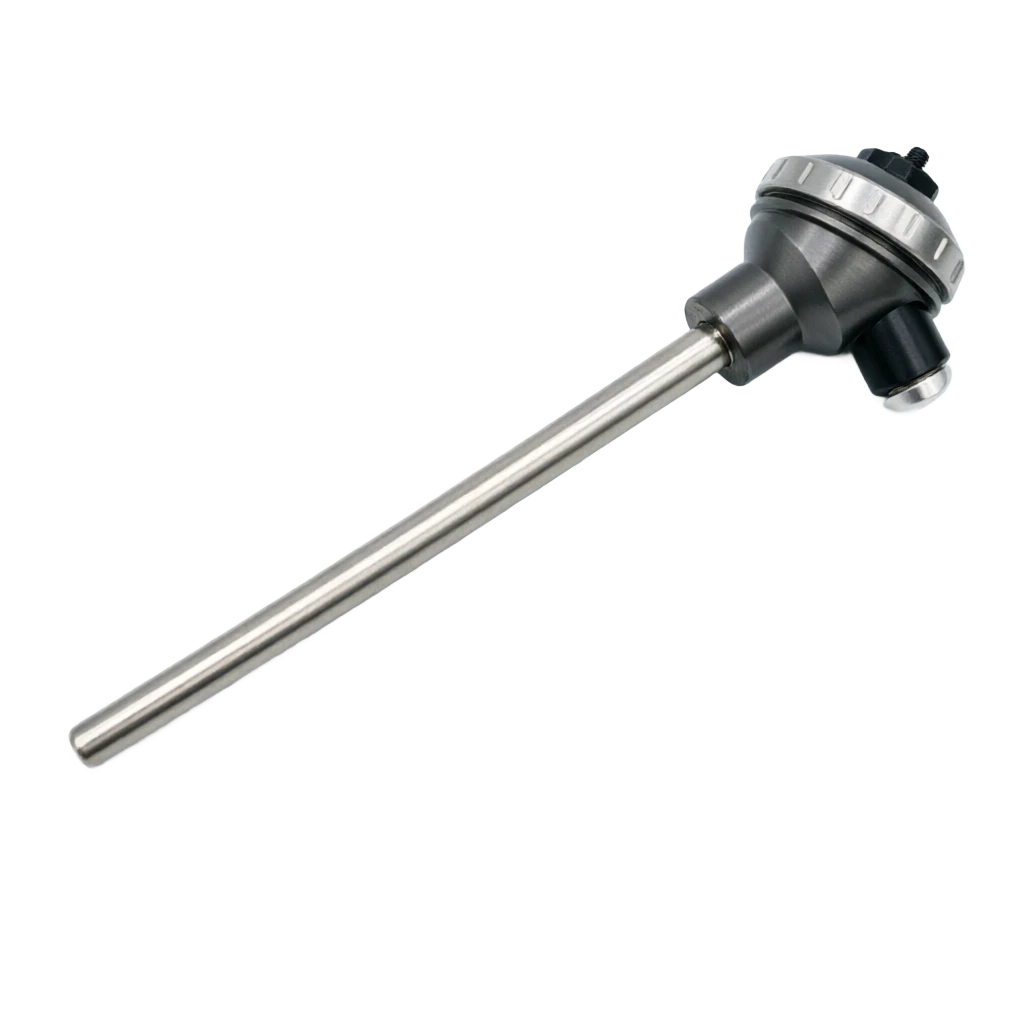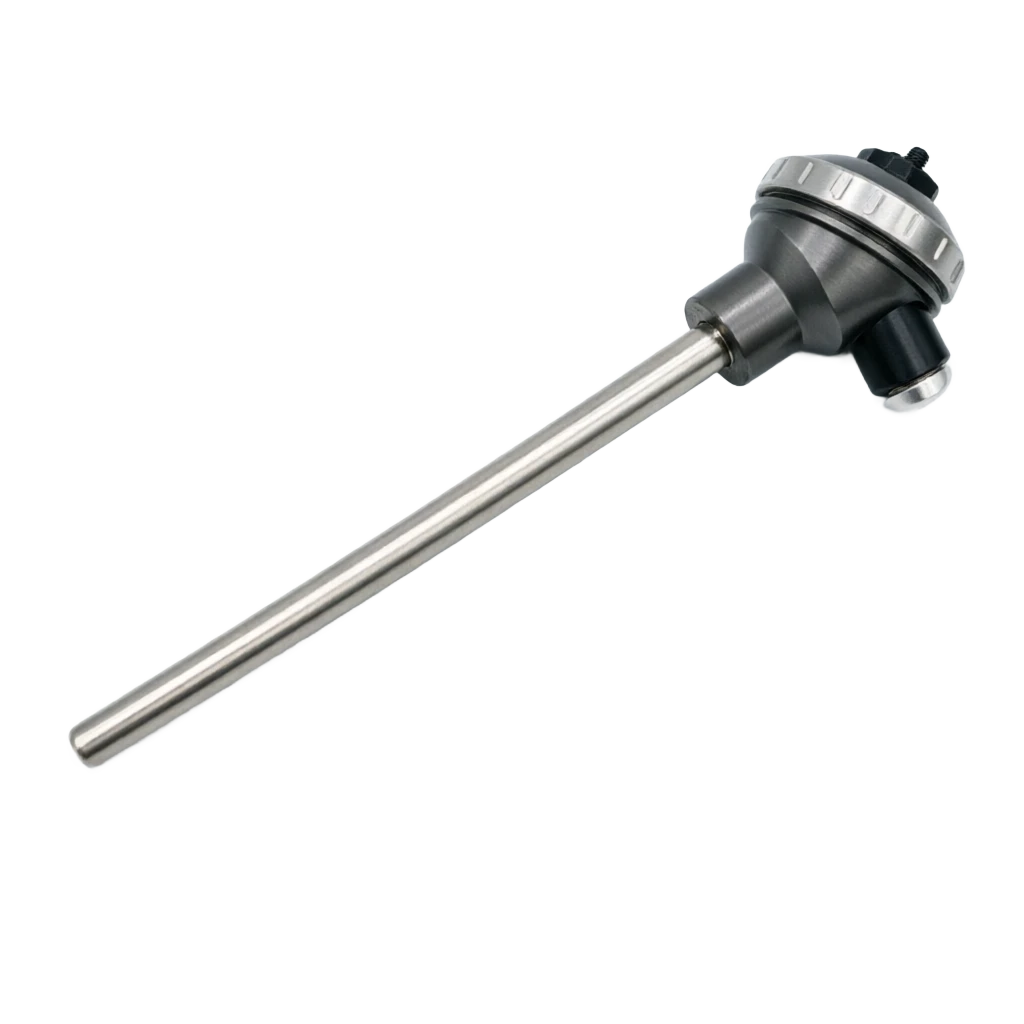
PRODUCT TECHNOLOGY

Preservative thermal resistance

Operating principle

- Preservative thermal resistance - The working principles

The temperature element is measured by the electrical resistance value of platinum based on a single temperature change, using Pt100 or Pt1,000 platinum. Platinum resistance temperature is following international temperature standards. ITS-90 Electro-temperature relationship -200 ~ 0 ℃ and 0 ~ +850 ℃ The region is described in different ways: R0 = 100 Ω( Pt100 ),A = 3.9083 × 10 ³ ℃¹,B = -5.775 × 10 ⁷ ℃²,C = -4.183 × 10 ¹²℃⁴。 Pt100 100 times at 0 °C and 138.51 times at 100 °C, with an average temperature factor of approximately 0.385 per °C. The key is the corrosive selection of the protective tube. Corrosion

  1. 01

    200 ~ 0 ℃:Rt = R0·[1 + A·t + B·t² + C·(t-100)·t³]0 ~ +850 ℃:Rt = R0·(1 + A·t + B·t²)

  2. 02

    1 Equal corrosive · Immolution of the metal surface as a whole, evenly reduced wall thickness = rare sulphate / rare hydrochloric acid / acetylic acid / 316L in seawater

  3. 03

    2 Point and/or perforation Cl. Damage to blunt membrane, forming local small holes Cl media (waterwater / Nacl / FeCl)

  4. 04

    3 The stress corrosive cracks + the corrosive medium cracks / thermal alkali/ containing Cl's high temperature water

Preservative thermal resistance type support

Provide survey missions, media and installation conditions and obtain product configuration advice.

Contact us
Pyrotechnic thermal resistance Technical note

TECHNOLOGY & APPLICATION

Understand the principles, the exact selection.

The technical characteristics and selection elements of the preservative thermal resistance are understood from measurement principles to field applications.

01

TECHNICAL GUIDE

Overview

(Anti-thermal-Reistant RTD, WZPM Series / WZPF Series) is an industrial platinum resistance temperature sensor designed for corrosive media such as acid, alkalin, salt, oxidizer, organic solvents, etc. The core idea is "to protect the tube from corrosion and to detect temperature by platinum electrical resistance" by selecting a protection tube for corrosive alloys or non-metallics, which completely separates platinum resistance elements from corrosive media, guaranteeing both temperature accuracy and significantly extending instrument life.

It is one of the most common and economical programmes in the climate-based climate of industrial corrosives. When media are in line with 316 LC-276), titanium alloys (TA2/TC4), tantalum (Ta), Monel 400, tetrafluoroethylene (PTFE/F46/F4), glass slurry, polypropylene, liner complex tubes, etc.

Main technical characteristics

IndustrialAnti-

  1. 01

    When stainless steel produces visible corrosion (annual corrosion rate mm), it should be considered for upgrading to a preservative form. Common anti-corruption options include: Haq alloy.

  2. 02

    > C-276

  3. 03

    0.1 (Hastelloy

General description · Serial number / CharacteristicsCross-reference
Serial numberCharacteristics
1Protection of tubes against corrosion: metal / non-metal protective tube isolation medium, platinum electrical resistance against corrosion
2Temperature stabilization: Pt100 / Pt1000 Platinum Retardation ITS-90 standard, long-term stability ±0.05 ℃
3Materials optional: Haps alloy / titanium / tantalum / Monnar / PTFE / glass squirm/ squirm
4Temperature range: -200 ~ +850 ℃ (depending on the protective tube material)
5Quote method: / / / Selective, anti-interference
6Structure diversity: assembly / swipe / insert / direct / French
7Process connection: screw / Frank / Carat / Sanitary / Activity Frank
8Good switching: standard wire box, integrated with the carrier
9Life expectancy: 3-8 years under suitable selection, much higher than 1-3 years for normal 316L
02

MEASUREMENT PRINCIPLE

Operating principle

2.1 Pyramid electrical resistance to temperature

The temperature element is measured using Pt100 or Pt1,000 platinum, based on the single temperature-modified resistance value of the metal platinum.

ITS-90, the resistance-temperature relationship is described in different formats between -200 ~ 0 ℃ and 0 ~ +850 ℃:

  1. 01

    200 ~ 0 ℃

    Rt = R0·[1 + A·t + B·t² + C·(t-100)·t³]0 ~ +850 ℃:Rt = R0·(1 + A·t + B·t²)

℃⁴。 Pt100 Yes. 0 ℃ Time 100 Ω, 100 ℃ Time 138.51 Average temperature factor, approximately 0.385 Ω/℃。

2.2. Preservative protection mechanisms

The key is the protection tube resistant to corrosion. The essence of the corrosion is the electrochemical reaction of the metal and the medium, by method.

For the following categories

Address the above-mentioned corrosive effects by targeting the selected material (Halle Alloy / titanium / tantalum / PTFE / glass slurry, etc.) C-276 / C-22 (a) Be of Mo high Ni-based alloy, having excellent corrosivity for nonoxidating acids (HCl, HSO, HPO), Cl-containing media, wet chlorine gas, and hypochlorate, which are the preferred anti-corrosive temperature measurements;

2 titanium TA2/TC4 )

(b) The oxidizing media (nitronitrate/chromatic acid/dichloric acid) and the chlorinated media in the water of the Crown are extremely corrosive, but not hydroflouric acid and perfluorine acid;

tantalum (Ta)

(b) The resistance to almost all inorganic acids (except HFCs) and the water of the King is excellent, chemical stability is close to glass, but hydroflouric acid and thermal alkalis at high temperatures are corrosive;

4 Monel Alloy 400 / K-500 )

(b) Excellence in the corrosivity of hydroflour, seawater, rare sulphate, and base burner;

⑤ PTFE(F4/F46)

Polytetrafluoroethylene liner, with almost all strong acid alkalis (melted alkali metal and high temperature fluorine) with a temperature limit of 260 °C;

Industrial Anti- Glass Splash

(b) Stabilizing the glass of boron on the surface of steel or cast iron, which is resistant to erosion of hydrochloric acid, rare sulphate, organic acid, but not hydroflouric acid and thermal alkali;

Shape-complex tubes

Carbon steel external/F4/PE/PP inner liner, good mechanical strength, price economy, for constant pressure or low vacuum conditions.

2.3 Lead-line approach and cold-end effects

The 3 type is used as a lead.

2.4 Workflow

IndustrialAnti-

Measurement formulaClick to see the big picture
-200 ~ 0 °C:Rt = R0·[1 + A·t + B·t2 + C·(t-100)·t3]
Measurement formulaClick to see the big picture
0 ~ +850 °C:Rt = R0·(1 + A·t + B·t2)
Measurement formulaClick to see the big picture
Of which R0 = 100 (Pt100), A = 3.9083 x 10 3 °C 1, B = -5.775 x 10 7 °C 2, C = -4.183 x 10 12
Motion of work . Serial number / Corrosion typeCross-reference
Serial numberCorrosion typeMechanismTypical medium
1Even CorrosionThe metal surface is all flatly dissolved and the wall thickness is evenly reducedrSulphate / rSalphate / Acetylic acid / 316L in seawater
2Occusation / Hole erosionCl, break the passivation film, form a small local hole.Cl media (seawater / Nacl / FeCl)
3The stress corrosive cracks.Rush + Corrosive media ⁇ CrackHeat-rich alkalis/ containing Cl High Temperature
4Cyclical corrosionCrystal poverty, Cr, priority erosion.Welding / Sensitization 304/316
5Cracking corrosionSeal cushion / Subsediment detentionFrench Seal / Under the Bronze
6Scratch the corrosive.Flow speed + medium ⁇ Mechanical-Chemical compoundSlurry / granular acid / high-speed flow acid
7Euphoria corrosiveFae metal contact, poaching, arctic acceleration.Carbon steel + stainless steel / Copper + aluminium
8Hydrogen brittle / Hydrogen CorrosionHydrogen penetrates metal, poachs, poor performance.Hydrochloric acid / strong reduction acid
The working principles . Serial number / Line-inCross-reference
Serial numberQuoteRationalePrecision
1A two-line system2 Lines powered and measured simultaneously, lead wires resistance superimposed and errorLow, for < 100 m short distance only
2Trilinear1 power supply + 2 measurements, and utility cable resistance compensated by a bridge±0.1 ℃
3Four-wire2 power + 2 measurements, no resistance to the cordsHigh ± 0.05 °C, precision metrology / laboratory
StepsActions
①On site temperature, tectonic protection tube conductor, tact temperature platinum resistance.
②The platinum resistance value, Rt, is thermally variable, and it's reflected in the heat resistance signal.
③Line 2/3/4 wires send Rt to a transmitter or display
④Transmitters press IEC 60751-minute linear 4-20 ma / Hart
⑤Signal to DCS / PLC display, alarm, record, control
⑥Excess / Open Zoom to malfunction (≤ 3.6 mA or ≥ 21 mA)
⑦Protection of caustics of tubes Periodic inspection or replacement by life cycle
03

PRODUCT STRUCTURE

Product structure

3.1 Main structural components

3.2 Form of PPE (Category 6)

3.3 Structure forms

IndustrialAnti-IndustrialAnti-

Temperature component (plypt)

Functional description: Temperature-Treatment Core Usage/Specific: Pt100 / Pt1000 film or circuit, level A / B

Pyrotechnics

Functional description: Separating corrosive media, bearing physical strength Common material/specifiers: Hapsy Alloy C-276/ titanium TA2 / tantalum Ta / Monel 400 / PTFE / Scatter glass / Shape

Inner liner (breathing)

Functional description: Add PTFE / glass lining to the metal shield Usual material/specify: PTFE / F46 / glass lining

Insulation (porcelain / china pole)

Functional description: Separating the fuses, avoiding short circuits Usual material/specify: Aluminium oxide / ceramic skeleton

Lines (heatlines)

Functional description: electrical connection of platinum electrical resistance to external connector boxes Common material/specification: silver-coated copper line / nickel chromium line / boete-insulated high temperature line

Cold-end seal / Substrate

Functional description: tail seal, connector endend Common material/specifier: epoxy / ceramic glue / stainless steel base

Connecting box caps

Functional description: protection line end, easy to maintain Usual material/specify: Aluminium alloy / stainless steel / IP65 ~ IP68

Connector End

Functional description: the lead line is connected to the compensatory guide or the carrier Usual material/specifier: ceramic / nickel plating copper / spring end

Process connection

Functional description: Installation in pipe / packaging / equipment Common materials/specifications: screws G1/2 / NPT, Frank DN25 ~ 100, carats, sanitary DIN 11851

Transmitters (optional)

Functional description: Integrated signal conversion Usual material/specification: 4-20 mA + Hart / MODBUS / PROFIBUS-PA

Deck / Warning

Functional description: Identification of material, temperature, length, level of preservation Usual material/specify: stainless steel / aluminium alloy engraving

Form

Name of component: Structural characteristics Functional description: Typical application Usual material/specification:

Total metal tube

Name of component: The whole protection tube is corrosive alloy Functional description: Hapsy Alloy / titanium / tantalum / Monnar Mixed tube Common material/specifier:

Metal internal liner PTFE

Name of component: Outer carbon steel + PTFE lining, strength + preservative double advantage Functional description: rare sulphate / hydrochloric acid / constant pressure storage tanks Usual material/specifier:

Metal inner liner glass

Name of component: Carbon steel / stainless steel + glass inside function description: Reaction pan / Reaction pan / Chemical cleaning tank Usual material/specification:

Part of PTFE

Name of component: Integrated polyvinyl fluoride protection tube, extremely resistant to corrosion Functional description: strong acid / electroplating / semiconductor cleaning Usable material/specifier:

Sculpture compound tube

Name of component: PE / PP / PVC liner, economic scenario Functional description: constant pressure sewage treatment / rare acid régime / flue gas desulphuration Usable material/specifier:

Double-storey metal

Name of component: Outer 316L + Inner Haq alloy / titanium Caption: High Pressure Corrosion / High Temperature Acid Reservoir Usual Materials/Specific:

Direct interpolation

Structural characteristics: Conservatory tube and lined box

Thread

Structural characteristics: Screw the device directly through NPT/ G screws

French

Structural characteristics: Connecting to equipment through a French (HG/T / GB / ANSI)

Card

Structural characteristics: Stabilize through screwdriver card sets to facilitate the reconciliation of depths Typical application: low pressure / frequent reconciliation of depth of insertion

Health level / Fast-track

Structural characteristics: DIN 11851 / SMS / Tri-Clamp Fast-Sacking Interface

Active French

Structural characteristics: Frank + Sealed rings can be adjusted along the tube, typical application: frequent on-site / multipoint temperature measurement

04

TECHNICAL GUIDE

Advantages and disadvantages

IndustrialAnti-

Product advantages

Material resistant to corrosion

Specific: material such as Haq alloy / titanium / tantalum / PTFE is specific to strong acid alkalis, with a useful life of 3-8 years

High temperature accuracy

Specific: Platinum resistion ITS-90 Standard, Pt100 A ±0.15 ℃ + 0.002 ⁇ , B-class ±0.3 ℃ + 0.005 |t|

Long-term stability is good.

Specific: Platinum resists annual drift ≤ 0.05 ℃, much better than thermoelectric dolls

It's a good switch.

Specific: Standard connector box + Standardized pilotine (2/3/4), spare parts swap convenient

It's integrated with the transvestites.

Specific: Directly integrated temperature adapters, simplified wiring, improved resistance to interference

Options

Specific: Haq alloy / titanium / tantalum / PTFE / glass squirming / squirm, selected for medium-specific type

Structureal

Specific: assembly / tack / straight plug / screw / Frank / Health level, applicable wide

Prices are high.

Specific: A scale cheaper than the far-off French + caustic choreography program, simple installation maintenance

Disadvantages and use restrictions

Temperature ceiling limited

Response: Most preservative materials have lower temperature ceilings: PTFE 260 °C, glass sting 300 °C, Haq, 1100 °C, titanium 400 °C; high temperature and strong corrosive combinations are less frequent

Machine strength is weaker than plastic

Response: PTFE / glass swirl is low, fragile and resistant to particle shocks; particle condition is subject to titanium or algae

Response time is excessive

Response: Preserve wall thickness + PTFE liner, t0.5 usually 8 ~ 30 s, which is less than 5 ~ 10 than naked

Cold-end sealing is high.

Response: Wet preservative seals require more than IP65, otherwise the lead line corrupts short circuits

Improper selections will accelerate the failure of the process.

Response: Harlem alloy is resistant to oxidizing acid (rich nitrate / strong sulphate) mixed with error; material selected in detail from the medium

Large cost differences

Response: Haq Alloy C-276 price is 5-10 times the price of 316 L and 30 times the price of 316 L

S liner complex.

Response: PTFE liner / glass sintering process is high and poor liner is prone to needle holes, bubbles, de-scaling

05

APPLICATIONS

Application area

Temperature measurements widely used in the following corrosive media

IndustrialAnti-

Chlor-alkali industry

Application area: electrolytic Nacl, chlorine gas, Naoh, hydrochloric acid, sodium hypochlorate C-276 titanium TA2 / Tanta Ta recommends preservative material:

Phosphorus fertilizer / phosphate

Field of application: wet phosphate, phosphate, plasma, phosphate, fluorine acid C-276 / C-22 / Monaire 400 Recommended preservative materials:

Pesticides / dyes

Application area: benzene, toluene, diphenylene, organic acid, sulphuric acid, hydrochloric acid C-276 / PTFE liner recommends preservative material:

Pharmaceutical/ Fermentation

Application areas: hydrochloric acid, nitrate, organic solvent, fermentation, CI P washing, typical medium: 316 L Haq alloy / glass slurry / PTFE Health Level

Hydrometallurgical

Application area: SOFA leachate, electrolyte, Wang water, nickel cobalt solution C-276 titanium TA2 / Tanta Ta recommends preservative material:

Plasma / Surface Treatment

Application area: Chromic acid, chromium plating, nickel plating, cyanide, photoloughing, typical medium: Haq alloy C-276/PTFE/ titanium TA2

Marine engineering

In the application area: seawater, sea salt, tidal, thermosalt (CTD) typical medium: titanium TA2 / Monar 400 / Hax alloy C-276 recommends preservative materials:

Water treatment / sewage

Field of application: chloral water, chlorinating, sulfur-containing sewage, alkaline, and ponds C-276 / PTFE / Shape PP / PE recommends preservative materials:

Acid regeneration / waste acid treatment

Application area: waste sulphate, waste hydrochloric acid, organic waste fluids Typical medium: Haq alloy C-276/PTFE/ glass slurry

Semiconductor / Panel Cleaning

Application area: HF, nitrate, SC1, SC2 Purge fluid, superpurified water Typical medium: PTFE / PFA / Haq alloy C-276/Turpium Ta recommends preservative materials:

Paper / Mulp

Application area: sulphate slurry, white liquid, green liquid, bleach fluid Typical medium: Haq alloy C-276/ titanium TA2 / 316L high molybdenum

Fire generation / Frozen desulphurization

Application area: limestone plasma, subsulphur, hydrogen acid, chlorine-containing fluorine, condensed typical medium: Haq alloy C-276/slave PP / glass slabs

06

TECHNICAL SPECIFICATIONS

Technical Parameter Table

6.1 Overall technical indicators

6.2 Control Tables for the resistance of main preservative materials to corrosion

IndustrialAnti-

6.3 Media concentration - material selection fast-tracking

IndustrialAnti-

  1. 01

    Select Table

Model naming rules (cf. JB/T 8622)

W(temperature)Z (temperature)P(resistance)x(secular)-□(protecting tube material)-□-□-□ (process connection)-□-□ (insert depth)-□ (output method)

7.1 Type by media type

7.2 Type by temperature level

7.3 Select by Process Connect

IndustrialAnti-

7.4 Type by Output

IndustrialAnti-

  1. 01

    Selection Guide

8.1 Selection Processes

the selection shall be determined in the following order:

8.2 Select type compared to general 316L thermal resistance

IndustrialAnti-

8.3 Preservative Plumber Selection Decision Tree

1 contains Cl or Oxygen media. C-276 ( C-22 or titanium TA2 ;

2 Contains HFC or HFC acid ⁇ Monnar 400 / Haq C-276 (No titanium or glass);

Royal Water / TX Mixture tantalum Ta/ PTFE liner;

4 Enriched nitrate / chromic acid / hypochloric acid ⁇ titanium TA2 / tantalum ta;

5 Enriched Sulphuric acid > 80% High temperature. C-276 / PTFE liner;

6 Medium concentration hydrochloric acid / rare sulphate ⁇ Haq C-276 ;

7 BBB / BBB ⁇ Nickel 200 / Monaire 400 / Haq C-276 ;

8 Organic acid / Weak acid / Food / Pharmaceutical 316 L (food level);

Respond to glass-lined glass protection tubes;

10 Strong Corrosion + High Flow Speed + Particle Zirt titanium TA2 Or Haq. C-276 (avoiding PTFE / Scratching glass);

8.4 Attention to Preservative Thermal Retardation

1 Insert depth according to process, usually pipe 1 / 3 (b) In diameter, avoiding heat error;

2 PTFE liner / glass liner response shall be compatible with the liner process and the depth of the insertion shall exceed the liner layer 50 mm above;

The tantalum protection tube is low in hardness and is installed in such a way as to avoid collisions with hard steel;

4 Hax Alloy C-276 tantalum is good, avoiding long-term exposure to enriched nitrate (passivable but oxidized);

5 PTFE not to exceed the temperature of the liner 260 ℃ , more than softens out;

6 Scattered glass cannot withstand sudden temperature changes (cool, hot, hot) ≤ 110 ℃ ) avoid direct exposure to condensed fluids;

7 Operator boxes shall be sealed to protect against tide. IP65 above), wet environment selection IP67/IP68 ;

8 Exd II BT4 / Exia II CT6 (b) Explosive-proof wire boxes;

When associated with electric / steam, be careful to protect the temperature limit of the pipe material and avoid local overheating;

The French connection should use gaskets (PTFE/HS/Full graphite) matching the medium, and both should be secured to avoid overload.

8.5 Maintenance element

— End of document —

Technical Table of Parameters . Parameter Item / Parameter ValueCross-reference
Parameter ItemParameter Value
Product implementation standardsIEC 60751 / IEC 61515 / JB/T 8622 / JB/T 9238 / GB/T 18404
Temperature Component TypePt100 / Pt1000 Pl (minus / circuit)
Accuracy classLevel A ± (0.15 + 0.002 ⁇ t) °C; Level B ± (0.30 + 0.005 ⁇ t) °C; Level 1/3 B / 1/10 B optional
Temperature range200 ~ + 850 °C (depending on protective tube material)
Quotend / rd / th /
Insulation resistanceTemperature ≥ 1000 M once m; High temperature ≥ 5 M once m
Preserve preservation of piping material316 L / Hax Alloy C-276 / C-22 / titanium TA2 / titanium TC4 / tantalum Ta / Monnell 400 / PTFE / glass squirm/ PP / PE
Exterior Specification⁇ 16 / ⁇ 20 / ⁇ 25 mm mainstream, also 8 / ⁇ 12 / ⁇ 32 ⁇ 38 mm
Process connectionSpline G1/2, NPT1/2; Frank DN25 ~ 100 GG/T/ANSI; card set; sanitary DIN 11851; active Frank
Response Time t0.5⁇ 16 about 8~15 s; ⁇ 25 about 15~30 s; liner slow 1.5~2 times
Operating pressureConstant pressure / 0.6 / 1.0 / 1.6 / 2.5 / 4.0 / 6.4 / 10 / 16 /25 / 32 MPa (at Frank level)
Ingress protectionIP65 / IP67 / IP68 (Accompanying connection box)
Line ModeSecond / Third / Four Lines; blast protection 4 Line priority
Output signalmV / 4-20 mA / Hart / MODBUS / PROFIBUS-PA / Foundation Fieldbus
Use temperature (wirebox)40~+85 ℃
Relative Humidity5% ~ 95% RH, no condensation
Storage temperature40 ~ +85 ℃, dry and ventilated
General supply length500 / 1000 / 1500 / 2000 / 3000 / 5000 mm or custom
Life expectancy3-8 years (relates to medium corrosivity, temperature, pressure)
Weight (reference)Φ 16 × 1000 About 1.2 kg;Φ 25 × 1000 About 2.5 kg
Serial numberMaterialsApplication medium (resistible to corrosion)Not Fit MediumTemperature limit
1316L Stainless steelRare sulphate / rare hydrochloric acid / acetylic acid / weak organic acid / food classEnriched hydrochloric acid/ containing Cl HT / Enriched Sulphuric acid+870 ℃
2Haq Alloy C-276Wet HCl/ rare HSO/ HPO/ containing Cl medium/ wet Cl/ subchlorate/ seawaterHNO / FeCl / CuCl+1100 ℃
Technical parameter table · Serial number / materialCross-reference
Serial numberMaterialsApplication medium (resistible to corrosion)Not Fit MediumTemperature limit
3Haq Alloy C-22Oxygen-containing acid / flue gas desulphurization / Cl strong oxidationMelted alkalis / hydroflonic acid+1100 ℃
4titanium TA2 / TA9 / TA10Nitrate / chromic acid / hypochloric acid / Cl containing neutral medium / seawater / WangwaterHydrofluoro acid / Enriched hydrochloric acid / Thermal Enriched Sulphuric acid / Phosphate+400 ℃
5tantalum TaAlmost all inorganic acid (except HF) / Wang water / sulphate / hydrochloric acid / nitrateHydrofluoro acid / thermal alkali / metallic smelting+300 °C (Oxygen oxide in air)
6Monel 400Hydrofluoroacid / Seawater / Rare Sulphuric acid / BBB / Ammonium fluorideEnriched nitrate / Enriched hydrochloric acid / Oxygen acid+500 ℃
7PTFE / F4 linerAlmost all strong algebra/ Wang Water/ Oxygen/ Organic SolventMelted alkali metal / high temperature fluorine / trifluorochloride+260 ℃
8F46 (PFA) linerStrong acid alkali/ high purity semiconductor cleaningMelting alkaline metal+260 ℃
9Scratch.hydrochloric acid / rare sulphate / organic acid / weak alkaliHydrofluoro acid / thermal alkali / hard-core knock / temperature sudden change+300 ℃ (Emergency ≤ 110 ℃)
10Shape PP / PERare hydrochloric acid / rare sulphate / rare alkali / sewage treatmentEnriched nitrate / Strong oxide / Organic solvent+90 ℃(PP)/ +60 ℃(PE)
MediaConcentrationTemperatureRecommended material
HSOrare≤ 10%Temperature316L / Hae-soo C-276
HSO50% ~ 70%< 80 ℃H.C. 276/Monnell 400
HSOEnrichment ≥ 93%< 100 ℃H.C. 276 (Turquoise/PTFE)
HClrare≤ 5%TemperatureH.C. 276/Monnell 400
HCl10%-20%TemperatureH276 / tantalum
HClEnrichment ≥ 30%TemperatureH276 / tantalum Ta / PTFE liner
HNOrare≤ 30%< 80 ℃316L / titanium TA2
HNO50% ~ 70%< 80 ℃Titanium TA2 / tantalum Ta
HNOEnrichment ≥ 95%< 80 ℃H276 / PTFE liner
HFAny concentrationTemperatureMonnar 400 / Hax C-276
NaOHrare≤ 30%< 100 ℃316L / Nickel / Monnar 400
NaOHEnrichment ≥ 50%High temperatureNickel 200 / Monnar 400 / Hax C-276
Seawater / NaclAnyTemperatureTitanium TA2 / Hae-Wi, C-276/Monel 400
Technical Parameter Table . Media Type / Typical Work StatusCross-reference
Media TypeTypical Work StatusRecommended ModelPhysic/outside
Rare sulphate ≤ 10%Phosphorus fertilizer production, electroplating, acid washing, constant pressureWZPK-Pt100-316L-Φ16-NPT1/2316L + G1/2 screw
Enriched sulphate / chloric acidWaste acid recovery, hydrometallurgical, acid regenerationWZPK-Pt100-C276-C20-FrancH.C.276 + Frank
hydrochloric acid / wet chlorine gasChlor-alkali, pesticides, dyesWZPK-Pt100-C276- ⁇ 20-PTFE lineH276 + PTFE liner
Nitrate / Chromic AcidPlacing, metallurgical, semiconductor, cleaning.WZPK-Pt100-TA2- ⁇ 16-Franctitanium TA2+Franc
Hydrofluoro acidFluorinated, electronic cleaning, semiconductorWZPK-Pt100-Monel400-Φ16-NP T1/2Montana 400 + NPT1/2
Boil / BryperChlor-alkali, paper, textile printingWZPK-Pt100-Nickel- ⁇ 16-FrancNickel pure 200 / Monel 400
Seawater / NaclMarine engineering, power plants, chemical plants, water recyclingWZPK-Pt100-TA2- ⁇ 16-Franctitanium TA2+Franc
Organic acid / Weak acidPharmaceuticals, food, fermentation, CIPWZPK-Pt100-316L- ⁇ 16-Health level316L + DIN 11851 Fast-load
Reaction / Glass-paintingOrganic synthesis, dye intermediateWZPK-Pt100-Glass-Glass-Gap20-FrancGlass + Frank
Oxygen Oxygen / SC1 / SC2Semiconductor, panel, wet method. Cleaning.WZPK-Pt100-PFA- ⁇ 16-PFA linePFA / PTFE liner
Temperature LevelTypical Work StatusRecommended protection tubeRemarks
200 ~ 0 ℃LNG / Liquid Nitrogen / Cold Chain316L / titanium TA2 / Hax C-276We need to get a cold glue seal.
0 ~ 100 ℃Chronic acid / Food / Pharmaceutical316L / Harsh C-276/PTFE / Glass ScatterUniversality
100 ~ 200 ℃Low-moderate reaction, acid wash, electroplatingHAB C-276/ titanium TA2 / PTFE / Scatter glassPTFE ceiling 260 °C
200 ~ 400 ℃Medium temperature reaction, phosphorus fertiliser, hydrometallurgicalH.C. 276/ titanium TA2 / Monnar 400PTFE has exceeded the ceiling.
400 ~ 800 ℃High temperature and severe corrosive (unique)H.C.276 / Inconel 600It's in the thermoelectric field, so be careful.
Technical Parameter Table · Connections / Applies to scenesCross-reference
ConnectionApply sceneSpecificationsPressure rating
Sniff G1/2 / NPT1/2Pipeside Wall / Device InterfaceG1/2、NPT1/2 / M27×2≤ 6.4 MPa
Sniff (cardette)Adjusting Insert DepthNPT1/2 + Carat≤ 1.0 MPa
FrenchReaction / pressure containers / large calibre pipeHG/T 20592 / ANSI 150#~300#≤ 32 MPa
Health-level fast-loadingFood / Pharmaceutical / BiofermentationDIN 11851 / SMS / Tri-ClampConstant pressure
Activity FrankFrequently adjust depth of insertionDN25~50 + Bar≤ 1.6 MPa
Output MethodApply sceneSupporting instrument
MV / Do it directlyShort distance, temporary measurementsNumeric / DCS mV card
4-20 MA Two-line SystemMainstream industrial sitesDCS / Loger
4-20 mA + HartRemote Grouping / ParameterisationHart Handheld / 475 Comms
MODBUS RTUMultiple instrument network / RS-485PLC / Industrial gateway
PROFIBUS-PAChemical's Essentially Safe IntegrationDCS / Asset Management System
Technical parameter table · Step / ConsiderationsCross-reference
StepsConsiderationsDecision points
①Media Component / Concentration / Temperature / Contains impurities6.2 / 6.3 Table identifies the recommended protective tube material
②Media Oxidity / RevertisingOxygen acid (nitrite / chromium acid) ⁇ titanium / Hae-C-276; reduction acid (hydrochloric acid / rare sulphate) ⁇ Hae-He-C-276/ tantalum
③Cl / F / OxygenCl-Hal-Hal-Alloy/ titanium; F-Cmonal 400
④Media flow speed / particulate matter / wear riskHigh current speed + granule ⁇ / Haps alloy, not PTFE/ glass
⑤Medium Temperature Range< 260 °C optional PTFE liner; < 300 °C glass slurry; < 400 °C titanium/ Monnar; < 1100 °C Haps alloy
⑥Work Pressure / Frank LevelHigh pressure, poignant French connection + thick wall pipe; low pressure, poignant threads suffice
⑦Health requirements / Cleaning methodsCIP / SIP Health Level ⁇ 316 L / PTFE / Polluting Ra ≤ 0.8 μm
⑧Insert Depth / Install SpacePipe 1/3 in diameter; container inserted 200~500 mm; liner response required longer
⑨Output / Signal TypemV / 4-20 maA / Hart / bus, press DCS interface
⑩Detonation/ protection levelExplosive / Exia; IP65 ~IP68 by environmental humidity
ComparativePreservative thermal resistanceNormal 316L Thermal Retardation
Protection tube materialHAB C-276/ titanium / tantalum / PTFE / glass squirming / squirming316L Stainless steel
Annual corrosive rate< 0.05 mm (reasonable selection)> 0.5 mm (strength corrosive medium)
Life expectancy3-8 years (in a corrosive medium)< 1~2 years (incorrosion)
Suitable mediaStrong acid alkali/ seawater / Wang water / organic solventRare acid weak alkalis / neutral water / food
Temperature limitPTFE 260 ℃ / Glass 300 ℃ / titanium 400 ℃ / Harsh 1100 ℃316L ≤ 870 ℃
PriceHigh (H.C. 276 is 5-10 times the 316 L, 30 times the tantalum)Low (baseline programme)
Response time⁇ 16 About 8-15 s (slow in the liner)⁇ 16 About 8-10 s
Mechanical strengthMetal Strong / PTFE weak / glass squeaky316L Strong
Optional Processesscrew / Frank / card / Sanitary / Linescrew / Frank / Carta
Typical applicationsPhosphorus / chlor-alkali / pesticide / electroplating / oceanGeneral industry / Food / Medium water
Technical parameter table · Periodic / Maintenance contentCross-reference
CycleMaintain ContentCriteria for judgement
Each shiftInspection: indicate temperature, record curve, alarm checkA deviation from historical values ⁇ ±1 ℃
MonthlyThe wire box is sealed, waterproof, ground-checked.No water, no no movement.
QuarterlyInsulation resistance test (500 V mega-e Table)Temperature. ≥ 1000 M once m
BiannualProtection of the appearance, corrosive inspectionNo visible corrosive / needle hole / bubble-up
AnnualField Match / Standard Bodging / Liner Appearance CheckA-A Within / Underline Complete
Life expectancy by life expectancyReplacement of protective tube or whole unit dueBy 3-8 years of life