PRODUCT TECHNOLOGY

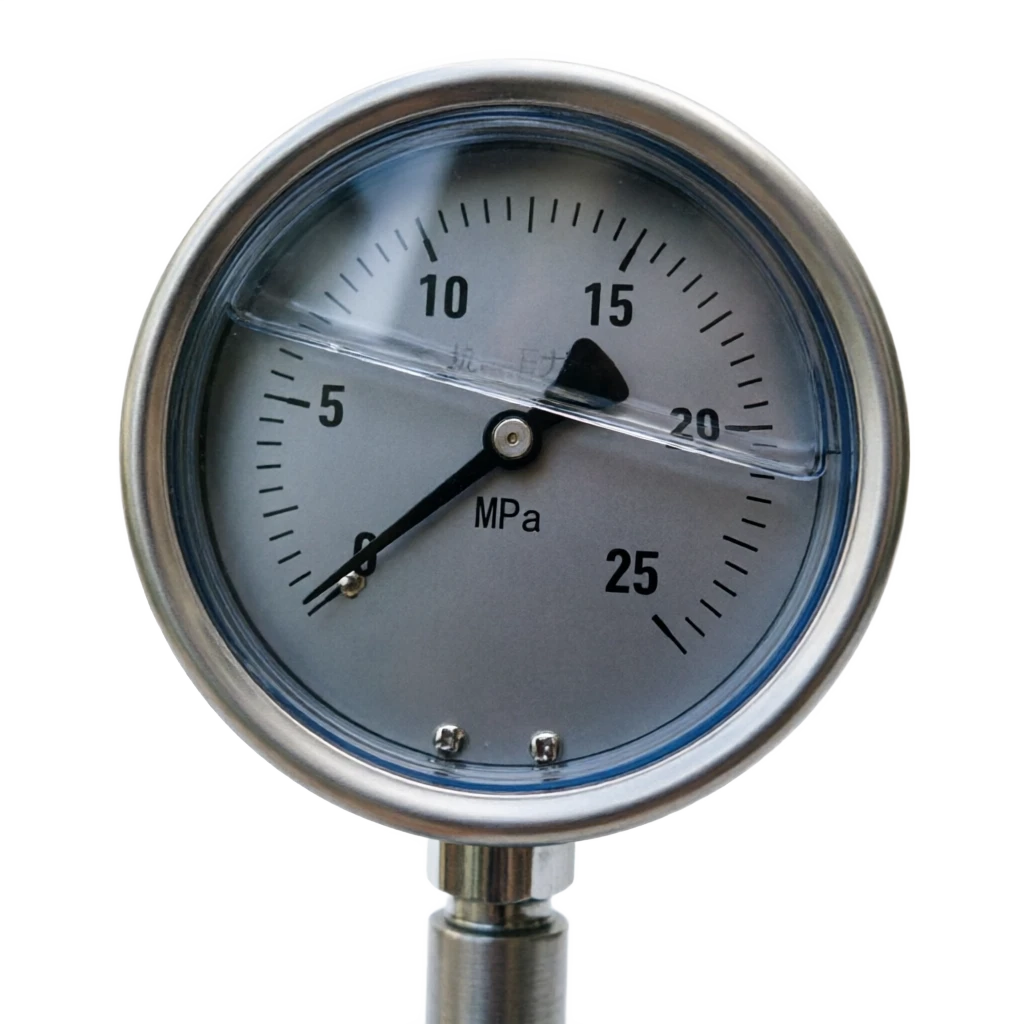
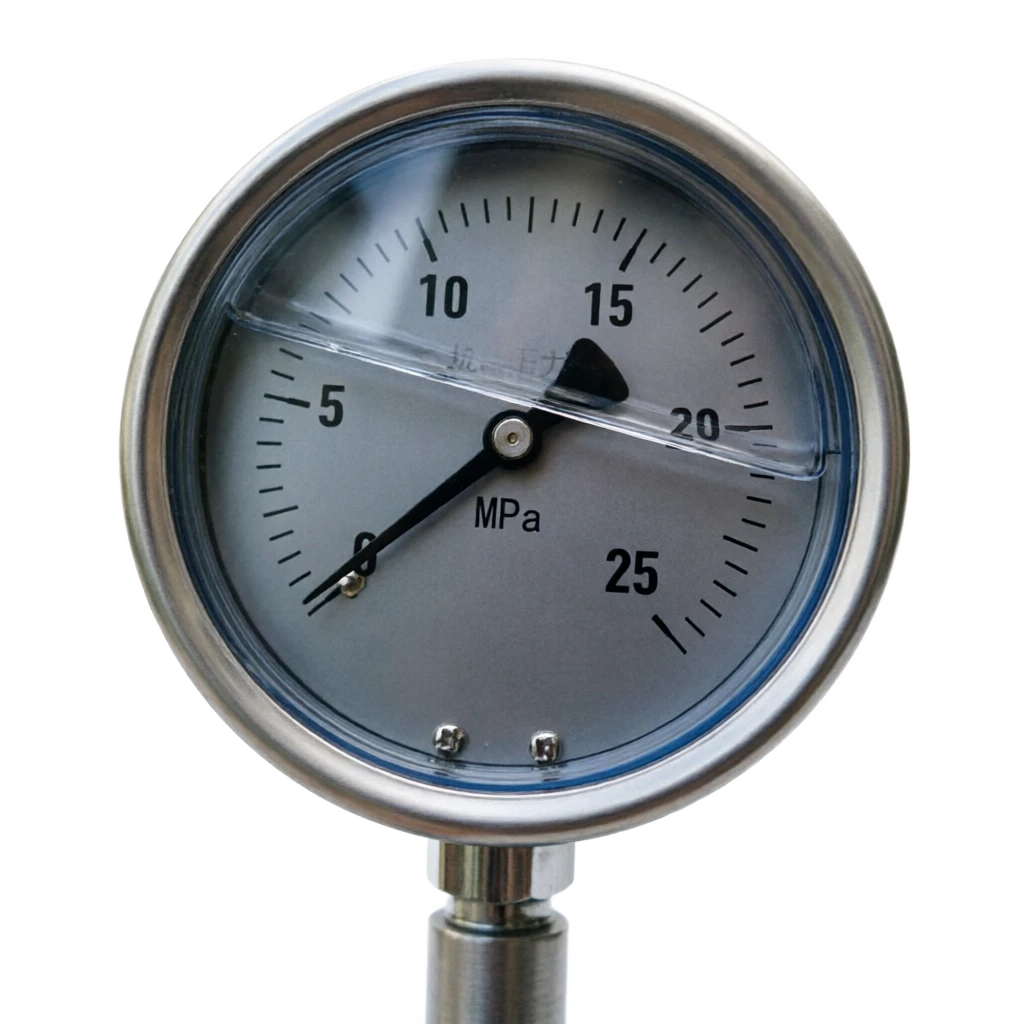
Stainless steel shock-resistant pressure table

Operating principle

The stainless steel is shock-resistant.

The measurement principle is consistent with the Boden tube pressure table - based on the retrofitting of elastic components, which is characteristic of the resistance to vibration: The normal pressure table is highly twitched in a vibration/pulse environment, unable to read and rapidly wear the core gears. (a) The seismic resistance is addressed by triple measures: the medium pulsation adaptation: normal indications can still be obtained in cases of intense pulse changes from measured media pressure, pressure shocks, frequent abrupt discharges from production processes; (a) The dual effects of charge: Interruption of the nitric depreciation + lubrication core (reduces carbine wear, prolongs life) + isolation of corrosive (enhancement);

  1. 01

    (a) The measured medium enters the stainless steel waved tube through the stainless steel interface (C or spiral, cross-section elliptical);

  2. 02

    Pressure cliques the ellipse, creates ring stress and moves the free end;

  3. 03

    (b) The shift is magnified by pull-on lead to stainless steel cores (shor-centre gears), and the driver pointer is tilted to indicate pressure;

  4. 04

    High pressure range (16~160MPa) with stainless steel spiral-based boddders - equivalent to longer elastic tubes, greater shift, more sensitivity and linearity

Stainless steel shock-resistant pressure table selection support

Provide survey missions, media and installation conditions and obtain product configuration advice.

Contact us
Stainless steel earthquake resistant pressure table

TECHNOLOGY & APPLICATION

Understand the principles, the exact selection.

From measurement principles to field applications, the technical characteristics and selection elements of the stainless steel shock-resistant pressure table are understood.

01

MEASUREMENT PRINCIPLE

Measurement principle

The measurement principle is consistent with the Boden tube pressure table - based on the retrofitting of the elastic element, characteristic of the resistance vibrating:

1.1 Basic measurement processes

  1. 01

    (a) The measured medium enters the stainless steel waved tube through the stainless steel interface (C or spiral, cross-section elliptical);

  2. 02

    Pressure cliques the ellipse, creates ring stress and moves the free end;

  3. 03

    (b) The shift is magnified by pull-on lead to stainless steel cores (shor-centre gears), and the driver pointer is tilted to indicate pressure;

  4. 04

    High pressure range (16~160MPa) with stainless steel spiral-based boddders - equivalent to longer elastic tubes, greater shift, more sensitivity and linearity

Okay, high-pressure handload.

1.2 Seismic (temporal) mechanisms — core features

The normal pressure gauge is highly twitched in a vibrating/pulse environment, unable to read and rapidly wear the core gear.

  1. 01

    Filled with a resistance nitric fluid (silicate/glycerine) in the shell

    Liquid resistance absorbs vibration energy and inhibits the hand-held shaking to keep it stable and readable in the vibration;

  2. 02

    Buffering devices

    (a) Interruptive perforation/buffer structure of the core motion component, further decomposition of the pointer impact caused by the pressure shock (sea hammer, sudden discharge);

  3. 03

    Full sealed structure

    The joint is welded with the watch shell arc, sealed in its entirety, and the nitric fluid is kept intact, while the environment is isolated from the corrosive atmosphere and dust.

1.3 Key characterization

Media Pulse Adaptation

Normal indications are still available in cases of intense pulse change, pressure shock, frequent and sudden discharges in the production process;

Environmental vibration adaptation

(b) Stable work near vibrating sources such as pumps, compressors, winders, etc.;

The dual effect of the charge.

(a) Interruption + lubrication core (reduces wear and tear on gears, increases life) + isolation from corrosion (enhancement of corruption);

Use pressure rules

The static pressure is used to measure the maximum 3/4 and the transversal load to measure the maximum 2/3.

02

PRODUCT STRUCTURE

Structure

2.1 Basic structures (total stainless steel + recharge resistant to earthquakes)

Post-suffix meaning

B = earthquake-resistant oil; Z = axle direction; ZT = axle belt edge (panel installation); T = radial edge; BA/BB = precision slotting (0.4 / 0.25 class).

2.3 Form of installation

Z, Axle-Little side (ZT, panel-mounted), Arc-Li (T); or, in the common diameter, ⁇ 60, ⁇ 100, ⁇ 150 (precision-resistant concussion type, mainly 150).

Connect.

Materials/description: 304/316 stainless steel, arc welding with bodden piped arc (direct contact pattern)

Boden tube (clarine)

Materials/description: 316L/304 stainless steel; 0-10MPa with C tubes, 16~160 MPa with spiral-done tubes

Machine core

Materials/descripts: 304/316 stainless steel (precision bearing stones, reduction of friction)

Buffering devices

Material/description: Blocking of nicoons/buffer structures, decaying pressure shocks

Filling fluid

Materials/description: Silicon oil (precautionary heat), glycerine 98% (conventional), fluorine (extremely corrosive environment option)

Shell

Material/descript: 304 stainless steel, fully sealed arc welding structure, filling cavity

Watch glass

Materials/description: Safe double glass/organic glass

Pointer

Materials/descript: 65Mn (65Mo manganese steel) Black Blade

Zigram

Materials/description: stainless steel disk (precision mirrors with a discoloration)

Seal

Materials/description: Butlerium, Tefron, Fluorine

Security structures

Material/description: surface shell blast-proof (rubber)+ excretion channel, safe release when the boden tube breaks

Zero-modified (precision)

Material/description: zeroing device (shock-proof lock) at the bottom of the cover, maintaining zero value

Series

Materials/descripts: characteristics

YN-□□B

Material/description: stainless steel shock-resistant pressure table (filling fluid)

YBN-□□B

Material/description: All stainless steel shock-resistant pressure table (so also used in this code)

YTN-□□B

Materials/description: stainless steel resistant to earthquakes (other name system, T-shell form difference)

YB-□□B

Materials/description: stainless steel resistant to earthquakes (partly for YB series oil recharge)

YBN-150BA / 150BB

Material/description: All stainless steel vibrating precision pressure table: 0.4 Level/ 0.25 Class, Zen 150 , -0.1 ~ 160MPa , with zero-to-zero mirror disk

YB-150BC / 150BD

Material/description: precision with zero (no oil matching)

03

TECHNICAL GUIDE

Advantages and disadvantages

3.1 Advantages

High seismic properties (core advantage)

(a) A fuel-filled nitric+buffer device with a stable and readable pointer in the event of a strong vibration, pressure pulse, shock, sudden discharge, anti-shock level V.H.3 ~ V.H.4;

It's corrosive.

(a) A fully stainless steel-linking liquid (316 L Boden tube + 304/316 concourse core) that applies to such harsh environments as weak corrosive media and ocean salt fog;

A double-edged watch.

The solution of both the "vibration" and "corrosion" categories is the most advantageous mechanical option for vibration + corrosive compound;

Long lifetime of the core

(b) A reduction in gear wear and wear and tear by the filling of lubricating fluids, a reduction in shock fatigue by the blockage, and a significantly longer useful life than the normal scale of work;

Full seal.

IP64 ~ IP65, dustproof water, adapted to outdoor and harsh environments;

Precision Optional Range

General 1.0 / 1.6 / 2.5 level; precision earthquake resistant up to 0.4 / 0.25 level, high precision measurements and field validation in a vibration environment (the condensed short panel of the normal precision watch is fixed);

Use temperature range

- 40~200°C (visual charger and sealed material);

No power, no security.

Pure mechanical charge structure, explosive-proof area usable (non-electrical instrumentation);

Security structure is well developed

(a) blast-proofing film + leak channel + secure double-gauge glass, with multiple protection;

I'm a rich candidate.

Zero-modified devices, mirror palettes, axle/panel installation, multiple screw standards.

3.2 Disadvantages

High prices

(a) For 3-8 times the normal pressure table (result steel + oil + precision type more expensive), the mass configuration is under a high cost pressure;

The fillings bring temperature limits.

(b) High temperature of glycerine fogification, increased cryogenic viscosity; charged ambient temperature is usually -25 ~70°C, and silicate oil is scalable but still capped;

The response rate is slightly down.

(b) The resistance to tremors is accompanied by a slight delay in the pointer response, which is affected by the observation of rapid transient processes;

Recharge maintenance issues

(b) The long-term use of potential seepage, vapour (table glass fog), leaks, which require periodic inspection and replacement;

Transport installation with direction requirements

(b) If the filling table is inverted/side-loaded for too long, bubble entry into the core area of the machine may affect the instructions and the installation of the attitude shall be regulated;

Not for a Noxidation Media

(b) Disable from the environment, such as stainless steel pressure tables, chlorine, nitrate and perchloride (imective table);

No remote transmission.

It remains a mechanical on-site instruction that the automated system needs to be equipped with alternative transmitters;

Weight and size.

(a) The heavy structure of the total stainless steel + filling fluid and the limited installation of small spaces;

The precision is still affected by vibration residue.

0.25 The physical accuracy of the level of precision-resistant seismic meters at the strong vibration site will decline and the high accuracy verification will be appropriate for stabilizing the environment;

Professionalization of overhaul

The testing, refilling and rehydration of filling tables require specialized operations and cannot be readily dismantled at the site.

04

APPLICATIONS

Application area

Not applicable

(c) Strong oxidation media (chlor/nitro acid, etc., modified diaphragm table); strong corrosion of superstainless steel (refusted membrane + special alloy); direct contact with high temperature media (coastal straw); long transmission of automatic control (remodified pressure transducers); static environment non-vibration and non-coloration (use of a normal table without waste of cost).

Oil/chemicals

Typical application: caustic medium and vibrational pump export, compressor tube tube pressure monitoring (core scenario)

Electricity

Typical application: pressure sites near vibration equipment such as motors, water pumps, wind machines, etc.

Mines/metallurgy

Typical applications: hydraulic stations, broken vibrating equipment, strong vibrating + corrosive events such as mud plume roads

Ships/ocean platforms

Typical application: cabin, deck vibration + salt fog corrosive compound (overtake scenario)

Engineering machinery

Typical application: hydraulic system (Vibration source itself) pressure indicator

Precision measurements/checking

Typical application: YBN-150 series of seismic precision tables: verification of normal pressure sheets, bridge Zhang La, scientific experiments in a vibration environment

Food/medicine

Typical application: seismic and sanitary process sites (filled with food-grade glycerine)

05

TECHNICAL SPECIFICATIONS

Technical Parameter Table

Technical parameter table · Item / ParametersCross-reference
ItemParameters
Measurement principleResilient deformation of stainless steel spring tube + charge-blocking nymphobrate, mechanical magnification pointer indicator
Measure ObjectNon-corrosive liquids, gases, vapours for stainless steel (vibration/pulse/corrosive compound)
Model SeriesYN/YBN/YTN-60B/100B/150B (conventional); YBN-150BA/BB (precision seismic)
Normal diameter⁇ 60, ⁇ 100, ⁇ 150 (precision 150)
Accuracy classGeneral: 1.0, 1.6, 2.5; precision shock resistant: 0.4, 0.25
Measurement rangeGeneral: -0.1 ~ 0 to 0 ~ 60/ 100MPa; Precision type: -0.1 ~ 0 to 0 ~ 160MPa (Classical Slotting) 0 ~ 0.1 / 0.16 / 0.25 / 0.4 / 0.6 / 1 / 1.6 / 2.5 / 4 / 6 / 10 / 16 / 25 / 40 / 60 / 100 / 160MPa )
Boden tube form0-10 MPa: stainless steel C tubes; 16~160 MPa: stainless steel spiral boden tubes (arc welding)
Boden tube/ interface mass316L/304 stainless steel (precision 304, optional 316)
Machine core material304/316 stainless steel (precision with gem bearings)
Case material304, stainless steel, all sealed arc.
Filling fluidSilicon oil (pre-optional), glycerine 98%, fluorine (optional)
Interface screwM14x1.5, M20x1.5, G1/2, 1/2 NPT, etc.
Process medium temperature40°C ~ +100/200°C (relates to filling fluids and sealed materials)
Ambient temperatureFilling -25 ~70 °C; Silicon oils up to -40 ~70 °C
Use of pressure rulesQuiet pressure, ⁇ Measurement ceiling 3 / 4 ;convert load ⁇ measures ceiling 2 / 3
Earthquake-resistant levelV.H.3 ~ V.H.4
Ingress protectionIP64 ~ IP65
Pressure unitsMPa, psi, bar, kg/ cm² etc. (optional)
Mounting configurationRadial / axial (Z) / axial panel flange (ZT) / radial flange (T)
Special ConfigurationZero-modified devices (precision), mirror disks, blade pointers (65Mn), blast-proof film
Applicable standardsGB/T 1226-2010, JB/T 6804 (shock resistant pressure sheet); control protocol JJG 52
ModelScale (MPa)PrecisionTable PathWetted materialsRemarks
YBN-150BA0.1~0 ~ 0~1600.4 LevelΦ150304 (optional 316)It's a little bit more than a little bit of a shock.
YBN-150BB0.1~0 ~ 0~1600.25 LevelΦ150304 (optional 316)It's a little bit more than a little bit of a shock.
YBN-150BA-ZTIbid.0.4 LevelΦ150304Earthquake Resilient Panel
YBN-60B/100B0.1~0 ~ 0~60Level 1.6Φ60/Φ100304/316General shock-resistant type
06

SELECTION GUIDE

Select Table

6.1 Parameters to be provided for the selection (orders required)

6.4. Measurement and precision selection

Example:

YBN-100B = fully stainless steel shock-resistant pressure table, ⁇ 100,1.6 grade, silican oil, M20 x 1.5; YBN-150BA-ZT = seismically accurate pressure table, ⁇ 150,0.4, panel installation.

6.6 Type and use elements added

  1. 01

    First, we'll decide if it's a shock.

    (b) The selection of the liquid table is made only in the event of vibration, pressure pulse, water hammer, and frequent discharge; the selection of the normal table in static settings is sufficient;

  2. 02

    Precision expectations management

    (b) The actual performance of the 0.25 scale at the Vibration Site will be reduced and precision checks will be performed to arrange for the suspension or stabilization of the time period to the extent possible;

  3. 03

    Filling to match temperature

    High temperature silican, conventional glycerine; surface glass fog/blast is a charge abnormality signal, promptly overhauled;

  4. 04

    Install attitude norms

    (b) Vertically installed to avoid long-term re-loading (air bubbles into core); axle/panel to look at the position of the liquid bubble;

  5. 05

    High pressure spiral maintenance

    16 MPa and above spiral-boden tubes are sensitive to over-range and strict application of 3/4~2/3 Quantities Rules;

  6. 06

    Periodicity

    (b) Generally not exceeding 1 year; vibrating corrosive compound proposal 6 months; precise shock tolerance meters are managed by standard instruments (usually 0.5 ~1 years);

  7. 07

    Pyramid Annex

    High temperature media iris; further protection at high pulse time with throttle/trainers;

  8. 08

    Order notes

    Sniffing standards, pressure units (MPa/psi/bar), material upgrades (316), zeroing devices, mirror disks, etc., need to be indicated.

Selecting table . Serial number / ParametersCross-reference
Serial numberParametersDescription/unit
1I'm not sure.Liquid/gas/gas; composition (decision 304/316 L)
2Pressure rangeMaximum, commonly used pressure (MPa); positive/negative pressure
3Vibration/pulse levelVibration frequency band, pressure pulse/shock/sudden discharge (decision on seismic necessity and level)
4Media/Environmental TemperatureDecision type of charge (glycerine/silicate/fluorine) and seal
5Precision requirementsMonitor 1.6 Class / Precision Measurement 0.4 ~ 0.25 Level (select YBN-150 Series)
6Install and ReadTable path, installation form (reverse/axis/panel), screw standard
7Special requirementsZero, mirror, pressure units, protection level
Filling fluidConditions of application
Glycerine (98%)Temperature regular vibrations (default, economy)
Silicon oil.High/low temperature environment (-40 ~ 200 °C), high temperature volatility (prefered)
Fluorine oil(Standed)
Food class GlycerinFood and medical hygiene
Table of selected types · Status / Recommended ModelCross-reference
WorkRecommended Model
Vibration + weak corrosive (pump/cressor export)YN/YBN-100B, 150B (class 1.6)
Vibration + strong corrosive tendencies (ocean, chemical)YBN Total stainless steel + 316L Boden tube + Silicon oil
High precision measurement/checking in vibration environmentYBN-150BA (grade 0.4)/YBN-150BB (grade 0.25)
High pressure + Vibration (16~160MPa)Spiral Boden Plumbing Precision Quest
Panel pane + VibrationYBN-□B-ZT (axis-side)
Bridge Zhang La, test equipmentYBN-150 series of precision shock-resistant meters (with zero better)
No vibrating, no corrosion, no conventional spotUse normal pressure table (Y series) without shock tolerance costs
Selective Table · Item / RuleCross-reference
ItemRule
Still pressure.Maximum working pressure ⁇ Full mass range 3 / 4
Conversation/pulse load⁇ Full Mass Range 2 / 3
Pressure Lower⁇ Full Mass Range 1 / 3
General vibrating surveillance100-150, 1.6
On-site validation/precision measurementLevels 150, 0.4 (0.25 for more stable vibration environment)
Selecting table . Bits / CodeCross-reference
BitsCodeMeaning
CategoryYN / YBN / YTNStainless steel earthquake-resistant pressure table (different plant systems)
Table Path60 / 100 / 150Common diameter
PostfixBErosion-resistant oil
Precision SlottingA / B0.4 Level / 0.25 Level (precision)
Install(none)/Z/ZT/TRadial/axis/axis-band/rounded
07

TECHNICAL GUIDE

Comparison with similar pressure meters (synopsis table)

Select the mode.

Vibration corrosive double-claving, stainless steel surface oiled; precision verification is also sensitive to earthquakes, YBN-150 showing up.

References

Production data for Siam Oshin, Shanghai Twins, Ditel instrument, chemical network, and GB/T 1226 - 2010 、JB/T 6804 、JJG 52 Organization. Specific parameters are based on samples of the products from the manufacturing plants.

Comparison with the same pressure meters (summary table) . Contrast / stainless steel earthquake resistant pressure table (YBN)Cross-reference
ComparativeStainless steel seismic pressure table (YBN)stainless steel pressure table (YB)& Normal pressure tableExact Exact Excusable Pressure Sheet (non-resilver steel YBN-150 early)
PercussionZhang (316L insulation)StrongWeak (copper alloy)Weak-Choose
Neo-Cyprim.Strong (fuel + buffer, V.H.3~4)Weak (optional shock tolerance)WeakStrong
Precision1.0~2.5 Level; Precision 0.4/0.25 LevelLevel 1.0 ~ 2.5Level 1.6 ~ 40.25~0.4 Level
Use temperature40~200°C (VIC)40~200℃40~70℃The temperature is the main.
Protection levelIP64~IP65IP54IP54General
PriceHigh (3-8 times normal table)MediumLowMedium High
Typical sceneVibration + corrosive compound, vibration environment Precision measurementStatic corrosive scenesGeneral no-vibration no-corrosionVibration environment validation (no corrosion)