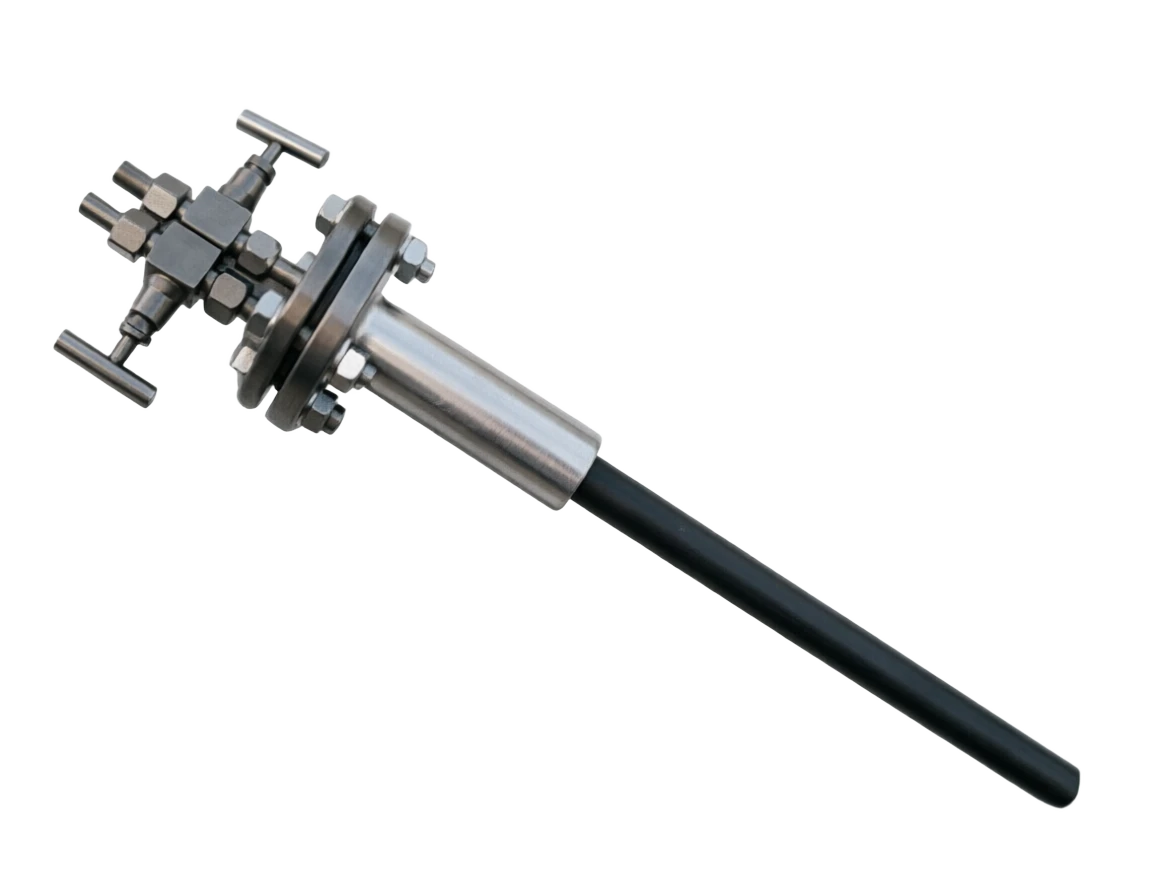
PRODUCT TECHNOLOGY

A oxaba flow meter

Operating principle

The Aoxaba flow meter. The working principles.

The core mechanism is "Peather hosting speed + average multipoint correction + average differential flow calculation", which maps the average flow speed of the entire cross-section of the pipe as a differential signal, then calculates the mass or standard/ mass flow through the differential transmitter and the temperature scanner. The following is a six-point project. The ideal fluid flows through the pipe at different speeds of position on the same cross-section (zero in the tube wall, largest in the centre), and the Bernuli equation describes the energy conversion of "flow-pressure": P + 1⁄2 v² + Gh = const, i.e. the more quiet the speed of flow. The skin host uses this: the flow-opening "total pressure" (silent pressure + kinetic pressure) and back-opening hole-detected "quiet pressure", the difference is "move pressure" – old v², inverse flow speed v = ⁇ (2 ⁇ P / old). Ox!
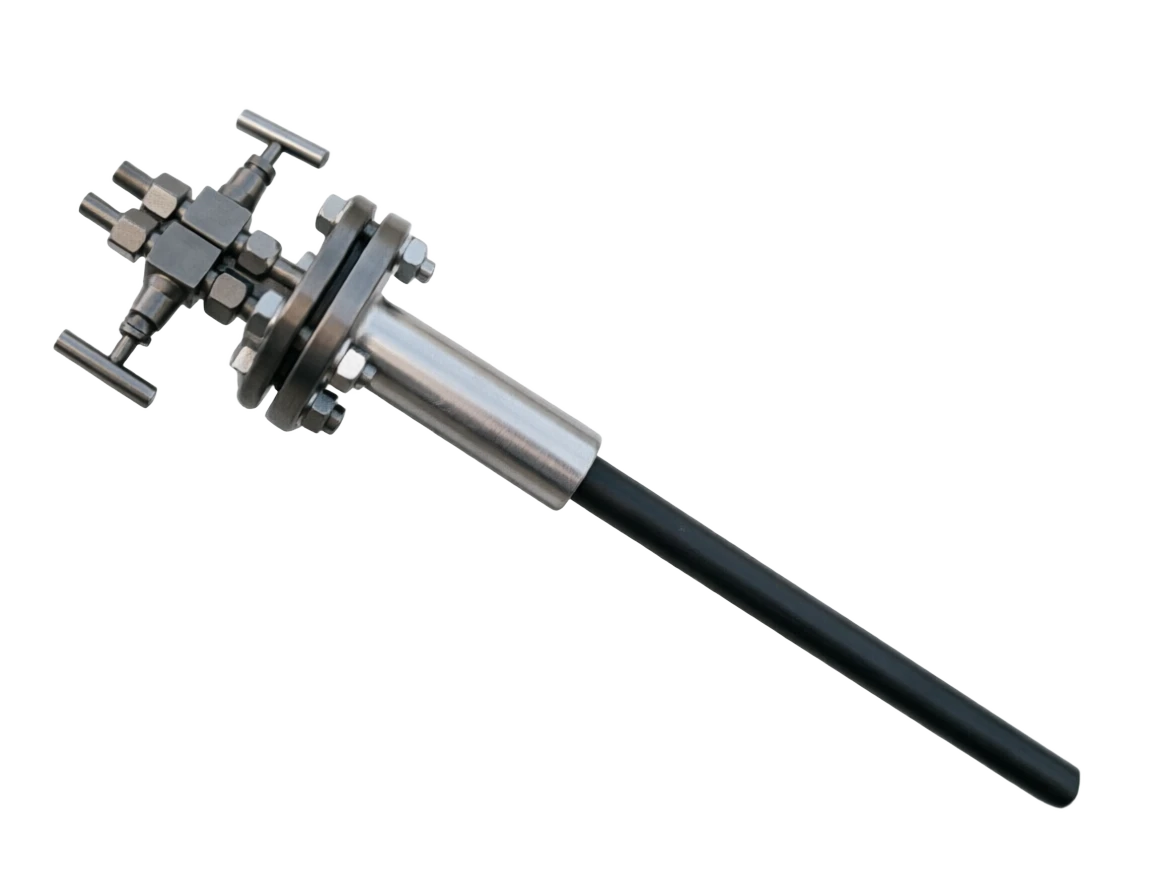
Reference to the Avenobar flow meter classification
· Classification reference diagrams

Aerobatic flow meter support

Provide survey missions, media and installation conditions and obtain product configuration advice.

Contact us
· Technical note

TECHNOLOGY & APPLICATION

Understand the principles, the exact selection.

The technical features and selection elements of the Aoxaba flow meter are understood from measurement principles to field applications.

01

TECHNICAL GUIDE

Overview

It is a differential-pressure-inserted flowometer based on the "Parette hosting principle + average multipoint pressure" that inserts a fluid-opening general tube across the pipeline, collects the average flow-rate of the entire section of the pipeline through multiple pressure points, and inversely calculates volume flow. It is positioned in the flow meter family as a "discretional penetration" with the same homogenous shape as the perforation, wedge, V-cone, and tune, but with the "insertion multiple-point pressure" instead of "full cross-sectional arteries", which brings with it very low pressure (1/5 ~1/10), insertion installation, DN 100 ~ DN 3000+ friendly three advantages. Typical application areas: large calibre gases (fluorinated gases, air, gas long-range, pipe-runs); large calibre liquids (industrial cycling water, sewage, long-duration crude oil); vapour measurements (saturated steam, overheating steam)

The following sites are needed: gas, boiler-to-ventilating, and plant desulphurized nitrous flue. Compared to the family brother: a grade of the same pressure as the perforation but a smaller amount of pressure; Quick as the vortex but not subject to fluid density pulses; (a) Pulse output (disklift) with turbines but usable in the large calibre field; The same as ultrasound is inserted but less expensive and does not require full regulation. This paper summarizes the working principles, product structure, strengths and weaknesses, areas of application, technical parameters, and selection tables and guidelines.

02

MEASUREMENT PRINCIPLE

Operating principle

The core mechanism is "Parcage hosting speed plus average multipoint correction + average traffic calculation", which maps the average flow speed of the entire cross-section of the pipe as a differential signal, then calculates the mass flow of the condition or standard/ mass flow through the differential transmitter and the temperature scanner. The following is a six-dimensional sequence.

2.1 Pkin hosting principle: Full pressure - static pressure = kinetic pressure

The ideal fluid flows through the pipe at different speeds of position on the same cross-section (zero in the tube wall, largest in the centre), and the Bernuli equation describes the energy conversion of "flow-pressure": P + 1⁄2 v² + Gh = const, i.e. the more quiet the speed of flow. The skin host uses this: the flow-opening "total pressure" (silent pressure + kinetic pressure) and back-opening hole-detected "quiet pressure", the difference is "move pressure" – old v², inverse flow speed v = ⁇ (2 ⁇ P / old). The Aoxaba replaces a single point with "multipoint pressure": 3 ~ 5 measuring holes in the direction of the main plume, which correspond to different current speed positions, and which eliminates the error of the velocity misalignment by receiving a weighted average of "average current speed" across the entire surface.

2.2 Blocking of symmetry and geometric design

The "receiving area / piped area" of the Aoxba is called the blockage of beta2, the square root of which is beta, the "diameter ratio" and directly determines the size of the blockage field and the differential pressure. The design elements of the block-by-block ratio are four: first, the greater the block-out signal, the stronger the jamming signal, the greater the jamming frequency, the more visible the block-off field, and the greater the blockage traffic correction factor; (ii) Second, stifling is smaller than the smaller flow field, and the lower the permanent pressure, but the low pressure signal is weak and the accuracy of the transmitter is high; Third, the common blockage ratio between 0.05 ~ 0.3 (beta = 0.22 ~ 0.55) and the trade-off between 0.1 ~ 0.2 to balance signal and pressure; Fourth, if the block ratio is selected, it is to be used strictly by the manufacturer ' s calibrated K coefficient, otherwise an error in the 5% ~15% system is introduced. The main body has the three cross-sections of "Stilbone" (Arnba/Viliba mainstream), "Cirque" and "V" with the best anti-crowding profile, which is mostly used for clean work, and "V" is used only occasionally in small calibres.

2.3 Multipoint pressure and velocity distribution correction

The distribution of the inside of the pipeline is strongly influenced by disturbances such as the number of Renaults, the direct section of the entrance, the bending valve, and the industrial pipelines rarely have an "ideal symmetry distribution". By setting up multiple pressure holes (typically 3-5-Yes) through the logarithm - Chebby Schiff Point, the "weight factor" at each angle is distributed in logarithm - Linear Chet-Schif, which pushes the average multipoint differential closer to the pressure of the "average flow speed of the full cross section" and thus overcoming the underrepresentation of single-point speed measurements. The accuracy of weight is the lifeline of the Aoxaba precision: the manufacturer is able to mark the weighting factor by the wind hole and the site is not allowed to alter the position or number of the pressure hole. The new generation of arx (such as Rosemount 485) uses "self-corrected multi-point weights" and is marked in NIST traceable windholes before leaving the factory, with a precision of 0.5% of real flow.

2.4 Flow formula and temperature compensation

The Axebar's differential pressure - flow relations follow the common formula for the differential flow gauge.

Q = K x A_c x ⁇ (2 ⁇ P/ aged) with K being the flow factor (specified by the manufacturer, typical 0.6~0.7), A_c being the pipe block area, the old as the work density, and the ⁇ P as the pressure differential signal. (a) For gas or vapour media, the density of the work condition varies with the pressure temperature and therefore must be compensated by a temperature: first, access to the pressure and temperature transmitter by the differential transporter;

Second, in flow mode / DCS, by the ideal gas or real gas state equation (gas at AGA-8); Third, trade settlements are subject to trade computer calculations based on AGA-3/ISO 5167. For liquid media, the density changes are small and usually are carried in by constant generations, and temperature compensation is still required for high temperature liquids (e.g. oils at 200°C or above).

2.5 Scope of application for the scale versus the Renault number

The ration of the oxin is determined by the quick-pressure transporter.

Typical configuration differential transmitter 0 ~10 kPa, differential pressure 1:0.1 passable tog. 1:10; Extensions can be as high as 1:0.04, corresponding to 1:25 Quantities. However, the lower limit of the range is subject to the Renault number - when the Renault number is less than 35,000 (in the sticky flow transition zone), the speed distribution is severely abnormal and the K coefficient begins to drift; K coefficients stabilized when the number of Renaults was above 100,000 (the flow was fully developed). So the K coefficient given by the manufacturer is generally marked with the Renault range: Common Re = 10 ⁴ ~10 ⁷。 (b) High-composite liquids (e.g., heavy oil, syrup) should be reduced in calibre or replaced by volume flow meters; The oxen was used with caution on a few occasions at a very low level.

2.6 Pressure and energy efficiency analysis

The permanent pressure damage of the abdomen is approximately 1 / 5 ~ 1 / 10, which corresponds to the annual savings of hundreds of thousands of CNY in electricity (electrically driven wind engine by large traffic) on a DN500 caliber plume. The reason for the low pressure is that it's smaller: the oxaba is less. 0.05 ~ 0.3 , and the hole plate β2 = 0.4 ~ 0.6 (β = 0.63 ~ 0.77 ) A small quantity of the fraction of the tradal transect. For long-flow gas pipelines such as flue gas, air, steam, etc., the Aoxaba is the preferred energy-efficient type. But be alert to two faults: first, the "undercut" is not equivalent to "zero blockage" and there is still a small amount of permanent pressure, which must be included in the budget for system impairment; Second, the low-resistance ratio places higher requirements for the differential deliveryer accuracy, and the differential pressure (< 100 Pa) must be accompanied by a high-end 0.075% accuracy, otherwise the low-rate accuracy will decline.

03

PRODUCT STRUCTURE

Product structure

The whole system of differential flow measurement consisting of the "insertion of one component + secondary instrument + compensatory calculation" consists of five components: a single component, a pressure and connection component, a package of differential delivery units, a component of the accompanying temperature compensation module, and a component of the accompanying display and communication module. This section is spread as a "one element + secondary instrument + process annex" -layer structure.

3.1 3-layer structure overview

3.2 Equivalent: Engineering advantages of the diamond crosssection

One Widget

Component: Holistic Body Function: Multipoint Pyrometric Pressure Collection Difference Key Point: Snotry / Circle / V Cross-section; Flow-Flowing ~ 3-5; Block-By-0.05 ~ 0.3; stainless steel / Haps alloy / Monar

One Widget

Widget: Insert pole + flang/ screw function: Install fixed piping on pipe Key points: French standard: HG / HT / ANSI; welding suitable for high pressure; French laminate suitable for disassembly; installation length specified by pipe

One Widget

Component: Sequestered pipe road Function: Leads the difference to a transmitter Key points: stainless steel pipe / plastic tube (gas); signal pipe blockage; separators / condensers (vapour)

Secondary instrument

Components: differential transmitter Function: differential ~ 4~20mA / HART Key points: 0.075% accuracy or higher; range 0~10 kPa common; static pressure 16~42 MPa; blast-proof level by site

Secondary instrument

Component: Pressure / Temperature Transmitters Function: Temperature Compensation Signal Source Key points: Pressure accuracy greater than 0.1%; Temperature Pt100 Thermal Resistor; Gas at AGA-8

Secondary instrument

Flow Accumulation / DCS Card Difference + Temperature & Flow Egclipsis ( ⁇ P); Temperature State Egremage; In a matter of time + Cumulative Output

Process Annex

Three valves: high pressure + balance valve; five valves: plus 2 sewage valves; steam must be fitted with condensed tank balance fluids

Process Annex

Condensate pot / isolator Isolates hot or contaminated media Use a condensate pot on steam lines, an isolator for dirty gases and a diaphragm seal for corrosive media.

Front

Block-up ratio, β2 Characteristics Typical application

Scrutinised (diamond)

0.05 ~ 0.3 Optimal resistance to congestion (no dust in the dent); lowest pressure loss; highest precision multipoint measurements

Circle

0.08 ~0.3 Manufacture simplest; glazing hole distribution around circle; suitable for clean gas / liquid Clean air, nitrogen gas, circulation water

V-shaped

0.06~0.2 Reward surface of the groove; small fluid separation zone; resistance to containment of medium light hydrocarbons gas, wet gas

Stick (single point)

0.02~0.08 Single point measurements with low accuracy; mostly used as auxiliary speed measurements; low-precision monitoring of large piping lines, and pyrotechnic monitoring of boilers

04

TECHNICAL GUIDE

Advantages and disadvantages

The advantages make it irreplaceable in the field of large-calibre energy efficiency measurements, but their resistance to sensitivity, straight-line section requirements and quantities determine its scope of application. The following are discussed in two sets.

4.1 Advantages: Very low pressure + large caliber friendly + high accuracy

Pressure

Specific advantages: 1/5-1/10 for perforation plate Typical indicator / Engineering value: DN500 Flows cost hundreds of thousands of CNY per year for electricity saving; Long pipeline line reduced pressure pump running costs

Large caliber

Specific advantages: DN100 ~ DN3000+ Full coverage Typical indicator / Engineering value: Pyroscopes in DN500+ processing difficulties, high prices; A oxen bar can be processed to any calibre

Precision

Specific advantages: Class 0.5~1.0 Typical indicator / Project value: multipoint pressure weight; wind hole marking; fit for trade and monitoring

Insertion type

Specific advantages: no parking installation and replacement

Anti-dirty.

Specific advantages: Scrambling cross-section + cavity wash-down against congestion Typical indicator / Engineering value: Frozen gas, coal powder gas, dust gas; relative perforation resistance to congestion is significantly increased

Flexible installation

Specific advantages: Francs, screws, welding. Typical indicators / Engineering value: fit multiple pipes; on-site adaptation friendly

It's low.

Specific advantages: Small congestion, no large flow compensation

Disadvantages and use restrictions

Blocking is more sensitive.

Specific deficiencies: K coefficient is strictly bound by geometric dimensions; calibration or misloading introduces 5%-15% error Engineering response: strictly applied to the manufacturer 's K coefficient table; geometrical changes require re-programming of wind holes

Straight pipe length requirements

Specific deficiencies: 15D~25D before the table, 5D~10D after the table to ensure the engineering response: consider adding a duct-of-the-pipe when the project is not satisfied; and avoid having to have multiple serious bends at the front of the table

Minimum scale

Specific deficiencies: the submersible is constrained by the accuracy of the differential transmitter. Engineering response: 0.075% of the high-end differential transmitter; consideration of turbo / turbo street conversion in small-flow settings

Renault range.

Specific deficiency: K coefficient drift outside Re = 10⁴ ~10⁷ Engineering response: good practices in high-facility liquids; Extremely low Renault volume modified volume flow meters

Small caliber

Specific Shortfall: DN100: following processing difficulties, accuracy differentials Engineering response: DN100: following Perforation / Turbo Street / Turbo

05

APPLICATIONS

Application area

The application diagram is structured around "Big caliber + Energy Conservation + Online Hand-in-Witting" and is divided into five sectors, each with typical scenes and selection features.

5.1 Industry Maps: Five Typical Scenarios

5.2 Horizontal comparison with other family flow meters

DIFFERENT PRESS (more than a little)

Carmon Turbo Street pulse (leave wheel)

Time difference/Doppler precision

Level 5 ~ 1.5

Level 5 ~ 1.5

Level 0~1.5

Level 5 ~ 1.5

Applications

0 ~ 2.5 Cascade high (%2) 5 ~ 30kPa in ( ) 0.5 ~ 3kPa Very low caliber range (no blockage) DN50 ~ DN1000DN25 ~ DN300DN15 ~ DN600DN50 ~ DN1600 Low (no block) piped requirements for high (filtration) (non-pollution) level of media cleanliness 10 D~ 30 D/ 5 D15D~ 25 D/ 5 D10D/ 5 D20D/ 5 D installation mode insert (non-stop) full-trading French-Language/Françan/Sniffle-Linking/insertion of low- to medium-sized and high-level typical industries in price indices

The boiler from the power plant sends the wind.

Typical work profile of media: Frozen gas / Air DN 800 ~ DN2400 Selector: Diamond crosses resistant to congestion; temperature 180°C high; pressure fine; ratio of 0.075% differential deliveryer with other family flow meters: first; ultrasound sub-option (DN1000+)

Gas long-duration main line

Typical work profile of media: high pressure 10 MPa, DN500 ~ DN1200 Select elements: French connection; high pressure pipe type; trade settlement level; temperature compensation; trade with other family flow meters: first option (energy saving + large calibre); turbines are expensive and heavy at large calibres

Quick-run water.

Typical work profile of the medium: DN500~DN1600, impurity water selection elements: compactor routers; periodic cleaning; precision 1.0~1.5 allows for trade-offs with other family flow meters: preferred; electromagnetic flowmeters at DN500+ + valor

Steam Master

Typical work profile of the medium: saturation / superheated vapour DN200 ~ DN800 Selectority: condensed tanks must be required; trivalves must be required; temperature compensation must be required; high pressure 4.0 ~ 10 MPa and other family flow meters must be given: first; vortex selection (large but not vibrating)

Chemical pipe feed.

Typical work profiles of media: multiple media NN 300 ~ DN1000 Selected elements: selection of materials by medium corrosive properties; 316 SS / double-skin steel; matching pressure temperature adapters; trade-offs with other family flow meters: preferred; mass flow count is high calibre and heavy

Comparative

The typical medium: Aoxen, the selection point: the perforation plate, the trade-off with other family flow meters: Turbo Street, Gas Turbo, Ultrasound.

Rationale

Characteristic work profile of medium: differential pressure (multipoint average) Select elements: differential pressure (full cross-section) trade-offs with other family flow meters: Carmen Turbo Street Pulse (leaf wheel) time difference / Doppler

Precision

Typical work situation of the medium: 0.5~1.5 Type Type: 0.5~1.5 Level and other flow meters of the family: 1.0~1.5 Class 0.5~1.5 Level 1.0~2.5

Pressure

Characteristic work profile of the medium: Very low (poreboard 1-5-1/10) Selectorial elements: High (5-30 kPa) and other family flow meters: Medium (0.5-3 kPa) Low (0.05 ~ 0.5 kPa) Very low (no blockage)

Calvary range

Typical work profile of the medium: DN100 ~ DN3000 + Selector: DN50 ~ DN1000 and other family flow meters trade-offs: DN25 ~ DN300 DN15 ~ DN600 DN50 ~ DN1600

Medium cleanliness

Typical work profile of the medium: Medium (disposed of dust gas) Selector: Medium (available of dust gas) and other flow meters of the family: Medium (resisting of dirty) High (filtered) Low (no blockage)

Straight pipe length requirements

Typical work profile of the medium: 15D~25D / 5D~10D Selector: 10D~30D / 5D trade-offs with other family flow meters: 15D~25D / 5D 10D / 5D 20D / 5D

Mounting

Typical work profile of the medium: Insert (no stop) Selector: Trade-off between full-pipe French and other family flow meters: hold/ Frank / screw handle / insert

Price indices

Model medium: Medium (DN500+Llow than Perforate) Selector: Low (DN500 below) and other family flow calculations: Medium, Medium, High

Typical industries

Model work: Plant Flow / Long Lost / Large Cycle Water)

06

TECHNICAL SPECIFICATIONS

Technical Parameter Table

Technical parameters table in four blocks

6.1 General specifications, 6.2 Precision and range parameters, 6.3 Materials and temperature, 6.4-compass power differential deliveryers and blast protection. The caliber range is the primary parameter (direct box application scenario), the barrier ratio + Quantum ratio + Renonost range determines the applicable boundary of the instrument, and the material and the accompanying differential deliveryer accuracy determines the availability on the ground.

6.1 Generic Specifications

6.2 Precision and process parameters

6.3 Materials and temperature

6.4. Supporting differential transmitters and blast protection

  1. 01

    Select Table

The selection is being carried forward by seven segments of the "caliber medium ⁇ stifling ratio ⁇ accuracy ⁇ differential transporter ⁇ mass ⁇ blastproof": the caliber is determined by the flow range;

The medium determines the material, temperature and compensation needs; the resistance ratio is determined by the manufacturer; the level of accuracy is determined by the measurement nature (trade vs monitored); the package of differential transmitters is the precision core; the material is determined by the medium ' s corrosivity; blast protection and protection is determined by the installation site.

7.1 Table of nine-part selection

7.2 Typical selection examples

  1. 01

    Selection Guide

Select in six steps: bore, fluid, blockage ratio, accuracy, differential-pressure transmitter, and installation requirements. Start with bore size to determine applicability. Use the manufacturer’s calibrated blockage ratio, select a transmitter that meets the system accuracy requirement, and confirm straight pipe lengths and pressure and temperature compensation before purchase.

8.1 Six-step selection

8.2 List of selected types of pits

8.3 Four-part acceptances

Summary

The Aoxba flow meter is representative of the "large calibre + energy saving + online handling" of the flow meter family, with very low pressure (1/5 ~1/10), inserted multiple-point measurement, DN100 ~ DN3000 + large-calibre coverage, which dominates the plant's pyrotechnics, gas long-duration, large-pipe circulation water, and steam mains. Its core mechanism is "Peather hosting multipoint pressure measurement + block-by-geometric design + differential flow calculation", with the key constraint being "Steop-in-a-plug-up-a-coated + straight-on-line assurance + package of differential deliveryer accuracy + complete attachments" with four parallel positions. (a) The logic of trade-off with other members of the family: DN500+, large caliber, first-class Aerosa (energy saving + large calibre); (a) Frozen gas / dust-containing stage preferred absob (remote cross-section anti-crowd); The steam master preferred the aoxin bar (condensed cans that stabilize); The following SN100 re-poreboards/turb street/turb (an oxan is not cost-effective); High-composite liquid re-composed flow meters (not applicable to Aoxba). Four disciplines emphasize the fact that the blocking ratio is strictly based on the manufacturer ' s standards (no site geometry); The direct-pipe segment must be reserved during the design phase (old plant retrofitting and retrofitting); The precision of the differential transmitter must be met by the precision of the thallium system; Steam must be accompanied by condensers and dirty sludge with separators (with complete annexes). Selective logic: First caliber (DN100 with plant support), second medium (gas / liquid / steam / dust-bearing different options), third barrier ratio (by weighing the pressure budget against the signal strength), fourth accuracy (trade vs monitoring decision level with the associated transmitter), fifth with the differential transmitter (precision + static pressure + output), sixth with the engineering package (direct pipe + condenser + separators). The 69th series has been completed and the Flow-Class family continues to be completed along the porosity plate, V cone, wedge, and the Manchuria.

Technical Table of Parameters · Parameter Item / General SpecificationsCross-reference
Parameter ItemGeneral SpecificationsAnnotations
Nominal pipe sizeDN100 / 150 / 200 / 300 / 400 / 500 / 600 / 800 / 1000 / 1200 / 1500 / 2000 / 2400 / 3000Lower limit DN100 mainstream; DN3000+special fix
Nominal pressure1.6 / 2.5 / 4.0 / 6.3 / 10 / 16 / 26 / 42 MPaDesign pressure by pipe; high pressure type multi-facilated
Suitable mediaGases (air / flue gas / gas / steam); liquids (cycle water / oil / sewage)High-gluct oil (e.g. heavy oil); careful use of heavy oil, etc.
Process medium temperature40℃ ~ +800℃High temperature for steam, overheated smoke; low temperature for LNG / liquid nitrogen gasification
Ambient temperature40℃ ~ +70℃The blast zone is limited by the appropriate level.
Block-up ratio, β20.05~0.3 (typical 0.1~0.2)Impact pressure + K coefficient; strict manufacturer-based after selection
MountingFrank's / Frank's / screw / Direct WeldInsertion installation; most can be handled online
Length of the insert poleCustomise by pipe path and depth of penetrationFormulas to be calculated by the depth of the plant 's insertion
Parameter ItemGeneral SpecificationsAnnotations
Accuracy class0.5 / 1.0 / 1.5 / 2.5Windholes can be rated up to 0.5; field measurements 1.0 ~1.5 are higher
Turndown ratio10:1 (typical); 25:1 (high end)By the ratio of the volume of the differential carrier; shall be configured for the extended differential
Application of the Renault numberRe = 10⁴~10⁷Full development of flow; transition area K coefficient drift
Repeatability≤ 0.2% (typical); ≤ 0.1% (high end)Repeated indicators are at the core of precision stability
Permanent pressure1/5-1/10 for the perforation plateDN500, smoke-saving.
Flow factor KPlant identification (typical 0.6 ~ 0.7)Windhole marked giving; field geometry is prohibited
The range of the differential signal.0~1 / 0~3 / 0~10 / 0~30 / 0~100 kPaMinimum range by scale; micropressure with high accuracy transmitter
Straight pipe length requirements15D~25D; after table 5D~10DMultiple-time caps for bending valves; reduced by duct-stevers
Parameter ItemGeneral SpecificationsAnnotations
General pipe material304SS / 316SS / Hapsy Alloy / Monnar / titaniumCorrosive media with high grade materials; flue gas routine 304SS
Insert rod material304SS / 316SS / Carbon Steel + Corrosion PreservativeSame materials as all the same; high pressure exercise
French materialCarbon steel / 304SS / 316SS / Double-Simple steelBy Pipeline Franc and Media Pressure Temperature
Gasket materialAsbestos / flexible graphite / polytetrafluoroethylene / metal entanglementMetal entanglement at high temperature and pressure; corrosive mediums with PTFE
Process medium temperature40℃ ~ +800℃Sub-section: Temperature (<0°C) / Temperature / Moderate (<400°C) / High temperature (> 400°C)
Technical parameter table · Temperature of the environment / -40°C ~ +70°CCross-reference
Ambient temperature40℃ ~ +70℃The blast-proof deliveryer is in the appropriate grade.
Media PressureConstant pressure ~42 MPaHigh pressure must be accompanied by high pressure flank and high pressure differential deliveryer
Material authenticationNACE MR0175 (acid environment)The HS must be ready for the event.
Parameter ItemGeneral SpecificationsAnnotations
The variance carrier accuracy0.075% (high end); 0.1% (general); 0.2% (low end)Accuracy determines the accuracy of the system; microvoltaic pressure must be 0.075%
Range0~1 / 0~3 / 0~10 / 0~30 / 0~100 kPaSelect the range of traffic by differential pressure
Still pressured.16 / 25 / 42 MPa- I'm gonna do it by the pipe.
Output4~20mA + HART 6/7Smart model configuration HART; supporting remote grouping and diagnosis
Explosion protection markingEx d IIB T4 / Ex d IIC T4 / Ex ia IIC T4By hazard zone on site and medium group
Ingress protectionIP65 (General); IP67 / IP68 (Outdoor)Outdoor and immersion upgrades
Communications agreementsHART / Foundation Fieldbus / Profibus PAPress DCS system
Trade Level CertificationCPC / YY level (trade settlement); CE / ATEX / IECExYY level for trade settlement
Technical Parameter Table . Bits / SelectionCross-reference
bitsSelectionBasis of judgement
1. Common diameterDN100 / 150 / 200 / 300 / 400 / 500 / 600 / 800 / 1000 / 1200 / 1500 / 2000 / 2400 / 3000DN range determined by the flow range plus plant-supported
2. Publicly called pressure1.6 / 2.5 / 4.0 / 6.3 / 10 / 16 / 26 / 42 MPaDesign pressure by pipe + safety factor
3 . Blocking ratio β20.05 ~ 0.1 (low blockage); 0.1 ~ 0.2 (medium); 0.2 ~ 0.3 (high)Blocking ratio influence pressure+ signal strength + K coefficient; strictly by manufacturer
4. Pocket-crossingSlink / Circle / V / StickLevel of contamination by medium + anti-congestion requirements; flue gas preferred to be sprout
5. Precision level0.5 / 1.0 / 1.5 / 2.5Trade settlement class 0.5; process monitoring class 1.0 ~1.5
6. Materials304SS/ 316SS/ Double Steel/ Hapsy Alloy/ MonarBy medium corrosiveness + temperature + pressure
7. Auxiliary pressure transmittersAccuracy 0.075% / 0.1% / 0.2%; scale 1 ~ 100 kPa; HARTAccuracy determines the accuracy of the system; the differential pressure must be selected 0.075%
8. Explosive-proof levelEx d IIB T4 / Ex d IIC T4 / Ex ia IIC T4Disaggregation of hazard area by field and medium group
9. Consisting annexesTriple/ pentavalve/ condenser/ separator/ flow handlerSteam with condensers; dirty with separators; straight sections not enough with flowers
sceneWorkSelect Configuration
Technical parameter table . Power plant boiler winder export / Frozen DN 1600, 180°C, constant pressure, dustCross-reference
Power plant boiler winder exitFrozen gas DN 1600, 180°C, constant pressure, dustDN1600 / PN1.6 / Bronze Shape / β2 = 0.15 / 0.5 Level/ 304 SS / Ex d IIB T4 / IP67 / Match 0.075% Fragmentator 0 ~ 1 kPa +HART/ pentavalves + separators
Gas main line, stationNatural gas DN 800, 10 MPa, trading classDN800 / PN16 / Bronze Shape / β2 = 0.18 / 0.5 Level/ 316 SS / Ex d IIC T4 / IP67 / Trade computer by AGA-7 Calculator / Accompanying Pressure Temperature Carrier + 0.075% Fragmentator
Refining of the circulatory water managerRevolving water DN1200, 0.6 MPa, with suspendedDN1200 / PN2.5 / Circle crosses / β2 = 0.2 / 1.0 Level/ 316 SS / IP65 / Match 0.1% Fragmentator 0 ~ 10 kPa / Trivalves + Separator (Closed)
Chemical overheated steam main.Overheated vapour DN500, 4.0 MPa, 450°CDN500 / PN6.3 / Bronze Shape / β2 = 0.12 / 0.5 Level/ 316 SS /Ex d IIC T4 / IP67 / Match 0.075% Quest differential transmitters + condensers + valves
Sewage SteamsSewage DN600, constant pressure, solid contentDN600 / PN1.6 / Circle crosses / β2 = 0.2 / 1.5 Level/ 316 SS / IP67 / Match 0.1% Fragmenter + strong flush separator / regular cleaning maintenance
Technical parameter table · Step / DeterminantsCross-reference
StepsThe content of the judgementDecision-making rules
1. CaliberMax. Minimal. Pipeline. I.D.?A oxen caliber, cylindrium DN100 ; selected by the manufacturer ' s support calibre; DN500 + Biccord economy
2. MediaWhat kind of medium, temperature, pressure, corrosive?Gas / Liquid transect type; corrosive gas with high grade material; steam with condensed tank
3. Blocking ratio- We're gonna get a budget, a signal strength, a blockage.Low obstruction (0.05~0.1); very low pressure; middle congestion (0.1~0.2); engineering trade-offs; high barrier (0.2~0.3); anti-closure
4. PrecisionTrade measurement or process monitoring?Trade settlement: 0.5 + 0.075% WBC + Third Party Check; Process monitoring: 1.0 ~ 1.5 + 0.1% WBC
5. Auxiliary pressure transmittersScale, Still Stress, Output protocol?Maximum limit of range by margin 80% selection;silent pressure thallium pipe working pressure 1.5 multiple;HART protocol matching; micro differential pressure selected 0.075%
6. Project support accountingDirect liner segment, temperature reimbursement, attachment?15D~25D / Quoted 5D~10D; steam must be fitted with condensers + valves; dirty anti-media separator; pressure / temperature transmitter kit
PipepointTypical error zoneThe right way.
Blockby ErrorOn-site process re-engineering / Rerouting pipe inner diameter without re-marking windholesUse strictly according to the manufacturer 's K coefficient table; geometrical changes must be re-marked
There's not enough direct sections.< 5 times set aside for top bendsPriority is given to retrofitrs when the old plant is retrofitted; 20D preset is used for design
The range is too small.Wreshold < 1 kPa with normal 0.1% transmitterMicrodiffusion pressure must be matched with 0.075% high-end transducer; otherwise low-level accuracy is poor
High pressure static.10 MPa Pipe with 16 MPa static transmitterSilent ≥ 1.5 working pressure; high pressure selection 25 / 42 MPa
Vapours are not condensed with condensersTake over the differential transmitter.Steam tubes must be fitted with condensed tanks; liquid column balance maintained
The dirty agent is not isolated.The pressure transferer film is glued.Caption-coated separators; or strong-squeezed separators
Technical parameter table . Misuse of small calibre / DN50 / DN80 Choosing oxinCross-reference
Misuse small caliberPN50 / NN80 Choose oxenDN100 Plugboard / Turbo Street / Turbo; Aoxa processing difficult, price uneconomical
Trade not regulatedTrade settlement data is not acceptedTrade settlement must be accompanied by YY-grade third-party certification; K coefficient determined by 0.5
LinkThe point of acceptance.
1. Factories acceptanceK coefficient table-mark certificate check (wind hole marking); block-and-segment check; material document check; package-discretion deliveryer report
2. Installation of acceptancesInsert depth measurements; French sealing and tight; no leaks in the extraction pipe; trivalves / pentavalves; calibration of condensation tank levels
3. Receiving and inspection of shipmentsZero-flow bottom stability; differential signals correctly read by the transmitter; temperature signals synchronized access; calculator results matched design; trade machine; correct unit area reserves
4. Periodic reviewTrade country markers periodically rechecked (in accordance with local regulations); differential transmitter cycle checks; extraction piped purges; separators film screening