PRODUCT TECHNOLOGY

Thermal gas mass flow meter

Operating principle

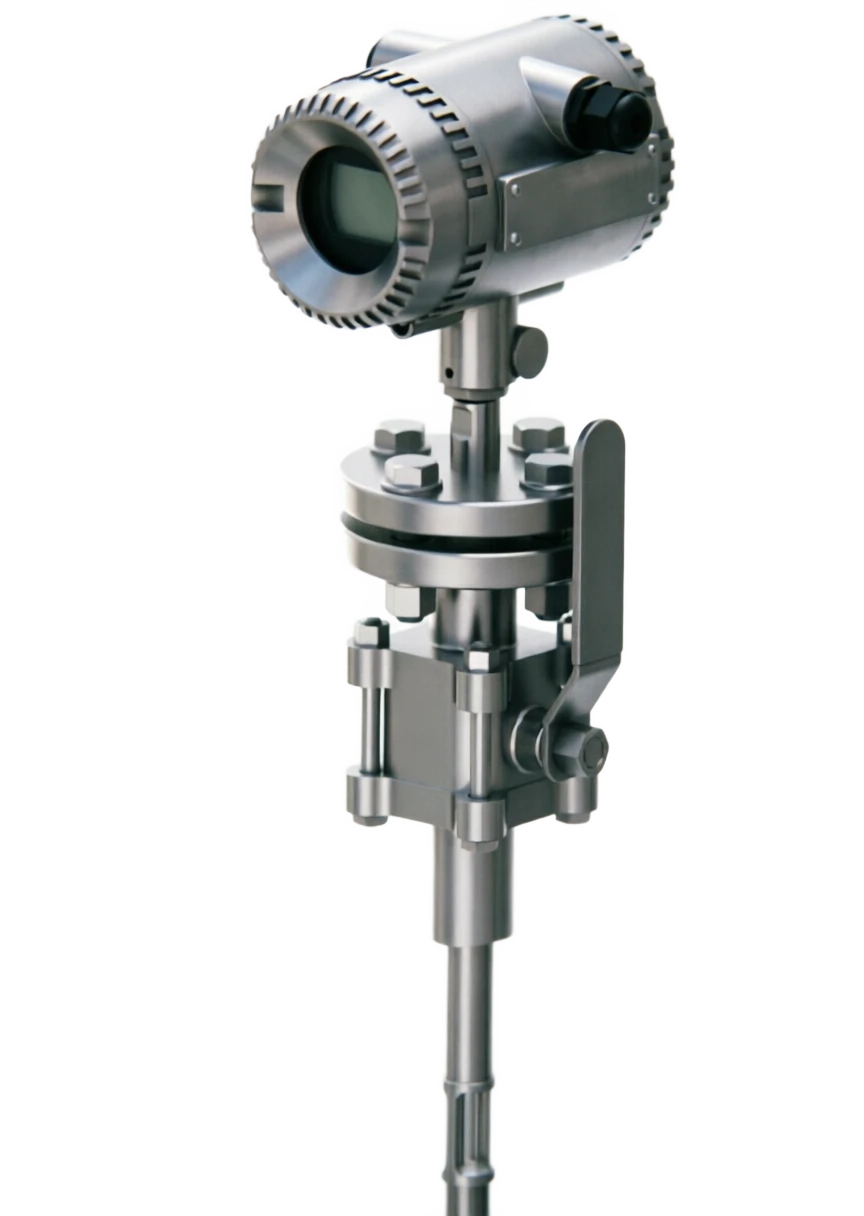
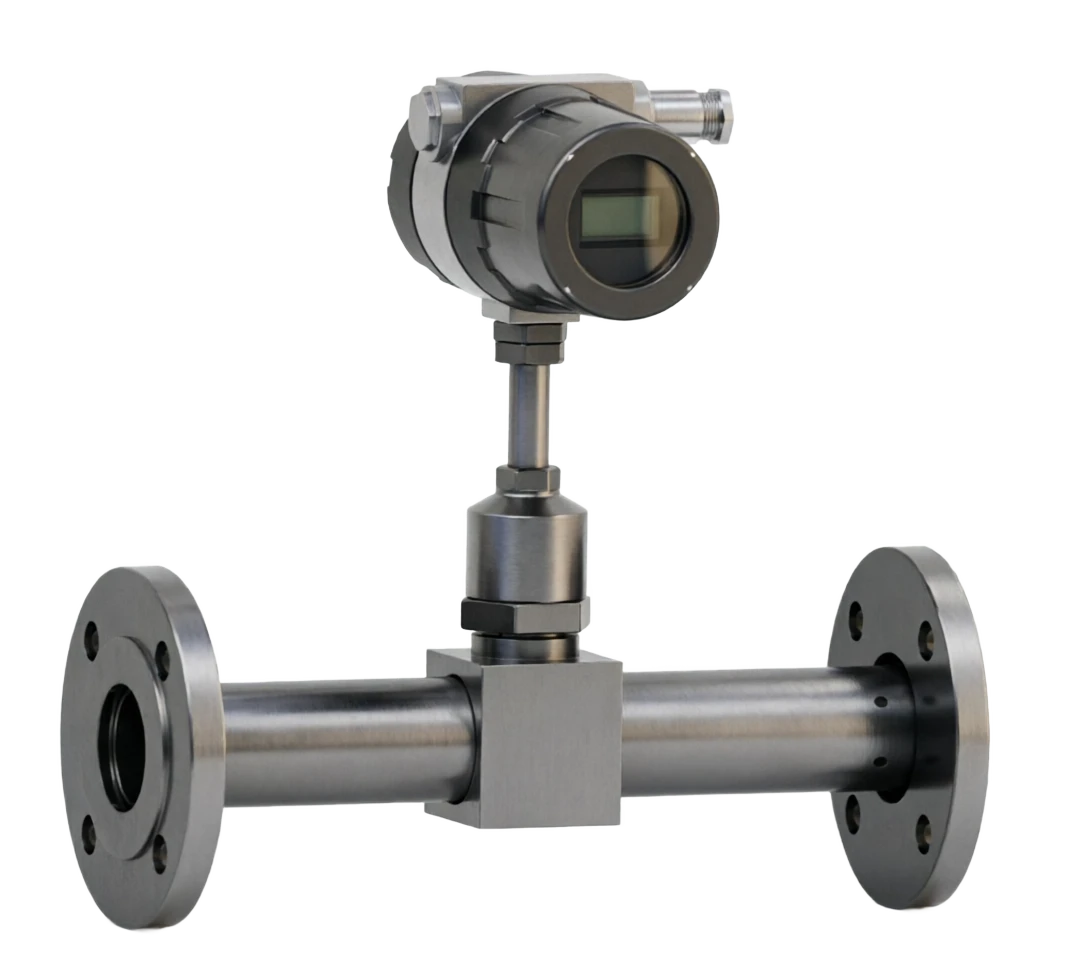
Thermal gas mass flow meters

Based on thermal diffusion principle: mobile gases take the heat from the heater, and the larger the mass flow, the more heat spread, the more the mass flow of the gas can be obtained directly by measuring the dissipation level. Its theoretical basis is King's Law: P = (A + B ⁇ v) ⁇ T of which: -P — heating power; - A, B — constants associated with gases and probes; - v — gas flow speed (mass flow speed); - ⁇ T - The temperature difference between the heating sensor and the medium. (b) Sensors consisting of two high-precision reference-level platinum resistance (RTD), which are connected by a bridge ring: the temperature sensor (R₂ / Reference RTD): the measurement of the actual temperature of the gas as the baseline; Heating sensor (R₁ /
Reference to the classification of heat gas mass flow meters
Thermal gas mass flow meters . Classification reference diagram

Thermal gas mass flow metering support

Provide survey missions, media and installation conditions and obtain product configuration advice.

Contact us
Thermal gas mass flow meter . Technical note

TECHNOLOGY & APPLICATION

Understand the principles, the exact selection.

The technical characteristics and selection elements of the thermogas mass flow meter are understood from measurement principles to field applications.

01

MEASUREMENT PRINCIPLE

Measurement principle

Based on heat diffusion

The flow of gas takes the heat from the heater, the mass flow is larger, the heat is more dispersed, and through.

Measurement formulaClick to see the big picture
P = (A + B·√v) · ΔT

The mass flow of the gas is directly available by measuring the dispersion. Theoretic basis is King's Law: P = (A + B ⁇ v) ⁇ T of which: -P — Heating power; - A, B — Constants associated with gases and probes; - v — gas flow speed (mass flow speed); - ⁇ T - temperature difference between heating sensors and media.

1.1 Mainstream programmes: Heat differential method (CTD)

(b) Sensors consisting of two high-precision reference-level platinum resistance (RTD), which are connected by a bridge ring: the temperature sensor (R₂ / Reference RTD): the measurement of the actual temperature of the gas as the baseline;

Heating Sensor (R₁ / Measurement RTD)

Electro-heated, which maintains a constant temperature differential above the medium temperature (typical ⁇ T = 20~50°C) through closed ring control.

When the gas flows, take it away. R₁ And the heat, the mass flow, the heat spreads, the heating power required to maintain the constant temperature differential. We'll measure the heating power.

Measurement formulaClick to see the big picture
Qm = K · (P − P0) / cp

P, quality traffic.

Qm = K (P - P₀) / cp where K is the nominal factor, cp sets the gas pressure relative to thermal capacity, and P₀ is the natural convective heat power at zero flow.

1.2 Auxiliary programme: constant power (CP)

The temperature differential decreases with the increase in flow. The structure is simple and low-cost, but the dynamic properties and the scale are less than the constant differential, and are used in low-end products.

1.3 Key characterization

Direct measurement of mass flow

Sensors sense the ability of gas molecules to take heat (in proportion to thermal heat of molecules x) which is essentially mass flow speed and therefore does not require temperature compensation, and the results are measured against temperature, pressure fluctuations - which is a fundamental difference from volume flow meters such as differentials, turbo-streets, etc.;

Gas composition dependency

The cp value of the measurement results is dependent on the gas and the heat coefficient, with variations in the composition of the medium, depending on the calibration curve (intellectual 32 gas parameter libraries, automatically modified cp);

Low-flowing sensitive.

Very low current speed of 0.05~0.1 Nm/s is measurable and suitable for gas examination leaks and small flow of large pipe tracks.

02

PRODUCT STRUCTURE

Structure

2.1 Core components

Probe material

316L stainless steel (standard), Hapsy alloy C-276, titanium (corrosive resistant).

2.2 Product structure forms

2.3 Sensor structure type

Hotline

Pelican hotline, very responsive, for microflow/fault detection (vulnerable);

Thermal membrane (MEMS)

(b) Monopoly platinum-resistant + micro-machine-electric processes, good durability, industry mainstream;

Coin tube type

A side-crop tube + a stream differential to be used for high-precision small flow (semiconductor, gas preparation).

Sensory.

Note: Optimistic design of the flow of bullets, reduction of the flow effects, clean-up of particulate accumulation

Reference Sensor (RTD)

Note: Pt1000 Pyramid resists, measuring medium temperature

Heating sensors

Note: Monopoly platinum resistance, constant temperature differential/stagger control heat

Transmitters (sign processing units)

Note: 24 bits ⁇ - ⁇ ADC (0.001°C resolution), Digital temperature compensation algorithm, smart self-diagnosis (sensor pollution alert)

Show and communicate

Note: LCDs display instantaneous/cumulative flows on screen; 4-20mA, RS485 etc.

Tables/process connections

Description: Pipeline French/screw/card connections; inserted welding base/Frand (with presses)

Pipe-Step (Pipe)

Scope of application: DN15~DN200 (small routing whole) feature: sensor integrated with pipe, fully calibrated, high accuracy, no depth error inserted; tube detonation installed

Insertion type

Scope of application: DN80 ~ DN3000 Large caliber pipe, windways Features: installation and maintenance of online pressurized vents, low cost; slightly less precision than pipe style, need to be carefully inserted In-depth positioning

Integral

Scope of application: Standard Type Characteristics: Number of Sites + Signal Output One

Remote

• Special features: sensor separation from surface installation

03

TECHNICAL GUIDE

Advantages and disadvantages

3.1 Advantages

Direct measurement of mass flow, no-voltage compensation

(a) No additional temperature, pressure transmitter and calculator, simple system composition, temperature pressure fluctuations without affecting accuracy, and combined costs below the "wreshold plus compensation" option;

Superwidescale ratio

Typical 100: 1, can reach 200: 1 ~ 1000: 1, all high and low flow covered, no measured dead zone;

Low-flow speed is excellent.

Minimum measurable 0.05~0.1 Nm/s suitable for gas examination leaks, small flow of large piped lumbers, network leakage monitoring;

The pressure is very small.

(b) The detection of the flowways is small, with virtually no additional pressure loss and energy efficiency;

No active parts, no maintenance

(a) A fully solid structure, MTBF ≥ 100000 hours, resistant to vibration, long life, without regular marking (recommended periodic verification);

Come on, come on.

≤1 s (T63), good-time, suitable for monitoring and controlling circuits;

Flexible installation

Insertion can be used to keep the pores under pressure and suitable for the retrofitting of the active-duty main pipe;

I'm smart.

Self-diagnosis (pollution alert), multi-gas parameter libraries, component compensation, RS485/Modbus/HART communications;

(b) Two-way measurement (part model);

Volume is displayed directly

Direct output mass flow (kg/h) or profile volume flow (Nm³/h).

3.2 Disadvantages

It's just for dry and clean gas.

Gases containing water, oil fog, dust can contaminate sensors and cause zero drift, and dirty gases (high furnace gas, wet flue gas) must be pre-filtered/regularly cleaned, not applicable in serious cases (dirty gases are more suitable for differential pressure like V-cones);

Gas composition is sensitive.

(a) The calibration curve is dependent on the gas cp and thermal coefficients, and the composition changes (combination gas ratio fluctuations) introduce errors, which require a component compensation function or a specific labelling;

Medium precision

General ±1.0% ~±1.5% readings (high-precision ±0.5% FS), lower than the Corioli mass flow meters (±0.1% ~0.2%), which are not generally used for high-value trade interfaces;

No liquids.

Thermal principles apply only to gases (liquid heat, sticky probes, with a special liquid heat or with a different method);

Media temperature, pressure range limited

General -40 ~ +150℃, ≤1.6 ~ 4.0MPa, with high temperature high pressure having to be customised to a much smaller scale than the differential pressure pattern;

Mark Dependency

The plant is to be marked with actual or equivalent gases, which are difficult to calibrate on site and have a long return period;

The high-flow speed segment is dropping.

Fluid speed > 60~80 Nm/s after convection heat saturation and reduced sensitivity;

Insertion has an installation error

(a) The depth of insertion, the oscillation, the flow field distribution all affect accuracy and require high normative requirements for installation;

Special gases such as acetylene are banned (with copper/silver components to generate explosive compounds).

04

APPLICATIONS

Application area

Not applicable

Disposed gases containing large amounts of hydro/oil fog/dust (without filtering), steam, liquid, acetylene, highly volatile mixture of compositions, high-value trade interface (recommended for Colloli)

Wait.

Compressed air system

Typical applications: air presses exports, workshop/class compressed air metering, network zoning measurement and leakage monitoring (advanced scene)

Metallurgy/steel

Typical applications: high-bore wind, coke gas, trans-bore gas, oxygen/nitrogen/thylene gas measurement

Chemical/ semiconductor

Typical applications: process gas rationing and monitoring of nitrogen, oxygen, americium, hydrogen, carbon dioxide, propane; high-precision catheter tube-type for gas formulation

Energy/gas

Typical applications: gas measurement, biogas, torch gas, air release measurements (explosive type)

Environmental protection

Typical applications: boiler gas, gas flow monitoring, sewage treatment exposure measurement

Food/medicine

Typical application: Clean gas measurement, e.g., fermentation gas, CO₂ addition

Scientific research/measuring

Typical applications: air check leaks, microflow marking, ventilator tests (large calibre insertion)

05

TECHNICAL SPECIFICATIONS

Technical Parameter Table

Technical parameter table · Item / ParametersCross-reference
ItemParameters
Measurement principleThermal diffusion (HYCP, HYP)
Measured mediumDry and clean gases (air, N₂, O₂, Ar, CO₂, H₂, gas, biogas, gas, flue gas, etc., except acetylene)
Nominal pipe sizeTube-band DN15~DN200; insertd DN80~DN3000 (overrided DN15~DN2000)
Flow velocity range0.05 ~ 120 Nm/s (Standard status 20°C, 101.325kPa); low end 0.1 Nm/s start-up
Turndown ratio100:1 (typical), maximum: 200:1 ~ 1000:1
Accuracy class±1.0% R (≥1 m/s); ±1.5% R ~ ±2.5% FS (General); High Precision ±0.5% FS
Repeatability≤0.2%
Nominal pressure≤1.6MPa (General 1.6 / 2.5 / 4.0MPa); high pressure type custom
Process medium temperature40℃ ~+85/ 150℃ (General); high temperature +220℃ ~+350℃ (Staff heat, Special 450℃)
Response time≤1 s(T63, filtration wave constant)
Probe material316L stainless steel, haze alloy C-276, titanium
Body material304/316L stainless steel
ConnectionTube-band: fran, screw (G), card-set; insertion: welded bottom, flan (with presses)
Straight pipe length requirementsUpstream ≥5 ~ 10 D, downstream ≥2 ~ 5 D (lower calibration)
Electricity24 V DC(≤18W)/ 220 V AC Optional
Output signal4-20mA, pulse, RS485 (Modbus-RTU), HART
Explosion protection markingEx d IIC T6 / Ex d IIBT4 / Ex iIC T6 (flammable gas scene)
Ingress protectionIP65 / IP67 (optional for dive IP68)
DisplayLCD field display instant + cumulative flows (mass or profile volume flows)
Applicable standardsJJG 1132-2017、ISO 14511
Average no-facilities timeMTBF ≥ 100000 hour (total solid)
06

SELECTION GUIDE

Select Table

6.1 Process parameters to be provided for the selection (orders required)

6.4 Example of typical model production (in YYRSL series)

Example:

YYRSL-150E-NN100-P1-T1-M-D = insert-type thermogas mass flowometer, DN100, 1.6 MPa, constant temperature, 4-20mA+RS485 output, blastproof type.

6.5 Elements of a selection supplement

  1. 01

    We need to confirm the gas composition.

    The calibration curves of the same instrument for air and hydrogen gas are very different and the actual gas must be indicated when ordering; the mixture of gas is to be matched and the need for a component compensation function is to be confirmed;

  2. 02

    Quantification of traffic by profile

    Here. Nm³/h ( 20℃ 、 101.325kPa ) Provides flow parameters, which often fall within a full range. 30% ~70% , not to be too large than FUN (the greater the greater the lower the accuracy);

  3. 03

    The dirty gas is careful.

    Gases containing dust/oil fog/water must be equipped with pre-filter and assessed for maintenance periods; heavy polluting gases (gas, wet flue) suggest a different type of differential pressure such as V cones;

  4. 04

    Insert Installation Code

    The induction area must be in the main pipeline area (usually inserted in 1/3-1/2 piping) avoiding bending, valve disturbance and marking the depth of insertion;

  5. 05

    Straight-barring segment

    Upstream ≥5 ~ 10 D, downstream ≥2 ~ 5 D, select a probe with current function or consult with the manufacturer to fix the current;

  6. 06

    (b) Vertical pipe installed from the bottom up; horizontal pipe is fitted to the side of the pipe (avoiding upper gas, bottom fluid) and is far from the sources of strong electromagnetic and vibration;

  7. 07

    Precision Level Matching Usage

    Internal share control selection ±1.5% R; workshop-level measurement ±1.0% R; trade cross-cutting carefully (recommended for Colloli or turbine);

  8. 08

    Package confirmation.

    Whether or not to include accessories such as base/ball valves (inserted band openings), filters, pairing of Frank, communication cables, etc.

Selecting table . Serial number / ParametersCross-reference
Serial numberParametersDescription/unit
1Gas name and compositionDetermines the cp value to the peg; ratio of the mix of gas needs allocation; and whether it contains dust/oil fog/water
2Flow rangeMax. Usual, Minimum Flow (Nm³/h or kg/h, marked 20℃ / 101.325kPa)
3Operating pressureConstant pressure, maximum pressure (MPa); Volatilities
4Working temperatureMedia temperature range (°C)
5Pipe ParametersCommonly known as diameter, inner diameter, material, wall thickness, pressure level
6Installation ConditionsHorizontal/vertical, available direct tube segments, need for a pressurized opening installation
7Precision requirementsMonitoring level ( ± 1.5%)/ Metric level ( ± 1.0%)/ High accuracy ( ± 0.5%)
8Output & FunctionsSignal output, communication protocols, blast resistance, self-diagnosis/assembly compensation
ConditionsForm of recommendation
PN15~DN100 Clean gas, high accuracyPyramid (integrator calibration, maximum accuracy)
DN100~DN200 General StatusPlugin or insert (cost-based)
NN200 Large caliber pipe/windways aboveInsertion (pressed opening, unstopped installation)
High temperature, strong vibration, small space installedPartial (sensor separated from surface)
Air checkup leaks, small flowHotline/cowder-type high sensitivity
High-precision ratio, gas.A sidewalk for the capillary tube (stropical shunt)
Selecting Table . Work Type / Recommended ConfigurationCross-reference
Status TypeRecommended Configuration
Clean gases such as compressed air, nitrogen, etc.Standard type (304 probes)
Gas, hydrogen, biogas, etc.Explosive-proof (Ex d/ia IIC T6)
High-temperature process gases, kiln tail gasHigh temperature (+350°C, with heat-dispersion structure)
A small amount of dust/wet gasAll metal anti-pollution probes + pre-filter + self-diagnosing alert
Corrosive gases316L/Haps Alloy C-276/Tiotium probe
Combination of group fluctuationsIntelligent component compensation (multi-gas parameter libraries)
High pressure tube network (>4MPa)High pressure custom
Selecting table . Bits / CodeCross-reference
BitsCodeMeaning
Basic ModelYYRSLThermal gas mass flow meter
PassageDN15~DN2000Nominal pipe size
StructureE / IInserting / Pipelines (E for Inserting in Example)
Pressure ratingP1 / P2 / P31.6 / 2.5 / 4.0 MPa
Temperature LevelT1 / T2 / T3Constant / Medium / High Temperature
OutputM / H4-20mA+RS485 / HART
Fireproof.N / D / INo blast/ blast/ Bennan
07

TECHNICAL GUIDE

Comparison with other gas flow calculations (summary table)

Select the mode.

Low-flow speed check leaks thermal, high-speed vortex in steam, high-temperature, high pressure differentials for dirty, trade to Kossy.

References

DJG, web of chemical instruments, Yuyuki, SEAGMA, etc. 1132 - 2017 、ISO 14511 Standardized. Specific parameters are based on samples of products from various manufacturing plants.

Comparison with other gas flow meters (summary table) · Contrast / Thermal mass flow metersCross-reference
ComparativeThermal mass flow meterVortex flowmeterFragmentation (poreboard/V cones)Corioli flow meter
Measurement principleThermal spread (stable temperature differential)Carmen Turbo Street.Bernouli's pressure.Corscillo/Vibration
Direct mass flow measurementYes (remuneration against temperature)No (compensation required)No (compensation required)Yes.
Turndown ratio100:1~1000:110:1~30:13:1~15:120:1~100:1
Minimum flow speed0.05~0.1 Nm/s2~5 Nm/sHigherLower
Precision±1.0%~±1.5%R±1.0%R±0.5%~±1%±0.1%~0.2%
Pressure lossVery smallSmallBigger.Large
The venom gas is resistant.Gap (filtered)MediumGood (V cone/weed)Okay.
Vapour measurementNo way.YuYu(Special)
Liquid measurementNo way.Yeah.Yeah.Yu
PriceMediumMediumLow ~ MediumHigh
Typical advantage scenarioCompressed air, low current speed, leaks, large pipe tracks, surveillance.Vapour, medium-high-flow gasDirty gas, high temperature, high pressure.High-value trade interface, high-precision