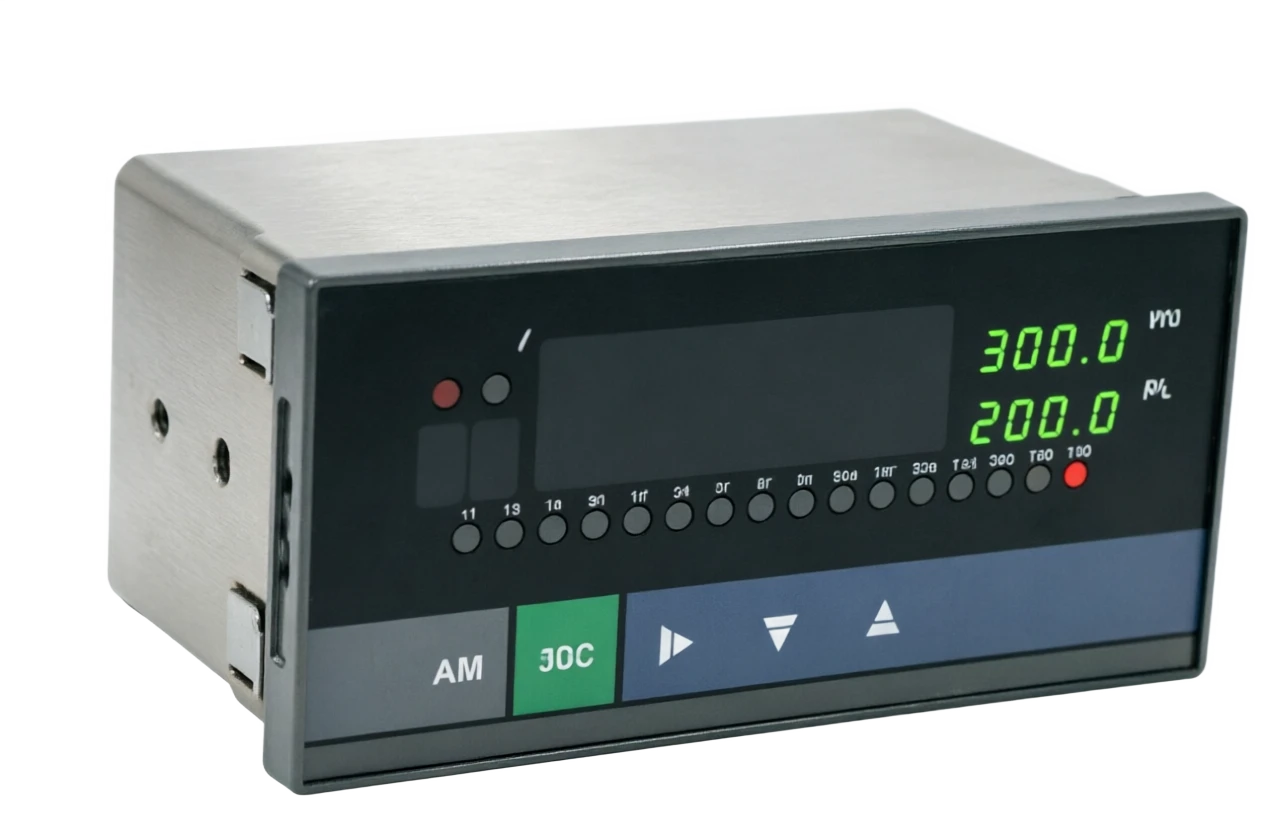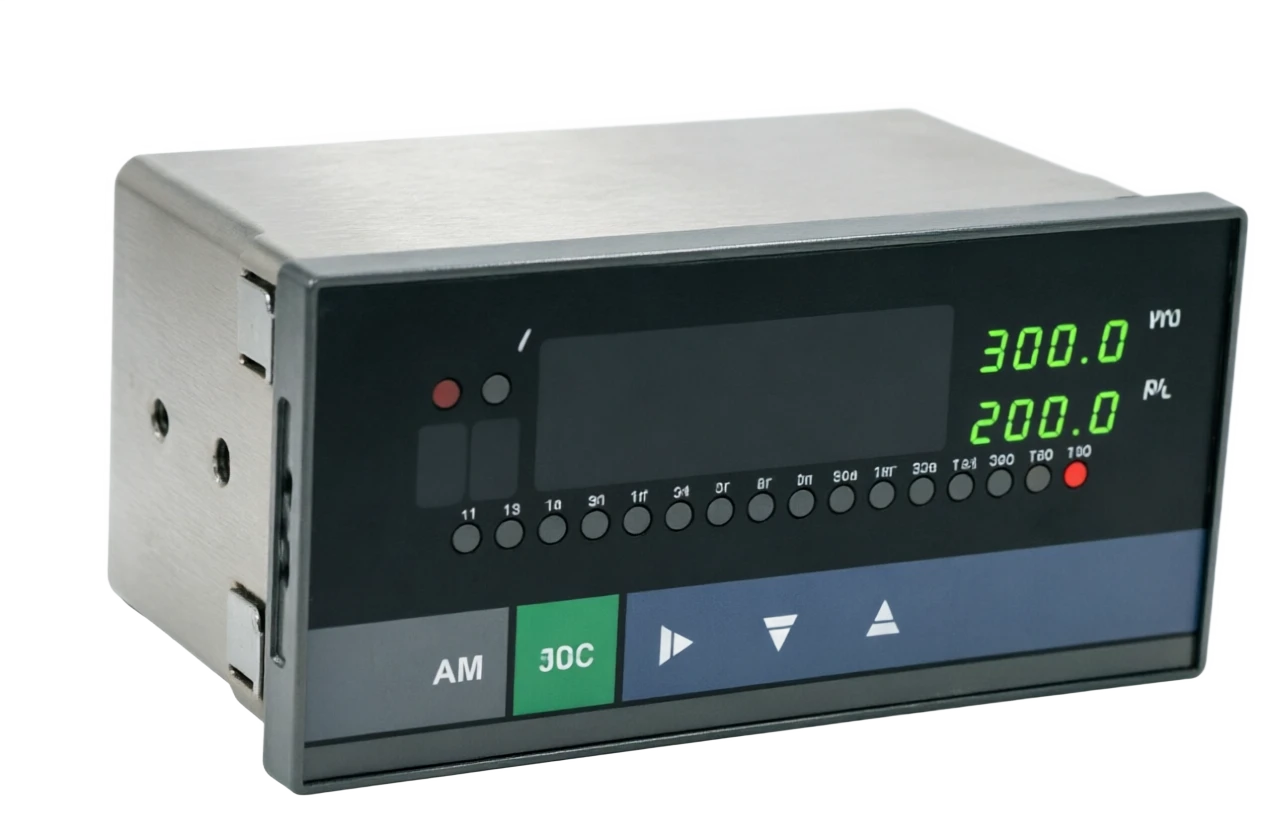
PRODUCT TECHNOLOGY

Smart Multi-Pilot Tour Display Modem

Operating principle

Smart multi-point tour display regulator.

(a) The smart multipoint patrol machine has as its core structure "multi-road switching + itinerary movement + point-by-point processing": all points are taken to the shared signal reconciliation and ADC front end when mocking the time, MMU sampled by point, measured by score sheet or linear marking the point project, updated and independently determined the point alert status; Once the scan is completed, go into the next round and recycle. The modem type is attached to the scan cycle with the PID operation (for specified points or results), which produces continuous current or bit signal.

  1. 01

    1 Multi-road switching front end • Dry reed relay or simulated multi-road switches (select by point and accuracy level); thermal resistance points with independent constant flow incentive channels; the time and inter-channel disturbance inhibition after switching is critical for accuracy

  2. 02

    2 Sharing of signals . Programming for the MV class thermoelectric doll and V class current sampling signals; automatic switching of filter parameters by signal type; integrated deployment of cold end compensatory elements (sharing of thermoelectric spot points)

  3. 03

    3 • Scanning order (proportion / specified point skip), duration of stay per point (typical 50 ~ 200 ms), frequency interval display grouping; anomaly can be encrypted back-up (quick confirmation of alarm authenticity)

  4. 04

    4 . A point-by-point project volume change . A stand-alone grouping of each point: signal type / lower limit/ decimal / unit; thermoelectric doll / thermoelectric resistance scale; linear current signal at two points

Smart Multi-point Tour Display Modem Support

Provide survey missions, media and installation conditions and obtain product configuration advice.

Contact us
Smart multi-point tour display adjuster Technical description

TECHNOLOGY & APPLICATION

Understand the principles, the exact selection.

From measurement principles to field applications, the technical features and selection features of the smart multi-point mobile display regulator are understood.

01

TECHNICAL GUIDE

Overview

The MPU is used to collect the 8-64-way signal, display the spot-by-point display and separate detection devices from the alert. "Road" is its soul: all points share a collection front end, take samples in sequence and beat, show current point engineering and make point-by-point alerts; The type of signal between the stations can vary (thermal voltage/thermal resistance/electric mixing). Most types are based on "Show + Alert" as a core function (the patrol monitoring type), with some of the types being carried along the PID to regulate output (the circuit mode, which rotates the journey or multiple roads, or the multiple average/ maximum/ minimum value). The difference between it and the four circuit adjuster of 52 is that the four circuits are "independent continuous control" per circuit, the patrol is "multi-point time-detection surveillance" and the function of a meter covering the traditional dozens of single-point lists.

  1. 01

    Comparison of 1 with the Four-Language Modems (52), Paperless Recorder (48)

1.2 A brief history of development

Overview * Project / AnnotationsCross-reference
ItemAnnotations
Product positioningMulti-point detection surveillance instrument: 8 ~ 64 Road Rover Collection + Point by Point Warning + Point by Point Alert; mainly "Search Alert" and adjusted; best dedensed at the distribution room, boiler, cooler, bearing temperature group, etc.
Core valuesA substitute for dozens of single-point tables (scatter and cost sharp drops); mixed input of points (symmetrical and quantitative signals per point); independent alerting of the state by point; unified communications upload; failure of individual points without affecting the rest of the monitoring
Mobile mechanismsFull site scanning cycle 1~10s (typical 2~5s complete 32 points); displaying method: single point fixed / automatic wheel patrol / one-stop group; alerting to independent determination of each point (threshold/ deviation/ break)
ReconciliationMonitor type: Only alerts are shown; reconciliation type: 1-2-path PID output can be reconciled with the specified point / multiple point average / maximum minimum value operation
Market patternsAbsolute dominance of domestic production: 8-64 point inspection series, etc.; rare import type (this breakdown of foreign investment is largely out); 600-4,000 yuan (points and configurations) in the mainstream of national production
Contrast DimensionsMultipoint Patroler (Phone)Four-way adjuster (PART 52)Paperless Recorder (PART 48)
Points / Return paths8~64 Points4 backway1-64 Road
Collection methodsTravel time (shared frontend)Time-out, but independent of each circuit.Travel Scan + Data Storage
Core functionsWatch + Call the police as the main4 Backway Independent Consequence ControlTrends + Archive
Historical dataMost do not store (surveillance type)Do Not StoreCore competencies (Flash Loop saving)
Police capabilityStand by each point, the strongestEvery turn, 1-2 pointsMultiple groups per channel + alarm profile
Control outputReconciliation 1 ~2 Road (Auxiliary Level)4 Complete Path PIDPID Type Matching
Single / Return costMinimum (thousands/ dots)Medium (thousands of dollar/turn)Medium
Typical applicationsMulti-point, less action surveillance.Small number of back-to-back controlsHistorical trends and traceability
PeriodPhaseTechnical characteristics
1970s-80sDigital surveyors start.CIMOS Digital Circuit + Dry Spring / Simulation Multi-point Rotation Monitors for Concerns; Digital Tube Display Point Numbers and Readings; Points 8-20; for the monitoring of power stations and boiler room temperature groups
Overview · 1990s / Single-piece smartnessCross-reference
1990sSingle-piece smartnessMMU roving sampling + standalone grouping per point (sign type / quantity / alarm value); LED points extended to 32-64; alarm relay aggregate output; national production surveyors are widespread in electricity, metallurgy markets
2000sCommunications and mixed inputRS-485 (Modbus) unified upload of full-scale spot data; spot mixed input (thermal voltage / thermal resistance / current random combination); machine type with transport output and print interfaces
2010sDisplay & Functional UpgradeDouble / Four Platoons LED or small array crystal at a glance; Call the police and take a look at the images; Maximum / Minimum / Average; Part of the 1 ~ 2 road PID became a travelling mode
2020s and so farAssociatedMQTT / Ethernet direct cloud-link platform; mobile phone end alert delivery; gateway-type inspections with wireless temperature (cell power) detection; pure surveillance to morphate to the "temperature-based smart gateway"
02

MEASUREMENT PRINCIPLE

Operating principle

(a) The smart multipoint patrol machine has as its core structure "multi-road switching + itinerary movement + point-by-point processing": all points are taken to the shared signal reconciliation and ADC front end when mocking the time, MMU sampled by point, measured by score sheet or linear marking the point project, updated and independently determined the point alert status; Once the scan is completed, go into the next round and recycle. The modem type is attached to the scan cycle with the PID operation (for specified points or results), which produces continuous current or bit signal.

2.1 signal chain eight subsystems

2.2 Analysis of Key Rationales

Modus operandi . Serial number / subsystemCross-reference
Serial numberSubsystemFunctions and elements of achievement
1Multi-road to frontendDry reed relay or simulated multiplex (select by point and accuracy level); thermal resistance points with independent constant flow incentive channels; time and channel inter-link disturbance inhibition after switching is critical for accuracy
2Shared signal reconciliationProgrammable Addition Magnification (PGA) corresponds to the mV class thermoelectric pups and V class current sampling signals; filter parameters are automatically rotated by signal type; cold end compensatory elements are integrated (hot-patter stations shared)
3Tour SchedulerScan order (results / specified point skip), time of stay per point (typical 50~200 ms), frequency displays for wheel patrols to be organized; anomaly can be encrypted back-scanning (quick confirmation of alarm authenticity)
4Project-by-point volume transformationIndependent grouping of each point: signal type / lower limit of the range / decimal / unit; thermoelectric doll / heat electrical resistance score; linear current signals are marked by two points
5Call the engine, one by one.Each point is independent of the upper and lower limit (or multiple group limit values); margin and delay can be set; alarm relay output mode is optional: public group / group output / point by point (minor machine type)
6Show ManagementDisplay mode: a list of fixed points (manual selection points)/ automatic wheel patrols/ grouping; LED models showing current points + project volumes; LCD types allowing a single view of multiline points
7Operations and reconciliation (selection)Maximum / Min / Average / Difference Operations; Reconciliation: Execution of 1~2 Path PID for specified points or operations, Output 4-20mA / SSR / Relay
8Communications and transportRS-485 (Modbus-RTU) uploads all the data from the point; transports the output selection (current point / calculation results forwarded 4-20mA); Ethernet / MQTT is available in the new generation type
· Analysis item / Mechanism descriptionCross-reference
Analysis ItemScheduling
Swing vs. trade-offs for parallel collection(a) A front-end set of shared tours: costs and effort are growing in a linear step with points, 64 points at a fraction of the cost of parallel programmes; The cost is that the renewal cycle is extended by points per point (64 dots x 100ms ⁇ 6.4s); Temperature-like agile variables are fully acceptable and fast signals (vibration/ transient) are not suitable. This is the essential separation between the multiple spot and the control scene.
Switch selection logicDry reed relays: small, isolated, and suitable for thermal electron doll mV-grade signals (high accuracy); CCOS Simulation Switches: Speed, life limit, but conduct electrical resistance and collusion (economic); We're gonna have to use the "Thermix Dry" when we have more points and mix the signals.
Motion of work • Model of the point-level group / A "virtual inscription" per point: signal type / q. / unit / alarm value / return / delay / participation in the operation; (b) The storage of the EEPROM partition; Individual spot sensor replacement (e. g. K-P-E-P-P) will require only a change in the location to be organized, and the remaining sites will not be affectedCross-reference
Point-level group modelA "virtual inscription" per dot: signal type / q. / unit / alarm value / return / delay / participation in the operation; (b) The storage of the EEPROM partition; Individual spot sensor replacement (e. g. K-P-E-P-P) will require only a change in the location to be organized, and the remaining sites will not be affected
The alarm output structure weighs.(a) Independent branch relays: the most precise but time- and cost-effective location; (a) Public aggregation: any single alarm action, with a visible sign-point location - most commonly used; Group output: group by equipment / region (e. g. electric A / B group), taking into account positioning and cost; The output structure is determined by the "Post-At-At-Ambassault Particle" when selecting the type.
Limitations of the Rotation ModeReconciliation output is only 1 ~2 and PID operations are embedded in the circuit cycle, with control cycles aligned with the scanning cycle; only slow processes (average temperature group control, cooler group control); 4 return roads for independent quick control should be selected for 52th circuit adjuster
Self-diagnosis of breaklines and failuresReasonability of signal after sampling at each point: Thermal electrical resistance < 10 short circuits > 400 judgment lines; thermoelectric intertwining (reading through or < lower Quantification range); current < 3.6mA judgement lines; failure points display specific codes and decide whether to participate in alarm and calculation according to their pattern
03

PRODUCT STRUCTURE

Product structure

The whole machine is embedded in a panel structure, with 96 x 96 mm (8~32 points) and 160 x 80 mm (16~64 points, multiple ends) in its shape, with the front panel displaying and buttons, the core being streamlined into two panels, "Main Control Panel + Switch to the Front End of the Collection" , with multiple point end-line rows and weak power partitions being the focus of the structure.

Analysis of strengths and weaknesses

4.1 Advantages

4.2 Disadvantages and responses

Front panel.

Composition and function: double row LED (point + project volume) or small liquid crystal (multiline spot); click key / wheel-start / group key; alarm (public) + communication light; partial machine-based beeper (alarm silencer)

Toggle the frontend of the collection

Composition and function: Dry Reed Relay Array or CCOS Multi-road Switches; Thermal Resistible Flow Incentive Channel; Signal Adjustment PGA; High Precision ADC (16-24-bit)

Console

Composition and function: MPU Roving Schedule + Point-by-Performance and Warning Determination; Point Form EEPROM; Alert and Dissemination Management; Reconciliation PID Operator

Call out the output panel.

Composition and function: relays 1 ~8 points (public aggregation/ grouping/ point by point); contact capacity 3A / 250VAC; audio alarm output (beep + alarm contact)

Communications and transport

Composition and function: RS-485 (Modbus-RTU) terminal; transformation output 4-20mA selection; Ethernet / MQTT provided in the new generation

Power unit

Composition and function: 85 ~ 264 VAC or 24 VDC; whole power ≤ 6 W (lower without display screen and reconciliation output)

End subsector

Composition and function: Multi-point input end row (identified by 8-point row); three-line thermal resistance spot by end; strong and weak end end subdivision; panel protection IP54

Mounting accessories

Composition and function: Installation of a support frame on the panel; Open 92 x 92mm or 152 x 76mm; Depth ≤ 130mm (over-time frame rear of end rows to highlight the depth of the reconciliation plate)

Evolutional trends

Structure: Description Composition and function:

Show upgrades at a glance

Structure units: A point-forming liquid crystal / a screen overview (8-16 lines) instead of a single-point round tour showing a significant increase in the efficiency of surveillance

Wireless temperature measurement grids

Structured units: incorporated wireless reception module (433 MHz / LoRA) directly connected to the cell power wireless temperature measurement nodes, which become the condensation gateway for the temperature-monitoring band of the rotary equipment Composition and function:

Cloud alarms are being sent.

Structure units: MQTT Direct Cloud Platform, with cell phones pushed over any point; main power pattern of unmanned electrical distribution, cold-storage remote surveillance

Connect with video / Fire

Structure: alert contact camera preset, sound alarm; evolution towards "integrated surveillance unit" at unmanned stations

Optimal cost of density of the spot

The single-point cost is only a few dozen dollars. 1 / 5 ~ 1 / 10; 64 point monitor a table + one face opening is all done

Mixed Input Flexible

Type and range of independent group signals per point; any mix of thermoelectric dolls/thermal resistance/electric currents; replacement sensor for later retrofit only changes to the corresponding point configuration

Call the group one by one.

Independent limit value per point / return / delay; grouping or aggregation relay output; alarm point display + beep + silence management, monitor the full experience

Efficient communications

A Modbus address uploads all the data from the sites; a round of questions that replaces dozens of single-point lists, up-to-point lists, double savings from investments in cables

It's a good quarantine.

Individual spot breakers / Short circuits affect only the point display (facing code), while the rest of the stations are routinely checked - less than the impact of the failure of the circuit log board

Operational capacity is functional

Maximum / Minimum / Average / Difference Operations directly yield group characterization values; temperature differential surveillance (axis and environment temperature differential) etc. is used to open boxes

Work and size

Full power ≤ 6 W; 96 x 96 small openings; close cabinets and box interiors are installed friendly

Disadvantages and use restrictions

No history

Description and response measures: most types do not store historical data, only real time values and alert status; paperless recorders (part 48) or top-up storage are required for trend retrospective locations

Long point update cycle

Description and response measures: 64 full scans 5-10s, fast-track surveillance lags; response: temperature-based slow-variant scenarios are dominant; key fast-track sites are separate and action-based pathways or stand-alone meters

Share front-end single point risk

Description and response: Switching or ADC failure will render all detection points ineffective; response: security critical points (e.g., hypertemperature chain) will be separately separated from stand-alone alarms; reliability spectrometers selected

Limited reconciliation capacity

Description and response measures: reconciliation only 1 ~ 2 Quick checkout and periodic coupling; multiple circuit independent control should be selected 52 Four-way or DCS Scheme

The wheel patrol shows the blind zone.

Description and response: Unvisible other points in the cycle between single points (calling the police or backstage determination); response: a snapshot showing the machine type or shortening the frequency of the cruise

Inter-channel Serial

Description and response measures: Economic CMBOS-to-transformation interlinkage introduces error in high resistance signals; response: mV class thermoptoPet group selection dry reed relay switching high accuracy

Port multiple connections are cumbersome

Description and response measures: 64 point three-line heat-making electrical resistance 192 endpoints, heavy connection and detection load; response: pre-connected line sub-team + cable group colour labels; desk-by-point check of tabular management of records

Typical application scenario

Electricity

Typical application scenario: transformer / box detrusion group and interface temperature group, switchboard contact temperature, electric axle bearing temperature common configuration: 32 ~ 64 point Pt100 + group alert + communications upload

Metallurgy

Typical application scenario: furnace body / hot wind stove temperature survey, roller bearing temperature, electric cluster temperature monitoring Common configuration: thermoelectric doll + heat resistance hybrid input + maximum value operation

Chemical

Typical application scenario: reactor multiple wall temperature, surface temperature of the pipe, fluid inspection of the tank temperature, common configuration: 64 points mixed input + alarm summary + Modbus

Refrigeration and food

Typical application scenario: cold storage with more room temperature, cooler-group temperature, fermentation-hot-moisture group surveillance, common configuration: Pt100 group + upper- and lower-limit alert + cloud push

Warm.

Typical application scenario: AA water system multi-temperature, a group of geothermal water heaters, boilers multi-wall temperature, common configuration: 16~32 points + average operation + transport output

04

APPLICATIONS

Application area

The multipoint patrol instrument is used mainly in "number of sites and low action" surveillance alerts, with temperature cluster surveillance as the absolute main force, typically distributed as follows.

5.1 Five typical application models

Mechanical equipment

Large-assembly bearing clusters, air pressurer multi-stage temperatures, speed-reducing oil temperature 8 ~ 16 points + group relays to shut down

Test equipment

Baking boxes / multi-temperature homogeneity surveillance in ageing rooms, thermo-upgrading tests of electrics, high accuracy (dry spring switching) + fixed-point display mode

Mode

Signal path, point.

Temperature surveillance alert.

Multipoint Pt100 / Thermal Puppet ⁇ Patrol ⁇ Summon alarm + Beeping + Communications Sending Best Classic Pattern; Warning Point Number Shows Positioning; Disabling Management

Temperature differentials and group characteristics monitoring

Multipoint sampling Intra-machine margin / Max / Average operation ⁇ Operating values alert and transport Axis - Environmental temperature differential surveillance; Average temperature for group control

Rotation regulation (slow passage)

Multipoint sampling / Average PID ⁇ 4-20mA / SSR reconciliation output Both temperature control and average temperature control in an ageing room in a cold storage group

The power distribution room is unguarded.

Thermometer, MQTT cloud platform, cell phone alerts to the gateways to the wireless temperature nodes; connection, sirens.

Complement with the recorder

Inspection agents send output (group characteristics) ⁇ Paperless recorder (part 48) records trends Inspection and control surveillance, recorder filing, division function

Parameter Item

Points

Typical specification: 8/16 / 24 / 32 / 48 / 64 point series; random mixing of signals type within the same type (point by point)

Type of input (point by point)

Typical specifications: Thermal electromechanical doll K/S/B/R/E/J/T/N; Thermal resistion Pt100/Cu50 (triline); current 4-20mA/0-20mA; voltage 0-20mV ~0-20V; independent Quantities and decimal places per point

Basic Accuracy

Typical specifications: 0.2 ~ 0.5% FS (economic) or 0.1% FS (drind toggle high accuracy); cold end compensation ±1℃; inter-channel serial disturbance inhibition ≥ 100 dB (high accuracy)

Scan Character

Typical specification: full point scanning cycle 1-10s (64 points typical 5~6.4s); 50~200 ms per point; jump point / encrypted re-cleanable

Display

Typical specifications: double row LED (4 bits + 4 bits project volume) or point-forming crystal at a glance (8 ~ 16 rows); fixed point / automatic wheel patrol / three modes at a glance; alarm point scintillation

Function Alarm

Typical specifications: upper and lower limits (or multiple groups) per point independently; margin and delay-by-point; relay output 1 ~8 points (summation / grouping / point-by-point by order); beeper + silencer; alarm screen

Self-diagnosis

Typical specifications: point-by-point break-up / short-circuit detection (thermal resistance range, current break-through determination); failure point code display; failure point grouping

Calculation functions

Typical specification: Full point or grouping maximum / minimum / average / any two points margin; calculation results alert and transport output

Reconciliation function (selection)

Typical specifications: reconciliation: 1:2 road PID (location/ bit); to be adjusted for the specified point or result; output 4-20mA / SSR / relay; control cycle aligned with scanning cycle

Transmitter output

Typical specification: 1 ~ 2 Road 4 - 20mA Change Selection (current point / calculation results forwarded), load ≤ 500 times

Communication interface

Typical specifications: RS-485 (Modbus-RTU) standard, full site data for an address; Ethernet / MQTT in the new generation; wireless receiver (LoRa / 433 MHz) gateway selection

Power supply

Typical specifications: 85 ~ 264 VAC 47 ~ 63 Hz or 18 ~ 36 VDC;utilization ≤ 6 W

Environmental conditions

Typical specification: Working 0 ~ 50℃, Humidity ≤ 85% RH without Condensation; Vibration ≤ 0.1mm (10 ~ 55 Hz) Disk-loading environment

Installation and protection

Typical specifications: Panel DIN 96 x 96mm (≤ 32 point) or 160 x 80mm transverse (≤ 64 point); Panel protection IP54; outer depth ≤ 130mm (with emits)

05

TECHNICAL SPECIFICATIONS

Technical Parameter Table

The following table shows the typical specifications of the smart multipoint surveyer (96 x 96 disks containing 32 points generic), which are based on the sample of the manufacturer.

  1. 01

    Select Table

The price is the price of the whole RMB.

7.1 Order code structure (example 8 bits)

  1. 01

    Selection Guide

8.1 Ten Elements of Selected Decision-Making

8.2 Typical scene selection path

8.3 Four procurement acceptances

Summary

The smart multipoint tour display regulator, which collects "twice time" in exchange for the best solution to the density and cost of the spot - a watch, a set of front ends, dozens of points, a stand-alone, a stand-by alert, is the king of the "multipoint action" surveillance scene (temperature, axle bearing, acreage); The costs are long-term updates, limited reconciliation capacity and shared single-point risk at the front end. It is divided with the showing of the records control family: the inspection instrument controls surveillance, the recorder (No. 48/53) the recorder records, the regulator (No. 49/50/52) controls, the hand-manufacturing (No. 54) operation. Selective logic: First, see whether the number of points matches the update cycle, second, whether the alarm output structure (aggregated/ clustered/ point-by-point) needs to be reconciled and remotely reconciled outside of the third, watcher. The log and control family continues to expand in this series, following up on signal alarm devices, flash alarms, etc.

Technical parameter table · Slotting / Representative typeCross-reference
TrancheType of representativeTypical ConfigurationPrice of the whole machineTypical applications
High PrecisionHigh-end inspection series of national production (ring switch)0.1% level; dry reed relay switching; point formations; liquid crystal overview; point-by-point independent alarm3000 to 4000 yuanTest equipment evenly monitored, temperature-up test
Standard communications typeMainstream Inspections in the Country32~64 dots; CCOS toggle 0.2% level; RS-485+group alert + operation1500-3000 yuanThe power distribution room, the metallurgical temperature-monitoring cluster, and the crew bearing surveillance.
ReconciliationNational Production Rotation Control Series16~32 points + 1~2 road PID; SSR / current output; average reconciliation2500 to 4000 yuanThe cooling tank is controlled by temperature, by average temperature in the old room.
EconomyNational Inspection of Production8~16 points; basic alarm summary; LED cruise display600 ~ 1,500 CNYGeneral temperature cluster surveillance, adaptation
bitsMeaningCommon take-up examples
1Broad categories of productsX = Smart Multi Point Tour Display Modem
2Panel Dimensions9 (96 x 96, ≤ 32 point); H (160 x 80 horizontal, ≤ 64 point)
3Points08 / 16 / 32 / 48 / 64 (Number of checkpoints)
4Input typeX (intermingled all-power input per site); T (unified thermal resistance); E (unified thermal voltage); A (unified current)
5Alarm output1/2 / 4 / 8 (substitute points, aggregate or group); S (singing silence)
6Communication interface0 (none); R (RS-485) M (MQTT cloud interface); W (wireless temperature measurement gateway)
7Reconciliation0 (Monitoring type); P (1 PID) and D (2 PID)
8OptionsH (high accuracy dry spring switching 0.1% level); L (Line crystal at a glance); T (transmit output); default base
Technical parameter tables · Decision-making elements / Decision pointsCross-reference
Elements of decision-makingElements of judgement
Number of points and abundanceTotal number of statistical sites and set aside 20-30% abundance; over 64 points for two or selected recorders/ data acquisition programmes
Watch vs control decisionsWatch only uncontrollable monitoring (mainstream); group average slow-regulating reconciliation; multiple circuit independent control first 52 Four-Live or DCS
Update cycle assessmentTemperature-type agile variable 5~10s fully scanned; fast-processed points are not suitable for the patrol monitor (with separate meters)
Precision Level SelectionGeneral surveillance 0.2~0.5% economy is sufficient; temperature-up test / evenness evaluation option 0.1% Dry spring switch for high accuracy
Alarm Output StructureParticle size selected for disposal actions following alarm: summary (one pot end)/ grouping (by device)/point-by-point (precision location, high cost); most commonly used grouping for connection parking
Show Mode RequirementsRound-tour surveillance LED double rows; one-stop surveillance of LCD multi-line machine (price difference of about 30-40%)
Communications and remoteRS-485; Unmanned Cell Phones for MQTT; Wireless Temperature Node Site Selection Gateway
Historical data requirementsMost of the inspectors are unhistoric; trend archive setters (transmit output group characteristics) or directly select paperless recorders (Para 48)
Technical parameter table • Security depth design / security critical points such as hypertemperature locks with separate alarms, without reliance on the patrol monitor to share the front end (single point failure risk)Cross-reference
Safe undercover.Security critical points such as hypertemperature chains are provided with separate independent alarms, and are not dependent on the patrol monitor to share the front end (single point failure risk)
Connector engineering64 (b) Large heat-retarded electrical cords of a 3rd-line; Preset Line + Colour Group + Check tabularisation management by point
sceneRecommended programmeRationale
Box change 32 point round temperatureStandard telecommunications 96x96 + Group Alert + RS-485Pt100 Group Watch; Group-Concentrated Ventilation; Communication from
Roller bearing, 16-point temperature.Standard group relay + margin operationAxis - Environmental temperature differential surveillance; cluster lock-in lock-out
The cooling tank is in the air.Reconciliation + Average PID + SSR OutputMultipoint average temperature slows; a standpipe is a collection
The power distribution room is empty.MQTT gateway + Wireless Temperature NodeWire-free modifications; cloud-driven instantaneous; associated sirens
Alteration surveillance (test)High Precision Dry Springs + LCD at a glance + fixed point display0.1% Level precision; a quick look at surveillance efficiency; temperature differential calculations evaluated evenly
LinkThe point of acceptance.
1. Check-in on arrivalModel 8 bit-by-step (size / points / input / alarm structure / communications / reconciliation / options); spot end-line grouping to check top-point tables on drawings
2. Precision tests10-20% Test point for five points accuracy (covering all signal types); short-link check of the thermoelectric doll; inter-channel stifling (neighboring point plus margin signal)
3. Inspections and alertsFull scan cycle measurements (check-out specifications); point-by-point trigger alarm check point display, relay action and beep; silence and alarm recovery confirmation; breakline / short circuit failure simulation
4. Communications and accountingModbus Full Point Data Read Check; Plot Checking of Operating Values (Maximity / Average / Difference); Transmitting Output Corresponding; 72 Hours Continuous Run Review