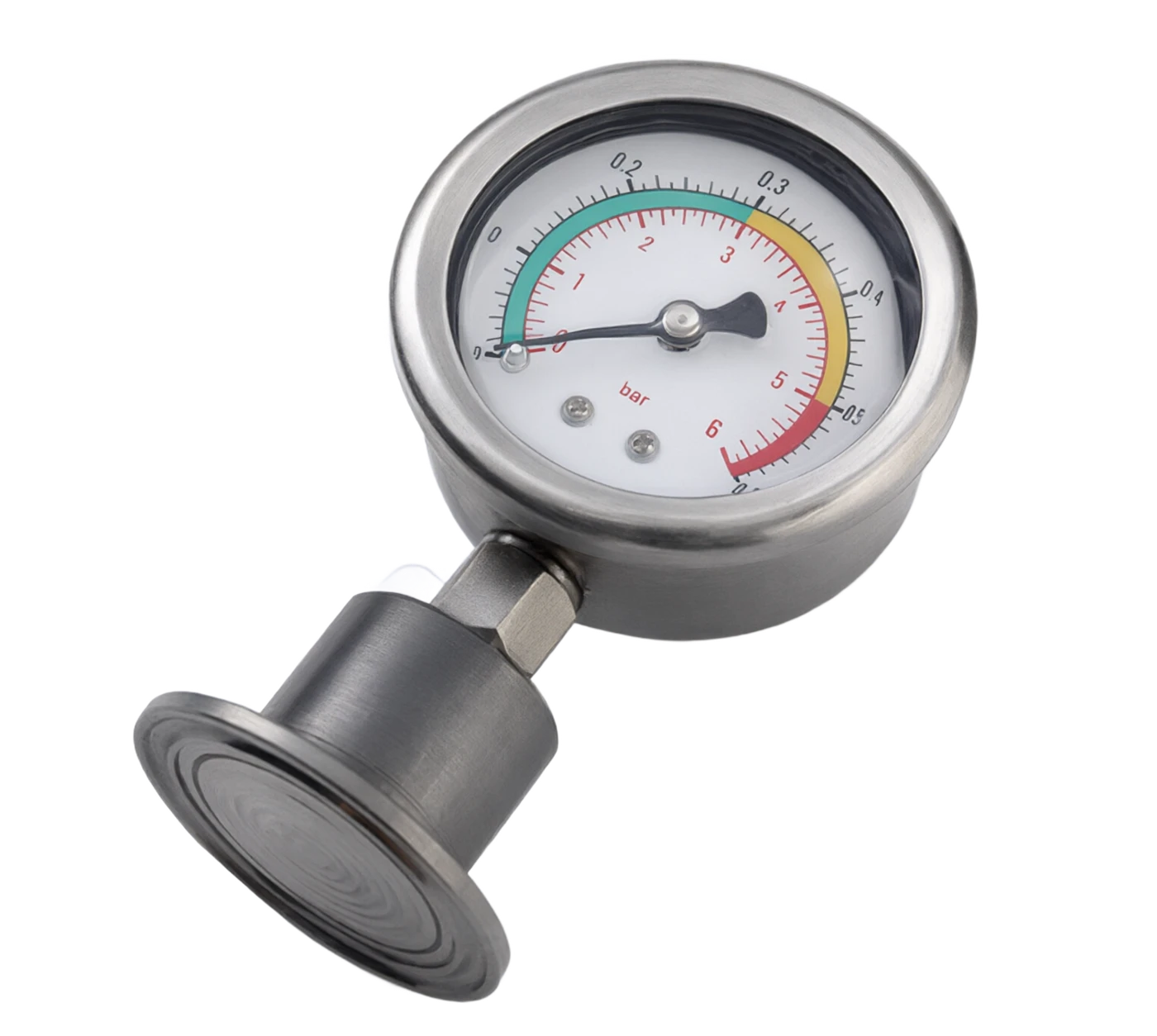
PRODUCT TECHNOLOGY

stainless steel diaphragm pressure table

Operating principle

The stainless steel diaphragm pressure sheet.

A systematic pressure instrument consisting of a diaphragm separator, which is based on a general stainless steel pressure table, and is an isolated elastic element pressure table. The core idea is that a flexi-resistible diaphragm will be completely separated from the spring tube, core and pressure through a sealed fluid. Key mechanisms: When the diaphragm is short enough to be long enough, the pressure from the instrumentation system is almost equal to the medium pressure. The softness of the diaphragm therefore directly determines the delivery accuracy. The temperature increase in the pressure-pressure is expected to result in high instrumentation values due to temperature inflating factors in the system of sealed fluids. The temperature effects are related to the sealed fluid inflatation factor, membrane strebranch and pressure temperature, particularly the low-range instrumentation effect. General provision for an error in the pressure temperature of not more than 0.1%/°C, total temperature of the diaphragm table

  1. 01

    The measured medium pressure P is active on the diaphragm (film);

  2. 02

    (a) The diaphragm produces flexible deformations, compressing seals filled in closed systems between the diaphragm and the spring tube (generally silicon oil);

  3. 03

    The fill fluid develops a pressure close to P (P − ΔP), where ΔP is the small loss caused by diaphragm stiffness.

  4. 04

    Pressure transfer to spring tube (boden tube), shift of the free end of spring tube;

Support for stainless steel diaphragm pressure table selection

Provide survey missions, media and installation conditions and obtain product configuration advice.

Contact us
- A table of stainless steel diaphragm pressure;

TECHNOLOGY & APPLICATION

Understand the principles, the exact selection.

The technical characteristics and selection elements of stainless steel diaphragm pressure tables are understood from measurement principles to field applications.

01

MEASUREMENT PRINCIPLE

Measurement principle

The core idea is that the pressure is transmitted through a sealed liquid by a corrosive flexible component pressure sheet that is completely separated from the spring tube, core, inside the instrument by a corrosive elastic diaphragm.

1.1 Work process

  1. 01

    The measured medium pressure P is active on the diaphragm (film);

  2. 02

    (a) The diaphragm produces flexible deformations, compressing seals filled in closed systems between the diaphragm and the spring tube (generally silicon oil);

  3. 03

    The fill fluid develops a pressure close to P (P − ΔP), where ΔP is the small loss caused by diaphragm stiffness.

  4. 04

    Pressure transfer to spring tube (boden tube), shift of the free end of spring tube;

  5. 05

    (b) The pressure values are indicated by the rotation of the lifting pole-core (span/centre gear) magnifying the agency-led pointer;

  6. 06

    When pressure is reduced or lost, the diaphragm and spring tube are restored to their status with their own elasticity, and the pointer returns to zero.

Critical mechanisms

When the diaphragm is rigid enough to be small, the pressure generated by the instrumentation system is almost equal to the pressure of the medium. The flexible design of the diaphragm therefore directly determines the delivery accuracy.

1.2 Nature difference from normal pressure table

1.3 Temperature properties (important)

The temperature increase in the pressure-pressure is expected to result in high instrumentation values due to temperature inflating factors in the system of sealed fluids. The temperature effects are related to the sealed fluid inflatation factor, membrane strebranch and pressure temperature, particularly the low-range instrumentation effect. The pressure-exposed temperature is generally not greater than 0.1%/°C, the total temperature of the diaphragm table is = the general instrument temperature effect + the diaphragm device is affected by the pressure temperature.

1.4 Liquidity differential effects (cough tube/softpipe)

The diaphragm table, which is connected to a hose or a cavity tube, is used to create additional pressure by ⁇ P ( ⁇ P = weight of sealed fluid x difference of liquid bit) and to cause a ignominological deviation, which must be amended or maintained at the same level if the diaphragm is under pressure and the installation position of the indicator is at a height.

The principle of measurement . Contrast / Common pressure tableCross-reference
ComparativeNormal pressure sheetDive sheet
Media Exposure MethodThe medium goes straight into the spring tube.The medium is only exposed to diaphragms and isolated.
Corrosion resistanceIt depends on the spring pipe material.Depending on diaphragm material (alterable haze alloy, tantalum, F4 etc.)
Suitable mediaNon-corrosive to copper/steal, clean mediumStrong corrosive, high viscosity, crystallity, suspended particle medium
Measurement systemsOpen (general medium)Closed (sealed liquid)
02

PRODUCT STRUCTURE

Structure

2.1 System Composition

Separators (pressured)

(a) diaphragms (films), French/sniffed joints, sealed gaskets;

General-type pressure meters (directives)

The stainless steel watch casings, spring tubes, pullers, cores, pins, and palettes are connected through a sealed liquid system, divided into direct connections: separator is connected to a direct screw of the pressure table, and the structure is compact, for use in situations where temperature is low and no place is installed;

The catheter pipe is a long way from here.

(a) A catheter (generally 1-15 m) connected between the separator and the pressure table, which can be directed to a safe position for use in high temperature, vibration, hazardous conditions;

Bouch connection

Soft connectivity, flexible placement, with attention to the effects of the fluid position differential.

2.2 Diveting forms

2.4 Model spectrometry

YTP

Dive sheet (base)

YTPF

Total stainless steel diaphragm pressure table YTPFN: All stainless steel seismic diaphragm pressure table (shell oil, vibration resistance)

YTPN

Vibration-resistant diaphragm pressure gauge. YTPX: diaphragm gauge with electrical contacts. YTPXC: diaphragm gauge with magnetically assisted electrical contacts. Dial diameters: Φ60, Φ100 and Φ150 (Φ75 also available on sanitary models).

Applicable standards

JB/T 8624, Semension Pressure Sheet; GB/T 1226 for the indicator instrument; and JJG 52 for the control of the elastic widget general pressure sheet.

L

Form: screwdriver to clamp. Characteristics: simple structure, common for small calibres

LY

Form: screw welding one. Characteristics: Sealed secure.

F

Form: Open French Characteristics: Common, easy to clean

F1/F2/FJ

Form: Technical French/Stressing French/Angle French Characteristics: Fit for different installment surfaces

M1/M2

Form: bolt/helge feature: Dismantling maintenance

WS

Form: Sanitary (carat) characteristics: Disassembly, satisfy GMP, clean-up without a dead end

FC/GC/LC

Form: Various liners Characteristics: Fluorine-based plastics in separators, enhanced corrosion resistance

GD

Form: Pipeline-type Characteristics: Directly loaded into a pipe

Widgets

Form: Selective material characteristics:

diaphragm (film)

Form: 316/316L stainless steel (conventional), Haq alloy C (strongly resistant to erosion), Monnar alloy (Cu30Ni70, hydroflutic acid/water), tantalum alloy (extremely resistant to erosion), fluorine F4/PTFE (sanitary level, strong acid) characteristics:

Frank/Connect

Form: 316 stainless steel, 316 inner line F4 feature:

Shell

Form: 304 stainless steel, 316L stainless steel

Seal the gasket.

Form: Fluorine rubber, silicon rubber, fluorine plastics

Seal filler

Form: Silicon oil (conventional, −40 ~ 100℃), glycerine (0 ~ 80℃), high temperature silicon oil (≤150℃), fluorine oil (high temperature resistance/extra-corrosion resistance), food grade filling fluid (hygienic) characteristics:

03

TECHNICAL GUIDE

Advantages and disadvantages

3.1 Advantages

Isolating corruption-medias from springs

The diaphragms can be selected by medium (Hallows/Turtalum/F4) to address the corrosive measurement challenge;

Product features

Blocked-resistant crystals - media for high viscosity, crystallity, condensation, suspension and sediment;

Precision range options - General 1.6, 2.5

(a) Precision type of 1.0;

Product features

(a) Range coverage width - 0~0.1 to 0~60 MPa (screwable up to 100 MPa), with vacuum and pressure vacuum specifications;

Health Level Capabilities - Card-based Health Type Satisfactory GMP

(b) Free of the dead, easy to wash, fast to pack and to adapt to food medicine;

Teleportation capability - a hairy tube can drive a surface away from high temperature/hazard/vibration sources;

(b) Seismic-resistant - YTPN/YTPFN oil-filled shell adapted to vibration conditions;

Product features

(b) Various connections, including GB/HG/DIN/JIS/ANSI, card, horn, etc., are installed in a variety of forms;

Maintenance of simplicity - reading visuality, without electricity (except for the power points) and essential security;

Product features

The structure is highly composite - it combines a variety of derivatives with general instruments such as electrical points, seismic resistance, and two needles.

3.2 Disadvantages and limitations

The whole accuracy is below the normal scale of the same grade - membrane is rigid, sealing fluid compression causes additional error

Low-volume ranges are more visible;

Temperatures are high - Seal fluid thermal expansion causes oscillometric drift (approximately 0.1% / °C)

(b) When the temperature of the environment and medium changes substantially;

The response rate is slow - diaphragm + seal fluid system slows the pointer response slightly

(a) Accurate measurements of rapid pulse pressure are not appropriate;

Divel vulnerability - film thinness (usually 0.1 mm level)

(b) The damage to the whole surface is not effective if it is afraid of hard particle impact, or of the impact of the dismantling;

Insanity - Seal system not decomposed on site

(b) Leakage of diaphragms or filling fluids shall be refilled back to the plant;

Liquid position error - HID for caustic/browsing installation introduces additional pressure error;

High price - approximately 3 ~ 10 times the average stainless steel pressure table under the same range;

The maximum scale is subject to the form of connection - the hysteria is generally only 2.5 MPa

French to 25 MPa, and a screwdriver to 60-100 MPa;

Use limits

High temperature requires additional measures - the heater/rainbow absorber at a temperature exceeding the applicable temperature for the sealed fluid, with higher costs for the high temperature membrane table;

The difference between vacuum and micropressure measurements is limited in the ability of the sealed liquid system to determine the micropressure.

04

APPLICATIONS

Application area

4.1 Typical application scenarios

4.2 Selective positioning (when diaphragm table)

(a) The measured medium is corrosive to stainless steel and corrosive beyond 316 L tolerance ⁇ select membrane table;

High viscosity, crystallity, condensation, solid particles, which block spring tubes, select membrane table;

(b) Health requirements (GMP, no-rest)

The surface is to be directed to the safety zone to measure the temperature or danger of the point.

Not applicable/non-economic scenario

The medium is clean and non-corrosive to 316L The stainless steel pressure sheet (YB) is sufficient and the diaphragm table is waste; a high precision remote transmission signal is required The diaphragm sealed pressure transceiver should be selected.

Petroleum chemicals

Typical media/facts: strong acid, strong alkali, solvent, catalyst plasma, recommended configuration: Haq alloy C or tantalum film + franium connection

Pharmaceutical/food/biological engineering

Typical media/work: CIP Cleaning fluid, syrup, fermentation fluid, injection water Recommended configuration: 316L sanitary card + food grade filling fluid

Chlor-alkali/alkali/fibre

Typical media/facts: hydrochloric acid, wet chlorine gas, alkaline liquid Recommended configuration: tantalum film or F4 diaphragm

Contamination/pesticide

Typical media/facts: crystallization, condensation, suspension media Recommended configuration: Open French + 316 Line F4

Electricity/metallurgy

Typical medium/work: high temperature vapour (distant), mud recommended configuration: caustic tube long-range + dispersive structure

Paper/septic treatment

Typical media/facts: Pulp, sludge, condensant

05

TECHNICAL SPECIFICATIONS

Technical Parameter Table

5.1 Table of general parameters

5.3 Example of Model Specifications (YTP Series)

Technical parameter table · Parameter / SpecificationCross-reference
ParametersSpecifications
Normal diameter⁇ 60, ⁇ 100, ⁇ 150 (sanitary type 75)
Accuracy class1.0, 1.6, 2.5 (0.4/ 0.6 level precision customised)
Measurement range-0.1~0 to 0~60MPa (special specification to 0~100MPa)
Thread Connecting Scale-0.1~0 / 0~0.1 to 0~60 (available 0~100) MPa
Franc Connected Quantities-0.1~0 / 0~0.1 to 0~25MPa
Carpenter-style hygiene scale.-0.1~0 / 0~0.1 to 0~2.5 MPa
diaphragm material316/316 L, Haq Alloy C, Monnar Alloy, tantalum alloy, fluorine plastic F4
French material316 stainless steel, 316+F4 fluorine
Seal the gasket.Fluorinated rubber, silicone rubber, fluorinated plastics
Filling fluidSilicon oil (−40 ~ 100℃), glycerine (0 ~ 80℃), high temperature silicon oil (≤150℃), fluorine, food grade
Ambient temperature−20 ~ +55℃ (normal), −40 ~ +80℃ (wider temperature)
Process medium temperature−20 ~+55℃ (conventional); high-temperature heaters above 200℃ with special structures higher
Temperature effectsTemperature error at pressure ≤0.1% / °C
Work Stress RulesStatic load 3 / 4; Convert load 2 / 3; Short-term Quantities
ConnectionSnack M20x1.5 (G3/8 " , G1/2 " ); Frank (GB/JB/HG/DIN/JIS/ANSI custom); health card
Ingress protectionIP54 (Conventional), IP65 (Contactment)
Case material304, 316L stainless steel.
Applicable standardsJB/T 8624, diaphragm pressure table; indicator GB/T 1226; validation JJG 52
Connection FormMeasuring spanTypical caliber/specificationMain uses
Thread Connection0~0.1 to 0~60 (to 100)MPaM20×1.5、G1/2″Clean but corrosive media
Open/Work French0~0.1 to 0~25MPaDN15~DN50 Standard FranksThick, particle-bearing medium
Carpenter hygiene.0~0.1 to 0~2.5MPaCarpenter DN25/50 etc.Food, pharmaceuticals GMP
The catheter pipe is a long way from here.Same DirectCube 1-15mThe heat, the danger, the spread.
Technical parameter table · Project / code/descriptionCross-reference
ItemDesignator/description
Series codeYTP-□ (Specific route 60/100/150)
diaphragm formL screw pair / LY screw welding / F Open Fran/ F1 Task Fran/ WS Hygiene, etc.
Imbrane material code316 stainless steel / F4 lined to tetrafluoro / Ta tantalum / C Haq alloy / M Monnar
I'm calling it a code name.N / X point / XC magnetic aided point / F all stainless steel
06

SELECTION GUIDE

Select Table

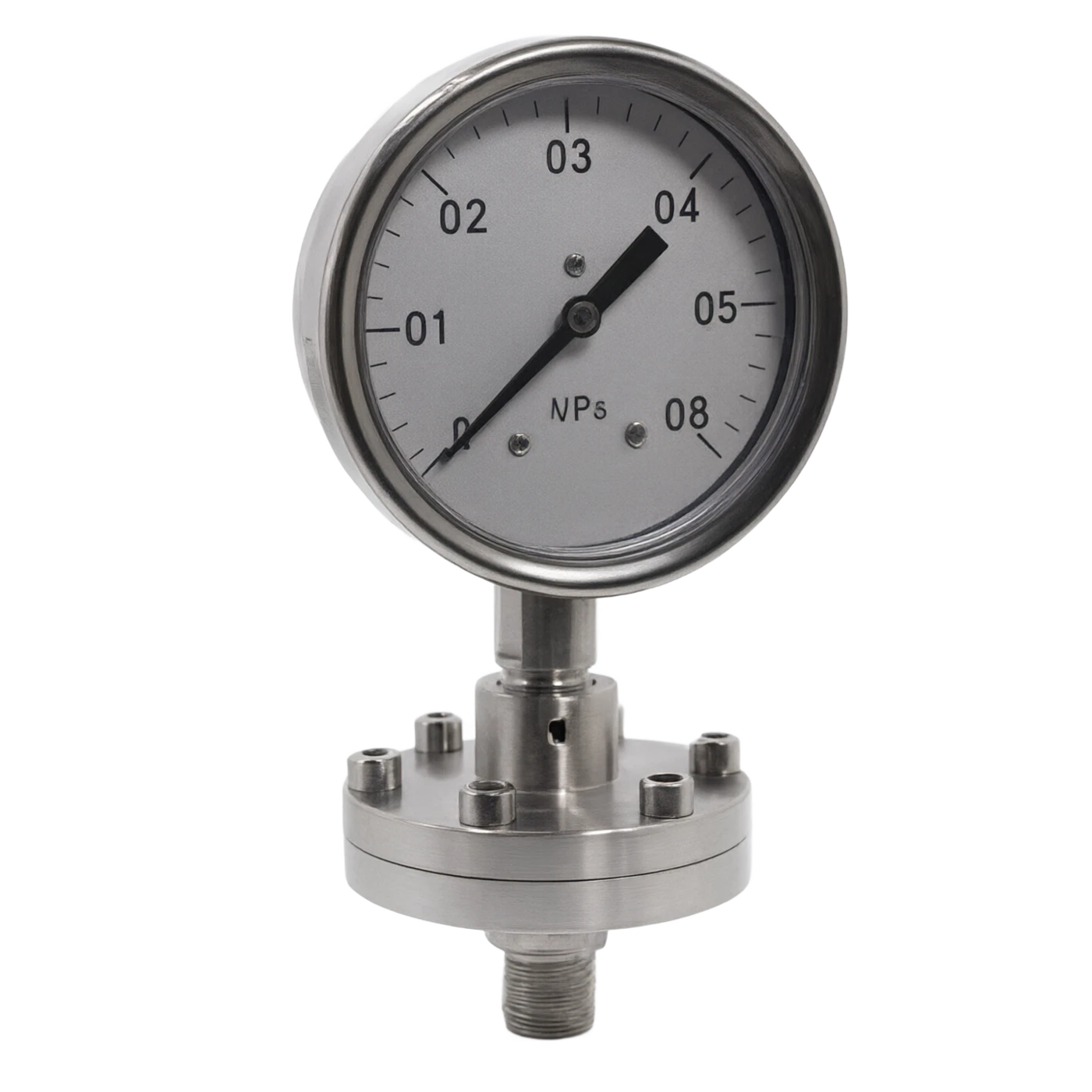
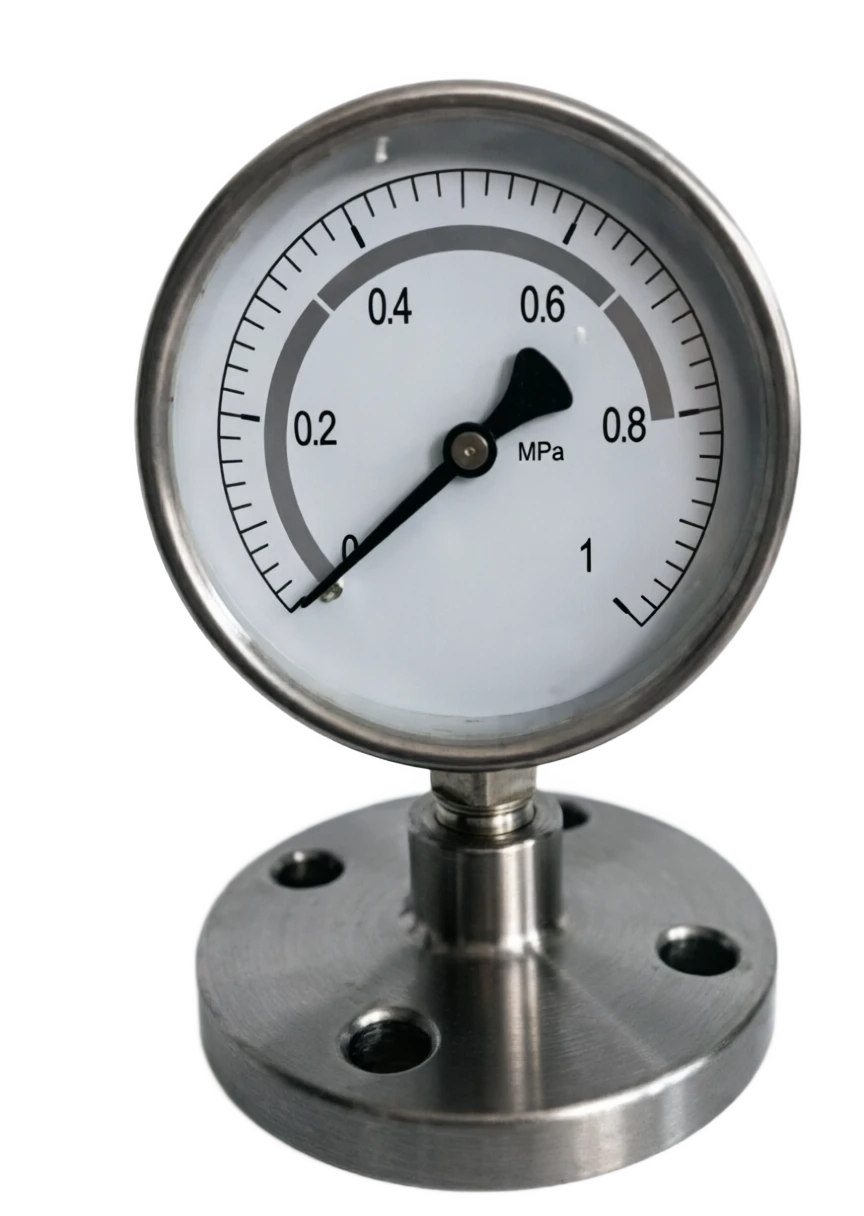
6.1 List of parameters required for ordering

  1. 01

    (a) The name of the measured medium, corrosivity, viscosity, particle/crystal;

  2. 02

    (a) The work pressure range (normal/maximum/minimum) and the scale range;

  3. 03

    Temperature of the medium, ambient temperature;

  4. 04

    (a) The form and specification of the connection (snone specification / French standard and caliber / carcass size);
  5. 05

    diaphragm materials (combustion by medium);

  6. 06

    Type of filling fluid (at temperature and sanitary requirements);

  7. 07

    (a) Precision level, chart diameter;

  8. 08

    Whether it is earthquake resistant (N), whether it is electrically wired (X), whether it is hairy and long;

  9. 09

    Protection level, blast resistance (described for electrical point type).

6.2. Table of diaphragm material selection (core)

6.3 Filling fluid selection table

6.5 The rules for the selection of the scale and accuracy

Still load condition

3 / 4 for maximum working pressure measurement;

Hand over loads.

• 2 / 3 to measure the upper limit;

Short-time Peak

• Measurement ceiling;

The usual workspaces are set in a range of 1/3 ~3/4 scales;

Regular monitoring of selection 1.6; monitoring of critical processes 1.0; and careful use of high-precision slotting (increased temperature error) for low-quantity ranges of diaphragm systems (<0.6 MPa).

6.6 Use point

  1. 01

    (a) Pre-installation check of the scale, accuracy, membrane material, filling fluid, connection in a manner that fully matches the condition;

  2. 02

    Checking for membrane absence, seals intact, and a pointer normal - the diaphragm is highly susceptible to damage by bumping;

  3. 03

    (b) The caustic contour radius should not be too small to avoid squeeze and sharp bending;

  4. 04

    (b) Wormpipe/correspond to fix the fluid level so as to maintain the pressure level at the same level as the surface;

  5. 05

    The configured instrument shall not be removed or replaced to avoid the discharge of the filling fluid;

  6. 06

    (b) The environment should be free of strong corrosive gases; the medium supertemperature-heater;

  7. 07

    (a) A rigorous review of the inventory cycle (general 1 year) with a sophisticated use of the shorter cycle;

  8. 08

    The order shall be made in full description of the diaphragm form, interface material, the French standard and the routing of the receiver.

Table of choice · Media category / Recommended diaphragm materialCross-reference
Media CategoryRecommended diaphragm materialRemarks
Weak corrosive water solution, steam316LEconomic conventions
Sulphur acid, hydrochloric acid (reduced), mixed acidHawthorne Alloy C.Chemical Mainstream Selection
Hydrofluoro acid, seawater, sodium hydroxideMonnar alloy.Special
Hydrochloric acid (heavy), wet chlorine gas, strong oxide acidtantalum alloysExtremely resistant, high price.
High acid alkalil alternation, sanitary levelFluorinated plastics F4 (PTFE)Line/covery, wide-faced
Food, pharmaceuticals CIP/SIP316L Health typeEMP, meet GMP
Table of selected types · Filling fluid / Applicable temperatureCross-reference
Filling fluidApplicable temperatureCharacteristics
Glycerine.0~80℃The Chronic Economy
Silicon oil.−40~100℃General Preferred, Temperature Wide
High temperature silicon oil≤150℃High temperature
Fluorine oilHigher temperature/specialTemperature and erosion. It's expensive.
Food class filling fluidsTemperature. Medium temperature.In health, edible
ConditionsRecommended structure
Clean corrosive medium, constant temperature.Sniffed straight-link YTP
Thick, grainy, crystallized.Open Franc YTP-F
Vibration environmentEstimation-resistant YTPN / YTPFN
High Temperature PointCough tube is spread over the long distance + thermal dispersive structure
The danger zone needs to be read.The catheter pipe is a long way from here.
Food/pharmaceuticalsHealth card type WS type
We need to control the alarm.Electron point YTPX (explosive-proof type selected)
07

TECHNICAL GUIDE

Horizontal contrast

Select the mode.

Clean customary selection of YB, corrosive crystal membrane; sanitary carding, long-temperature plume drag; diaphragm materials looking at medium, two-thirds lock in the range.

Horizontal comparison · Contrast / stainless steel diaphragm pressure tableCross-reference
Comparativestainless steel diaphragm pressure tablestainless steel pressure table (YB)Semenal seal pressure transmitter
PercussionE (diaphragms interchangeable)Medium (316L only)E (diaphragms interchangeable)
Blocked crystals.Yu- That's bad.Yu
Health level capacityYu (Cardar GMP)GeneralYu
PrecisionLevel 1.0 ~ 2.5Level 1.0 ~ 1.6±0.075%~±0.2%FS
Teleport.None (wielding only at points)None4~20mA/number
Temperature effectsLarge (approximately 0.1%/°C)SmallerSmall (with compensation)
Response speedSlow down.Come on.Come on.
PriceMedium HighLowHigh
MaintenanceNo physical repairs.SimpleSpecialized verification required
Applicable positioningCorrosion/crystal media field indicationClean media site instructionsCorrosion medium + remote control