PRODUCT TECHNOLOGY

Wedge flow meters

Operating principle

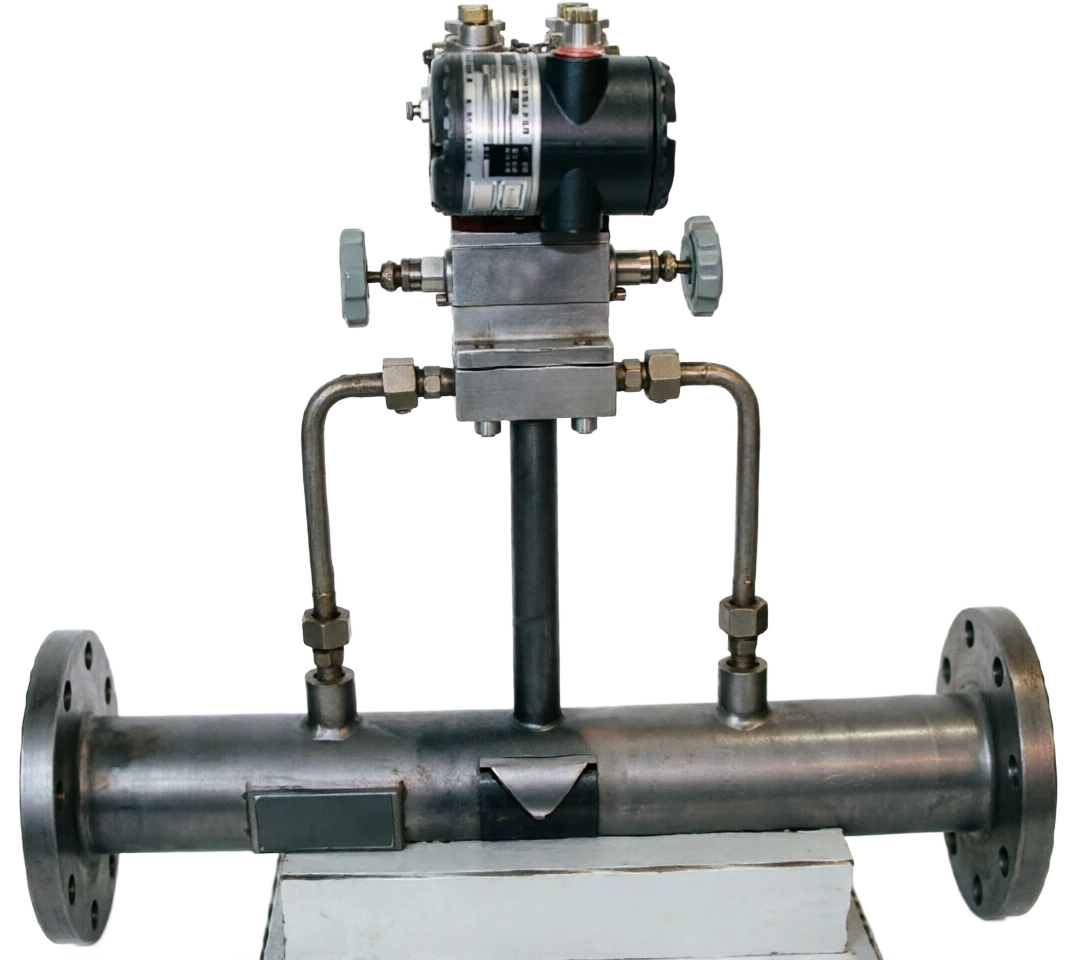
Wedge flow meters.

Benuli's law, based on constant energy in a closed pipeline, is the same as the porosity plate, the V-cone, which is a differential flow gauge family, but the flow-saving geometry is very different. A V-shaped wedge with a penetrating tipping line, an outdated flow of fluids condensed, increased, reduced static pressure, formed up and down in the wedge, stable differential pressure P = P₁ - P₂, flow and differential content square root relationship: qv = C ε m/(1-m²) (πD²/4) ⁇ (2 ⁇ P/ Old) of which: -qv - volume flow, m³/s; - C — exit factor (where not marked, you can use ISO 5167 - 6: 2022 to take C = 0.77 – path, m); - P-- on the wedge.

  1. 01

    09 ); -Opium - DI (liquid ⁇ ) 1 ); -m — bow openings compared to pipe openings; -D — piped inside

Wedge flow meter support

Provide survey missions, media and installation conditions and obtain product configuration advice.

Contact us
Wedge flow meters Technical Note

TECHNOLOGY & APPLICATION

Understand the principles, the exact selection.

From measurement principles to field applications, wedge flow meters are known for technical characteristics and selection points.

01

MEASUREMENT PRINCIPLE

Measurement principle

Benuli's law, based on constant energy in a closed pipeline, is identical to the porosity plate, the V-cone, and the Flow meter family, but the flow-saving geometry is different.

The pipe is a top-end V wedge, with the flow of fluids constricting, increasing, lowering static pressure, forming up and down.

Measurement formulaClick to see the big picture
qv = C · ε · m/(1-m2) · (πD2/4) · √(2ΔP/ρ)

Stable differential pressure ⁇ P = P₁ = P₂, flow/pressure content square root relationship: qv = C ε m/(1-m²) (πD²/4) √(2ΔP/ρ)

of which

- qv — volume flow, m³/s; -C — Outward coefficient (if not marked, press ISO 5167 - 6: 2022 for C = 0.77 –

  1. 01

    09 ); -Opium - DI (liquid ⁇ ) 1 ); -m — bow openings compared to pipe openings; -D — piped inside

Path, m; - ⁇ P — Up-to-down wedge pressure, Pa; - Old - measured medium density, kg/ m³.

The differential is induced by the pressure vent to the differential transmitter to a telecommunications number, and is then operated by the smart flow calculator to open the opening, density/temperature/pressure compensation to receive volume or mass flow.

Key mechanisms - Low Renodes

When the number of Renaults is as low as 300 ~ 500, the square root relationship between flow and pressure remains stable (the porosity plate usually requires Re ≥ 10⁴ to ensure accuracy), which is the underlying reason why wedge flow meters apply to high viscosity, low flow media.

Self-cleaning machine

The wedges are smooth in the drift-free zone, with the floating particles and the visceral fluids passing smoothly, without sedimenting upstream of the scalding material and without having to set up a sewage slag device like a hole plate.

Two-way measurement capability

Wedge structures are similar to symmetrical and partial models allow for two-way flow measurements.

02

PRODUCT STRUCTURE

Structure

2.1 Basic structure

2.2 Wedge ratio (H/D)

H of the wedge top to the inner wall of the pipe, as a ratio of H to the inner diameter of the pipe, is the core geometry parameter of the wedge flow meters: the usual specifications: H/D = 0.2, 0.3, 0.4, 0.5 (wide range 0.15-0.6, equivalent beta approximately 0.377-0.791).

2.3 Structure

Wedges of V (scaling)

Note: Top angles are installed downward, corner angles 30° ~ 90° (commonly 60°), smooth transition to no-demurder zone, core no-flow components

Measurement tube segment (form)

Note: Corresponds to process pipe, carbon steel/restainless steel, suitable for liner material

Take the slam.

Note: located on both sides of the upper and lower wedges; flange extraction pressure (standard) or bi-frane remote diaphragm extraction pressure (blackproof anti-corrosion)

Differential pressure transmitter

Note: Bi-French remote differential pressure transmitters with frequent diaphragms, corrosive/crystal/gluid media not entering the catheter tube

Triple valves / Wash Rings

Note: Balanced isolation, block-blowing

Smart Flow Impressor

Note: Open-source calculations, temperature reimbursement, display of instantaneous/cumulative flow

0.2~0.3 (small)

Characteristics: Small circulation cross-section, high pressure

0.4~0.5 (large)

Features: Large circulation cross-section, low pressure

Connect by wedge

Type: Separation Description: Wedges and pipes can be separated, more for DN<50

Type: Integrated Description: Wedges are welded with pipes, mostly for DN ⁇ 50

Connect by the extract

Type: French pressure Description: Standard form

Type: Bi-French remote diaphragm Description: crystallity, freezing, viscosity, corrosion media preferred

By range of supply

Type: Wedge flow sensor Description: only current-saving devices, output differential pressure

Type: Integrated smart type Description: Sensor + transfer panel + differential transmitter integration without barbed-up pipe, direct screw/Franc connection

Connect by Pipe

Type: French / Welding / Combination Description: Select by caliber and pressure level

03

TECHNICAL GUIDE

Advantages and disadvantages

3.1 Advantages

Application of high viscosity, low renodes medium

Re, which is as low as 300-500 and still maintains square root relationships, can measure as much as 500 mPa.s and even higher liquids (heavy oil, slag oil, asphalt, syrup, etc.), as an area beyond the capacity of the perforation plate;

Cleaning up, blocking up.

V. Downward, no-deficient areas with the upper corner of the wedge, with the smooth passage of the suspended particles, without sedimentation, walling, suitable for the dirty stain media of ore, mag, mag, mud, sewage, etc.;

Precision and repetition

(a) The accuracy of the ±0.5%, repeated ±0.2%, with long-term stability of approximately ±0.2% F.S/years, after the line-by-line specification;

Less pressure.

(b) 1/3~1/2 (ISO 5167-6: ⁇ = (1.09−0.79 β) ⁇ p) for permanent pressure on approximately perforation plates, operating energy efficiency;

Long life and wear.

(b) No motion components, wedge flow line type designs that allow the corrosive medium to be even, reliable and long-term use without re-calibration;

Corrosion resistant, harsh conditions

(a) Corrosive media are not entered into the catheter and the transducer after the diaphragm bi-fascier, which can be measured by the insulation of the wedge;

Scaler Than Medium

General 10:1, with a maximum double-range differential configuration of 30:1;

The structure is simple and solid.

(b) Vibration, impact, sludge, installation, maintenance and maintenance, with low operational maintenance costs;

Integration installation convenience

(a) Integrated to save the catheters from congestion and leakage is an ideal option for the old catheters to be modified;

Measurable two-way flow (part model); standard regulated (GB/T 2624.6-2024 / ISO 5167-6)

2022)。

3.2 Disadvantages

Precision dependent on currents

Unspecified wedge flow measures are only about ±3% ~±4% (unspecified exit factor uncertainty given by ISO ±4%, k= 2) and ±0.5% must be calibrated by water/flow and cost increased;

The scale is not so strong.

General 10:1 ~15:1, which is wider than the perforation plate but does not extend to certain modern flow meters (e.g., Corioli, ultrasound);

The pressure is still on.

(a) A permanent pressure loss compared to an unobstructed instrument (e.g. electromagnetic, ultrasound) although smaller than a perforation plate;

Volume flow meters, indirect mass measurements

Gases/vapours require temperature compensation to obtain mass/specify flow, and the whole system is more complex;

Shorter application time

GB/T 2624.6 - 2024 (a) The new incorporation of wedges into the standard throttle-saving device system, which had previously relied on long-term individual plant-specific calibration data, and the accumulation and trade-off of data within the industry had not matured;

Large caliber to customize

(b) Conventional product DN15~DN300 (partially to DN600), with special orders for a larger calibre and higher prices;

Extreme change in viscosity affects accuracy

(b) Compensation for high viscosity media density/slabyty fluctuations, otherwise the exit factor is offset;

Vertical installation needs correction

When the positive and negative pressure is not at the same level, the altitude difference shall be corrected.

04

APPLICATIONS

Application area

Vs V-Cone Flow Count Selection Experience

- High viscosity (>100 mPa.s), slurp fluid, wall-like mass ⁇ Priority wedge flow meters; - General dirty gas (gas, flue gas), severe deficiency of the direct section, high calibre priority V-cone flow meters; - When neither is applicable (hygienic, super-precision trade interface) take into account the quality flow count.

Oil/ petrochemicals

Typical applications: crude oil, heavy oil, slag oil, fuel oil, kerosene, residual oil, paraffin oil, water-bearing emulsifiable oil, water-containing sand oil, asphalt flow measurement (traditional advantage domain)

Mining/metallurgy

Typical application: measurement of two-splemented plasma transports of solids, such as iron ore, tailings, mag and mud

Chemical

Typical applications: strong corrosive, crystal-friendly acid/alkali/salt solution, solution with suspended solids, various types of water solution

Electricity

Typical application: saturation vapour, overheating vapour measurement

Gas

Typical applications: cays, furnaces, gas (with high humidity and impurities), hydrogen, nitrogen, air

Environmental/Water Management

Typical applications: sewage, industrial wastewater, water from rivers with mudslides, sludge flow measurement

Food/medicine

Typical application: highly viscous sanitary fluids such as syrup, pharmacological fluids (non-bacterium-class)

05

TECHNICAL SPECIFICATIONS

Technical Parameter Table

Technical parameter table · Item / ParametersCross-reference
ItemParameters
Measured mediumLiquids, gases, vapours; high viscosity liquids, solids mixture, suspended particles/air bubble media
Nominal pipe sizeDN15 ~ DN300 (general); customised to DN600 ~ DN1200 (special to be greater)
Nominal pressure0.1 ~ 6.4 MPa (General); special design up to 16 ~ 42 MPa
Working temperature50°C ~ 400°C (conventional); special design - 160°C ~ 700°C (dermal/high temperature custom)
Accuracy class±0.5% (Flow-by-Flow); ±1.0% ~±1.5% (General); Unsigned ±3% ~±4%
Repeatability±0.2%
Long-term stability±0.2% F.S/year
Turndown ratio10:1 (regular); double-range configuration highest 30:1
Renault range.300 (or 500) ~ 1×10⁶ or more (reduced low Renault range, increased uncertainty)
Wedge ratio H/D0.2, 0.3, 0.4, 0.5 (widespread 0.15 ~0.6; equivalent beta thi-0.377 ~ 0.791)
Top corner of the wedge30° ~ 90° (commonly 60°)
Maximum viscosity of measured liquid500 mPa.s or higher
Loss of permanent pressure1/3 ~ 1/2 ( ⁇ = (1.09 − 0.79 β) ⁇ p)
Straight pipe length requirementsUpstream 3 ~ 16 D (View Disturbing Type, ISO gives 7 ~ 22 D); Downstream ≥3 D
Minimum flow speed0.01 m/s
ConstructionFrench, welding, pairing; one-size/separated
Pressure tapping methodFrench extraction pressure (standards), bi-French diaphragm extraction pressure (blockproof anti-fouling)
FlowHorizontal, Vertical (bottom-up); Partial model can be measured in two directions
Structure materialWedges/pipes: 304, 316/316L stainless steel, carbon steel, special alloy and liner
Output signal4-20mA (optional HART), RS 485
Electricity24V DC
Supporting instrumentFragmenters (recommended diaphragm transfer), trivalves, rinsing rings, temperature/pressure transporters, flow calculators
Applicable standardsGB/T 2624.6-2024 / ISO 5167-6:2022
06

SELECTION GUIDE

Select Table

6.1 Process parameters to be provided for the selection (orders required)

  1. 01

    4 Example of typical model production (in LGX/LGXB series)

Example:

LGXB-Y-100-T-1.6-T2-1-P-E-X = one-size wedge flow meter, DN100, stainless steel, PN1.6, medium temperature 100-250°C, liquid measurements, pressure compensation, French extraction, intelligence integration.

6.5 Elements of a selection supplement

  1. 01

    Precision Level Recognition

    ±0.5% accuracy shall be specified by stream (e.g., waterworks), the accuracy of undefined products calculated in accordance with ISO formulas is only ±3% ~±4%, and the requirements must be clearly specified at high-precision locations such as trade interfaces;

  2. 02

    viscosity compensation

    (b) Media viscosity, when temperature fluctuations are high (e.g. heavy oil), with a combination of temperature compensation or selection of the broad viscosity range;

  3. 03

    Pressure Priority

    (b) Preference for bi-French diaphragm diaphragms in a sticky, crystallized, corrosive medium to avoid catheters plugging at the root;

  4. 04

    Direct paragraph accounting

    Upstream 3 ~ 16 D (approved by actual disturbance type, partially closed valves above 15 D), downstream ≥3; suitable for scaling up H/D or consulting with the manufacturer when space is insufficient;

  5. 05

    Install Details

    Vertically installed fluids are down; horizontally installed pressure-plugs - liquid media are below the pipe level and gas/vapour is above the horizontal line; the regulating valves are installed downstream; temperature transmitters are downstream 5D; pressure transmitters are up 10D;

  6. 06

    Package List

    Wedge-switcher + differential transmitter + trivalve group + (rinsing ring); gas/vapour with temperature, pressure transmitter + accumulation

Instrument; steam plus condensers.

Selecting table . Serial number / ParametersCross-reference
Serial numberParametersDescription/unit
1Name of the detected mediumLiquid/gas/vapour; viscosity, density, particle/crystal (a liquid must be viscosity)
2Flow rangeMax. Usual, Minimum Flow (m³/h, kg/h, Nm³/h, with an indication of the condition or profile)
3Operating pressureMaximum, normal, minimum pressure (MPa, indicated as gauge/pressure)
4Working temperatureMaximum, normal, minimum temperature (°C)
5Pipe ParametersCommonly known as diameter, inner diameter, wall thickness, material, pressure level, connectivity standard
6Medium viscositymPa.s (Key parameters for high viscosity media)
7Installation ConditionsHorizontal/vertical, flow, upstream resistance form, available direct tube length
8Extracting and Output RequirementsWhether bi-French teleport, temperature compensation, signal output, blast protection requirements
9Marking requirementsMark media, range, target uncertainty (to be determined on a daily basis at high accuracy)
H/DCharacteristicsTypical applications
0.2~0.3Small traffic, high pressure, high sensitivity.Small flows, high accuracy, low viscosity medium
0.3~0.4General BalanceGeneral (recommended preferred)
0.4~0.5Large cross-section, small pressure, wide passageLarge flow, high viscosity, suspended particles of slurry
Selecting Table . Work Type / Recommended ConfigurationCross-reference
Status TypeRecommended Configuration
High viscosity oils (heavy oil, slag oil, asphalt)Large H/D+ diaphragm diaphragm remote transporter + with heat
Mix, mag, mag, mag.Large H/D + grinding material (or liner) + washring
Crystal-freeze mediaBi-French remote diaphragm extraction + washed/separated fluid
Strong Corrosion MediaWedge/pipes 316L, Haqcluoride alloy or lined tetrafluoro+ diaphragms are spread remotely
Sewage, mud-bearing river waterStandard + Blocking Pressure
SteamHigh temperature + Cooled tank/cooled condensed ring
Small caliber (DN<50)Separated structures
Old pipe retrofitting, space limitations.Integrated smart (guided tube)
Selecting table . Bits / CodeCross-reference
BitsCodeMeaning
Basic modelLGXB(HJ-LGX)Wedge flow meters
Structural characteristicsY / FOne / Separate
Common015 ~ 300 (extensible)DN15~DN300
MaterialsM / T / NCarbon steel / stainless steel / Specially ordered
Public pressure0.25 / 0.6 / 1.0 / 1.6 / 2.0 / 2.5 / 4.0 / 5 / 6.4Corresponding MPa
Temperature levelT1 / T2 / T320~100℃ / 100~250℃ / 250~400℃
Media1 / 2 / 3Liquid / Gas / Steam
Compensatory formN / P / TNo compensation / pressure compensation / temperature compensation
Getting pressure.A~FSniffy Plugin / Sniffy/ Welding / French / French Plugin Flank / One-Stick Temperature Compensation
Difference Process1 / 2Moderate pressure / High-voltage range
DisplayW / XScalp sensors / Smart Scalp (flow meter)
07

TECHNICAL GUIDE

Comparison with other differential flow meters (summarized)

Select the mode.

Wedges of high-mixed fluids, V-coins of dirty gases, clean and cheap pyre boards, trade-to-trade quality (flow meters).

References

Encyclopedia (weed/weed flow meters), instrument network, Chang-Zhen instrument, stamina instrument and ISO 5167 - 6 : 2022 / GB/T 2624.6 - 2024 Technical information is collated. The parameters are based on samples of the products from the manufacturing plants.

Comparison with other differential flow meters (summarized) . Contrast / Wedge flow metersCross-reference
ComparativeWedge flow metersCone flow countStandard Plugins
Resilientware FormWedges of V (vertical face down)Pointy cone (Standing of axle)Center hole plate
Minimum Renault300~5008×10³≥1×10⁴~2×10⁴
High viscosity medium adaptabilityE (500 mPa.s and above)MediumBad
Mulp/particle-containing mediaYuYes.Poor (blacky)
Precision (after marking)±0.5%±0.5%±0.5%~1%
Precision (unmarked)±3%~±4%Plant software computing±0.75% ~1.5% (geometry)
Turndown ratio10:1 (up to 30:1)10: 1 ~ 15: 1 (up to higher)3:1~5:1
Permanent pressure1/3~1/2 for the perforation plate1/3 ~1/5 for the perforation plateLarge (baseline)
Direct liner segment (former/recent)3~16D / ≥3D0~3D / 0~1D10~20D / 5D
Two-way measurementsMay (part model)No way.No way.
Level of standardizationGB/T 2624.6-2024 (newly included)The owner is the owner.GB/T 2624.1 - 4 (maturity)
Typical advantage scenarioHeavy oil, slag oil, slurry, sewageGas, flue gas, steam, straight-pipe segment inadequateClean media, low cost generic