
PRODUCT TECHNOLOGY
Double metal thermometers
Operating principle
- Thermometer of dual metals;
The core working principle is "thermal expansion angle of the double metal welding temperature component": the hyperinflation factor metal (the active layer, usually brass H62/H68, copper pure, Ni-Cr alloy) and low-inflating factor metal (the passive layer, usually the aval steel, usually Fe-Ni alloy with a Ni36% welding thickness) are then rolled into a spiral or spiral-line thermometer by heat-stamping or explosion of a two-metal piece of welding thickness of 0.1 ~0.5 mm. At temperature change, the two-metal piece is bent because of the two layers of metal inflate, and the temperature is measured on the tics by mechanically driven agency-led pointers. Thermal expansion of the bimetal is based on two key parameters: a differential in the ⁇ ar = alpha-alpha (alpha is active and alpha is passive);
- 01
1 Temperature Field Transducers • Protection tube ⁇ Temperature element (ingold steel + brass spiral) · Metal temperature = full scale
- 02
2 Thermal expansion of the bimetal ⁇ alphax ⁇ T produces bends ⁇ thermal stress ⁇ physical parameters
- 03
3 · Helical angular displacement · Bending curvature produces a helical rotation angle · Mechanical angle · Approximately 1°/°C
- 04
4 • Gear transfer . 1 : 1 ~ 1 : 10 Slow down / Accelerating . Pointer turn . Linearity ±0.5%
Structure
- Thermometer of dual metals
Designed using modular mechanical structures, consisting of 8 core components such as shell, ticboard, pointer, temperature element, protective tube, connective component, electrical point component (optional). Classes 4 by type of installation: Axial, Radial, Universal, Angle, take-over and calibration, respectively, in different directions. 5 by shell size: ⁇ 60/ ⁇ 80 / ⁇ 100 / ⁇ 150 / ⁇ 200 mm, the main pattern is ⁇ 100 and ⁇ 150.
- 01
· 1 shell / shield = sealed inner core + anti-corrosion / aluminium alloy cast / 304 stainless steel / corrosive, sealed failure
- 02
· 2 typographical · = temperature + indicator reading = aluminium plate printing / vacuum plating = colour loss, stain
- 03
· Pointer 3 . Indicates the current temperature . Aluminium alloy / stainless steel / red ABS bending, loose
- 04
4 . Temperature element . Temperature- angular transposition (core) . Yin Steel + brass welding spiral Aging, drifting, breaking
Application area
Bimetal thermometers . Field of application
It can be used as a single on-site indicator instrument or as a point-of-wire alert and chain control element.
- 01
1 • Petroleum chemicals • storage tanks, response Zi, pipe walls . -40 ~ +400 ℃ • Preserve corruption + electrical points
- 02
2 • Power plant auxiliaries – water, steam, heat grids back. 0 ~ +300 ℃ • Pressure resistance + protection .
- 03
3 Warming HVAC QC, AC, windmill pipe -20 ~ +100 ℃ + Direct read +
- 04
4 Food processing Bacillus, baking pots, baking -20~+250 ℃ Health level + surface polishing
Selection Guide
Bimetal thermometers . Guidelines for selection
The selection forms are presented by the temperature object, protective tube material, form of installation, level of accuracy, size of shell 5 dimensions, so that the engineering designer can make a systematic selection according to the requirements of the detected medium, location and accuracy. This summary covers all key technical points of the binary thermometer from the principles to the engineering applications, and the specifics of the model should be demonstrated in detail with the latest product manual of the manufacturer and the field work situation.
- 01
Steam boiler gives water to ~ 0~200 °C ~ 316L + screw + 1.0
- 02
Vapour overheater. 0 ~ +500 ℃ · 321 / 1 Cr18Ni9Ti. Axis + Frank. 1.0 Level
- 03
-40 ~ +200 ℃ 316 L. Radius + Frank 1.5
- 04
Reaction to the Zero-50+300 °C 316L + carat 1.5
Model Selection SELECT A MODEL
3 Models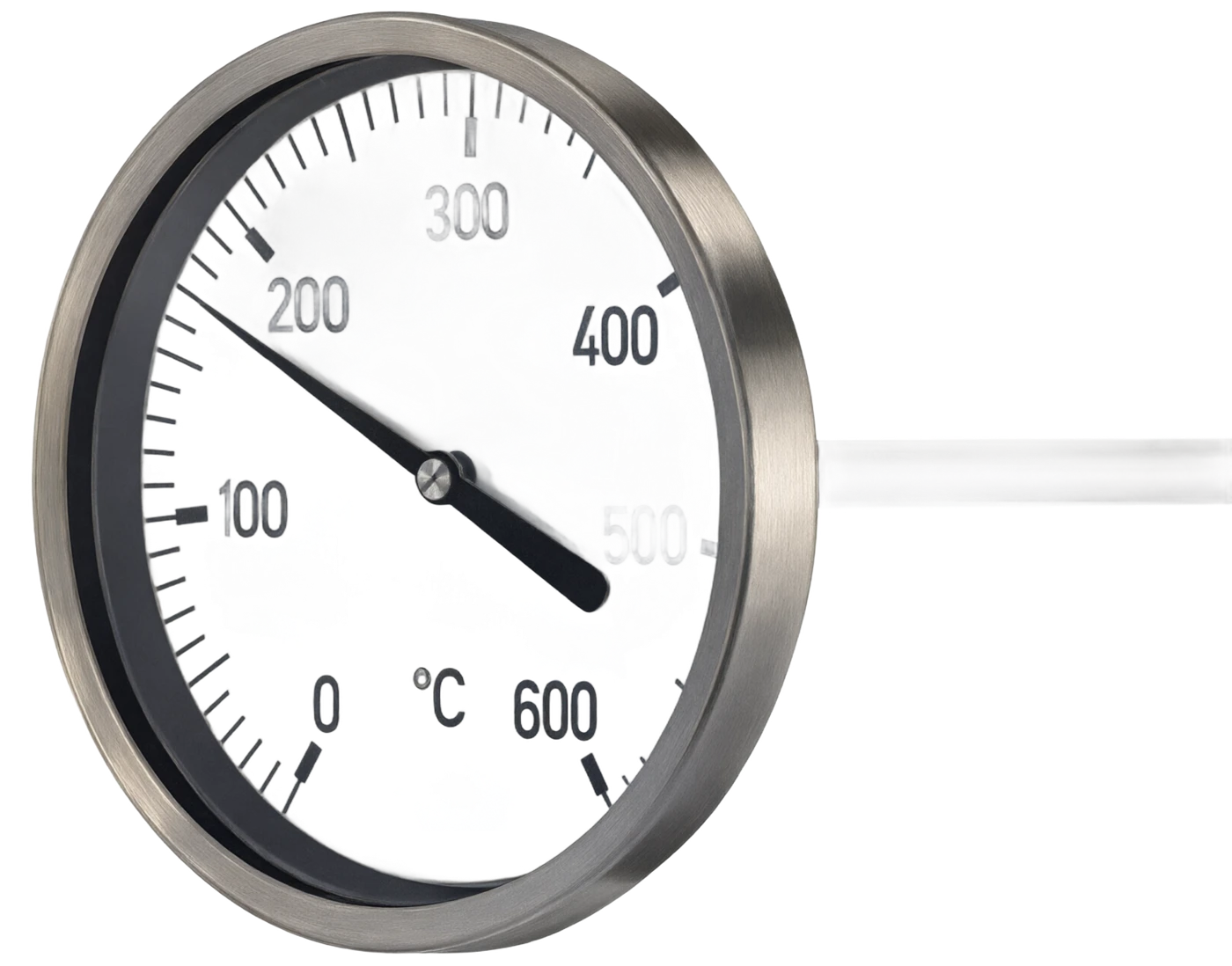
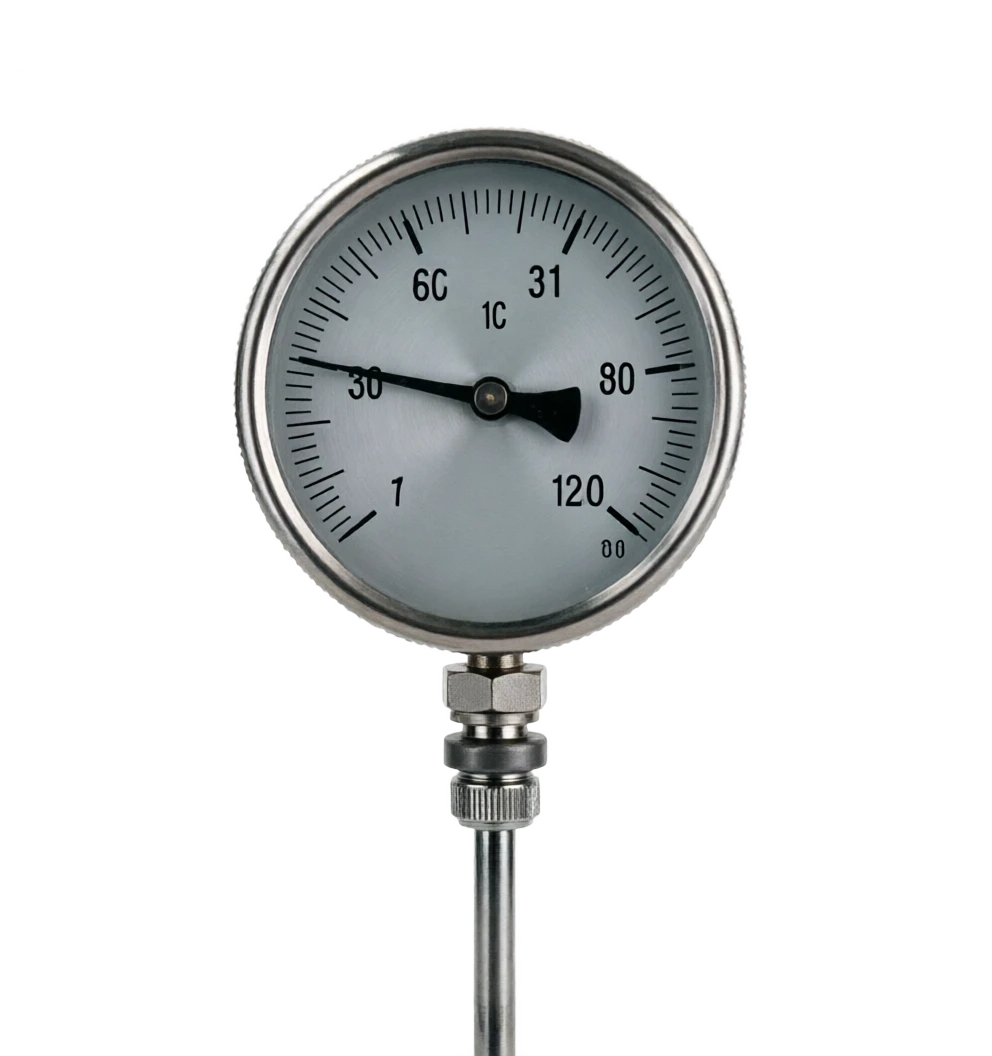
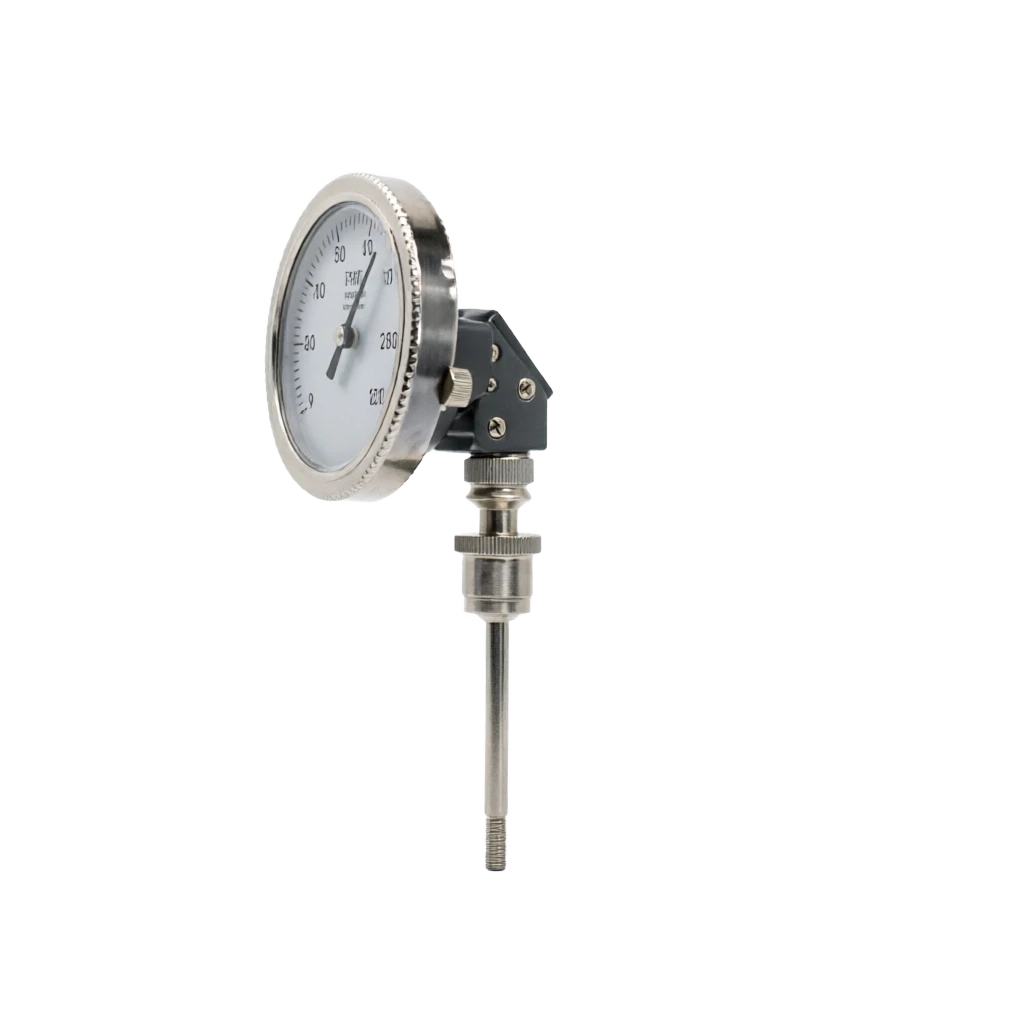
Double metal thermometer selection support
Provide survey missions, media and installation conditions and obtain product configuration advice.
Contact us