PRODUCT TECHNOLOGY

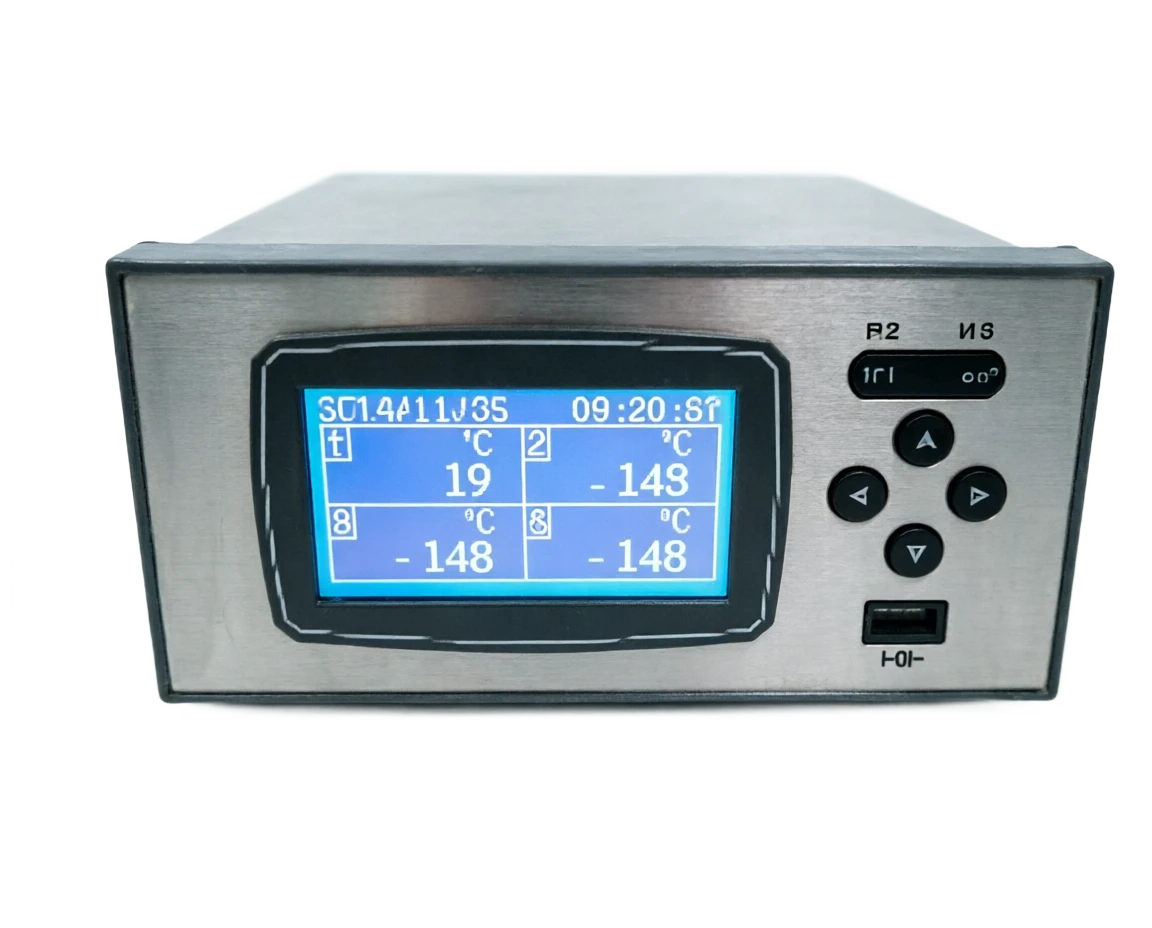
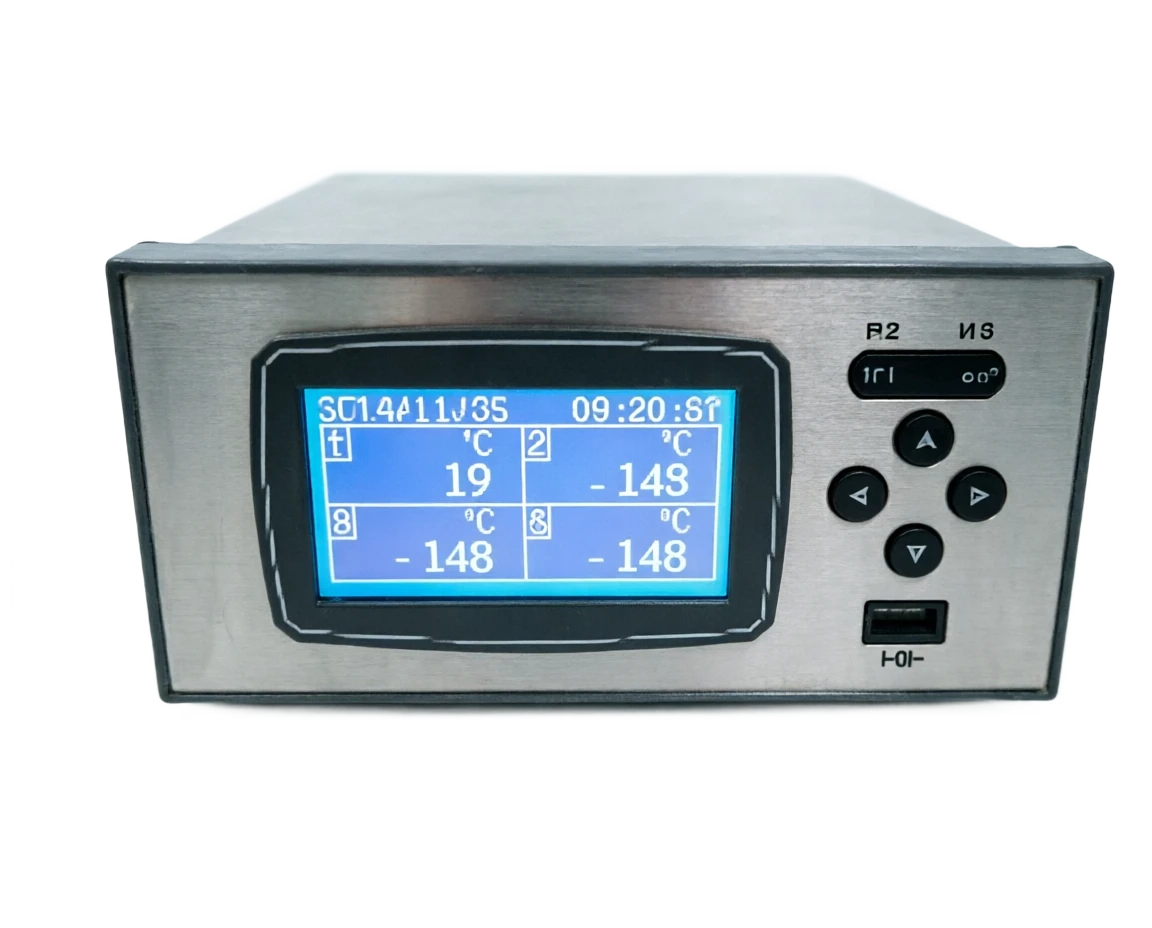
Monochrome Paperless Recorder

Operating principle

Monochrome Paperless Recorder ..The working principles

Using the "Multi-Road Acquisition + Embedded Master + Single Colour Display + Data Storage" four-layer structure, which is the same as the colour screen type: the pick-up panel converts the channel signal to a numerical amount, the master MMU completes the project volume conversion, alarm judgement and data storage, and the graphic engine draws the trend curve in a "walk screen" way on a single colour screen. The difference is between the display layer (unicolored array + partition pane instead of colour curve) and the resource size (channel number, storage, operation fully streamlined).

  1. 01

    1 & Multiroad Simulation Collection & DV + Devices to Magnify + 16 ~ 24 - bit ADC; Sublime Input (mA / mV / thermoelectric doll / thermoelectric resistance) Group Switch; Full channel scanning cycle 1 s (economic 0.5 ~ 1 s)

  2. 02

    2 • Project Volume Change • Scale Table (thermal voltage/thermal resistance), linear marking, openings and simple additions and subtractions (parts of machine type);

  3. 03

    3 . Alert engine . Every channel 1 ~ 4 Group Alert Values (up and down limits, etc.); differences and delays; relay output (typical 2 ~ 6 point); time stamp storage of alerts

  4. 04

    4 . Monochrome Show Engine . 320 x 240 Point One-Clear LCD; Walk Screen Trend + Bar Chart + Numerical Image; Channel with Partition Pane (1 ~ 2 Channel) or Full Screen Channel + Cursor Switch; LED Backlight Relays to Modem

Monochrome Paperless Recorder Selection Support

Provide survey missions, media and installation conditions and obtain product configuration advice.

Contact us
Monochrome Paperless Recorder . Technical Note

TECHNOLOGY & APPLICATION

Understand the principles, the exact selection.

From measurement principles to field applications, the technical features and selection features of monochrome paperless recorders are understood.

01

TECHNICAL GUIDE

Overview

An economic multi-channel display recorder with an electronic storage medium as a recorder, displayed as a carrier, using a single-colour liquid crystal screen (STN / FTN Blue Model or Yellow Green Model). It's with the long map screen paperless recorder. 48 It's called "Sister Machine": also "walking" to simulate paper trends, no more expendables, and also support data export, but the screen is one-colour small size. 3 ~ 5.6 Main inch, small route size ( 1 ~ 16 The price is only for the color screen. 1 / 3 ~ 1 / 2 It also has the advantage of having a single-colour screen with low-capacity, light-working, strong-light-readable, and occupying a cost-sensitive and space-intensive location such as a single machine kit, test equipment, on-site cabinet and "economic backbone" in the paperless recorder family.

  1. 01

    1 Comparison with long-tap colourless paper recorder (part 48), paper recorder

1.2 A brief history of development

Overview * Project / AnnotationsCross-reference
ItemAnnotations
Product positioningEconomic Disk Display Record Terminal: small size single screen + 1-16 channel collection records; single-formula and compact cabinets, which are the downfall of the colour screen recorder (part 48) in cost-sensitive markets
Core valuesPrices are only for the colour screen type 1/3 ~1/2; low utility (whole 5 ~ 10 W); light work (-10 ~ 60 °C is common); readability is good in light; paperless records without consumables and electronic archiving are fully maintained
Display type3 / 3.5 / 4 / 5 / 5.6 single-colour LCD in inch (Blue Model / Yellow Green Model); 320 x 240 dots; real-time trends, bar charts, digital image switching; channel distinguishing by partition pane or cursor mark (no colour dimension available)
Recording modeInternal Flash (4~256 MB) + SD / U disc extensions (partial machine type); record cycle 1s ~ minutes; data export top-off replay analysis
Market patternsAbsolute dominance of domestic production: single colour series for rainbows, wi-tai, and so on; import of monochrome is largely out of production (the mir-R series is paper), mainstream of national production 1000-4,000 yuan
Contrast DimensionsMonochrome Paperless Recorder (This Part)Paperless recorder (Page 48)Paper recorder.
Display3~5.6 single-colour LCD in inch5.6 ~ 15 in TFT Colour ScreenRecord Paper (free screen)
Channel size1-16 Road1-64 Road1-8 Road (limited number of pens)
Channel DistinctionPartition pane + Cursor Mark (no colour)Color Curve Partition IntuitiveMultiple ink of different colours
Price of the whole machine1000 to 4,000 yuan2000 ~ 120000 CNYLow-sized but persistent expendables
Work5 ~ 10 W (optional low pressure straight stream)15~40WNumber W (server system)
Working temperature10~60°C is common (wider temperature)0~50°C (LCD-Specific Limits)0~50℃
Strong light readabilityGood (unichrome reflecting/ high contrast)General (highlight selection)Paper records are natural and readable.
Operations and NetworksBasic Operations + RS-485Temperature compensation, Ethernet, cloud interfaces, allNone
Typical applicationsSingle-line support, test equipment, compact disksCentralized surveillance, compliance records, remote accessRegulations specify a paper recording site
Overview · Period / StageCross-reference
PeriodPhaseTechnical characteristics
Late 1980sThe paperless recorder was born in monochrome.Japanese manufacturers pioneered monochromic crystal paperless recorders (e.g., the mir-R-paperless front; low data capacity (KB level), functions that are trend-based and expensive
1990sMonochrome gold periodMonochrome Paperless Recorder to Mainstream Paperless; STN Blue Template + Number MB Storage; National Producers to start imitation; Process to replace Low- and Medium-Range Paper Recorder
2000sColour Screen Thrust / Single Color DownTFT cost of colour screens dropped, medium-high-end markets turned to colour screens; single-colour machines retreated to economic-type markets; national monochrome was mature and prices dropped to dollar scales
2010sEconomic positioning solidification3~5 inch single screen set-up for single machine packages (packaging machine, test box, HVAC); SD card export to frame with RS-485; partially machine-based and simple temperature reimbursement
2020s and so farSubdivision of survivalSingle-colour machines are stable in specific subdivision markets with low power, wide temperature, strong light resistance and price advantage; and a "economic + full-functional" dual-track product line with a colour screen type
02

MEASUREMENT PRINCIPLE

Operating principle

Using the "Multi-Road Acquisition + Embedded Master + Single Colour Display + Data Storage" four-layer structure, which is the same as the colour screen type: the pick-up panel converts the channel signal to a numerical amount, the master MMU completes the project volume conversion, alarm judgement and data storage, and the graphic engine draws the trend curve in a "walk screen" way on a single colour screen. The difference is between the display layer (unicolored array + partition pane instead of colour curve) and the resource size (channel number, storage, operation fully streamlined).

2.1 signal chain eight subsystems

2.2 Analysis of Key Rationales

Modus operandi . Serial number / subsystemCross-reference
Serial numberSubsystemFunctions and elements of achievement
1Multi-road simulation collectionMulti-road switches + amplification +16~24-bit ADC; mass switching for all-power input (mA / mV / thermal voltage / thermal resistance); full-channel scanning cycle 1s (economic type 0.5 ~1s)
2Project Volume Change(b) Thermal pressure reimbursement is only supported by a few machines.
3Call the alarm engine.1~4 alarm values per channel (up and down); margin and delay allowed; relay output (typical 2~6 points); time stamp storage of alerts
4Unchrome Display Engine320 x 240 dots monochrome LCD; walk screen trend + bar + digital image; channel with partition pane (1 ~2 channel per grid) or full-screen channel + cursor switching; LED backlight brightness is resonable
5Storage ManagementInternal Flash 4~256MB Circulation Storage (first-in-first); SD / U Disk Export (partial machine type); power outage data protection (super-capacitation buffer)
6Communication interfaceRS-485 (Modbus-RTU) is the mainstream configuration; Ethernet is available only in a few sets; USB cluster
7Retransmission and outputs1~2 Route 4-20mA transformation output selection (channel forwarding); PID control output (relay/SR) provided in the recording control one-size aircraft
8Power unit85 ~264 VAC or 24 VDC low-pressure power supply; whole power consumption 5 ~ 10 W; low-pressure direct flow machine type suitable for mobile equipment and solar power supply
· Analysis item / Mechanism descriptionCross-reference
Analysis ItemScheduling
A channel separation for single-colour screensColour type distinguishes channels by colour, and single machines can only be used in two ways: a partition pane (320 x 240 screen divided into 4-8 grids, separate curves of coordinates per grid); The second is the full-screen channel display + the channel selection key switch, which is matched by the cursor reading. Multichannel trend contrasting capacity is naturally weaker than the colour screen type
The difference between STN and FTN screens / STN (super-distorting column) is low cost, medium contrast, and slow response (low temperature drag); FTN (Compensatory Membrane STN) is better contrasted and viewed and is used in a single medium- and high-end recorder; Blue Model Base Black / Yellow Green Model Base Black and Blue Model Visual Comfort is more popular in the control roomCross-reference
Difference between STN and FTN screenSTN (Super-Tarfward column) low cost, medium contrast, slow response (low temperature drag); FTN (Compensation Membrane STN) comparison and perspective better, with high-middle-end monochrome recorder; Blue / Yellow & Green Zone black style, blue optic comfort more favoured by the control room
Low-capacity realizationSingle LDC power is much lower than TFT (backlight + drive total of tens of milliwatts vs watts); CMU and power management with low power, complete 5-10 W; 24VDC battery/ solar power, suitable for moving and unmanned positions
Operating principle over a wide temperature range(b) A single colour STN / FTN liquid crystal with a working temperature range of more than normal TFT (-10~60°C, wide temperature -20~70°C); Low temperature response slow but usable, high temperature without the risk of blackening the screen; The air-conditioning environment in the field cabinets is reliable (e.g., electrical room, outdoor cabinet).
Strong light readabilityOne-chromatic high contrast points remain identifiable (reflective or semi-tractive structures) under sunlight; colour screens require 1,000 nit high-lighted selections to achieve similar effects; outdoor cabinets, workshop open-door operating table are reserved positions for single-colour machines
Economics of storage capacityMonochrome storage needs are lower than colour screens (no colour image data, few channels); 4~64MB Flash will be able to complete several years of archiving under 1min cycle; less configuration of SD card extensions under cost pressure, accounting for the number of years of filing when choosing
03

PRODUCT STRUCTURE

Product structure

The whole machine is embedded in a plate panel, with the outer dimensions being 96 x 96 mm, 160 x 80 mm (cross) and 80 x 160 mm (dry), the front plate monochrome crystal screen and thin membrane keys, and the core is streamlined into the "Main Control Panel + Collect Output One Board" two layers.

Analysis of strengths and weaknesses

4.1 Advantages

4.2 Disadvantages and responses

Front panel.

Composition and function: 3~5.6 inches monochrome LCD (Blue Model / Yellow Green Model)+ thin membrane keys (4~8); channel selection keys, image switching keys, group keys; panel protection IP54 (part IP65)

Console

Composition and function: MMU (Cortex-M level sufficient) + monochrome display driver; program and grouping Flash; RTC backup battery maintains clocks for 3-5 years

Collect Output Board

Composition and function: Capable input front end + ADC + Relay / Transfer Output Circuit; Economy-type design will combine capture and output with one panel; inter-channel not isolated (separated selection added)

Power unit

Composition and function: 85~264VAC or 18~36VDC; whole power consumption 5~10W; DPT trigger data protection services (super-enabled buffer written)

End subsector

Composition and function: Enter the endpoint (group identification), relay output endpoint, transport output endend; back-link, close end spacing (small size)

External interface

Composition and function: USB mouth (consolidated / U-dispatch export, visual type); RS-485 end; SD card slot provided in part

Mounting accessories

Composition and function: panel installation card buttons; open-scale random type (96 x 96 open 92 x 92; 160 x 80 open 152 x 76 international standard)

Evolutional trends

Structure: Description Composition and function:

TFT Monochrome

Structure unit: Low cost TFT monochrome (5 inches 480 x 272 monochrome) began replacing STN, perspective and response improved and prices close to composition and function:

One Record Control

Structure module: "Record + Control" One-type "Classed with Single / Multiple Path PID" (PART 50/52), with single-machine combination values highlighted Composition and function:

Low pressure straight flow and the connection of things

Structure units: 24VDC low-capacity machine + MQTT selection, remote surveillance of solar unmanned duty stations and mobile devices Composition and function:

Color-scrowded squeeze.

Structure units: 5 inch colour screen prices continue to decline to squeeze the monochrome market; single-colour machines are broken down by wide temperature, strong light reading and extremely low price

Prices are strong.

Note: The whole machine is $1,000-$4,000, representing 1/3-~1/2 for the colour screen type; the cost difference is multiplied by multiple single-machine sets (one recorder per device)

Low-cost.

Whole machine 5-10W, far below the colour screen 15-40W; 24VDC battery/solar power, suitable for mobile devices and unmanned duty points

Light and wide.

Working temperature - 10~60°C (wider temperature - 20~70°C) is better than colour screens - 0~50°C; high light is directly visible and readable; the off-air cabinet and empty distribution power have a clear reliability advantage

Close size.

96 × 96 / 160 × 80 Small-sized openings, compact cabinets and equipment cabinets easily set; panels are shallow (typically) ≤ 150mm )

No consumables

Core advantages of paperless records consistent with the colour screen type: saves the ink for writing; electronic data is retrieved by time seconds; archive paperless storage limits

Record accuracy is guaranteed.

0.2 ~ 0.5% FS display accuracy; time axis determined by RTC and sample beat; paper-less machine error and pen tip lag

It's easy to do.

Low image, straight key white, low on-site operator training; streamlined grouping and low commissioning workload

Disadvantages and use restrictions

Channels are not intuitive.

Description and response measures: no colour dimension, multichannel trends are viewed by partitioned or switching windows, with comparison analysis less efficient than colour screens; response: re-comparison of circuits with sub-brands; or upgrade of colour screens

The screen small content is limited

Description and response measures: 320 x 240 point array single screen channels and curve details limited; historical retro-deployment weak or non-existent; response: export upboard software re-playing to compensate

Streamlining of Operations

Description and response measures: Most machine types are linearally marked and open, with low temperature compensation; response: Vapour / Gas measurement field colour screen mode (part 48) or flow computer

Small storage capacity

Description and response measures: SD card expansion in some machines, mainly 4~256 MB Flash; response: accounting capacity by filing year and record cycle, and SD card type, if necessary

Weaknesses in the isolation and extension of access

Description and response measures: economic design corridors are often not isolated and limited in their ability to resist commoactivity; route numbers are fixed and unextensible; response: strong interference settings confirm quarantine selections; circuits over 16

Cold tow.

Description and response measures: slowness of response and new drags in the STN screen; response: selection of FTN wide temperature or heating in containers during severe outdoor cold

Network function limited

Description and response: RS-485, mainly, with fewer types of ultranets and cloud interfaces; response: RS-485 bus is delivered via the communications manager or the colour screen is selected directly in the event of a need for remote centralized surveillance

Typical application scenario

Test equipment

Typical application scenario: high-temperature test box, constant temperature cell, an ageing room temperature record, oven temperature curve and batch Data export Usage: Thermal doll / Thermal resistance input + U export

Packaging and food machines

Typical application scenario: bacterium varnish, steaming equipment, randomized set of recorders for baking lines, common configuration: 160 x 80 cross-section + relay alert

Warming HVAC

Typical application scenario: heat exchange station, air conditioner unit, cooler temperature multi-temporal recording Common configuration: 96 x 96 + RS-485

Water treatment

Typical application scenario: Small pump station, liquid / flow / pH record, no-posted configuration: 24VDC low-capacity + MQTT selection

Electricity distribution

Typical application scenario: electrical distribution room, box temperature survey log (the light temperature advantage of the air-conditioned environment)

Mechanical equipment

Typical application scenario: air presses, cold water units, generator sets with OEM sets, common configuration: economic fixed input + numerically

Laboratory

Typical application scenario: incubators, dryer boxes, reaction records, data export reports Common configuration: small channel + USB grouping

04

APPLICATIONS

Application area

The typical industry is distributed as follows:

5.1 Five typical application models

Mode

Signal path, point.

Random recording of devices

Device with a self-enabled sensor ⁇ log (fixed or all-powerful input) + batch export OEM cost-sensitive preferences; 160x80 cross-band matching device cabinets

More Temperature Patrol

Multi-road thermal resistance/ thermoelectric dolls ⁇ block window co-screens ⁇ point by point alarm power distribution/ cooler storage model / wide thermostats

One Record Control

Sensor Record Control One (inline PID) ⁇ SSR/ Relay Output + Curve Record Test Box "Cut" One complete; Alternative Compressor + Logs

No one's on the remote watch.

24VDC type RS-485 / MQTT / central monitoring / cloud platform solar power is feasible; low power consumption is key

Batch Reports Export

Archive at the start of batch Export CSV ⁇ Upboard Statement Food / Laboratory Batch Entry Program (non-compliance level)

Parameter Item

Number of channels

Typical specification: 1/2 / 4 / 6 / 8 / 12 / 16 route series; fixed configuration is the main one, not extended on site

Input type

Typical specifications: universal input: 4-20mA / 0-20mA; 0-20mV ~0-20V; thermoelectric doll K/S/B/R/E/J/T/N; heat resistance Pt100/Cu50; frequency / pulse input provided in part machine type

Show Specifications

Typical specifications: 3 / 3.5 / 4 / 5 / 5.6 Single LCD (STN / FTN, Blue or Yellow Green Model) in inch; 320×240 points; LED backlight life 50000 hours or more, brightness to tune

Show Image

Typical specifications: Real time trends (walking/ partitioning windows), bar charts, numbers, alarm overview, simple historical playback (part of machine type); channel switches + cursor readings

Basic Accuracy

Typical specifications: 0.2~0.5% FS (Unacceptable Input Channel); Cold End Compensation ±1~2°C (inline CJC); Channel-wide sampling cycle 0.5~1s

Recording cycle

Typical specification: 1s / 2s / 5s / 10s / 30s / 1min; log resolution 0.01% FS level

Storage capacity

Typical specifications: built-in Flash 4~256 MB; SD / U disk extensions (partial machine type); recycle storage first-out; 8 channel 1min cycle 64MB approximately 2~5 years

Function Alarm

Typical specifications: 1~4 alarm values per channel; range and delay available; relay output 2~6 points (3A/ 250VAC); time stamp storage of alert belts

Calculation functions

Typical specifications: linear marking, opening, additions and subtractions (typical); temperature compensation and accumulation are provided only in a few medium-sized sets

Transmitter output

Typical specification: 1 ~ 2 Road 4 - 20mA Change Output Selected (channel forwarding), Load ≤ 500 times

Communication interface

Typical specifications: RS-485 (Modbus-RTU) mainstream; USB grouping mouth; Ethernet / MQTT only a few machine types

Data Export

Typical specifications: U / SD card export (CSV/ manufacturer format, visual type); upboard software replay and report; network download (minus type)

Real time clock

Typical specification: RTC backup battery maintained for 3-5 years; power loss and call events recorded in log

Power supply

Typical specification: 85~264 VAC 47~63Hz or 18~36VDC; whole power consumption 5~10W

Environmental conditions

Typical specification: Work -10~60°C (wider temperature -20~70°C), humidity 5~85% RR no condensed; slowness of STN screen response at low temperatures is normal

Protection and installation

Typical specifications: Front of panel IP54 (part of IP65); outer 96 x 96/ 160 x 80/ 80 x 160mm; depth of panel ≤ 150mm

05

TECHNICAL SPECIFICATIONS

Technical Parameter Table

The following table shows the typical specifications of monochrome paperless recorders (the generic machine type of 5.6 inches 8 channel), which are based on the sample of each manufacturer.

  1. 01

    Select Table

The price is the price of the whole RMB.

7.1 Order code structure (example 8 bits)

  1. 01

    Selection Guide

8.1 Ten Elements of Selected Decision-Making

8.2 Typical scene selection path

8.3 Four procurement acceptances

Summary

(a) Monochrome and Long Chart Colourless Paperless Records (Page 48) constitute a "economic + full-functional" dual-track product line - a monochrome keeps paperless records of core values (no consumables, electronic archiving, precision assurance) at a price of 1/3-1/2 and maintains a separate market with low power consumption, wide temperature, anti-light-resistant three screen characteristics, and a breakdown of test equipment and bad environment; The cost is the intuitive separation of corridors and the streamlining of the operation and network functions. Selective logic: First, budget and channel size (less channels + cost-sensitive single colour), second, environment (one colour more reliable in light/ wide) and third, analysis of needs (rich replay and remote access to colour screen). The log and control family continues to expand in this series, following up on the direction of the patrol, signal alarm devices, etc.

Technical parameter table · Slotting / Representative machine type and seriesCross-reference
TrancheType and series of delegatesTypical ConfigurationPrice of the whole machineTypical applications
MediumMain brand of national production 5.6 inches monochrome series5.6 inch FTN screen; 8-16 road; all-power input; RS-485+U drive export; partial temperature reimbursement3000 to 4000 yuanMultipoint records, small devices, locations to export analysis
Standard TypeMain brand of national production 96 x 96 Single-colour series3~4 in STN; 4~8 road; universal access; relay alert; RS-4851500-3000 yuanHeating, water treatment, distribution, main power of room inspector.
EconomySingle-colour series for national production3 in; 1-4 road; fixed input type; U disk or only in-house view1000-1500.Single-machine package, OEM attached records
One Record ControlNational Production Records Control One-FlagMonochrome screen + 1~4 Return PID; SSR / Relay output; trend log2000 ~ 4500 yuanTest box, drying equipment control + machine
bitsMeaningCommon take-up examples
1Broad categories of productsM = Monochrome Paperless Recorder
2Overall dimensions9 (96 x 96); H (160 x 80 cross); V (80 x 160 vertical); 3 (cracker)
3Screen Specification3 (3 in); 4 (4 in); 5 (5.6 in STN); F (5.6 in FTN)
4Number of channels01 /02 / 04 / 08 / 16 (simulation of the number of input paths)
5Input typeX (Universal input); K/S/E/P (Designation of fraction number); A (electricity only)
6Alarm output2 / 4 / 6 (number of relay points); 0 (unrelays only)
7Communication interface0 (none); R (RS-485), U (USB group); E (Ethernet few)
8OptionsT (transmitting output); C (record control integrated PID); W (gW - 20 ~ 70 °C); S (SD card extension); default base
Technical parameter tables · Decision-making elements / Decision pointsCross-reference
Elements of decision-makingElements of judgement
Colourscreen vs. Monochrome Decision-MakingBudgeted / Remote Access / Widely Operating 48 Color Screen Type; Cost-sensitive, Low Passage, Poor Environment (Wind/ Strong Light)
Channels Match1~8 Paths for Mainstream Configuration; Super16 or Multiple Channels Matching Screen Needs ⁇ Color Screen Type; 20% Channel Enrichment (Union Color Machine Non-extensible)
Screen and Size Selection96 x 96; 160 x 80 for equipment; multichannel trend view frequent selection 5.6 inches FTN (better contrast)
Temperature assessment of the environmentNo space to allocate electrical booths / Open-air cabinets select wide temperature (-20~70°C); assessment of STN tow effects in severe colds, and FTN if necessary
Strong light readabilityUnchrome machine advantage visible on outdoor / open operating table sunlight; colour screens need to be highlighted and added
Accounting for the recording cycle and capacityFlash capacity by filing years and cycles; over 1 year archive or 1s fast-recording needs confirmation SD card extension
Technical Parameter Table · Export and Analysis of Needs / Batch Report required / Upboard Analyser of the U-dispatch Type that Exports and supports CSV; Minimum Matching Viewed on SiteCross-reference
Export and Analysis NeedsBatch report / top-up analyse the type of the U-disk that is exported and supports CSV; minimum match is only seen on site
Control function needsDevice control + one-stop record control; complex controls remain as 49/50/52 with independent regulators
Electricity supply conditions24VDC low-capacity machine type (solar/ battery power is feasible)
Communications and integrationFocused monitoring of walk-through RS-485 bus via the Communications Manager; priority colour screen type with & / cloud interface
sceneRecommended programmeRationale
Test Box Temperature Control + RecordRecord control One-Cyber (unicolour + PID)Control + one machine is done; only one open panel; result less than two separate sets
Power distribution room, 8 point temperature patrol.Standard 96x96 Light Temperature + Dry Point AlertUnconditioned environment wide temperature reliable; ultra-temperature alert associated ventilation
Packer OEM Attached RecordEconomy 160x80 Fixed Inputlowest cost; cross-matching devices; U drive export batch data
Solar pumping station is unguarded.Medium with 24VDC + MQTT + Low-powerBatteries / solar power available; remote surveillance alert delivery
Food batch records (internal management level)with 5.6 inches + U disc CSV ExportBatch filings to export reports; code compliance level still colour screens
LinkThe point of acceptance.
1. Check-in on arrivalModel 8 bit-by-step check (size / screen / channel / input / alarm / communication / option); type of screen (STN / FTN) confirmed with temperature level
2. Precision testsFive-point method of checking the accuracy of input channels for each type; short check of the thermoelectric doll channel CJC; RTCC check while walking
3. Recording function validationShortest record cycle continuous 24 hours to check completeness and time stamp; electrical blackouts recovery test (data lost, event log); low temperature subscreen visual drag assessment (wider temperature mandatory)
4. Alert and export connectionRoad-by-road trigger check relays and resumes; U export CSV format and top-to-top back-to-peer verification; RS-485 correspondence reading-writing check