PRODUCT TECHNOLOGY

The mills cut off the thermoelectric dolls.

Operating principle

- The mills cut off the thermoelectric dolls.

The working method consists of three core elements: temperature-temperature conversion based on thermal power effect of Sebek; Thermal conductivity based on a double layer of protective tube structure; Based on "retribution repair" of the end structure. Compared to normal grinding-heat-resistant electron dolls, there are more "cut-up" links, increasing the overall life expectancy by a factor of 2 ~ 5. The rationale for thermoelectric dolls is based on the heat-electric effects found in 1821 by T.J. Seebeck: in closed circuits consisting of two different conductors (thermal electrodes), heat-power E, E is proportional to temperature differences if the temperature of the two points varies. Thermal power is composed of two components: exposure (electronic diffusion at the contact of two conductors) and temperature differential (electronic diffusion at both ends of the same conductor). Standard score at IEC 60584

  1. 01

    1000 To fight the coal powder. 500 ~ 800 ) Scratch wear and tear. Main grinding material is arranged in a hard-on.

  2. 02

    / Co-Cr-W

  3. 03

    Particle such as cement powder (HV alloy)

  4. 04

    1 Thermal field heating ; Media temperature ; Grinding surface ; Raw temperature ; Total Quantum

The mills cut off the heat-pupPop support

Provide survey missions, media and installation conditions and obtain product configuration advice.

Contact us
• Technical note

TECHNOLOGY & APPLICATION

Understand the principles, the exact selection.

From measurement principles to field applications, the technical characteristics and selection features of the grinding-off thermoelectric dolls are understood.

01

TECHNICAL GUIDE

Overview

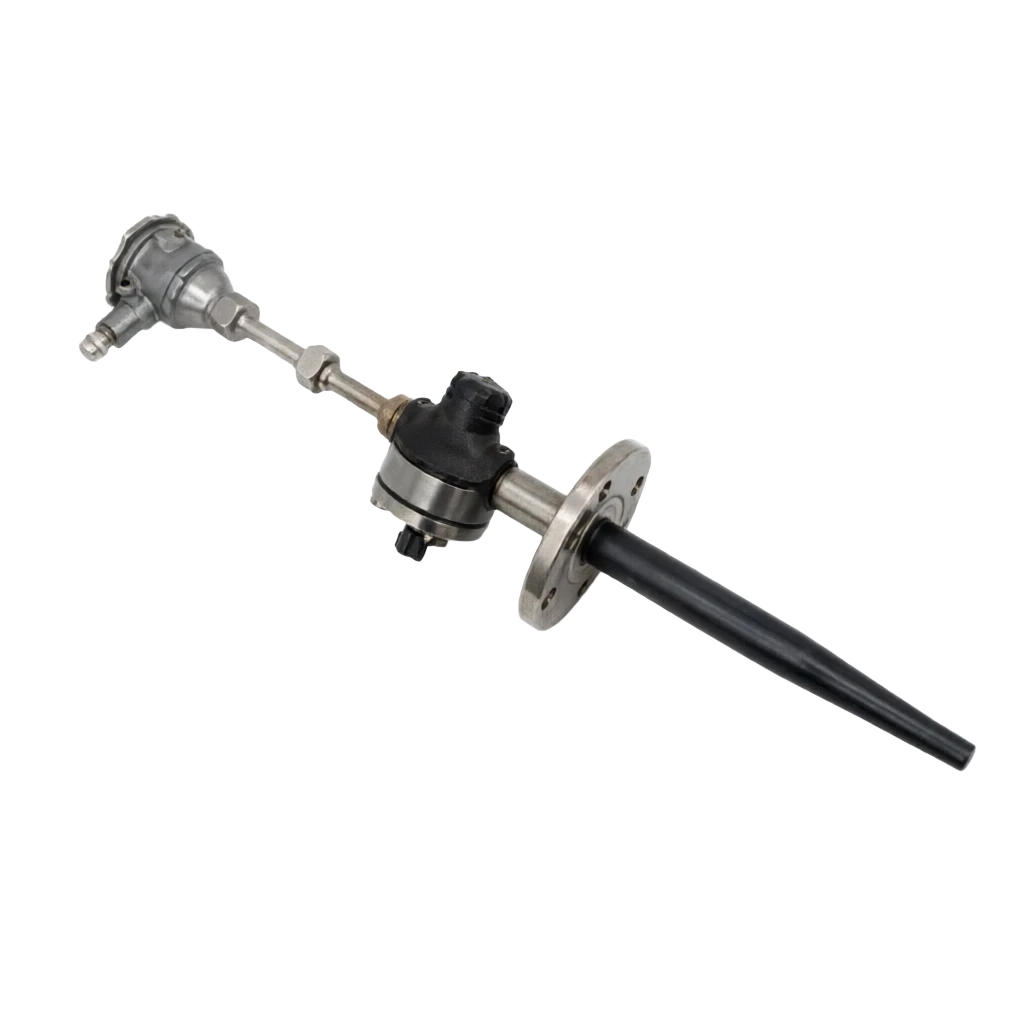
(Wear-Reistant Cut-off Thermocouple) is a dedicated industrial thermoelectric doll for the high-speed flushing of solid particles such as coal, cement powder, catalysts, ore powder. It introduced the "Cut-offTip" structural design based on the grinding heat doll - by pre-positioning a cutable spare length (usually 100 ~ 300 mm) on the outside side of the grinding head, where the grinding head is washed to the point where it cannot be used any longer, the wear and tear segment can be cut off on the spot and the unpaved spare part can be shown to continue working. This design, which extends the overall life of the thermoelectric dolls from 3 to 6 months of the normal grinding type to 12 to 36 months, is a key thermometer for high-mortgage events such as coal grinding machines in fire power plants, coal powder preparation in cement plants, gasification furnaces in coal-chemical plants, etc.

1.1 Product positioning and value

The core value is "Hand-over plus cut-off life." High-intensity calibration sites such as medium-speed mills (HP / MPS / ZGM) at fire plants, pressors at cement plants, Shell powder gas furnaces at coal-chemicals, and the typically only 3-6 months of the normal grinding-heat-resistant electron plant ' s mill life, with frequent replacements causing high production costs. Thermal electrocution is cut off by grinding, cutting the wear and tear in 30-80 mm by cutting the end design, using a bed or an angular grinding machine on the ground, and continuing to work with new grinding layers, with single installation being able to withstand 3-8 cuts, which increase the overall life life by 2-5 times.

1.2 Brief history of technological evolution

Three main stages went through.

The first generation of co-Cr-W alloys was introduced abroad (Wika, Yokogawa, ABB) in the 1980s, but with a life expectancy of 3 to 6 months; ② 1990 Mid-term compound pouring WC-Co (tungsten-cobalt carbon) grinding head, with increased lifetime 6 ~ 12 Months; The single installation life was extended to 12 to 36 months after the 2000s by introducing the Cut-Off-Tip and double-layered protection tube designs, and was cut several times at the site, depending on the wear and tear. Gradient functional material (GFR) grinding head (surface hard + internal resilience) became widespread after 2015 with the maturity of 3D metal powdering technology, further enhancing the resilience of the ground.

1.3 Comparative positioning with normal grinding electrons

The normal grinding-heat-resistant electromechanical dolls are designed to be single-layered protection tubes + grinding-resistant, which can only be replaced by a full-scale wear-resistant head (dismantling the thermome and replacing the entire protective tube), with a high maintenance workload. Thermal cut-off is designed using double protection tubes (outside grinding protection tubes + inner temperature tubes) + end-of-end structures that can be quickly recovered from grinding in situ by cutting off + rewelding inner temperature tubes without dismantling the main thermoelectric object. The core difference can be summarized as: "As usual grinding" + "Vs grinding cut" + "Recoverable on site" .

Table 1-1. Major manufacturers and representative models of wear-resistant shutoff thermocouples

General description · Serial number / BrandCross-reference
Serial numberBrandTypical ModelMain-play featureMain markets
1Wika (Germany)TC10-A / TC80-Wear seriesHigh reliability, high priceElectricity, petrochemicals, coal-chemicals
2Yokogawa (Japan)RN-Wear/ RC-War seriesJapanese Market LeaderElectricity in Japan, South-East Asia
3ABBTS Series / SensyTemp Cut-OffHigh-end nuclear power, oil and gas certificationPower stations, coal-chemicals, seamen
General description · Serial number / BrandCross-reference
Serial numberBrandTypical ModelMain-play featureMain markets
4Endress+Hause rTC15 / TC88 / iTHERM WearModular designChemical, electricity, cement
5Ashcroft (United States)TC-Wear SeriesUnited States marketCement, coal-chemicals, North America
6National production: Shanghai Automaticized InstrumentWRNT / WRNK-WarBig, low.Electricity, cement, China
7Nationally produced: Hangzhou Chunjiang / Red FlagWRN-Wear SeriesLow- and Middle-Range UniversalizationSmall and medium-sized projects
8Nationally produced: ChinaxiangWRN-Wear / WRN-Cut SeriesNational production substitutionChemical, electricity, coal-chemicals
9National: KawaruTC-Wear / WRN-War seriesNational Product Middle EndElectricity, chemical
02

MEASUREMENT PRINCIPLE

Operating principle

The work is based on three core elements.

1 Temperature-temperature conversion based on thermal electrical effects of Sebek; 2 Thermal conductivity based on a two-layer protective tube structure; 3 Based on the "reparation of wear and tear" of the end structure. Compared to normal grinding-heat-resistant electron dolls, there are more "cut-up" links, increasing the overall life expectancy by a factor of 2 ~ 5.

2.1 Thermal electrical effects of Sebek

The rationale for thermoelectric dolls is based on the heat-electric effects found in 1821 by T.J. Seebeck: in closed circuits consisting of two different conductors (thermal electrodes), heat-power E, E is proportional to temperature differences if the temperature of the two points varies. Thermal power is composed of two components: exposure (electronic diffusion at the contact of two conductors) and temperature differential (electronic diffusion at both ends of the same conductor). In the IEC 60584 standard fraction table, the temperature range of the K (NiCr-NiSi) is -270 ~ +1372 ℃, the temperature range of the N (NiCrSi-NiSi) is -270 ~ +1300 ℃, the temperature range of the E (NiCr-CuNi) is -270 ~ +870 ℃.

2.2 Double-layered protective tube structures

Two layers of protective tube structure, internal to external

1 internal thermostat (synthesis) 6 /Φ 8mm (b) Internal sealing of the thermoelectric doll wire + magnesium oxide insulation powder, which is responsible for the delivery of heat and the protection of the doll wire; 2 outer grinder-resistant tubes (silver-resistant) 16 /Φ 20 /Φ 25 /Φ 32 mm ) is connected to the cut end by thread or welding and is responsible for absorbing solid particles; 3 The grinding head (at the front end of the outer protection tube) is formed by welding/ spraying/composite pouring / mosaicing, which is directly exposed to the detector medium and bears the most severe brushing and wear. The design of the two-layer structure is critical: the 1 ~ 2 mm gap between the inner and the outer layers is left to ensure, through spring card buttons or screw-fixing, that the post-moderate temperature tube is re-matched with the new job.

2.3 Interruptor structure principles (core)

Cutting the end structure is the core innovation point for grinding off the thermoelectric dolls. The working principle is: 1 in the rear of the grinding protection tube in the outer layer, with a pre-positioned section 100 ~ 300 mm severable length (replacement segment); 2 backup segment every 30 ~ 80 mm has a pre-defined "cut position" mark (dent/ screw/ ruler line); 3 When the wear is resistant to wear and tear that is no longer usable, the floor or horn grinding machine is used to cut the wear and tear section along the predefined position; The new dimension of the cut is new (the internal temperature tube is still intact) and can be put to work directly; The total life of the thermoelectric doll has been significantly increased by repeated cuts. Key design for the end structure: 1 to cut the plane-level whole mm; 2 Cuts the concentricity of the inner temperature tube and the outer protection tube; 3 re-installed pressurized. 80% 。

2.4. Grounds for grinding and material selection

(a) The milling principle is based on "hardness confrontation" - by welding/ spraying/ embedding high hardness materials at the front end of the thermoelectric doll (HV ≥600 ~ 700, in cost); 2 Aluminium Oxide Alo ceramics (HV) 900 ~ 1100 , low cost); 3 Sprayed ZroO ceramics (ZroO) HV1100 ~ 1300 It's a good heat shock. 4 Composite pouring WC-Co (tungsten-cobalt carbonated) HV1200 ~ 1500 , highest hardness); 5-beded YG6X/YG8 Hard-quality alloys (Purpose) HV1500 ~ 1800 , most durable but most costly). The milled layer is connected to the protective tube: Qyl (≤+600℃), Qar (+600 ~ +800 ℃), and laser melt (+800 ~ +1100 ℃).

Wear-ResistantCut-

2.5 Cutting off reprocessing and sealing

The end of the cut is the key to the process of cutting off the thermoelectric dolls.

(a) One end-carriage: the wear and tear section is cut along the pre-defined position with a special cut-off device and the end-side roughness Ra ⁇ m; 2 Console alignment: adjustment of the concentricity of the inner temperature tube with the outer protection tube through a special kit; 3 Seal loop replacement: O/Metallic C/graphite gaskets selected by medium temperature and pressure; 4 Connection recovery: reconnecting the outer protection tube with the inner sensor temperature tube by threading/calculation/welding; 5 Seal test: Hydraulic test 1.5 Double work pressure. Keep pressure. 30 Min no leak; 6 Performance recheck: Standard Temperature Match + millivolt signal test, error ⁇ ±1.5 ℃ or 0.4% FS。

Table 2-1 Grid-resistant cut-off thermoelectric doll workflow (9 steps)

Wear-ResistantCut-

  1. 01

    1000 To fight the coal powder. 500 ~ 800 ) Scratch wear and tear. Main grinding material is arranged in a hard-on.

  2. 02

    / Co-Cr-W

  3. 03

    Particle such as cement powder (HV alloy)

The working principles . Steps / Physical processesCross-reference
StepsPhysical processesMain processingOutput FormPrecision range
1Thermal field is heating up.Medium temperature, tack, grinding head surface.Original temperatureFull Scale
2Heat-resistant grinding head.Hard-quality alloy, tweak, outer protection tube.Hot stream density~1000 W/m²
3The outer protective tube. Thermal.The protective tube, the inner temperature tube.Thermal flow is declining.~5% Loss
4The inner temperature tube. The heat.Intra-cube, poaching end of the thermo-puppet.Measure end temperatureApproaching medium temperature
5Thermal power effectsSeckbeck Effect K approximately 41 μV/°CThermal power MV0~50 mV
6Signal compensationCold end compensation + compensation guidemodified MV±1.5 ℃ / 0.4% FS
7Signal transmissionmV signal ⁇ Temperature Transmitrator / DCS4-20mA / Engineering Unit±0.5 ℃
8Loss monitoringHear tolerance thickness measurements + cut warningLife expectancyThe remaining 30%, call the police.
9Cut off the scene.Cut the wear and tear section + resealedNew Work3-8 cuts
03

PRODUCT STRUCTURE

Product structure

Designed in modular structure, consisting of 12 core components such as wire boxes, wire terminals, compensatory guidance lines, outer grinding protection tubes, inner-sweet temperature tubes, grinding heads, cut-end structures, connective components, seals, etc. (a) Class 5 by the structure of the cut end: screws, cone, plane, troughs, rulers; Classes 4 are classified in a grinding-resistant form: welding, spraying, composite anotation, mosaicing.

Table 3 - 1 Grinded Cut Thermoid 12 Wid-ResistantCut - Table 3 - 3 Grid Cuttered Therms 4 typeWear-ResistantCut-

Junction box

Main function: Protection of the end of the line + Dustproofing Key materials/processes: Aluminium alloy cast / stainless steel Fault mode: Corrosion, Seal failure

Connector End

Main function: Connection to compensatory guide Key material/process: ceramic piping + nickel-plated copper chops Fault mode: loose, oxidized

Compensatory guide

Main function: Cold-end temperature compensation Key material/process: K type KX / N type NX / E Type EX failure mode: break, signal decay

Connect pole / neck

Main function: Connecting to the wire box and the protective tube Key material/process: 304 / 316L stainless steel Fault mode: break, corrosion

The outer grinding tube.

Main function: Take medium flush + secondary protection Key material/process: 316L / Inconel 600 / Haps C-276 Fault mode: wear, corrosive

Inner thermostat.

Main function: Covered fuse + Carrier heat Key material/process: Inconel 600 + Magnesium Oxide powder Fault mode: ageing, drifting

Hot-wire doll wire.

Main function: Sebek Effect Temperature - Power Trancorate Key Materials/Process: K / N / E Spectrum Fault Mode: Oxygen, Fate

- It's a grinding head.

Main function: Direct exposure to brushing (most outer layer) Key materials/processes: stacking/painting/complex pouring/embedded hard alloy Fault mode: wear and tear

Cut the end structure

Main function: In situ cut after wear and tear (core feature) Key material/process: screw/convene/train/scaling end

Seal / Gran Head

Main function: Cut back end seal Key material/process: graphite / metal C / O Fault mode: ageing, leaking gas

Connect screws / Frank

Main function: Connect to the equipment process Key material/process: M33x2/Frand DN50/carpage Fault mode: loose, leaky

Deck / Tag

Main function: Model / Pyrometric / Cut position Key materials/processes: stainless steel etching Fault mode: falling, blurry

Cutend Type

Thread Cut

Structural features: external screws on the outer protection tube, every time you cut the back-edged screws, applicable: high pressure + multiple cuts on behalf of the manufacturer: Wika TC80-Cut

Cone Cut

Structural features: outer tube strip cones, with a closed cone set restored each time cut

Plane Cut

Structural characteristics: Stuck tight with bolts after the outer tube is evened Seal Sealed Sealed Place: Low Pressure + Less Cut Represents the manufacturer: National Production WRN-Cut

Tug Cut

Structural characteristics: Outer tube pre-carves, which are severed by a car ring, applicable: medium pressure + medium cut on behalf of the manufacturer: E+H TC88-Cut

Ruler Cut

Structural features: external tube tics, cut along the ruler, then use a dedicated interface, applicable to: General + Accurate Control Length, representing the manufacturer: ABB TC-Cut

Welding

Forming process: Co-Cr-W Alloy hardness HV: 600 ~ 700 for a medium-speed coal mill, cement milling at the end of the protective tube

Spray

Forming process: Plasma sprayed aluminium oxisizing AlO or zirconium oxide ZroO ceramics HV: 900 ~ 1300 Typical application: high-speed coal plume, wind cleaning

Composite Apostille

Forming process: foundry WC-Co (tungsten-cobalt carbonated) compound pouring + welding HV: 1200 ~ 1500 Typical typical applications: cement kiln tails, circulation fluidized beds

Embedded

Forming process: YG6X / YG8 Hard-quality alloy rods embedded at the end of the protective tube HV: 1500 ~ 1800 Typical applications: super fine coal powder, strong flushing of coal grinders

04

TECHNICAL GUIDE

Advantages and disadvantages

It is a key thermometer for high wear and tear, which has a significant advantage over normal grinding thermal electron but also has deficiencies in terms of high process cut-off requirements, high maintenance workloads and the impact of sealing reliability on site conditions.

4.1 Main advantages (8 grand)

Wear-ResistantCut-

4.1 Main advantages (8 grand)

Life expectancy has increased considerably.

Detailed: Total life after 3-8 cuts 12-36 months, 2-5 times the normal grinding type

The site is repaired.

Details: Post-restore can be cut off from the scene + resealed without dismantling the subject of the thermoelectric doll

Lower maintenance costs

Detailed information: Long time spent on single installation, reduced frequency of procurement and replacement hours, lower annual maintenance costs 60%

The milly layer is optional.

Detailed: Welding / Spraying / Complex Adding / Embedding 4 type grinding head swipes with different strength and temperature

Pressure adapts.

Detailed: High external protective tube bearing capacity (typical ≤ 10 MPa), suitable for high pressure coal powder pipes and gasification furnaces

Signal is stable.

Detail: Two layer protective tube structures avoid direct contact with the thermoelectric doll wire, mV signal stable

Remotely Transferable

Detailed: Integrated temperature adapters with output 4-20mA + HART, directly with DCS / PLC

It's a blast-proof extension.

Detailed: Ex d / Ex ia blast-proof shell suitable for hazardous areas such as coal and gas

Disadvantages and use restrictions

First price is higher

Detail: grinding head + double protection tube + cutting end structure makes the whole machine price about 1.5 ~3 times the normal grinding type

Cutting the process is very demanding

Detailed: Cut, sealed, re-checking requires specialized tools (bed, seal, detector) and cannot be operated at random on site

Medium Cleaning Requirements

Details: Large particles / High viscosity mediums jam gaps within and outside layers, affect the sealing

Temperature is restricted.

Detailed: Outer protection tube + grinding head is always temperature resistant +1200 ℃ At super-heat conditions, you have to choose the ceramics protection tube.

Longer response time

Detailed: Double-layer protective tube thermal inertia supercomposition, typical 60-150 s, much slower than normal thermoelectric dolls (1-5 s)

Limited number of cuts

Detailed: The outer protective tube can be cut off 100 ~ 300 mm, 3 ~ 8 cuts cannot be cut again

On-site maintenance cycle

Detailed: The thickness of the grinding layer will need to be checked on site on a regular basis (3-6 months) to avoid abrupt wear-out of the loss effect

05

APPLICATIONS

Application area

The use of coal mills, coal powder preparation in cement plants, gas furnaces in coal-chemicals, circulatory fluidized boilers, high-heavy coal spraying, oil burning, catalyst silos, biomass boilers, garbage power plants, etc., is extensive in all industrial temperature measurements involving high-speed washing of solid particles. Requirements for grinding, pressure, temperature range, medium properties vary significantly from sector to sector, and suitable grinding head and cut end structures need to be selected based on specific work conditions.

Table 5 - 1 Grid Cut Therms 14 Large Typical Application Table 5 - 2 Grill Cutoff Therms 5 Large Industries Application MatrixWear-ReistantCut-Wear-ReistantCut-

Fireworks.

Typical temperature measure scenario: Medium-speed coal grinder export (HP / MPS / ZGM type) Temperature range: +80 ~ +200 ℃ Key requirements: millability + high life + cutable

Fireworks.

Typical temperature measure scenario: coal powder pipe (one wind pipe, second wind delivery) Temperature range: +60 ~ +150 ℃ Key requirements: Resuscitation + high current speed + blockage

Fireworks.

Typical temperature scenes: coarse powder separator, fine powder separator Export Temperature range: +80 ~ +180 ℃ Critical requirements: grinding + cyclone brush

Cement factory

Typical temperature scenarios: Cement grinder, rotary kiln, rotor wind separators Temperature range: +60 ~ +800 ℃ Key requirements: high temperature + subdued

Coal-chemicals

Typical temperature scene: Shell / GE / Temperature range: +200 + 1200 °C Key requirements: high temperature tolerance + high pressure + high pressure

Coal-chemicals

Typical temperature scenario: powder-pressure pipe line Temperature range: +80 ~ +400 ℃ Critical requirement: grinding + high pressure + cut

Circulation fluid beds

Typical temperature scenario: CFB boiler chamber, refueller, separators Temperature range: +400 ~ +900 ℃ Key requirements: High temperature + grinding + blast resistance

A furnace with coal.

Typical temperature scenarios: coal-jet pipes, coal-puffhouses, bags, dust-sweepers Temperature range: +40 ~ +150 ℃ Key requirements: grinding + blast + blockage

Oil burns.

Typical temperature scenario: flue gas from kilns, cooler emissions Temperature range: +400 ~ +800 ℃ Key requirements: grinding + heat tolerance

Catalyst warehouse

Typical temperature scenario: FCC catalyst catheter, reactor distribution panel Temperature range: +300 ~ +700 ℃ Key Requirements: Grid-resistant + Blockproof

Garbage power plant

Typical temperature scenario: waste incinerator furnace chamber, flue gas channel Temperature range: +200 ~ +900 ℃ Key requirements: millability + corrosion resistance + cut

Biomass boiler

Typical temperature scenario: biomass burner, fluid bed furnace Bulk temperature range: +300 ~ +800 ℃ Key requirements: grinding + corrosion resistant

Iron and metal metallurgy

Typical temperature scenarios: high furnace blower powder, smoke burner gas temperature range: +80 ~ +600 ℃ Key requirements: grinding + high life

Phosphorus / Aluminium

Typical temperature scenario: phosphate powdering, aluminium oxide roasting Temperature range: +80 ~ +500 ℃ Critical requirement: grinding + corrosion resistant

Fireworks coal grinder

Preferred grinding head: Embedded YG6X Cutend Preferred: Thread Severager Temperature Range: +80 ~ +200 ℃ Life Requirements: 12 ~ 24 Month for Product: Wika TC80-Cut

Coal-chemical gas furnaces

Boiler-resistant head preferences: compound pour WC-Co Cut-end preferences: cone cut-off temperature ranges: +200 ~ +1200 ℃ Life expectancy requirements: 12 ~ 18 Months of product: E+H TC88-Cut

Circulation fluid beds

Preferred mills: Spraying oxidation Cutting End Preferred: Tile Cutting Range: +400 ~ + 900 °C Life Requirements: 12 ~ 18 months on behalf of Product: ABB TC-Cut

Cement plant cyclone, Zipper.

Preference for grinding head: Composite pouring WC-Co Cutend Preferred: Planted Breaker Temperature Range: +60 ~ +800 ℃ Life Requirements: 18 ~ 36 Month for Product: Nationally Produced WRN-Cut

Catalyst warehouse

Preferred mill: Welding Co-Cr-W Cut-Up-Preferred: Thermosphere: +300 ~ +700 ℃ Life Requirements: 12 ~ 18 Months on behalf of Product: Yokogawa RN-Cut

06

TECHNICAL SPECIFICATIONS

Technical Parameter Table

Table 6 - 1 The mills cut off the thermoelectric dolls. 23 The whole machine parameter tableWear-ReistantCut-Wear-ReistantCut-Table 6 - 3 The mills cut off the thermoelectric dolls. 5 Class-Several Cutend Structure versus World-ReistantCut-

Technical parameter table . Serial number / parameter itemCross-reference
Serial numberParameter ItemSpecificationsTypical values/ranges
1Sensor typeIEC 60584 Standard ScoreK / N / E (K most commonly)
2Temperature rangeIt depends on the spectrometer and the milliform material.0 ~ +1200 ℃
3Accuracy classGB/T 16839 / IEC 60584I ± 0.5 °C/ II ± 1.0 °C
4He's got a hard-on.Welding/spraying/complex pouring/membeddingCo-Cr-W / AlO / ZrO / WC-Co / YG6X
5Hardness of grinding headWys hard HV600~1800 HV
6Thin-resistant layer thicknessWelding/painting/mixed thickness of milled head2~8 mm
7Outer protective tube diameterΦ16~Φ32 mm⁇ 20 / ⁇ 25 (most commonly used)
8Inner thermostat diameterΦ6 / Φ8 mm⁇ 8 (most commonly used)
9Insertion depth LL = 500~3000 mm800 / 1000 / 1500 mm
10Cuts the total length.Save cutout100~300 mm
11Number of cutsIt's always cut off.3-8 times (30~80 mm per session)
12Protection tube material316L / Inconel 600 / Haq316L (Mainstream) / Inconel 600 (high temperature)
13Process connectionscrew / Frank / card / weldM33x2 / Frank DN50 / Carpette / Welding
14And the response time.63% Step Response60~150 s (depending on the outside)
15Operating pressureOuter protective tube pressure≤ 6.4 MPa (General) / ≤ 10 MPa (enhanced)
16Media Flow Speed♪ Take the particle flush speed ♪≤ 25 m/s (General)/ ≤ 40 m/s (enhanced)
17Insulation resistanceBetween the wire and the protective tube.≥ 100 MΩ (500V DC)
18Pressure withstand ratingBetween my wires / my wires and my pipeAC 500V / 1 min without punches
19Explosion protection markingGB 3836 / IEC 60079Ex d IIB T6 / Ex ia IIC T6
20Ingress protectionIEC 60529IP65 / IP66 / IP67
21Working environment temperatureThe duct box is temperature resistant.40 ~ +85 °C (wirebox) / 0 ~ + 1200 °C (temperature)
22Storage temperatureTransport and storage temperature55 ~ +105 ℃
23MTBFAverage no-facilities time≥ 100000 Hours (includes multiple cuts)
MaterialsForming processHardness HVTemperatureCostTypical applications
Co-Cr-WOxygen-accetene welding600~700≤ +600 ℃MediumMedium speed coal mill
Spray, AlO.Plasma spray900~1100≤ +800 ℃LowCoal powder pipe
Technical parameter table · Materials / formation processCross-reference
MaterialsForming processHardness HVTemperatureCostTypical applications
Spray ZroOPlasma spray1100~1300≤ +1000 ℃MediumCFAB boiler
Composite Plugin WC-CoCast + Weld1200~1500≤ +800 ℃MediumCement cyclone separators
Embedded YG6XHard-quality alloy rods.1500~1700≤ +900 ℃High- I'm gonna get a coal grinder.
Embedded YG8Hard-quality alloy block.1700~1800≤ +900 ℃HighSuper fine coal powder, strong flush.
Technical parameter table · Cut-off end type / Number of cutsCross-reference
Cutend TypeNumber of cutsMaximum underpressureSeal reliabilityOperation difficultyRepresenting products
Thread Cut5-8 times≤ 10 MPaYuMedium (carwring required)Wika TC80-Cut
Cone Cut4-6 times≤ 6.4 MPaYes.Medium (cars + cones)Yokogawa RN-Cut
Plane Cut3-4 times≤ 1.6 MPaMediumLow (severed only)Nationally produced WRN-Cut
Tug Cut4-6 times≤ 4.0 MPaYes.Low (cut along dent)E+H TC88-Cut
Ruler Cut3-5 times≤ 2.5 MPaMediumLow (cut along ruler)ABB TC-Cut
ConnectionSpecificationsMaximum underpressureSealTypical applications
Threaded connectionM27×2 / M33×2 / G1"≤ 6.4 MPaBoil belt + screw sealCoal mill exit, coal powder storage
Flanged connectionDN50 / DN65 / DN80 PN16/PN40≤ 4.0 MPaTied up with gaskets + flanc boltsGasification stoves, coal powder pipes
Cassette Connection⁇ 16 / ⁇ 20 / ⁇ 25 Carats≤ 16 MPaCarat + screw pressure tightHigh pressure coal powder line
Weld ConnectionWeld directly in the pipe / container≤ 10 MPaAngular welding + OsmosisHigh temperature, high pressure coal chemical
Quick Plug InFast contact from sealed≤ 2.5 MPaO Circle + CardI've been doing a lot of work.
Ball valve + suiteDN50 Ball Valve + Insert Suite≤ 10 MPaBall valve + graphite fillerOnline plug-in
07

SELECTION GUIDE

Select Table

The selection forms are presented by application, grinding-resistant material, cut-end type, process connection, and fraction 5 dimensions, to facilitate systematic selection by the engineering designer based on the temperature object, medium properties, pressure level and connection interface.

Table 7-1 Table of selection of the scenes for grinding cut-off thermoelectric doll applications (11 rows)

Table 7-3. Measuring-tip selection for wear-resistant shutoff thermocouples (5 rows)

Wear-ResistantCut-

Selecting Table . Temperature Object / Temperature RangeCross-reference
Temperature ObjectTemperature range- It's a first choice.Cut the top of the lineSensor type
Medium-speed coal mill exit+80~+200 ℃Embedded YG6XThread CutType K
Coal powder pipeline+60~+150 ℃Co-Cr-WPlane CutType K
Powder Separator+80~+180 ℃Embedded YG6XTug CutType K
Powder Separator+80~+200 ℃Embedded YG8Tug CutType K
Cement coal grinder+60~+300 ℃Composite Plugin WC-CoPlane CutType K
Cement cyclone separators+60~+800 ℃Composite Plugin WC-CoCone CutType K
Shell, gas-cooked nozzles.+200~+1200 ℃Embedded YG8Thread CutK/ N
Powder coal and pressure line+80~+400 ℃Composite Plugin WC-CoCarcard cutType K
CFAB boiler chamber+400~+900 ℃Spray ZroOTug CutK/ N
FCC Catalyst Kit+300~+700 ℃Co-Cr-WRuler CutType K
The garbage incinerator.+200~+900 ℃Composite Plugin WC-CoThread CutK/ N
- It's a grinding head.Hardness HVTemperatureSprint strength.Typical applicationsRepresenting products
Co-Cr-W600~700≤ +600 ℃Medium ScratchCoal powder pipes, coal millsWRN-Cut-Co CrW
Spray, AlO.900~1100≤ +800 ℃Sprinted hard.Coal-powder lines, windmillsWRN-Cut-Al O
Spray ZroO1100~130 0≤ +1000 ℃Strong Sprint + Antithermal EarthquakeCFC boilers, waste incinerationWRN-Cut-Zr O
Composite Plugin WC-Co1200~150 0≤ +800 ℃Sprinted hard.Cement cyclone separatorsWRN-Cut-WC Co
Embedded YG6X1500~170 0≤ +900 ℃A very strong brush.Medium-speed coal mill exitWRN-Cut-YG 6X
Embedded YG81700~180 0≤ +900 ℃Super-brush.Shell, gas-cooked nozzles.WRN-Cut-YG 8
Select Table · Cut-end type / Cut-off timesCross-reference
Cutend TypeNumber of cutsPressureSeal reliabilityTypical applications
Thread Cut5-8 times≤ 10 MPaYuShell gas-coolers, medium-speed coal mills
Cone Cut4-6 times≤ 6.4 MPaYes.Cement cyclone separators
Plane Cut3-4 times≤ 1.6 MPaMediumCoal powder storage, low pressure.
Tug Cut4-6 times≤ 4.0 MPaYes.CFB boilers, coal powder separators
Ruler Cut3-5 times≤ 2.5 MPaMediumFCC Catalyst Kit
Process connectionSpecificationsPressureTypical applications
Threaded connectionM33x2 / Frank NN50 PN40≤ 10 MPaCoal mill exit, coal powder storage
Flanged connectionDN50 / DN65 PN16≤ 4.0 MPaGasification stoves, coal powder pipes
Cassette Connection⁇ 20 / ⁇ 25 Carats≤ 16 MPaHigh pressure coal powder line
Weld ConnectionWeld directly in the pipe / container≤ 10 MPaCoal chemical high temperature high pressure
Quick Plug InFast contact from sealed≤ 2.5 MPaI've been doing a lot of work.
08

SELECTION GUIDE

Selection Guide

8.1 10 Step-style process

Wear-ResistantCut-

8.3. Grid-resistant cutting of thermal electron dolls 10-line selection decision tree

The summary, Wear-ResistantCut, covers all the key technical points for the milling-cuter approach to the application of thermal electromechanicals, and the specifics should be detailed in conjunction with the latest product manual for the manufacturer and the field work.

Selection Guide · Steps / SelectionCross-reference
StepsSelect contentKey decision-making points
1Confirm temperature object + mediumCoal/ Cement/ Catalyst/ Mine/ Powder
2Determine temperature ranges0~+1200°C, determined by medium
3Set the milling levelSelect stack welding/ spraying/ compound pouring/ embedding by flush strength
4Determine cut-off typeSelect the screw/ cone/ plane/ groove/ ruler by the pressure and number of cuts
5Determine the fraction numberK / N / E (K most commonly)
6Determine the protective tube diameterOuter 20 / ⁇ 25 + inner 8
7Determine Insert Depth500 ~ 3000 mm, custom
8Select Process Connectionscrew / Frank / card / Weld / Fast Plugin
9Verification of blast and protectionEx d IIB / Ex ia + IP65/IP67
10Spare parts and life-cycle costsNumber of single-installation cut-off times + spare parts supply
ComparativeThe mills cut off the thermoelectric dolls.Normal grinding thermoelectric dolls
Protection of the tube structureDouble layer (overlay tolerance + inner temperature)Single-layer grinding protection tube
After a grinding headCut off on site + resealedWhole replacement of protection pipes
Total life expectancy12~36 months (3~8 cut)3~6 months (one time)
Single installation hoursLong (several cuts at one installation)Short (one-time installation)
Maintenance of workloadLow (periodic cut-off)High (frequent replacement)
Response time60~150 s (double superseding)30~80 s (single level)
Pressure≤ 10 MPa (outside)≤ 6.4 MPa (single layer)
PriceMedium (about 1.5 ~3 times normal grinding)Low (baseline)
Cut the equipment.Carbed required / horn grinderNo need.
Medium Cleaning RequirementsMedium (avoiding congestion)Low
Typical applicationsMedium speed coal mill, Shell gas furnace.Coal powder pipes, windmills
Selective Guide Problem / Yes Decision-makingCross-reference
ProblemYes, it's a decision.No. Decision-making
Q1 mediums are high in bulging?Select the grinding cut + embedded YG6X/YG8Select normal mill + welding
Q2 Installation location difficult to maintain?Choosing to grind cut + long lifeI'm just gonna pick a normal grind or a dress.
Q3 Working temperature > +800°C?Select a compound pour WC-Co/ Spray ZroOSelect a stack of welds Co-Cr-W
Q4 medium working pressure > 4 MPa?Select the screw-sliter/ card cutterSelect plane/ dent cut
Q5 Media contains corrosive composition?outer selection Inconel 600 / Haps316L is fine.
Q6. Got a bed on the scene?Sniff / Cone CutSelect the groove / ruler cut-off
Q7 needs to be severed more often (≥ 5 times)?Select to cut the total length 200-300 mmSelect to cut the total length 100-150 mm
Q8 requests quick replacement?Select the fast plug cutSelect screw / Franc Connection
Q9. The blast level?Select Ex d / Ex ia StrengtheningJust pick the normal type.
Q10 Media Flow Speed > 25 m/s?Pick a thick outer layer, ⁇ 32 + enhanced grindingGeneral outer layer 20
Selection guide · Serial number / AttentionCross-reference
Serial numberAttentionDetailed description
1Install Location SelectionAvoid positive plowing of coal powder / gas furnace burner, prioritize 5D behind bend (reduced brushing)
2Insert Depth AssuranceInsert depth ≥ 500 mm to ensure grinding head in the medium mainstream
3- It's a grinding-head.The grinding head should be leaning away from the maximum brush angle, and 30 ~ 45 % can be extended 30 %
4Cut the residuals and confirm.Confirm before installation can cut the total length ≥ 100 mm and leave the remaining amount of site restoration
5Seal-lock check.Check that O / Metal C circle is intact and ageing needs to be replaced before installation starts
6Snails are tight and twirl.Tweak the screws as per the manufacturer's rules, and avoid spills or too tight to die.
7Compensatory guidance setup≥ 500 mm, separate from power cables, with a single zinc plating tube
8Temperature limit in the environment+85 ℃, super-temperature insulation shield
9Medium CleannessLarge particle media need to be pre-filtered to avoid blocking the internal and external gaps.
10Mine-protected and groundedInstallation of wave-surge protection (SPD) outdoors, ground-to-ground electrical resistance ≤ 4 times
11First Review and Periodic CalibrationFirst check in new loads within 7 days, then calibrated every 6 months 1 time
12Mill-resistant monitoringOn-site use of ultrasound thickness meters to monitor the thickness of the grinding layer per 3 month, remaining < 30% alert
Selection guide · Serial number / Maintenance itemCross-reference
Serial numberMaintenance projectsCycleContentsExecutor
1Appearance and reading checkWeeklyConnector boxes, compensatory guides, signal readingsField inspector.
2Hear tolerance thickness measurementEvery 3 monthsUltrasound thickness machine, remaining < 30%Meter maintenance
Selection guide · Serial number / Maintenance itemCross-reference
Serial numberMaintenance projectsCycleContentsExecutor
3The site was cut off and repaired.Every 6-12 monthsCut as planned + resealedInstrument Engineer
4Seal replacementAfter every cutReplace O Circle / Metal C CircleMeter maintenance
5Overall precision verificationEvery 12 monthsStandard temperature field match, error. ±1.5 ℃Vendor or third party
6Overall replacementPer 24~36 monthsCuts are exhausted, whole replacements are replacedField maintenance officer