PRODUCT TECHNOLOGY

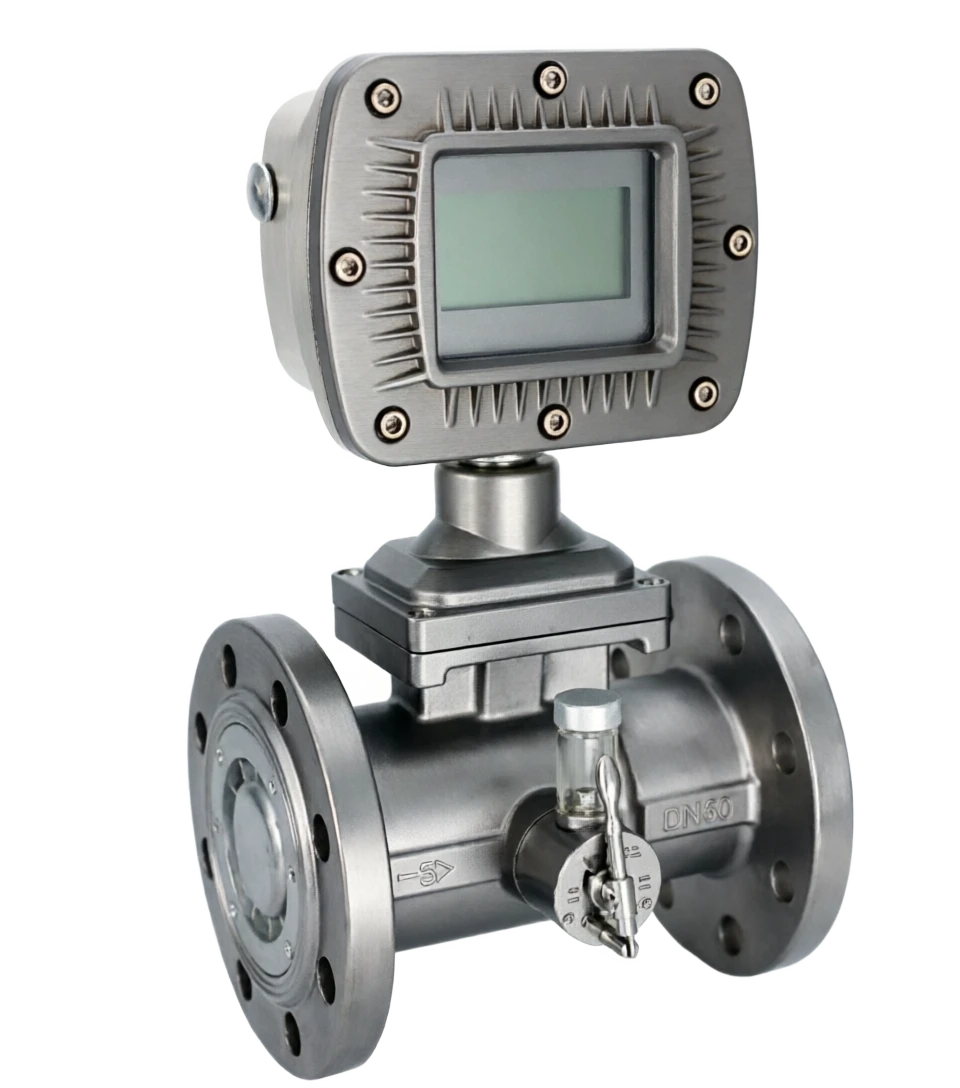
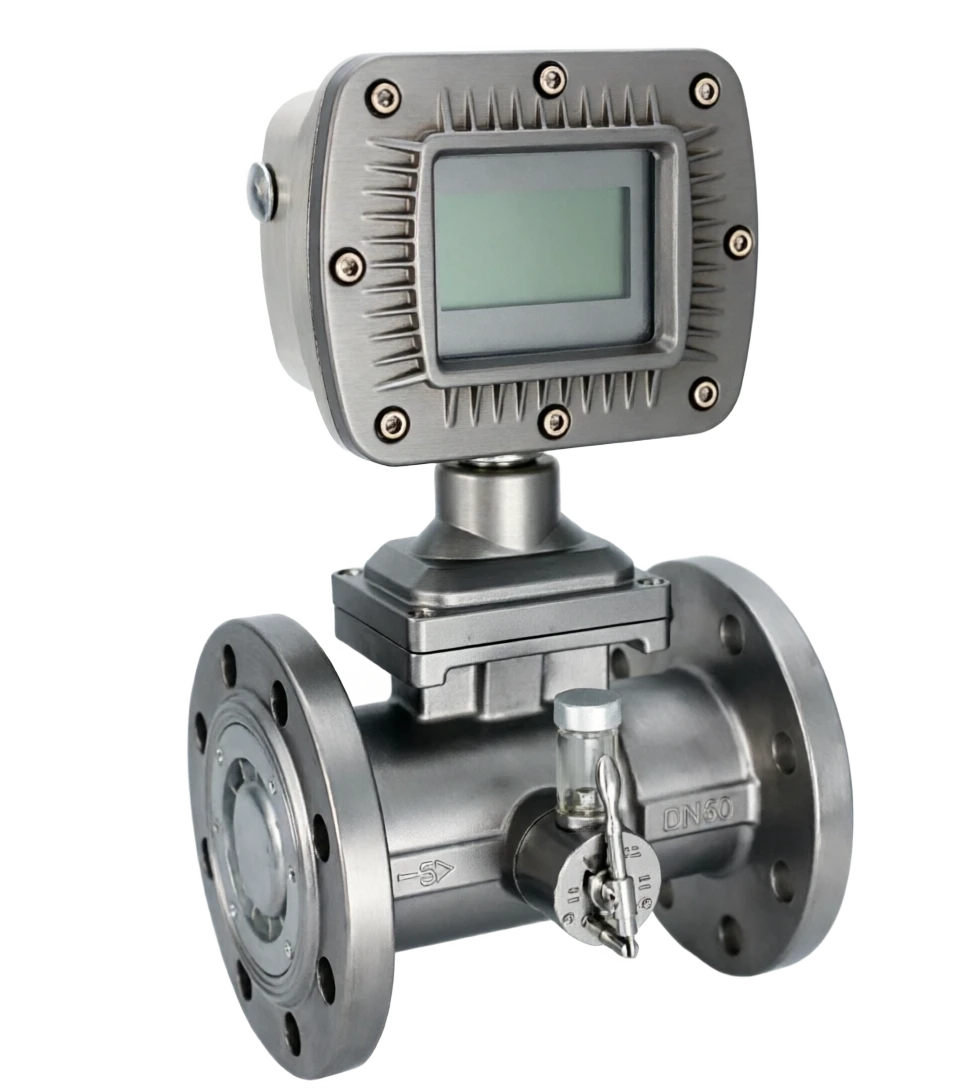
Gas vortex rotational measure

Operating principle

The gas vortex rotational measure.

The core mechanism is "Aeroflows drive the rotation of leaves, with a magnetic sensor line of leaf cutting producing pulses, which are proportional to volume flows", and back-end access to the temperature compensation converts the volume flow of the work to standard volume or mass flows. The following are presented in six angles. (a) The flow follows the axis into the surface of the impacting leaf blade, which rotates at the current motion rectangular effect, and is satisfied at a rate of n and the mean flow speed v of the fluid axis: n = k. v/ tan beta, where k is the structural constant, beta is the leaf blade inclination; When fluid viscosity, foliage and renodes match entry into the "hydro-slide zone", the speed is linear with the flow speed, at which time the flow corresponds to the frequency, i.e. the "K factor" of the instrument (pulse equivalent). The gas density is much lower than the liquid, so the gas turbine leaves must be lighter.

  1. 01

    05~0.5 kPa, much smaller than the perforation plate (5~30 kPa), is particularly friendly for long-range gas pipelines and is the preferred range for measuring large gas flows in urban areas.

Gas vortex rotational counter support

Provide survey missions, media and installation conditions and obtain product configuration advice.

Contact us
Gas vortex rotational measure

TECHNOLOGY & APPLICATION

Understand the principles, the exact selection.

From measurement principles to field applications, the technical characteristics and selection elements of the gas vortex rotational meter are understood.

01

TECHNICAL GUIDE

Overview

velocity flow meters, which are gas-based media, are identical to liquid vortex rotational meters and directly correspond to flow through the flow by pulse frequency, and are compensated with temperature pressure for the standard volume or mass flow after the channel. It is located in the flow meter family in a "high-frequency pulse" type, which is wide-range, low-pressure, fast-response, trade-settlement-level precision and is mainly oriented towards clean, dry, low-calculable gas media: natural gas, urban gas, light hydrocarbon gas, compressed air, nitrogen gas, carbon dioxide, chemical gas, etc. Compared to family brothers: speed-style with vortex flow but high frequency pulse rather than low frequency square wave, usually one-tier accuracy (0.5 ~1.0 grade vs 1.0 ~ 1.5 level); The mass flow meter (Coriolli) is free of pressure, with a wider range and lower price, provided that the temperature compensation is accompanied by a qualitative conversion and is sensitive to dirty gas and pulse flows. This paper summarizes the working principles, product structure, strengths and weaknesses, areas of application, technical parameters, and selection tables and guidelines.

02

MEASUREMENT PRINCIPLE

Operating principle

The core mechanism is "Aeroflows drive the rotation of leaves, with a magnetic sensor line of leaf cutting producing pulses, which are proportional to volume flow", and back-end access compensation for temperature change to standard volume or mass flow. The following is a six-dimensional sequence.

2.1 Mechanical principles: `Ip-wheel energy conversion'

(a) The flow follows the axis into the surface of the impacting leaf blade, which rotates at the current motion rectangular effect, and is satisfied at a rate of n and the mean flow speed v of the fluid axis: n = k. v/ tan beta, where k is the structural constant, beta is the leaf blade inclination; When fluid viscosity, foliage and renodes match entry into the "hydro-slide zone", the speed is linear with the flow speed, at which time the flow corresponds to the frequency, i.e. the "K factor" of the instrument (pulse equivalent). The gas turbines must therefore be lighter, thinner and smaller in their leaves' end gaps, so that low-density gases also drive the wheels into stable work areas.

The combination of light quantification of the turbo material (aluminium alloy, engineering plastics, ceramics in part) and precision bearings (gems bearings, gas-dynamic bearings) is a key process point where the gas turbine is distinguished from the liquid turbine.

2.2 Sensory principles: magnetic induction or hormonal testing

(b) Magnetic magnetically decorated magnetic linees (MA) at the top of the wheel or the blades in the form of an exchange voltage pulse, which is the rate of rotation of the leaf; If the Hole sensor is used, the pulse is generated by magnetic magnetization and the horticultural element switch properties. The pulse of the magnetic output is proportional to the current speed, with a low-speed hourly band and a difference in resistance, so the manufacturer usually sets up a front-end magnification of the whole circuit and output the square wave of the uniform range (typically 5V or 24V). For low-flow sensitive situations, a "low-frequency pre-memplifier" or a low-frequency optimized sensor may be used to guarantee the noise ratio near the lower limit of the range. There are also variations in photoelectric (photo-reflection on a fixed surface), variable magnetic resistance, etc., which are essentially trans-velocity to a number of telecommunication numbers.

2.3 Volume and mass conversion: temperature compensation is a mandatory option

The original output of the gas turbine is the volume flow of the condition Q-work, and industrial measurements usually require standard volume flow Q-mark or mass flow Q-m. The conversion relationship of the three is: Q_ Marker = Q ⁇ Work × (P_Work x T_ Mark)/ (P_Stamp × T_Work), Q_m = Q _ Work _ Old _ Work, where P and T are pressure and absolute temperature respectively, and the old _ Work density (which can be calculated by a combination of P and T). The temperature reimbursement is achieved by three pathways: first, the flow meter is connected to the 4~20mA pressure and temperature transmitter signals, which are calculated in real time in the reimbursement module built into the flow meter; Second, calculated by the DCS / Flow Calculator for the same pulse as the temperature signal; Third, it is calculated by a standard method such as AGA-3/AGA-7/ISO 9951, which is applied to trade measurement levels. The temperature compensation accuracy directly determines the mass flow settlement accuracy, and the heat indexing system is also required for the heat billing (gas heat trade).

2.4 Quantities and pressure

Gas turbines are usually 10 times the scale scale.

1~40:1 high-range scale instrument is compensated by two end algorithms for low frequency extension and linear segment; general impairment

  1. 01

    05~0.5 kPa, much smaller than the perforation plate (5~30 kPa), is particularly friendly for long-range gas pipelines and is the preferred range for measuring large gas flows in urban areas.

(a) Upper boundary is bound by both the bearing life and the pressure - the flow of the large leaves is increasing and the bearing wear is increasing; The lower range of the scale is constrained by mucous changes and the initiation resistance of the bearings, which are below a certain flow speed and cannot even be rotated. The "minimum measurable flow" given by the manufacturer is the combined constraint of the bearing to initiate friction + viscosity change, not theoretically derived values.

2.5 Anti-interference and pulse sensitive

Gas turbines are very sensitive to pulse flows - the compressor, re-pump, pressure valve opening changes can produce pulses, and the rotation rate of the sub-pulse of the pulse fluctuates near the mean value, with instant errors in ±5% ~15% if added directly. Three solutions: a upstream installation of sufficient straight-drain and fluorators; (a) Add a pulsed nitric barrier (buffer tank / blocker); Add pressure-reducing valves to the table to eliminate the source of pressure fluctuations. On the other hand, gas turbines are sensitive to gas-dirty pollution - water fog, liquid water, dust, oil fog, muscular foliage, foliage, and increased axle bearing wear, and therefore require pre-table configuration of filters (usually 100 ~ 200 objects); At the same time, natural gas needs to be dehydrated or its long-term use is significantly less accurate.

2.6 Calibration and traceability

The accuracy of the gas turbine is assessed as a combination of repetitiveness, linearity, pressure loss and temperature compensation, usually divided into 0.5/1.0 / 1.5 levels. Three methods of calibration: first, standard watch method (matched by high-precision gas turbines or sound-speed nozzles); Second, sound-speed nozzles (the flow speed of the throat is known and accurate reverse flow from upstream pressure); Third, Pistol gas flow standard devices (high accuracy, often used in provincial courts of measurement). Trade settlement instruments are accompanied by a third-party certificate (YY level) and the on-site review cycle is usually 1-2 years. The K coefficient of the gas turbines is offset by changes in the flow segment, temperature and viscosity, so the manufacturer generally provides multiple K-fact tables to measure the use of the settlement system in the current flow segment.

03

PRODUCT STRUCTURE

Product structure

The section is based on the "Physical Level + Functional Module" perspective.

3.1 Physical level: surface + leaf wheel + sensor + shell

2 Signal links

Pulse, frequency, volume, standard/mass

1. Form

Function: Pipe interface + flow orientation Key technical points: Frank / screw / welding three interfaces; flow-through design (directive blade + stopper); materials mostly found in aluminium/ stainless steel / corrosion resistant alloys; caliber coverage DN15 ~ DN600

2. Leaf wheel components

Function: Flow momentum reception ⁇ Rotation ⁇ Turn speed output Key technical points: Light quantification of leaves (aluminium / engineering plastic / ceramics); precision bearings (stone bearing or gas-dynamic pressure bearings); top-end embedded or institutionalized magnetic design; high kinetic balance accuracy (G2.5 class)

3. Sensory components

Function: Rotation ⁇ Pulse telecommunications conversion Key technical points: Magnetic and electrical sensors / Hole / Photoelectric/Variable Magnetic Disorder four main streams; Pre-enlarged whole circuits, one-way out of square wave; (b) The blast-proof structure is mostly detached (d) or intrinsically safe (i); The signal cable is shielded and placed away from power cables.

4. Pre-input flow

Function: Elimination of the entry stream malformation Key technical points: integrator (banded leaf beams); 5D direct section (with a condenser reduced to 5D / 3D) in front of table 10D; and left between bends, valves, indents

5. Filter components

Function: Interception of water fog, dust, fluid drops Key technical points: required filters (100~200 < Y / basket type) before table; gas dehydrated devulcanization; pressure differentials, alert alerts, cleanup; filtering pressure impairments included in total system pressure budget

6. Signal processing and compensation

Function: Pulse Count + Temperature Compensation + protocol output Key technical elements: multi-part table of pulse equivalent (K factor); (b) Thermal compensation (incorporated or external crediting); 4~20mA / HART / Modbus / live bus output; Trade level by AGA-3 / AGA-7

Link node

Physical volume

1. Leaf wheels

Rotation speed n FluxVottle Rx drive; precision bearing support; moving balance

2. Sensory

Exchange voltage pulses Magnetic induction / Hole detection; pre-magnified flat bands

3. Plastic

5V / 24V square Boeschmidt plastics; TTL / OC/ pullout

4. Counting

f Frequency DCS/ Flow Calculator / RRU high-speed count; time period cumulative

5. Volume conversion

Work volume Q_Work Q_Work = f / K, K coefficient taken by flow segment

6. Temperature compensation

Standard volume Q_mark / Mass Q_m P / T Transvestance Signal Synchronization; state equation

7. Output

4~20mA / HART / Modbus instantaneous + cumulative; charge storage, power export

04

TECHNICAL GUIDE

Advantages and disadvantages

The advantages make it irreplaceable in the field of clean gas trade and high precision measurement, but its media purity requirements and pulse sensitivity limit its scope of application.

4.1 Advantages: high accuracy + width + low pressure

Precision

Specific advantages: Achieving a level 0.5 trade settlement requirement Typical indicator / Project value: high K factor stability, multiple linear compensation; significantly higher than vortex level 1.0 ~ 1.5

Turndown ratio

Specific Advantages: 10: 1 ~ 40: 1 Large Widen Range Typical Indicator / Project Value: Large and Small Flows Covered Urban Gas Flows and Small Flow Peak Measurements, without the need for multi-unit instruments

Pressure

Specific advantages: 0.05 ~ 0.5 kPa far less than perforated plate Typical indicator / Engineering value: low energy consumption for long-range transmission; no additional pressure is required to compensate for running costs

Response speed

Specific advantages: msec pulse output Typical indicator / Engineering value: suitable for leakage detection, flow transient studies, fast cut-off control input

Output is flexible

Specific advantages: Pulse + Simulation + Communications Trimony Typical indicator / Engineering value: compatible old DCS (pulse count) with new systems (4~20mA + HART); trade settlement and process control equivalents

Disadvantages and use restrictions

Media Requirements

Specific deficiencies: Sensitivity to dirty gas (dust / water fog / oil fog adhesive) engineering response: mandatory filters (100 ~ 200) before watch; regular cleaning and pressure differential checks; gas dehydrated devulcanization

Pulse sensitive.

Specific deficiencies: Compressor / pressure valve / error under re-pump pulse up to ±5% ~15% project response: upstream with buffers or tube blockage; pressure valves sufficiently far from the table; pulse intense occasion modified to vortex or mass flow count

Temperature and pressure compensation

Specific deficiencies: no compensation is for the volume of work, trade settlement requirements, and compensation for trade losses

Axle bearing wear.

Specific deficiencies: long-term run K coefficient drift, particularly near lower ranges of range Engineering response: periodic re-examination (1 - 2 years); spare leaf wheel components; high quality axle bearing type (gas-dynamic > gemstone)

Straight pipe length requirements

Specific deficiencies: sensitivity to the entrance stream requires a longer direct tube segment Engineering response: 10D before table / 5D after table; reduced to 5D / 3D with a duct integrator; sufficient length to be reserved between bending contours

05

APPLICATIONS

Application area

The application chart is structured around "High-precision clean gas plus trade measurement" and is presented below in five industries, each with a typical scene and selection.

5.1 Industry Maps: Five Typical Scenarios

5.2 Horizontal comparison with other family flow meters

Gas long pipeline

Typical work profile of medium: high pressure (8~26 MPa), medium-sized mouth path (DN50~DN600) (b) Selective elements: high pressure line type; Trade settlement level (0.5); Based on AGA-7; D.D. in front of the table (b) Choices with other family flow meters: preferred; (b) Ultrasound sub-selection (DN300+); Turbo Street is not high-pressure.

Urban gas mix

Typical work condition of the medium: medium pressure (0.05~0.4 MPa), medium calibre (DN50~DN300) Selection elements: high-precision trade settlements; (b) The temperature compensation is necessary; Filter and Streaming Before Table (b) Choices with other family flow meters: preferred; The waist rotationometer is measured in small areas.

Light hydrocarbon gas recovery

Typical work condition of the medium: LPG / propane / butane (liquid phase evaporation) Selective elements: Special (highly variable density) medium; (b) The pressure compensation is highly accurate; Ex d IIB T4 (a) The trade-off with other family flow indices: preferred (trade level); Quality flow count. Select (high accuracy but high pressure)

Compressed air pipe network

Typical work condition of the medium: 0.6~1.6 MPa medium pressure, multi-grade compression, oil containing water (a) Selection elements: Dry filters must be required; (a) A level of precision of 1.0 ~ 1.5 is sufficient; Cost-sensitive (a) The trade-off with other family flow meters: the preferred (widescale + small pressure); Turbo Street, in the dry and clean sector.

Chemical gas ratio

Typical mass condition: nitrogen / oxygen / carbon dioxide (multiple condition) Selection elements: frequent changes in the performance of the work; (b) The need for precise compensation; Small tube radiance (DN25~DN100) (b) Choices with other family flow meters: the preferred Quantification Method (QR) adaptation; Mass flow meters.

Comparative

The typical mass profile: gas turbines.

Accuracy class

Type of work for the medium: 0.5~1.5 Type of work Elements of selection: 1.0~1.5 Level of trade-off with other family flow indices: 1.0~2.5 Class of work: 0.2~0.5

Turndown ratio

Typical work in the media: 10:1:40:1 Selected elements: 10:1:20:1 trade-offs with other family flow indices: 40:1:100:1 10:1:50:1

Pressure

Typical medium performance: low (0.05 ~0.5 kPa) Type elements: medium (0.5 ~3 kPa) and other family flow meters trade-offs: very low (no blockage) high (5 ~30 kPa)

Media cleanliness requirements

Typical medium performance: high (filterable) selected elements: Medium trade-offs with other family flow meters: low (no blockage) low (less contact with media)

Pulse sensitivity

Model work profile of the medium: high selection point: middle trade-offs with other family flow meters: low

Straight pipe length requirements

Typical work profile of the medium: 10D / 5D Selective elements: 15D / 5D and other family flow meters: 20D / 5D low (direct line 3D / 1D)

Temperature and pressure compensation

Typical work situation of the medium: mandatory selection elements: commonly used trade-offs with other family flow meters: built-in algorithms, direct quality (no compensation)

Typical caliber

Typical work profile of the medium: DN15~DN600 Selector: DN25~DN300 and other family flow meters: DN50~DN1600DN10~DN300

Price indices

Typical work profile of the medium: medium, low, middle, high, medium, high.

06

TECHNICAL SPECIFICATIONS

Technical Parameter Table

Technical parameters table in four blocks

6.1 Generic specifications, 6.2 precision and range parameters, 6.3 output and communication, 6.4 work environment and authentication. The calibre range is the primary parameter (direct box applicable scenario), the accuracy level + the flow range is the hard-checked indicator for trade measurement, and communications and blast-proof selection are aligned with the field system.

6.1 Generic Specifications

6.2 Precision and process parameters

6.3 Output and Communications

6.4 Working environment and certification

  1. 01

    Select the type of "caliber" medium, precision, output, blast protection,

"Reimbursement" paragraph six is moving forward.

The caliber is determined by the range of traffic; the medium determines the material, blast protection and temperature compensation needs; the accuracy is determined by the measurement nature (trade vs monitoring); the output is aligned with the field system; blast protection and protection is determined by the installation site; the temperature compensation module is determined by the settlement type.

7.1 Table of nine-part selection

7.2 Typical selection examples

  1. 01

    Selection Guide

Select in five steps: fluid compatibility, range sizing, accuracy, output, and installation requirements. Check fluid compatibility first. Dirty gas requires filtration and drying. Size the bore to the range (typically using an 8–15 m/s flow velocity). For custody transfer, use Class 0.5 accuracy and third-party verification. Confirm straight pipe runs, filtration, pulsation control, temperature and pressure requirements before purchase.

8.1 Five-step selection

8.2 List of selected types of pits

8.3 Four-part acceptances

Summary

Gas turbine flowmeters provide accurate custody-transfer measurements of clean gases. With Class 0.5 accuracy, 10:1 to 40:1 turndown and low pressure loss, they are widely used for natural gas trade, municipal distribution and compressed-air mains. The rotor generates magnetic pulses, which are converted using the linear K-factor and compensated for temperature and pressure to obtain standard volumetric or mass flow. Check gas cleanliness, pulsation control, straight pipe runs and temperature and pressure compensation together. Choose a high-pressure Class 0.5 AGA-7 model for long-distance natural gas pipelines, a custody-transfer model with compensation for municipal gas, and a wide-range model for chemical proportioning. For dirty or wet gas, consider a vortex or ultrasonic meter. For stringent mass-based proportioning (±0.5%), use a Coriolis mass flowmeter. For custody transfer, require Class 0.5 accuracy, third-party verification and a flow computer. Before ordering, confirm the fluid’s cleanliness, corrosiveness, liquid and dust content; size the bore for the required range (typically 8–15 m/s); select an accuracy class and verification for trade or monitoring; match the protocol to the field system; and specify straight pipe runs, filtration, compensation and pulsation control. This is the 68th guide in the series, with ultrasonic, thermal mass and target flowmeters to follow.

Technical Table of Parameters · Parameter Item / General SpecificationsCross-reference
Parameter ItemGeneral SpecificationsAnnotations
Nominal pipe sizeDN15 / 25 / 40 / 50 / 65 / 80 / 100 / 150 / 200 / 250 / 300 / 400 / 500 / 600Covering small traffic to large flow lines
Nominal pressure1.6 / 2.5 / 4.0 / 6.3 / 10 / 16 / 26 MPaGas turbine high pressure specification up to 26 MPa (long-lose level)
Technical parameter tables · Application of media / Urban gas, light hydrocarbon gas, compressed air, nitrogen gas, carbon dioxide, chemical gasCross-reference
Suitable mediaNatural gas, urban gas, light hydrocarbons, compressed air, nitrogen, carbon dioxide, chemical gasClean dry low viscosity gas; dissension of dust from liquid)
Process medium temperature40°C ~ + 120°C (General); 196°C ~ + 200°C (Special)Low temperature for LNG / liquid nitrogen gasification; high temperature for heat gases
Ambient temperature40°C ~ +70°C (General)The blast zone is limited by the appropriate level.
Table materialArgument / 304SS / 316SS / Double-Skin / Hapsy AlloyCorrosive gases with high grade materials
Impeller materialAluminium alloy / Engineering plastics / Aluminium oxide ceramicsCeramic anti-corrosive and balconies require precision processing
Axle FormGem bearing / Gas-Axe bearing / Magnetic suspension (high end)The longest gas-dynamic life; magnetic suspension for trade flagships
Parameter ItemGeneral SpecificationsAnnotations
Accuracy class0.5 Level (trade settlement); 1.0 Level (precision); 1.5 Level (general)Trade settlement requires a grade certification
Turndown ratio10:1 (general); 10:20 (extension); 10:40 (high end)The lower range of the scale is bound by the bearings to initiate friction.
Repeatability≤ 0.1% (typical); ≤ 0.05% (high end)Repeated indicators are at the core of precision stability
Pressure loss0.05 ~0.5 kPa (by caliber and flow segment)Lower than one level of perforation under the same calibre
Temperature Compensation PrecisionAfter-compensation system error ±1.0% (typical); ⁇ ±0.5% (high end)Pressure and temperature adapters must be more accurate than the system requirements
K coefficient (pulse equivalent)The factory has marked to give multiple tablesMultiple K coefficient table used by flow segment
Work stress range0.1~1.0 times the pressure in the common nameSensitivity of low pressure segment affected; high pressure segment sealed reliability
Temperature compensation range40°C ~ +80°C (general)There is a high risk of external linear push-out.
Start flow50% ~80% below the approximate rangeThe traffic could stop.
Parameter ItemGeneral SpecificationsAnnotations
Pulse out5V TTL / 24V Pull / OC CCD DriveThe frequency is now comparable to the volume flow of work; the old DCS is collected by high-speed counting.
4~20mA outputCorresponds to instant flow (with HART protocol supersing)smart model matching;conventional options
HART ProtocolHART 6 / HART 7 Two-way Communication/ Diagnosis / Remote calibration; temperature transmitters can access the same line via the HART gateway
Modbus ProtocolRS-485 Modbus RTU / TCPFlow Computer / RRU access
Field busFoundation Fieldbus /Profibus PA (part)PIC preferences
Wireless outputWirelessHART / LoRA (part)Remote wellfields or rehabilitation projects
LCD DisplayInstant flow + cumulative flow + stateSmart live readable; general display no display
Data StorageHistory flow curve (smart)Power outage data maintenance; export interface
Parameter ItemGeneral SpecificationsAnnotations
Explosion protection markingEx d IIB T4 / Ex d IIC T4 / Ex ia IIC T4Gas group matches the temperature group with the field medium
Technical parameter table · Protective / IP65 (conventional); IP67 / IP68 (outdoor)Cross-reference
Ingress protectionIP65 (General); IP67 / IP68 (Outdoor)IP67/68 Response to storm and short-term immersion
Authentication and verificationCPC / YY level (trade settlement); CE / ATEX / IECExExport Project Prescription ATEX / IECEx
Industry standardsISO 9951 / AGA-7 (trade settlement); GB/T 18940 (national flag)Domestic trade settlement based on GB/T 18940
Health certification3A / EHEDG (food and medicine industry)Gas turbines are used in the food industry to compress air / nitrogen measures
Material authenticationNACE MR0175 (acid environment)Gas fields and high HS environment is a necessity
Cable entrance.M20 × 1.5 / 1/2 NPTThe blast-proof Glen seal.
Life expectancyDesign life 10-15 years; axle bearing 3-8 years (by condition)Shorter dirty work; regular maintenance
Technical Parameter Table . Bits / SelectionCross-reference
bitsSelectionBasis of judgement
1. Common diameterDN15 / 25 / 40 / 50 / 65 / 80 / 100 / 150 / 200 / 250 / 300 / 400 / 500 / 600By Flow Range + Common Flow Speed 8-15 m/s
2. Publicly called pressure1.6 / 2.5 / 4.0 / 6.3 / 10 / 16 / 26 MPaDesign pressure by pipe + safety factor
3. Precision level0.5 / 1.0 / 1.5Trade settlement class 0.5; process monitoring class 1.0 ~1.5
4. MediaGas / Urban gas / Light Hydrocarbon gas / Compressed air / Nitrogen / Carbon dioxide / Chemical gasMedia decides filtering, temperature compensation, blast-proof level
5. Output modePulse / 4~20mA / HART / Modbus / FF / ProfibusBy the receiving end system; old DCS pulse, new DCS 4~20mA + HART
6. Explosive-proofing levelEx d IIB T4 / Ex d IIC T4 / Ex ia IIC T4Decision by hazard field and media group
7. Protection levelIP65 / IP67 / IP68By outdoors and permutation
8. Temperature compensationInternal / External Flow Calculator / Trade Flow ComputerTrade settlements require external trade computers; process monitoring is affordable
9. Catalular materialArgument / 304SS / 316SS / Double-Skin / Hapsy AlloyCorrosive gases with dual-phase steel or alloys; conventional cast aluminium / 304SS
sceneWorkSelect Configuration
Urban gas gatesMedian pressure 0.4 MPa, DN200, trade settlementDN200 / PN16 / 0.5 / Ex d IIC T4 / IP67 / casting aluminium + 316 SS innerware / pulse + 4 ~ 20mA + HART / external trade computer (GB/T 18940) / pre-table dehydrated desulphurization + 200 eye filter
Long pipeline substationHigh pressure 10 MPa, DN300, trade settlementNN300 / PN100 / 0.5 Class / Ex d IIB T4 / IP67 / Double-System / Pulse + HART / Trade Computer at AGA-7 / Gas-Axeves / Inline Temperature Compensation
The factory compressed air master.1.0 MPa, DN100, process monitoringNN100 / PN16 / 1.5 Class / IP65 / found aluminium / 4~20mA + pulse / external flow composer + temperature transmitter / front of table Y filter (100 objects)
Table of technical parameters . Chemical formulation ratio (nitrogen) / 0.8 MPa, DN50, formulation accuracyCross-reference
Chemical ratio (NO)0.8 MPa, DN50, high ratioNN50 / PN16 / 1.0 Level / Ex d IIB T4 / IP65 / 316SS / HART / Inline Temperature Compensation + Modbus upload DCS / Front 100 aim filter + buffer blocker
LPG loading stationLiquid gas vapour, DN80, strict blast protectionPN80 / PN16 / 1.0 Level / Ex d IIC T4 / IP67 / 316SS / 4~20mA + Pulse / External Trade Computer (highly NDD) / Front-table dehydration + 150 filter
Technical parameter table · Step / DeterminantsCross-reference
StepsThe content of the judgementDecision-making rules
1. Media fitWhat kind of medium, cleanness, liquid content, dust?Clean gas directly; oiled oil containing oil dehydrated oil; dust mix 100 ~ 200 eye filters; corrosive gas with double-phase steel / alloy materials
2. Metric accountingMax, minimal, usual, flow speed?Select the calibre by the usual current speed 8~15 m/s; q. range over maximum / minimum flow covered; DN minus pressure high, DN minus accuracy difference
3. Precision matchingTrade measurement or process monitoring?Trade settlement: 0.5 + third party check + trade computer; process monitoring: 1.0 ~ 1.5 + built-in compensation available
4. Output packagesWhat do the systems receive?Old DCS: Pulse + Speed Count; new DCS: 4~20mA + HART; remote: Modbus / WirelessHART / LoRA; trade computer: Pulse + Temperature Signal Sync
5. Project support accountingDirect tube, filter, pulse, temperature?10D / Quoted 5D direct tube segment; filtering and dehydration before table; pulsation source (compressor / pressure-relation valve) side buffer tank; pressure / temperature transmitter accuracy above system requirements
PipepointTypical error zoneThe right way.
Media undehydratedThe fog into the surface causes the bearing to wear and tear + the accuracy driftDehydration is required before the table (gas triglycol/molecules dehydration)
Dust and dust.Fly sticky powder changes the foliage + frequent cleaningThe factory compresses the air with frozen drying + 100-spot filters
Pulse sources are adjacent.Compressor exit directly into the turbine.Buffer tank / block tube for pulsation; spacing ≥ 10 D
Large caliberCommon current speed below 5 m/s, near lower range of rangeSelect by usual flow speed 8~15 m/s; consider indents or combinations when DN is large
Small caliberOverpressure 1 kPa, high running powerZoom in on a DN; the compressive accounting limit is changed to the vortex/ ultrasound
Temperature signal not answered.Maintenance of volume flow is not standardWe must have a thermostat and access to the algorithm before the trade settlement.
Trade not regulatedData is not accepted when measuring disputesTrade settlement must be accompanied by YY-grade third party certification
LinkThe point of acceptance.
1. Factories acceptanceK coefficient table marking certificate check; trade computer companion checks; filtered dehydration devout matching check; blast control check
2. Installation of receiving and inspection/face of 10D / post-table 5D direct-pipe measurements; filter tolerance checks; cable shield and blastproof Glen seals; and simultaneous calibration of temperature transmittersCross-reference
2. Installation of acceptances10D / Queen of Table 5D Direct Segment Realising; Filter Thread Checking; Cable Blocking and Detonation Glen Sealed; Synchronization of Temperature Transmitters
3. Receiving and inspection of shipmentsAir pipe / full pipe switching; zero flow floor stable; pulsed signals correctly counted by DCS; trade unit area reserves match design
4. Periodic reviewK coefficient review (each 1 to 2 years); filter cleaning (by pressure); axle inspection (by manufacturer); Trade certification certificate validity management