PRODUCT TECHNOLOGY

Smart Double-Input Display Console

Operating principle

Smart Double Input Shows the Modem . Workbook

(a) The core structure of "Dual-channel capture + group operation + PID reconciliation + Double output": two-way input channels are independently collected (separated linear/ quantified), the charge is calculated by grouping mode (temperature differential/average/high selection/ low selection/ main channel direct control), and the PID driver is used to drive the main output after comparing the given value; The by-outputs are configured to perform the second function - heating / cooling fraction (the same alleged double-way control), second independent circuit (the double-entry variant) or alarm. The two-channel screen displays the main charge and the by-measures, and either channel breakline is processed and hinted at the security side.

  1. 01

    The difference between temperature differential control (CH1-CH2) and two-way measurements (e. g. the temperature difference between imports and exports, the temperature difference between upper and lower zones); The given value is the temperature differential set instead of the absolute temperature Reacting within the Pupu - a combination of temperature differential limits (over-heat-proofing of mass / heat stress); (b) Control of temperature differentials on and off the cold heat table; The temperature difference in the pre-drybox and back.

  2. 02

    Average control (() CH1 +CH 2 )/ 2 • Two points are equal to the charge; single-point fluctuations are diluted, and control is more stable; two points are equal to the temperature above and below the constant temperature cell; two points to the clean room / the incubator is equal to the temperature; and two parts of the long baking lane average temperature

  3. 03

    High-selection (MAX) • Charges against those who take two larger routes; still under larger control (failure safety) when the path is down; Redundant (high-stake-back super-temperature); two parallel devices for hot spot surveillance; chemical reactor hotspot protection

  4. 04

    Min ; take two paths smaller; rather than go in (e.g. low flow, cut-off) Double pump export traffic is low; double-cooling water flow is low-selection protection

Smart Double Input Shows the Modem Selection Support

Provide survey missions, media and installation conditions and obtain product configuration advice.

Contact us
Smart Double-Input Display Modem . Technical Note

TECHNOLOGY & APPLICATION

Understand the principles, the exact selection.

From measurement principles to field applications, the technical features and selection points of the smart double input display regulator are understood.

01

TECHNICAL GUIDE

Overview

It is a disk-based reconciliation instrument with the "complex calculation and display reconciliation of two-way input signals" as a core function. It adds a second input channel to the hardware platform of the single-way PID regulator (part 50) to support the two-channel simultaneous display and multiple combination mode of operation: temperature differential control (the difference between the two-way temperature is charged), average temperature control (the two-point mean), high / low selection (large / small, redundant sensor voting), independent display of the main side channel (the measuring of the valves/ setting an external) and the routing of heating/ cooling double output. The essence of "two input" is to complete "the accused amount that requires two points to define" (temperature differential, average, high selection) in a table closed ring, saves the off-site connection between the calculator and signal distribution, and is used extensively in the control scene of "one of two stations" such as the thermostat, cold hot table, the chemical reaction pack with heat-carrying temperature differential control, the clean room pressure differential and the average temperature in multiple areas.

1.1 Comparison with single circuit adjusters, four circuit adjusters, two-channel monitors

1.2 A brief history of development

Overview * Project / AnnotationsCross-reference
ItemAnnotations
Product positioningDouble input combined operation reconciliation terminal: two-way input (temperature/ simulation) + combination (variable/ even/ high-low) + PID / bit adjustment + double channel display + double output (heat/ cooling fraction or master control + alarm); (a) Load 96 x 96 / 72 x 72 shell; It's a one-way modem (Page 50) extended by "the alleged dimension" -- the four-way modem (Page 52) expanded by the number of circuits, and this is an extension of the composition of the single circuit charge.
Core values(a) A table of closed ring double-detection points (temperature differential/average / high selection), with off-site operator and lined; Double-channel simultaneous screen display (main measure + sub-measure / valve / external); Heating cooling double output fraction (one table cooling the heat and two-way temperature control); High-selection redundancy voting (the sensor failure of the journey is not out of control); Prices equal to single-turner (only 10-20%)
Input FormDouble-way thermal resistance/ thermoelectric dolls (inotheraptation, such as the main Pt100 by K-Pop); double-circuit simulations (4-20mA / 1-5V, traffic/ pressure / liquid bit adapters); mixed input (in the same temperature + in the same way, such as the temperature compensation display)
Output FormMain output: relay / SSR driver / 4-20mA current (select by implementer); secondary output (second circuit / heat cooling fraction / alarm); two channel independent alarm relays; RS-485 communications (Modbus-RTU)
Market patternsStandard series of national smart regulator manufacturers (both input variants with single circuit and platform); single station 600~2,500 yuan; and stable demand for bulk in the test equipment, semiconductor, chemical, laboratory construction industry
Contrast DimensionsDouble Input Reconciliation (Phone)Single-way adjuster (PART 50)Four-way adjuster (PART 52)Double Channel Monitor
Input channels2 Roads (combination)1 Road4 Road independence2 Roads (Show only)
Composition of the accusedDifference/ Average / High & Low / SubsequentSingle Point Measure4 standalone single pointsUncontrolled, double values displayed
PID Return route1 ~2 (composition or double-independent)14None
Output ConfigurationMain + Deputy (Sequence / Alert)Main Output + Call the Police4 Road Independent OutputPolice only (optional)
Typical sceneTemperature Control / Mean Temperature / High Selection RedundancySingle-point temperature pressure flow controlMulti-Zone Independence ControlTwo o'clock surveillance.
Single-desk price600~2,500 CNY500-2,000 CNY.1500 to 4,000 yuan.300-1,000 CNY.
Portable1 96 x 96 bit1 place1 place (3 place)1 place
Overview · Period / StageCross-reference
PeriodPhaseTechnical characteristics
Simulation AgeOutloading CalculatorTemperature difference / mean control by simulator threads of "transmitters + operators + regulators"; letter number drift-by-class accumulation; complex connection, high total price, large surface
1990sDouble-Specific ShowDouble channel digital monitor (no operation control only shown); temperature differentials are contrasted by artificial heart; control remains external operator
2000sDouble-Input One-FrameworkMPU to include "Search + Operations + PID" in a table; temperature differential / average / high-low selection group selection; heat cooling fraction output; save operator and middle alignment
2010 to dateSmartness and communicationDouble-channel + curve / bar chart display; program given (multi-stage temperature reduction and temperature differential control); RS-485 grouping and remote monitoring; semiconductor / tester industry precision machine type (0.1 level)
02

MEASUREMENT PRINCIPLE

Operating principle

(a) The core structure of "Dual-channel capture + group operation + PID reconciliation + Double output": two-way input channels are independently collected (separated linear/ quantified), the charge is calculated by grouping mode (temperature differential/average/high selection/ low selection/ main channel direct control), and the PID driver is used to drive the main output after comparing the given value; The by-outputs are configured to perform the second function - heating / cooling fraction (the same alleged double-way control), second independent circuit (the double-entry variant) or alarm. The two-channel screen displays the main charge and the by-measures, and either channel breakline is processed and hinted at the security side.

2.1 Five combination modes of operation

2.2 Seven-large subsystems of the signal chain

2.3 Analysis of Key Rationales

The working principles . Model / Definition of the amount of the chargeCross-reference
ModeDefinition of the alleged amountTypical applications
Temperature control (CH1-CH2)Difference between measurements of two routes (e. g. temperature difference for imports and exports, temperature difference for upper and lower zones); value is given as temperature difference rather than absolute temperatureLimit the temperature difference between a reactor and its jacket to reduce scaling and thermal stress. Other applications include the temperature difference between the upper and lower plates of a heating/cooling stage and between the front and rear zones of a drying oven.
Average control (CH1+CH2)/2Both points are equal to the charge; single point fluctuations are diluted by the average, and control is more stableTemperature at two points above and below the constant temperature cell; clean room / incubator at two points; average temperature at two parts of long baking lane
High-selection (MAX)We'll take the number of charges for the bigger two routes; we'll keep the larger controls when the path falls down.Double sensor redundancy (take high-prevent hypertemperature); two parallel units for heat spot surveillance; chemical reactor hot spot protection
Low-selection (MIN)Take the smaller of two; rather than go in with the better (e.g. low flow, selected breakout)Low-selection of double-pump export flows; low-selection protection of double-sump cooling water flows
Main sub-channelCH1 for alleged closed loop regulation; CH2 displays only / alarms (e. g. valve feedback / second surveillance point); or external mode (CH2 for given source)CH1 controls temperature and CH2 displays valve position. In cascade mode, the master output sets the secondary setpoint. An alarm indicates when the second measurement exceeds its limit.
Modus operandi . Serial number / subsystemCross-reference
Serial numberSubsystemFunctions and elements of achievement
1Double channel inputTwo-way independent modem: Thermal electrical resistance constant flow incentive + Trilineal compensation / Thermal electromechanical remedy cold-end / Simulation differential sampling; foreign-type mix (Pt100 all the way 4-20mA); double-track break-line detection and safety side processing
2Combination OperatorDifference/ Average / High-Land Selection / Main Sub-Pilot Mode Grouping Selection; Specimen of Temperature Differences is linearized and then reduced (not before subtraction and then check tables - this is the case for the mix of different degrees); High-Low-Spect Secondary Channel Errors are more than indicative
3PID OperationsStandard PID+ customize; the charge is a combination of PID (unique as a one-way path, the combination calculation is transparent for PID); the program is given (multi-slash/ temperature protection platform)
The working principles . 4 / The double output channelCross-reference
4Double Output ChannelMain output: relay (bit/ time ratio) / SSR driver / 4-20mA; by-product: speculation (heated/ cooled each section) or second circuit or alarm; specular boundary and dead zone formation (heated stop to cool start zone)
5Double channel displayMainly charged (large words); by-show second measurement / valve / given percentage / output; double row LED screen, channel breakline and sensor failure alert
6Double-channel alert.Independent upper and lower limits + upper mass of combinations per channel; temperature differential alert (process constraint); inter-channel deviation alert (bisensor consistency proofing, deviation large hint sensor drift)
7Communications and formationRS-485 (Modbus-RTU) double channel data and combination upload; modular software / panel double channel parameter management; upper slot remote
· Analysis item / Mechanism descriptionCross-reference
Analysis ItemScheduling
Linear order of temperature differentialsCorrect sequence: the linearity of the scale tables is reduced by the temperature of each route; (a) Wrong practice: mV / resist and check table (the results of the thermoelectric dolls are different from those of the non-linear); The only thing that can be achieved is mixed input (Pt100 less K even temperature) -- the manufacturer is identified as "linear after calculation" when selecting the model.
High-selection failure safety logicDouble sensor redundancy height: drifting down the path does not affect control (still moving high points); but drifting up the road leads to error - so high selection must be accompanied by channel deviation alerts: two channels deviations over threshold point to sensor failure; three strikes at second vote in more rigorous settings (over two input meters, security instrument systems)
Heat / cooling interval(a) Two-way control of the same alleged amount: output 0~50% map cooling, 50~100% map heating (or vice versa); (b) A gap area (typically 2 ~ 5%) shall be set up near the part point, otherwise cold heat is offset by small movements and the implementer is frequently torn; Gap width adjusted by object 's hot inertia
The given syntax of temperature differential controlIn temperature-difference mode, the setpoint is the allowable temperature difference. Typically, one primary loop controls internal temperature, with a constraint loop limiting heat-transfer oil power if the temperature difference exceeds the limit. Some models use an auxiliary output for the interlock. Confirm that the architecture fits the process.
The security side of the double-wire line.The combination is not true when either channel is cut off: the high-selection mode continues along the other path (degraded); the temperature difference / the average pattern breaks any road should cut the security side output (preset value / reserved) and alert the police; the security side behaviour must be determined in a form and the default rules cannot be taken for granted
Double input and double circuit area.Double entry: a two-way signal constitutes an accused quantity and a PID (mainstream); Two circuits: two separate PIDs, each control valve (part 2 of page 52, return to the road special case); The same hardware platform exists in both configurations, with orders being specified by demand - control of 1 combination of the former and control of 2 independent objects
03

PRODUCT STRUCTURE

Product structure

The whole machine is a plate of shell structure.

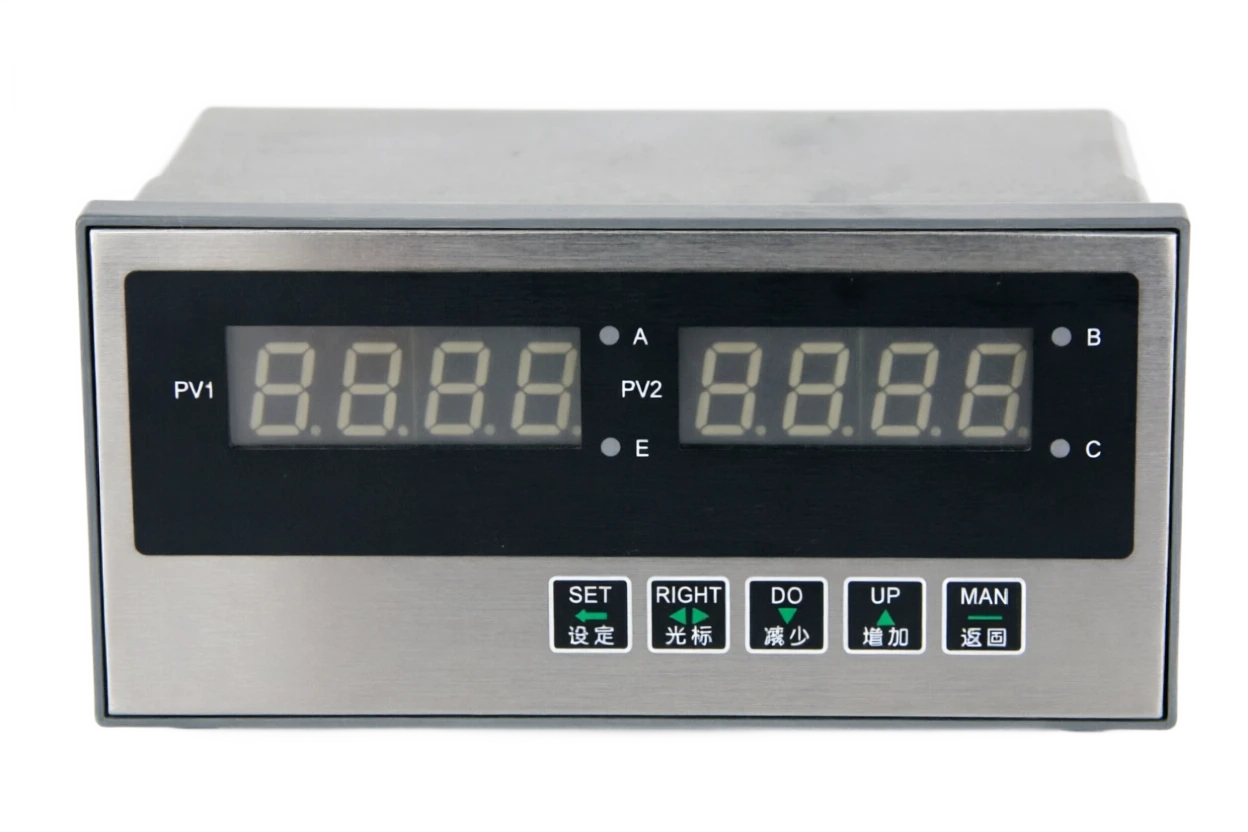
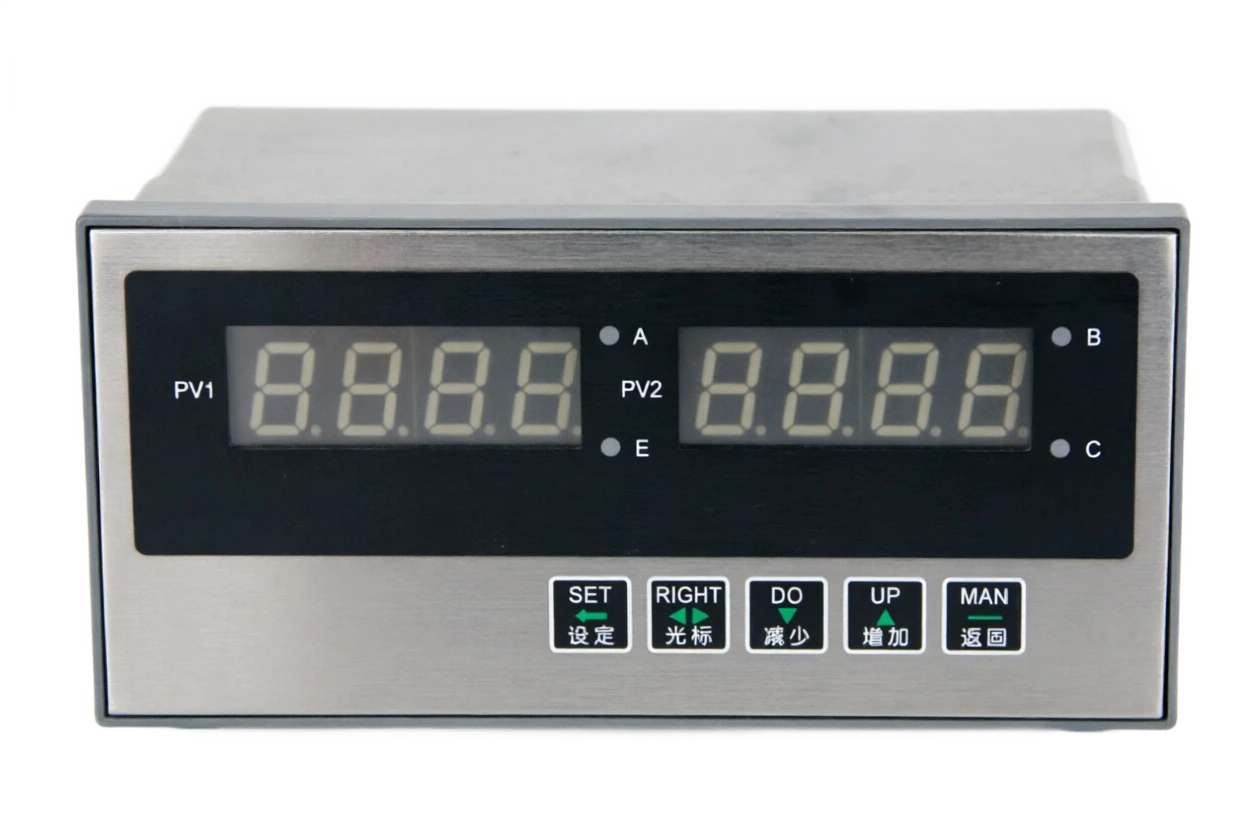
96x96 (mainstream) or 72x72 / 48x96 panel size, double row LED screen display, backend subsector double channel input partition layout, output module (relay/SR/ current) may be inserted to replace.

Analysis of strengths and weaknesses

4.1 Advantages

4.2 Disadvantages and responses

Panel & Display

Composition and function: two rows of LED: main row display of the charge (large words/ green or white), by-show second measure/ given percentage of output; Channel status lamps (CH1 / CH2 / alarm / output); Light touch key group (group mode / PID / fixed)

Double channel input port

Composition and function: CH1 / CH2 subdivision tip; heat resistance three-line / thermal doll compensation guide / simulation; inter-channel isolation (mode interference inhibition)

Console

Composition and function: MPU dual channel acquisition + combination operation + PID; group parameters EEPROM; self-regulating and program-based engines

Output module (plugged)

Composition and function: relay (3A / 250VAC, bit / time ratio); SSR driver (12 VDC / 30mA, solid state relay); 4-20mA current (deliverer / frequency variant); stand-alone module for secondary output and specification

Call the alarm relay.

Double channel independent alarm + combination excess + channel deviation alert; relays 2~3 points (3A/ 250VAC)

Power unit

85 ~ 264 VAC extenuating or 24 VDC; power ≤ 5 W; output relay contact capacity matched load accounting

Communications module (optional)

RS-485 (Modbus-RTU); double channel original value + group amount + status upload; remote given and grouping

Mounting accessories

Tray-caps/ support frame; water-protected gaskets (paint IP54); end-of-pipe shield (selection)

Evolutional trends

Annotations

Software for group mode

Difference / Average / High and Low Selection is grouped to switch to hard version; same material covers multiple double input scenarios; field modification process does not change hardware

Program given + Double Input Merge

Multi-stage temperature reduction program superimposes with temperature differential binding (semiconductor process curve); geometrical synchronous heat stress (synthesis with 52-sync warming)

Precise control type breakdown

0.1 Level HID Double Input (tester / measure heated temperature cells); Sample and display resolution 0.01°C; Self-refining + Fuzzy PID compound

Communications and remoteization

RS-485 Batting; upper-space configuration and remote given; two-channel data entry platform (linked to 48/53 recorder)

Two-point charge of a closed ring.

Description: Temperature difference / average / high-low selection completed "Search + Operations + Adjustment" in a table; saves off-site access to the operator (simulation of the three time tables) and intermediate alignment; eliminates drift and failure points of the operator link

Small gains on price increases

Note: The single circuit is only 10-20% more expensive than the same; combined operation + double display + by-product; the "charges defined by two points" scenario is the best value for money

Heated and cooled a table of two directions.

Description: Spacing output cold-hot two-way temperature (silent styl stair / cold heat / test box); Spacing boundary and gap dead zone formation; and second control and switching logic

Reliability of redundant voting

Description: Double sensors fail all the way to the high-selection mode; channel deviation alert sensor drifts; critical points (axis bearing temperature / hot spots) are significantly upgraded

Double-channel side-screen surveillance

Description: Main charge + submeasured screen; both circuits visible at temperature control of import/export; separate monitors for the province

Form flexible variants

Description: combination modes grouping switching; degradation of main sub-channels to one-way + surveillance; one material adaptation process, interoperability of spare parts

Precision potential

Note: High resolution 0.01°C displays precision with 0.1 level; self-recommended + fuzzy PID; satisfaction tester and measuring constant temperature cell precision

Disadvantages and use restrictions

Serial disturbances in sampling of two channels

Description and response measures: ADC time sampling, inter-channel disturbance and time of establishment (similar to Part 52); mV class thermo-temporators are more sensitive; Response: high-quality inter-channel separation and switching to twitch; Double temperature difference at acceptance.

Group precision supersing

Description and response measures: temperature difference accuracy ⁇ sum of two channels accuracy (plus worst case scenario); 0.2 class table temperature difference accuracy may reach ±0.4°C; response: select 0.1 class machine type on a controlled occasion; and two channels to maximize homologous sensors (partly offset by system error)

High-selection single failure to drift up and down.

Description and response: High-choice "Fluction" without "Fluction"; Response: Channel-devious alarms must match; more rigorous voting logic (III-II) exceeds its capabilities and is placed in the SIS

Breakline security side dependent group

Conduct of breaking a path under the mass mode varies according to pattern; default behaviour may not be consistent with a process safety expectation; response: validation of breaking a line prior to shipment and writing into the protocol

Secondary output cross-check

Division / Second turn / Warning Three By-out Use Crossings, Not Together; Response: Need to Clear the Only Outline; Consider Four Back-Strip Type in All-Winding (Page 52)

Double input is not equal to double loop

Misset risk: Misform "Current Two Independent Objects" into a double input combination; response: order the accused in a double-turner combination of - 1 in a single volume, 2 in an independent circuit or 52

Group Operations Transparency

Combination is internal, right? "Drive check shows" back to the original two-way; response: the type of the channel selects the original two-channel + the combination uploads simultaneously; panel side display cut-in-prime check

04

APPLICATIONS

Application area

The scenes used mainly for the "two point definition of the accused" and "cold heat two-way temperature control" are distributed as follows.

5.1 Four typical application models

Chemical and pharmaceutical

Typical application scenario: Reacting within-commodity - mixed temperature differential limits (blocking/thermal stress); heat-referenders export back to oil temperature differential surveillance; two-sensor high-select hotspot protection Common configuration: temperature differential mode + spectro-out output + channel deviation alert + RS-485

Test equipment

Typical application scenario: average temperature control above and below the constant temperature slot; temperature control above and below the cool heat table; high cryogenic test box double-direction temperature configuration commonly used: average / temperature deviation mode + 0.1 level precision + SSR output + program given

Semiconductor and Electronics

Typical application scenario: process curve + temperature differential (silli-coated heat stress); temperature differential on backstream welding; average temperature in the oven; common configuration: temperature differential + program given + current output + remote monitoring of communications

Electricity and rotation machines

Typical application scenario: Axle double sensor high-selection temperature protection; fixed round group average temperature measurement at two points; cooling water double road low-selection flow protection Common configuration: High / Low-selection mode + Channel Dividing Alert + Warning point

Environment and cleanliness

Typical application scenario: clean room pressure differential (two points pressure differential control); culture box at two points average temperature; pre-dry box and post-dry box temperature differential common configuration: temperature differential / average pattern + relay output + double channel alert

Heat and cooling

Typical application scenario: heat changer import/export temperature differential control (heat efficiency swap); cold water for water temperature differential (load monitoring); two-way temperature control test table Common configuration: temperature differential model + 4-20mA output + communications upload

Mode

Typical application scenario: signal path Common configuration: points

Temperature-disconnection control

Typical application: compare reactor internal and jacket temperatures and use the auxiliary output to interlock on the temperature difference. Common configuration: a single primary loop controls reactor temperature, and power is limited when the temperature difference exceeds its threshold. Confirm that the control architecture suits the process.

Mean temperature control

Typical application scenario: two points above and below Pt100 ⁇ average PID ⁇ SSR / heating tube common configuration: single point fluctuations diluted; suitable for the thermos/ incubators; high resolution type 0.01°C

Cold and hot two-way split.

Typical application scenario: charge ⁇ PID ⁇ spectrometer (heat + cooling segment) Common configuration: a watch control two-way; fraction point + gap dead zone consolidation; SSR heating + relay cooling (or compressor electromagnetic valve)

High-selection redundancy protection

Typical application scenario: double sensor high selection alarm/ lockout common configuration: drifting down; channel deviation alert high; touch point straight into protected loop (link flash alarm, verse 58/59)

05

TECHNICAL SPECIFICATIONS

Technical Parameter Table

The following table shows the typical specifications of the smart double input display regulator (general-type), which are based on the sample of the manufacturer.

  1. 01

    Select Table

The price is the price of the whole RMB.

7.1 Order code structure (9 bits for example)

  1. 01

    Selection Guide

8.1 Ten Elements of Selected Decision-Making

8.2 Typical scene selection path

8.3 Four procurement acceptances

Summary

The smart double-entry display adjuster incorporates a table of "alleged amounts that require two points to define" - temperature differentials, averages, high-selections, low-selected inner-ring closure, saves the three-table line, drift and face of the analogue time "transmitters + operators"; (a) The frequency output allows the cold and hot double-way temperature control to be completed; High-selection + channel deviation alerts constitute a practical upper limit for double sensor redundancy protection. The division of labour between it and the family: independent control of multiple circuits is to be placed in the four circuit adjuster (No. 52 Pages, server magnification and hand-to-hand switch to hand-manufacturing (No. 54 Part II. Trends in archiving and record-keeping (No. 48 / 53 Full alarm process to flash alarm (No. 58 / 59 This section contains the control of the combination of "two stations" and is attached to the security instrument system. Selective logic: first, the composition of the charge (combination of vs independent circuit, first decision point), second, the combination mode and accuracy slotting (temperature overlap assessment + precision requirements), third, the side of the side of the breakout function and the breakline security (repeal confirmation + delivery validation). The series has thus completed the 62, and the regulator family forms a complete matrix (one-way / two-entry / four-way/serve IV), followed by signal conversion distribution, electric implementing agency packages, etc.

Technical Table of Parameters . 1 / Input ChannelCross-reference
1Input channels2 Road independence; heat resistance Pt100 (triline)/ heat electromechanical doll K/E/J/T/S; simulation 4-20mA / 1-5V / 0-10mA; foreign-type mix (e.g. CH1 temperature + CH2 simulation)
2Combination modeTemperature differential (CH1-CH2) / Average / High-selection / Low-select / Main sub-channel (CH2 displayed or external); group selection; temperature differential calculation is "linear before decreasing"
3Measurement accuracy0.2 ~ 0.5% FS; precision machine type 0.1 (0.01°C resolution); temperature differential accuracy assessed at the worst supersing of two channels
4Sample cycle0.1~0.5s (twice channel time); display refreshing 2~4 times/ seconds
5ReconciliationPID (self-refined/ fuzzy PID)/ bit/ time ratio; program given (30~50-square-in-the-square curve, precision)
6Main OutputRelays (in thousands of euros) 3 A / 250 VAC; SSR driver ( 12 VDC / 30mA ); 4 - 20mA (Hands) ≤ 500 Number of times; retrenched modules
7Side Output(b) Three-purpose mutually exclusive configurations
8Function AlarmDouble channel independent upper and lower limits + combinations exceed limit + channel deviation alert; relays 2~3 points (3A / 250VAC); back-up grouping
9Display typeDouble row LED screen: Main row charge (high 15-20mm); Second row measurement/ given/ output; channel failure alert
10Breakline ProcessDouble channel breaker detection; safety side behaviour grouping (preset / reserved / cut single channel down); high selection mode continues on the remaining path
11Communications interface (optional)RS-485 (Modbus-RTU); double channel original value + group amount + status upload; remote given and grouping
12Set withPanel keys (local); remote message given; external (CH2 simulation given source, main by- mode)
13Power supply85 ~ 264 VAC or 24 VDC; power ≤ 5 W
14Environmental conditions0 ~ 50℃; Humidity ≤ 90% RH; Waterproof onboard IP54 (with gaskets)
15Structure and installationPanel size 96 x 96 (main)/ 72 x 72 / 48 x 96; plate-load card claw fixed; two-channel placements in end subdivision
Technical parameter table · Slotting / Representative typeCross-reference
TrancheType of representativeTypical ConfigurationPrice of the whole machineTypical applications
PreciseNationally produced 0.1 Level Double Input Series0.01°C resolution + program given + Fuzzy PID + SSR / Current output + RS-4851500 ~ 2,500 CNYTester, measuring heating cells, semiconductor processes, cold heat stations
Smart communication typeNationally produced IQ Double Input SeriesFive Mode Group + Self-reorganization + Double Output Spacing + RS-485 + Double-Strip Display900 ~ 1,500 yuanReact to temperature differentials, average temperature control, remote monitoring.
Standard TypeNational production standard double input seriesTemperature difference / average / high-low selection + self-refining + relay master output + alarm600 ~ 900 CNYGeneral industrial controls, temperature, clean rooms, ovens.
EconomyNational production simple double-spectrum reconciliationDouble display + single group mode (temperature differential or average) + bit output; no communications400-600 CNY.Supported temperature control, control surveillance, budget constraints
bitsMeaningCommon take-up examples
1Broad categories of productsD = Smart Double Input Display Console
2CH1 inputP (Pt100); K / E / J / T (thermal voltage); A (4-20mA); V (1-5V)
Technical Parameter Table . 3 / CH2 inputCross-reference
3CH2 inputCH1 value (inotherable mix, e. g. P + A)
4Group ModeD (temperature differential); M (average); H (high selection); L (low selection); I (main sub-channel)
5ReconciliationP (PID self-regulating); F (bit type); T (time ratio)
6Main OutputR (relays); S (SR driver); C (4-20mA current)
7Side Output0 (nil); F (heated cooling); 2 (second circuit); A (alarm)
8Alarm Configuration2 (two channels + three combinations selected two); 3 (full match)
9OptionsR (RS-485), G (0.1 level precision), X (procedure given), default base
Technical parameter tables · Decision-making elements / Decision pointsCross-reference
Elements of decision-makingElements of judgement
The charge constitutes a judgment."Two points define a charge" (temperature difference/mode/ high selection) This section combines; "Two independent objects control valves" double-turned or 52-part four-way; "Only uncontrollable" double-channel monitors (with PID money); This is the first decision. The order is not misordered.
Group Mode SelectionProcess constraints are "margin" (thermal stress / heat efficiency); "total flat" (truck / box temperature) average; "super-temperature failure" (redundant protection) high selection; "fault-proof flow" low selection
Precise needs assessmentGeneral industry ± 0.5 ~ 1 °C ⁇ Standard type 0.2 ~ 0.5%; Tester / Cell ± 0.1 °C ⁇ 0.1 Level Control; temperature differential landscape accuracy assessed after two channels superding
Executor Matches OutputExposure / EMP ⁇ Relay output (accounting contact capacity); solid state relay heating ⁇ SSR driver output; electric valve / frequency transformer ⁇ 4 - 20mA output;output modules to insert machine type to replace later
Sub-output confirmationCold, hot, two-way temperature control, fraction (refining boundary and gap dead zone); surveillance of second point exceeding limit, alarm, second control object, second circuit variant, three retorts, needs only to be combed
Sensor Selection and ConvergenceDouble-routing homogenous as far as possible (system error partially offset); temperature-disorder model confirmation of "linearization after calculation" achieved; mV class thermo-bids double-routing attention to route-coat indicators
Redundancy and voting requirementsDouble Sensor High Selection + Channel Fragmental Alert is the maximum on-line; security integrity is higher (three to two/ SIL) in the security instrument system, which does not carry SIL return route
Breakline behaviour is being consolidated.Pre-shipment mode validation of breakout behaviour (preset / reserve / down); write to protocol; security side default and process confirmation
Communications and remote demandRemotely given / Data Uploader ⁇ RS-485; double channel raw value + combination is uploaded (check transparency); and the associated log (No. 48/53) archive trend
Programs' NeedsProcess curve (multi-stage rise/refreight) + temperature differential superstition ⁇ Selection to selected; slope upper heat-resistant stress (semiconductor / composite)
sceneRecommended programmeRationale
React to the temperature differential limitSmart Communication +Pt100x2 Temperature Mode + Current Main Output + Sub-Exit Alert + RS-485Inner temperature master + temperature margin; channel deviation alarm capture sensor drift; data uploading transparent
Measure the temperature of the constant stairwellPrecision +Pt100x2 Average Mode + SSR Output + Program gave0.01°C resolution; two points of flat; slope control over impulses
Cold-hot two-way temperature controlPrecise + Temperature Mode + Spacing Output (SSR Heat + Compressor Refrigeration)A table of two directions; cold- and heat-proof fighting in the break; upper and lower plates; temperature differentials directly closed loops
Technical parameter table · Axle bearing temperature redundancy protection / Standard + Double-assembly Pt100 High-selection mode + Alarm pointCross-reference
Axis temperature redundancy protectionStandard + double-pack Pt100 High Selection Mode + alarm pointWandering; Speculation Alert High; Touch Linking Flash Alert (Page 58/ 59)
Clean room pressure controlSmart communication + Double pressure transmitter 4-20mA temperature differential (pressure) mode + current outputTwo point pressure differentials directly closed rings; driving new wind valves; RS-485 upstairs control platform
LinkThe point of acceptance.
1. Check-in on arrivalModel 9 bit-by-place check (CH1 / CH2 input/ group mode/ reconciliation / main side output/ alarm/ option); mixed input machine peer identification confirmation; output module specifications matched with implementer
2. Precision and portfolio operationsValidation of accuracy of each of the two channels (three points of signal source); grouping check: double input temperature differential of zero for the same source (channel string disturbance inspection); high / low selection action correctness; temperature mode linearity sequence check (mixed input)
3. Reconciliation and output testsSelf-refining complete process; validation of the spectro-out output boundary and stairwell movement; alarm / channel deviation alarm values and backslides; measurement of breakline behaviour patterns (in line with consolidation)
4. Communications and connectivityRS-485 Double Channel Original Value + Group Volume Upload Check; Remote Validation of the Grant; Linking to the Log/ Platform; Inclusion of the Account and Periodic Validation (1 year)