PRODUCT TECHNOLOGY

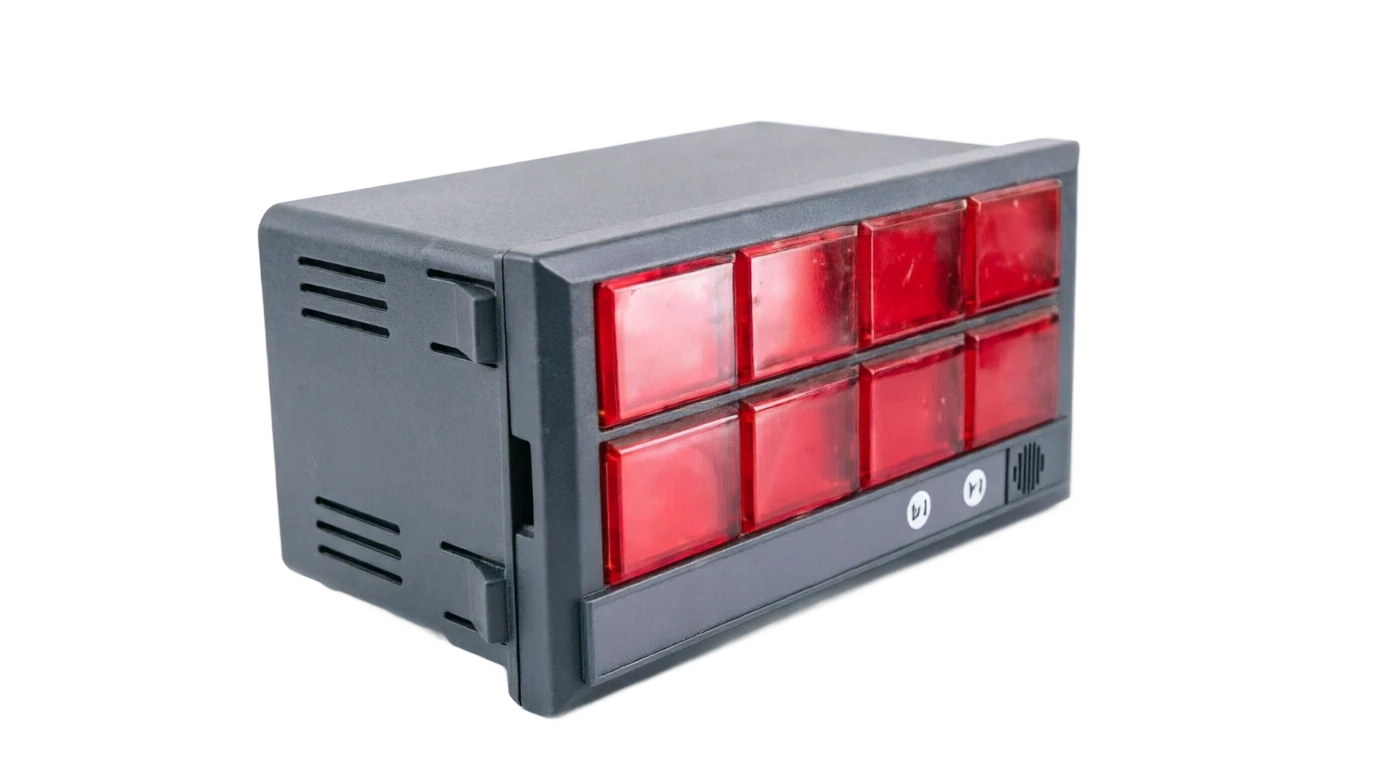
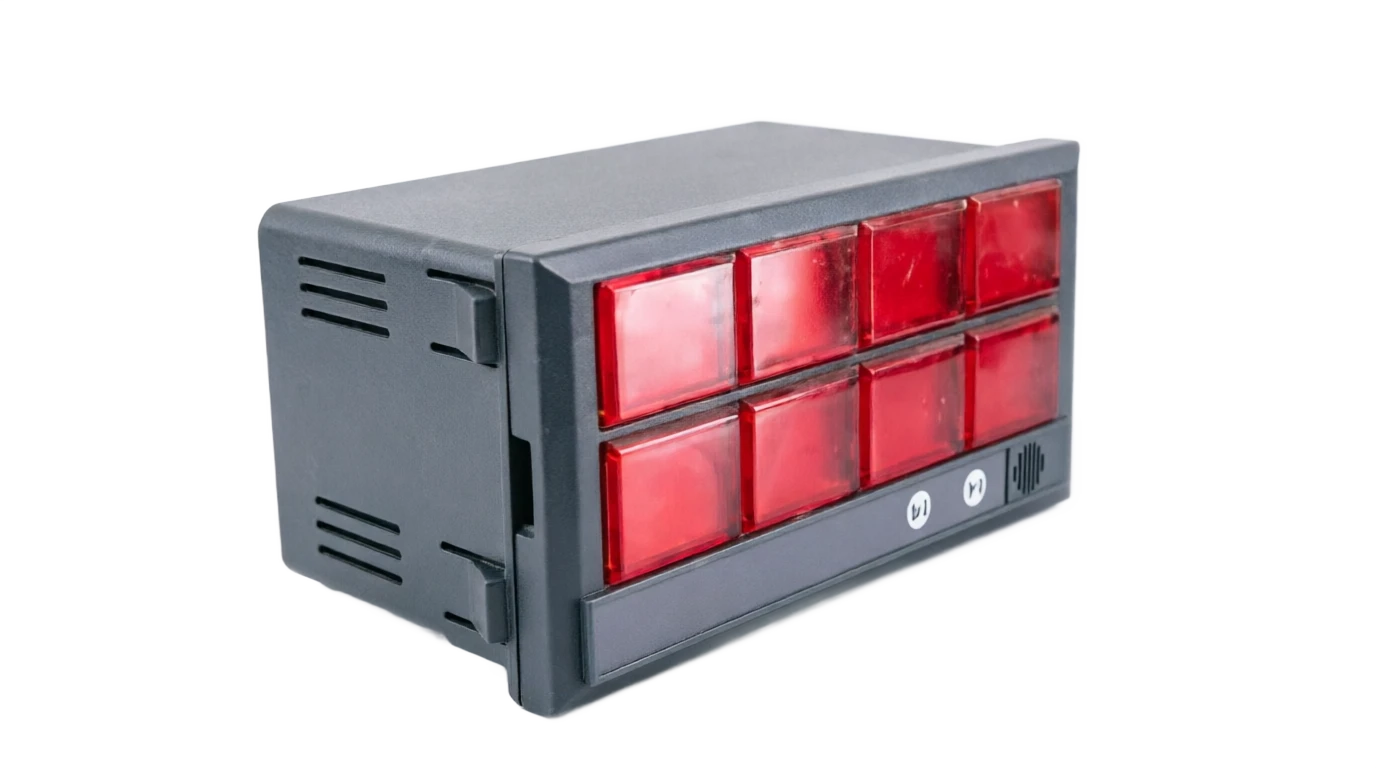
Eight-way flash alarm.

Operating principle

Eight-way flash alarms.

Core structure with "Input the spot sample + alarm status machine + audio output + confirm the double-point human flow": eight-line input-point-cycle sampling, and "normal ⁇ not confirmed (light + sound) alarm confirmed (square + silence) failure recovery (scraper or recovery hint)" mode flow; Sound is public, window-to-window independent, test buttons can be full-lighted and self-checked, smart-typed with a head start, input of break-line detection and alarm log output.

  1. 01

    1 Normal surveillance • Lights out, no sound • Input points are off alert (often open input disconnected)

  2. 02

    2 • Alert occurs * The circuit light flashes (1 ~ 2 Hz), beepers sound * Input point action (often closed)

  3. 03

    3 Run confirmation (silver) The circuit light continues to flash, sound is completely gone and press the confirmation (silver) button

  4. 04

    4 Call the police and hold. Flash continues, hint is not eliminated. Input is still alert.

Eight-way flash alarm selection support.

Provide survey missions, media and installation conditions and obtain product configuration advice.

Contact us
Eight-way flash alarm. Technical note.

TECHNOLOGY & APPLICATION

Understand the principles, the exact selection.

From the principle of measurement to the field application, the technical features and selection points of the eight circuit flash alarms are understood.

01

TECHNICAL GUIDE

Overview

(Flash Signal Alert Device) is a classic disk device for the control room signal alert system. It receives eight-way passive-point signals from the field alert switch, the liquid-level count (e.g., 57th high- and low-water level interface), and from various secondary instrument alarms, confirmed by input, state display and sound alerts, to alert operators to failure circuits in the form of "lightlight windows + an accident sound" and ensures that the alarm is visible, heard, remembered and divided by confirming (smoke/light-smoke), and by generating memory, restoring the alerts through human-engine interaction. It is located between the source of the on-site switch and the operator, and is a condensed form of a signal warning system (traditional alarm window system) that is not a substitute for the small and medium-sized control room and the important backway independent alert.

1.1 Comparison with DCS soft alarm, PLC alarm disk

1.2 A brief history of development

Overview * Project / AnnotationsCross-reference
ItemAnnotations
Product positioningControl room switch signal alarm terminal: -way input + flash display + sound alert + confirmation / silence / repositioning human process; Between the source of the alert on the spot (pressure switch / liquid level interface / secondary alarm) and the operator, it is the assembly of the conventional signal alarm system (Anuncator)
Core values(b) Two channel tips for sound light (smoke window + sound), with high instant catch rate of failure; Recognition - memory - restoration of process integrity (incidental accidents are retroactively documented); First alarm (first back flash, subsequent flat) to distinguish the source of the accident; Independent redundancy with DCS alerts (which can still be called if DCS fails)
Input FormEight-road passive points (open/ closed optional); enter back-track light test and input breakout detection (high mix); contact voltage 24VDC or 220VAC provided by instrument
Show with SoundEight-window LED (light / flat / out of states); beeper / sound output; selected machine models with public backup lamps and light test buttons
Market patternsNationally owned (the master series of the instrumentors, often designed in the same way as the digital monitors); single stations of hundreds to $; large items gradually replaced by DCS soft alarms and PLC alarms, but the market continues to exist in independent security alerts.
Contrast DimensionsEight-way flash alarm.DCS Soft alarmPLC, alarm.
Call the police.8 o'clock / Station, multiple and linked extensionsThousands of points (within I/O capacity)Tens to hundreds of points.
IndependenceHardware independent of DCS / PLC (power and circuit self-contained systems)Dependence on controllers and networksDependency on PLC hardware
First-out memoryInherent (smoke/ flat)To be organizedProgrammable
Sound light intensityLightlight Window + Bell, PermeableSoft alarm relies on the operator's voice.Take Decision System
Response speedmsec node directly drivenI'm affected by the scan cycle.I'm affected by the scan cycle.
Power outagesEnter breakline / power failure to alert (hencet input)The system is completely blind.with DCS
Expansion of flexibilityAdd more, add more. It's hard to change logic.Change the pattern.Programming changes
Unit cost80 ~200 CNY / dotThe lowest after the low.Centred
Typical applicationsThe big back-up independent alarm, DCS blind zone.Massive, concentrated police.Medium device special alarm.
Overview · Period / StageCross-reference
PeriodPhaseTechnical characteristics
1960s-70sRelay alarms ageEMPs logic + incandescent lights + bells; large size, contact spark maintenance frequency; confirmation / silence process achieved by relays maintaining circuits
1980sXXS Micro-machine Flash AlertNationally produced XXS series to become industry-standard; CCOS / small IC Logic + LED; standard form established at eight points
1990-2000Single-Specific SmartMMU Logic: Initial memory, flash frequency, constant closed input grouping; LED Highlight window; largeness with Marseille simulation
2000-2010Differing with DCSDCS Universal Compact Alert Market; Flash Alert Retarded Independent Security Alert and Small and Medium Control Room Economic Program
2010 to dateSmartisation and IntegrationEnter breakwire detection, automating light tests; RS-485 upload alarm records (timescale); and fix redundant positioning with PLC/DCS alarm systems
02

MEASUREMENT PRINCIPLE

Operating principle

Core structure with "Input the spot sample + alarm status machine + audio output + confirm the double-point human flow": eight-line input-point-cycle sampling, and "normal ⁇ not confirmed (light + sound) alarm confirmed (square + silence) failure recovery (scraper or recovery hint)" mode flow; Sound is public, window-to-window independent, test buttons can be full-lighted and self-checked, smart-typed with a head start, input of break-line detection and alarm log output.

2.1 Alarm status machines and operating processes (eight-step cycle)

2.2 Seven-large subsystems of the signal chain

2.3 Analysis of Key Rationales

Motion of work . Serial number / StatusCross-reference
Serial numberStatusLight windows and sound performanceTrigger Condition
1Normal surveillanceLights out. No sound.Input point is non-alarm (open input disconnected)
2Call the police.The backlights are flashing (1~2Hz), the beeper is ringing.Enter the point action (several closed)
3Run confirmation (dissemination)The circuit lights keep flashing and the sound is gone.Press the confirmation (silence) button
4Call the police. Keep it on hold.Flash continues, hints are not eliminatedInput is still alert.
5- It's gone.Lights flat (or out, group), soundEnter entry point returns normal
6Keep the light on.The Hindre has called the police, waiting for the reposition.Standard path for post-failure failure confirmed.
7RevertLights out. Back to normal surveillance.Press the Reverted Bit button (entry is only valid if normal)
8Initial memory (smart)First flash, then call the police, then the road.At the same time, when we called the police,
Modus operandi . Serial number / subsystemCross-reference
Serial numberSubsystemFunctions and elements of achievement
1Points input sampleEight-road passive points, internal provision of 24VDC (or 220VAC) query voltage; photocading or relay isolation; frequent / constant closed-by-way formation (both closed input and breakline surveillance)
2Alert status machineCMU Runs the status of the road by road (alarm/ confirm/ restore/ revert); sound-baning buttons are global valid, double-buttons are closed; flash frequency 1-2Hz is organized
3Initial Decision LogicFirst circuit alarm locks the "first out" sign (light priority); subsequent circuits are processed in a flat light; all returns are followed by the initial marking clearance - time-series of the accident's origin
4Light window display driverIndependent LED windows per road (high red/ yellow optional); tri-state: out of / flash / flat; window covers may be inserted (backline name indicated)
Motion of Work . 5 / Sound OutputCross-reference
5Sound OutputBeeping / bell (in-house or off-line, contact-driven bell-hour capacity 3A / 220VAC); public travel, any unrecognized alarm trigger; new alarm can be triggered again after silence (heavy trigger group)
6Test and self-examinationTest button: All lights flash + sound (light test / sound test); smart: input break-through detection (often closed circuit), light failure detection (back-up lamp programme)
7Recording and Communications (Intelligent)Alert / Confirm / Restore timescale recording of events; RS-485 (Modbus-RTU) upload flow of events; fill disks with retroactive shortboards for alarm devices
· Analysis item / Mechanism descriptionCross-reference
Analysis ItemScheduling
The value of the initial alarm.When the multiple circuits trigger the same chain of accidents, the time-series information of the source circuit is most valuable; the light is different from the light (supposed) visuals that allow operators to position the start of the accident; this is the core intelligence characteristic of alarm devices that distinguish them from a simple "lightboard"
Select to enter regularly and in closed formFrequently (NO): no contact alarm, no failure to report risks on site; no failure (NC): no contact to report the alarm, no failure to monitor the breakout and failure of power (safe direction of failure); no failure to use the safety-related circuit (e.g. 57th water limit) should be selected for regular closure — no action is taken to alert the police, and it is preferable to miss the report that the failure is not an oversight.
Confirm - Disabling - Revert Process DesignDistillation: sound is removed but flash is maintained (not "all by"); reset: valid only after normal entry (closed with conditions); the process corresponds to human engineering: the operator is forced to see (slight) before the sound is extinguished and the failure is confirmed to be eliminated before re-routing the light.
Information cipher for flash and lightFlash = unrecognized new alarm (high priority visual); flat = confirmed unreversible historical alarm; scrambled = normal; tri-state code + sound constitutes a complete alarm language, and a glimpse of the system is not unusual at a distance of tens of metres
Redundancy with DCS to call the policeThe flashing alarm unit uses a power supply and circuit independent of the DCS, so audible and visual alarms remain available during DCS or network failures. Critical safety loops use both hardwired and software alarms. The high-high and low-low contacts in Chapter 57 are typical hardwired alarm sources: one path goes to the FSSS, and the other triggers the annunciator’s voice alarm.
The limitations of the alarm storm.Small eight points, with no major storm problems; "one sound" when multiple and extended sound; smart-type mitigation by head + event record; large-scale alert priority management should be assigned to DCS/SIS alert management system (AMS)
03

PRODUCT STRUCTURE

Product structure

The whole machine is embedded in the panel structure, with 80 x 160 mm (over eight windows) and 160 x 80 mm (eight windows), with eight light windows + confirming/ compounding/ test buttons, cores consisting of input plates and logical drives, sound-based in-cell beepers or external bells.

Analysis of strengths and weaknesses

4.1 Advantages

4.2 Disadvantages and responses

Front panel.

Composition and function: Eight windows LED display (windows labels may be replaced with a revert name); confirmation (silver)/ reset/ test three buttons; power signal (part of machine type plus public backup)

Input Panel

Composition and function: input end of eight-way point (Query 24VDC / 220VAC); photolytic / relay segregation; frequent closed jump lines or software configuration

Logical Drive

Composition and function: MPU status machine and start logic; light window driver (tristate); flash frequency and time sequence parameter EEPROM

Sound Unit

Composition and function: In-machine beeper (standard) or external wire contact point (3A / 220VAC); volume adjustable; weight-reducing trigger logic

Communications interface (smart)

Composition and function: RS-485 (Modbus-RTU): Real-time status + timescale event record; access to SOE or alarm management system

Power unit

Composition and function: 220 VAC calibration (24 VDC optional); power consumption ≤ 5 W; direction of power loss: constant failure to enter electricity and alert (failure safety)

Structure and protection

Composition and function: Panel DIN open (76 x 152 / 152 x 76mm); Panel protection IP54; window resistant to UV ageing (long-term light is not yellow)

Extension form

Composition and function: multiple combinations (public sound combined / public silence); Marseek simulation embedded (traditional form of large-scale fire power units); and a numerical display of 96 x 96 variants

Positioning solidification: independent security layer

Note: Redundant hardware independent alarm layer with DCS / SIS; long-term stability of the key security circuit "hard alarm" marker

Event Log Smart

Description: Timescale alert/ confirm/ restore record (SOE supplement); RS-485 access to historical stations, retroactive alignment DCS

Form Integration

Description: Design with the numerical monitor, patrol (part 55) homogenous design (uniform look and group tools); multi-discretion (show + alarm) type

People are fine-tuned because of the work.

Note: Light (red incident / yellow warning), flash frequency, confirmation process optimized by person-based engineering standard (HG / IEC 62682 alarm management concept)

High catch rate for the sound light dual channel

Note: Flash + audio dual channels stimulate visual and hearing at the same time; failure rates are high at short notice and tens of metres away is a glimpse of anomalies

Hardware redundancy independent of DCS

Note: Power and circuit self-contained systems, DCS dead machine/ network failure that still alerts; security loops for the "hard + soft" dual-track configuration of critical circuits

Initial memory location of the accident

Note: Flash (caption)/ Light (follow) visual distinction; source location of chain accidents is judged by one glance and no record is required

Confirm process is consistent with the person ' s engineering

Silencing does not stop the visual indication, and reset is interlocked until its conditions are met. The operator must see, acknowledge, clear and reset each alarm so alarms are neither missed nor cleared in error.

millisecond hard circuit response

Note: no delay in the no-scan cycle by direct driver of the point of contact; one scale faster than DCS soft alarm (second-suppling)

Very low cost maintenance simple

Note: Single point cost 80~200; no mechanical motion parts (relative relay disk); light window and buttons, i.e. all human interfaces, free of training

Always close input failure security.

Description: Always enter a cut-off / failure of electricity is an alert; the correct way of entering a secure route is preferred to misreporting and not to be missed

Disadvantages and use restrictions

Small extension clumsy.

Description and response measures: 8 Dots / Stations. More than 10 stations are required to be in touch at 100 points; (a) Public sound and "all sound"; Response: Large-scale alarm selection DCS soft alarm or PLC alarm disk, this table only covers security and vital back roads

No priority management

Description and response: no emergency/warning level (lighted red and yellow only); no filtering and containment in alarm storms; response: priority management is delegated to DCS / SIS alert management system, this table maintains a "full sound" conservative strategy

Limited amount of information

Description and response: only the window has a return name, no values and description; operators need to check the reasons against the lock; response: the label is standard (nominal + medium + limit direction); smart event recording aids are traced

First-Link-Sequence Competition

Description and response measures: First determination of competitive risk at times the same time as the msbps; precise time series (SOE) for critical events performed by DCS / SIS SOE modules (msbps); no official time-series recording of the human tips is recorded on the first time mark in this table

Risk of lights coming out

Description and response measures: LED windows long-term failure (especially flat light backways) without warning and failure to alert; response: periodic light tests (programming, shift test); high-composite light failure detection + back-up lamps

Non-incorporated structures

Description and response measures: In-board search of voltage and relays non-motor circuits; contact this table (this table is contained in the control room safety zone) after the transmission of the hazard zone coordinates through this security measure (section 42/43 separation fence)

Trends in marginalization from soft alarms

Description and response: The new large project focused on alerting is already being carried out by DCS; response: clearly positioned - two existential lines of the Independent Security Alert Level and the Small and Medium Control Room Economic Program, avoiding a centralized management function with DCS

04

APPLICATIONS

Application area

The typical industry is distributed as follows:

5.1 Four typical application models

Hot-to-heat boiler power

Typical application scenario: high and low water level (57 interface), excessive steam pressure, shut-off, failure of pumps, etc., hard alarm; medium and small boiler room main alarm, common configuration: eight windows x several joins + off-line bell + often closed input

Chemical

Typical application scenario: key chain side tips, storage tanks high / low LLW, flammable / toxic gas alarms double tip Usage: smart + RS-485 event log + separation fence transfer

Water treatment / pumping station

Typical application scenario: Pump failer alert, pool fluid level, pedicular system failure; UAV pump station in-situ, field alarm box Common configuration: economy + 24VDC power supply + regular closed input

Metallurgy building materials

Typical application scenario: heater burner alarm, kiln tail temperature excess, cooling water outage; with Marseak simulation, with common configuration: Marseak embedded + multiple and public sound

Medical food

Typical applications: overpressure and overtemperature alarms for sterilizers, cold-room temperature alarms and batch safety notifications. Common configuration: economical model, red and yellow indicator zones, and a test-button check at shift handover.

Power support.

Typical application scenario: Auxiliary alarm (stations outside of DCS) with accelerator bearing temperature, lubricating oil pressure, plant electric switching, etc. Common configuration: smart + SOE supplementary records

Mode

Typical application scenario: signal path Common configuration: points

The boiler room is a stand-alone alarm.

Typical application scenario: Water Level Juncture (Page 57) / Pressure Switch / Fire Debrilling Detection ⁇ Multiple eight-way alarm ⁇ Bell Usage Configuration: Hard Alert without system; often closed input fail-safe; turn-over light test system

DCS Two Tracks Under the Dip

Typical application scenario: Two sources of alarm: two paths: going all the way to DCS (soft alarm + record), going all the way to flash alarm (hard sound light) common configuration: DCS still visible while dead; important safe return signposts

Gas detectors.

Typical application scenario: Flammable / Toxic Gas Alert relay output ⁇ Flash alarm ⁇ Sound light and duty tips Usage: Gas Alert has limited voice; Control Room set #Tips are covered by this table

Event Record Access

Typical application scenario: Smart RS-485 ⁇ DCS History Station / Alert Management Station Common Configuration: Alert - Confirm - Restore full process timescale; intervalid with DCS soft alarm records

Parameter Item

Call the police back.

Typical specification: 8 return route / station; multiple join extensions (public sound and silence bus options)

Input signal

Typical specifications: no-source points (open/ closed-by-road group); query voltage 24VDC markers (220VAC partial); optical & relay isolation 1500V

Display type

Typical specification: LED lamps triform: out (normal)/ flash (unrecognized)/ flat (identified); light: red (accident)/ yellow (early warning) optional; window signgests may be inserted (digital)

Flash frequency

Typical specifications: 1-2Hz (conformable); space ratio: 1:1 ~1:3

Sound Output

Typical specifications: In-cell beeper (sonic); or external caller / beeper contact (3A / 250VAC); new alarm triggers congener

Operation button

Typical specification: confirmation (single): global silence retains flash; recoup: lock with condition (only valid if input is restored); test: full light flash + sound self-check

First-out memory

Typical specification: first-turn flash, subsequent back-to-back light; clean-up after all re-entry (intelligence standard feature)

Enter Breakpoint Test

Typical specifications: frequent input of circuit breakout alert (high-format); road-by-way breakout status indicators

05

TECHNICAL SPECIFICATIONS

Technical Parameter Table

The following table shows the typical specifications of the eight circuit flash alarms (discretionary smart machines), which are based on sample manufacturers.

  1. 01

    Select Table

The price is the price of the whole RMB.

7.1 Order code structure (example 8 bits)

  1. 01

    Selection Guide

8.1 Ten Elements of Selected Decision-Making

8.2 Typical scene selection path

8.3 Four procurement acceptances

Summary

Eight-round flash alarms are the last sentry of the control room signal, which guarantees that the sound-light two-channel failure is visible, confirming that memory-repeating processes ensure that the alarm is not missed, that the flashes make the chain of accidents visible and that the hardware independence keeps the operator under control when DCS fails. It is divided into family units: the Surveillance Subordinate Patroler (Page 55), the Water Level Protection Source to the Double Colored Element Liquefied Point Lilometer (Page 57), the Trends Archiver (Page 48/53), the Sound Light Alert for the failure of this pipe switch and the Human Identification Process. Selective logic: First, look at the size and independence of the alarm point (security bottom vs centrally managed), second, the input formula (safe return often fail-safe), and third, the initial identification and recording requirements (retroactive capability determines the type of machine). This series shows the continued expansion of the records and control instrument family, followed by the sound light alarm, signal isolation conversion units, etc.

Technical parameter table . 9 / Event recording (smart type)Cross-reference
9Event Record (Intelligent)Call / confirm / restore event timescale (RTC); cache hundreds; power outage maintenance
10Communication interfaceRS-485 (Modbus-RTU): Real time eight-way status + event log reading
11Response timePoints to sound output ≤ 20 ms (hard logic path); first-severed resolution approximately 10 ms
12Power supply85 ~ 264 VAC 47 ~ 63 Hz or 24 VDC; power consumption ≤ 5 W; power outage: constant failure to enter electricity and alert (failure safety direction)
13Environmental conditions0 ~ 55℃, wet ≤ 85% RH no condensation
14Installation and protectionPanel DIN Open: Cross-Straight 152 × 76mm ( 80 × 160 ) or vertical 76 × 152mm ( 160 × 80 ); panels protection IP54 ;outside depth ≤ 120mm
15Insulation and securityEnter power / power / bell contact insulation 1500 V AC; danger signal is relayed through separation fence (part 42/43)
Technical parameter table · Slotting / Representative typeCross-reference
TrancheType of representativeTypical ConfigurationPrice of the whole machineTypical applications
Smart Record TypeNationally-made Smart Flash Alert SeriesInitial Memory + Enter Break-Script + RS-485 Event Record + fusion software1000-2,000 CNY.It's a big road, power, a secondary control, a retroactive event.
Standard SmartThe Standard Road SeriesInitial memory + flash frequency group + frequent closed software group600 ~ 1200 CNYBoiler room, water treatment, industrial alarm.
BasicNational production XXS Traditional seriesRelay or basic IC logic; frequent closing lines; no headline300-600 CNY.Simple tips, spare parts, continuation of projects
Marseic EmbeddedSimulator disks with alarm windows seriesMasake disk embedded module; public sound and silence bus; custom windowCustomise on a face-to-face basisLarge-scale power-based master disks, retrofits.
bitsMeaningCommon take-up examples
1Broad categories of productsB = Eight-way flash alarm
2Panel FormatH (cross 80 x 160, eight window rows); V ( vertical 160 x 80, eight window rows); 9 (96 x 96 congener variant)
3Enter SpecificationD (24 VDC query voltage); A (220 VAC query voltage); N (recurring); C (relative closure); and road-by-road M
4Light window specificationsR (red, accident); Y (yellow, early warning); M (red, yellow, mixed, road-by-road designation)
5Function Configuration1 (basic: silence / reposition / test); 2 (add memory); 3 (add break line detection)
6Audible alarm configurationZ (in-plane beeper); L (outside bell contact); B (both)
7Communication interface0 (none); R (RS-485)
8OptionsE (incidents record + RTC); T (automated cycle of light test); P (public backup lamp); default base
Technical Parameter Table • Scoping of alert points / ≤ 40 Point: Multiple eight-way and linked economically feasible; Larger: DCS soft alarms are centrally managed, and this table only maintains a security bottom point - avoiding a collage scaleCross-reference
Alarm point size location.≤ 40 Point: eight circuits and economics are feasible; larger: DCS soft alarms are centrally managed, and this table only maintains a security bottom point - avoiding a build-up
Enter formula and fail securitySafety-related circuits (water limit / fire out / gas alert) are often closed: breaklines are alert; general tipback routes are frequently open (reduce misreporting)
Initial memory needsThe chain of accidents requires locating the source, poignant selection of memory machines (smart model); independent single pointer hints, poignant base model.
Retroactive and record-keeping needsTime series to be followed retroactively to alert the police, smart record type (event + timescale + RS-485); dropable pointer role in a SOE-system context
Sound programmesIn-house beeper (control room duty) or external wired (cross room / noise environment); unmanned station-keeping ion-house sound tower (table contact driver)
Lights and DecksRed = accident/ chain, yellow = early warning/ tip level, not mixed; sign sign notation + medium + limit direction (e.g. "flag pack water level two"), to be understood by operators without mapping
Double-track design with DCSKey Backway Alert Two Paths: Enter DCS (Soft)+ Enter Table (hard); Confirm that this Table is independent of DCS Power Backway; This is the DCS Underground Design for Blind Zones
Segregation and Benn.Access to the danger area interface (e.g. BENLAX) by transfer through the separation fence (part 42/43); this table is in the control room safety zone
Extensions and joint programmesMulti-connected public sound / public silence bus unified planning; repositioning usually remains separate (avoiding the wrong return)
Test system supportLamp tests are included in the shift protocol (industry practice); high-formulation automatic cycle tests; and light-lighting back-track focus verification of light effects
Spare parts and continuityXXS Traditional spare parts extension project purchased by prototype; new project smart (assembly flexible + recording capability)
sceneRecommended programmeRationale
Small and medium boiler room control roomStandard smart x 2~3 Concord + external caller + constant inputWater level (Page 57) / Overpressure / De-fired hard alarm; start locating the source of the failure; do not depend on any system
- The fossil gas alarm.Smart Record + RS-485 + Separation Fence Transfer + Red and Yellow PartitionGas alarms, relays, centralized alerts; incident records, traceable; warning incident classification
No one's guarding the pumping station.Base +24VDC+Closed Input +Touch Drive Outdoor Acoustic Optical TowerBreak-up alarm (failure security); UPS power; remote assumed by SCADA
Large crew DCS BottomSmart Record (safe bottom point only)+ Independent power sourceThe sound is still visible while DCS is dead; intercalibration with soft alarm records
The Marseilles retrofit.Masake Embedded to customize on a diskAesthetic unity of traditional master controls; public bus maintenance
LinkThe point of acceptance.
1. Check-in on arrivalType 8 bit-to-place check (panel format / input format / light / function / sound / communication / options); window placard check (bit / medium / direction)
2. Status machine process testsSimulation of input triggers: flash + sound; flashing after sound is lost; double lock validation (ineffective re-entry if alarm is not eliminated); initial memory validation (two-way sequence trigger)
3. Sound light and test functionLight test full flash; volume of sound and cell-ring contact capacity; break-line detection (always closed circuit breaker alert) validation
4. Communication and record-keeping linkagesRS-485 Status read to check with incident record (time-standard certainty); cross-check with DCS soft alarm record; 72 hours running continuous appraisal