PRODUCT TECHNOLOGY

Heat-resistant dolls.

Operating principle

- The work of the milling thermoelectric doll.

When two different stages of conductors (thermal electrodes A and B) are interconnected to form closed circuits, if the temperature of the two points is different, the heat power EAB (T, T0) is generated in the circuits, the size of which depends only on the two electrode materials and the temperature of the two ends and is not related to the length of the electrode, the thickness. This phenomenon was discovered in 1821 by the German physicist Seebeck Effects, which is the physical basis for thermoelectrical thermometry. Thermal power is associated with temperature through IEC. 60584 The standard scale is determined, and the usual expression is multiple: E(t)= c0 + c1 ·t + c2 · t² + c3 · t³ +... + cn t ⁇ n Thermal power output corresponds to the heat (T) and the cold end (T) T0 The temperature difference,

  1. 01

    1 • Ice bathing 0 ℃ The ice water mixture is very high, for laboratory use.

  2. 02

    2 • Bridge Compensation Act; incorporated PN Compensation for the temperature bridge road ±0.5 ℃ It's a field mainstream.

  3. 03

    3 Compensatory Guide Method Q. Extension of the cold end to the Temperature Stability Branch ±1 ℃, economic utility

  4. 04

    4 . Software Compensation Act . PLC/DCS Inline Temperature Sensor Reimbursement . ±0.3 ℃, System Level

Heat-resistant electrocution support

Provide survey missions, media and installation conditions and obtain product configuration advice.

Contact us
· Technical note

TECHNOLOGY & APPLICATION

Understand the principles, the exact selection.

From measurement principles to field applications, the technical characteristics and selection features of the grinding thermal electron dolls are understood.

01

TECHNICAL GUIDE

Overview

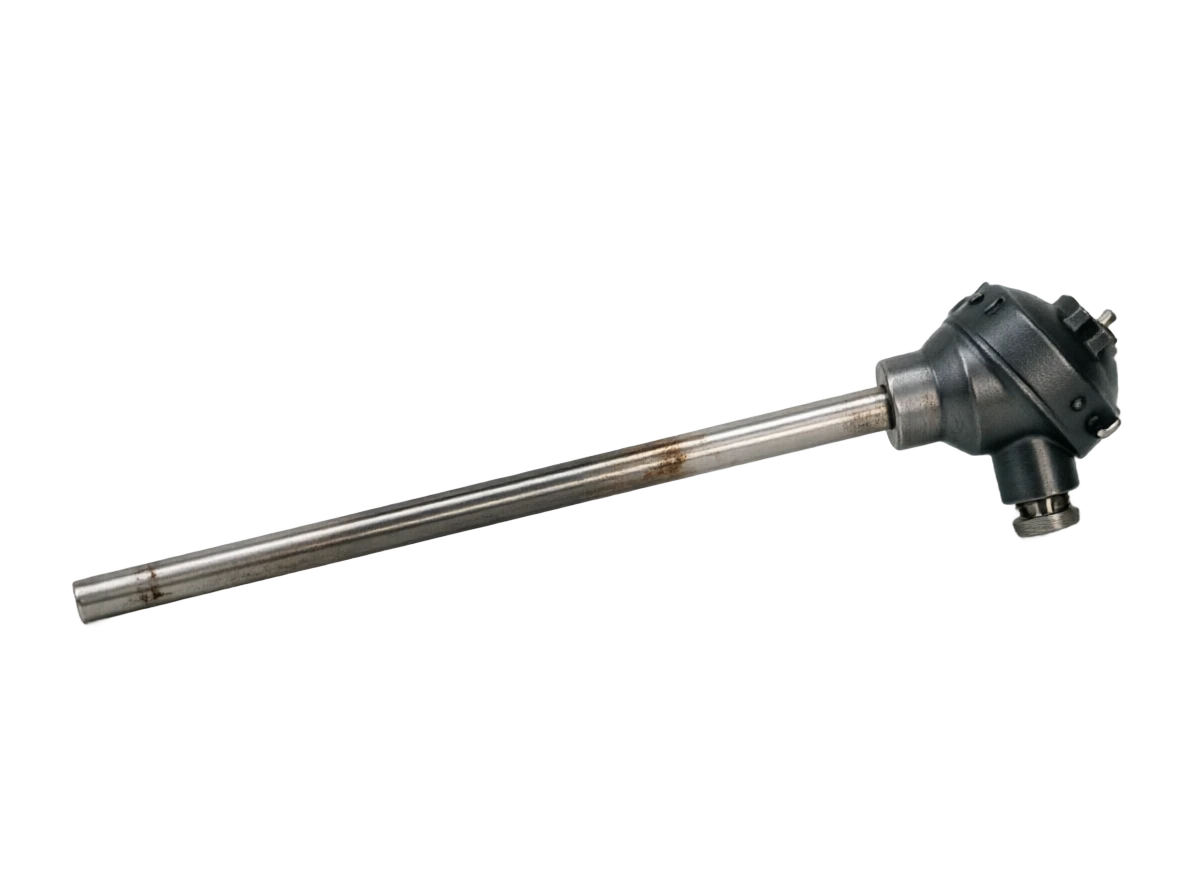
(Wear-Reistant Thermocouple) Industrial thermometers, such as those that specifically reinforce the resistance to brushing, wear and tear, and mechanical shocks, are based on the normal thermoelectric doll. The measurement outer layer usually uses ultra-hard-resistant grinding materials such as tungsten cobalt alloys (YG6/YG8), carbide chromium, silicon carbonation, aluminium oxide or oxidizing ceramics, and welding/painting transitions between metal shields and grinding caps, which can work long-term in two-stream conditions, with high-hard particles and strong flushing of gas fixes.

It started in the last century. 80 The demand for strong weather temperature measurements in the European and American electricity industries, such as a boiler windpipe and a powder ash pipeline, was initially used as a simple form of metal-protected thermoelectric dolls plus welding caps. After more than four decades of development, a modern grinding-heat-resistant pup system, centred on YG-type rigid alloys, composite ceramics and surface spray techniques, has evolved.

Main technical characteristics

Wear-

General description · Serial number / CharacteristicsCross-reference
Serial numberCharacteristics
1High end cap hardness: HRC 60-80, capable of absorbing high hardness particles
2High resilience: 5-20 times higher than normal thermoelectric dolls in the same condition
3Response speed is reasonable: adjusting response time by the height of the cap 1 ~ 30 s
4Temperature range width: -200 ~ +1700 ℃, covering most of the medium and high temperature
5Structural strength: metal shields resistant to impact 10~50 MPa
6High compatibility: may be matched with multiple fractional ids such as K/E/J/N/S/R/B
7Good switching: standard wire boxes and bolts installed, replacement maintenance convenience
8Extended Communications: Package Transmitters Support Hart / MODBUS / PROFIBUS
02

MEASUREMENT PRINCIPLE

Operating principle

2.1 Thermal electrical effects of Sebek

When two different stages of conductor (thermal electrodes A and B) are interconnected to form closed circuits, the heat-power EAB (T, T0) is generated in the circuits at different points of temperature, the size of which depends only on the bipolar material and the temperature of the two ends, not related to the length of the electrode, the size of the condensed circuit. This phenomenon was discovered by the German physicist Sebeck in 1821 and is known as Seebeck Effects, which is the physical basis for thermoelectrical thermometry.

Measurement formulaClick to see the big picture
E(t) = c0 + c1·t + c2·t2 + c3·t3 + ... + cn·t^n

Thermal power is associated with temperature through IEC. 60584 Standard scale is established, with the usual expression being multiple: E(t)= c0 + c1 ·t + c2 ·t² + c3 ·t³ + … + cn·t^n

2.2 Cold-end temperature compensation

Thermal power output of the thermoelectrically-relative (T) and cold-end (T0) with the display instrument expected to be at 0°C

The cold end must be compensated for because of the absolute temperature value of the baseline.

2.3 The principle of a grinding complex

The key to this is the adoption of a composite structure at the measurement end of the "Intrametal Mask + Intermediate Transition Layer + Outer Ultra Hard End Hat": 1 Inner Metal Mask (IME) 310 S / 316 L / Inconel 600 ) - provide strength, resistance to oxidation and sealing;

2 Transitional layer (cobalt-based alloy stack welding/ plasma spraying) NiCr-Cr3C2 ) - releases heat stress, isolates alien metals from inflation differences and prevents end hats from falling;

3 outer end cap ( YG6 、 YG8 chrome carbide, silicon carbide, aluminium oxide) - directly subject to particle wash and friction up to HRC 75 ~ 85 。

2.4 Workflow

Wear-Wear-

Motion of work · Serial number / Compensatory methodCross-reference
Serial numberMethod of compensationRationalePrecision
1Ice bathing.Cold end in 0 °C ice water mixtureIt's very high. It's for the lab.
2Bridge Compensation ActInline PN Automatic Compensation for the temperature bridge road± 0.5 °C, field mainstream
3Compensatory route methodExtend the cold end to the temperature stabilizer with a same-point guide.± 1 °C, economic utility
4Software Compensation MethodPLC/DCS Inline Temperature Sensor Reimbursement± 0.3 °C, system level
Motion of work . Step / ActionCross-reference
StepsActions
①On site temperature po-po, measuring end-poll slur points, generating heat E (T, T0)
②Thermal power is extended to the cold end by the mineral/shielding-compensation guidance.
③Cold-end PN metallographic temperature ⁇ Sender/ Numerical Table with E(T, T0)
④Converter converts the display/ output temperature to IEC 60584 fractions
⑤4-20 maA / Hart / bus signal ⁇ sent to DCS / PLC record control
⑥If the range is exceeded / break / reverse / trigger alarm and send a malfunction signal
Motion of work . Step / ActionCross-reference
StepsActions
⑦Ride-resistant caps continue to resist granular flushing.
03

PRODUCT STRUCTURE

Product structure

3.1 Main structural components

3.2 Hat types with grind tolerance

3.3 Output mode

Wear-Wear-

Analysis of strengths and weaknesses

4.1 Main advantages

4.2 Main shortcomings

Wear-

Measuring enders

Functional description: A/B Bi-Electro-temperature core Usage/Specific: K/E/J/N/S/B

Insulation tube

Functional description: Separating positive and negative extremes to avoid short circuits Usual materials/specifies: high pure aluminium oxide 99%/meganes oxide

Inner tube.

Functional description: Air-condensed protection, antioxidation commonly used materials/specifies: 316L / 310S / Inconel 600

Transition level

Functional description: release stress to prevent the end hat from falling

A grinding hat.

Functional description: Direct exposure to materials resistant to wear and tear Usual material/specify: YG6/YG8/CUC/Palms

Metal jacket.

Functional description: overall protection, resistance to pressure, common materials/specification: 304/316L/321 stainless steel

Junction box

Functional description: Cold end compensation, signal transfer, common materials/specifiers: Aluminium alloy / stainless steel / engineering plastics

Connector End

Functional description: Compensatory guide access Usual material/specifier: nickel plating copper endpoint / ceramic endpoint

Process connection

Functional description: installed in a pipe/container Common material/specification: screws G1/G2, Frank DN25~100

Cold-end transporter

Functional description: signal amplification, linearization, output Usual material/specification: integration 4-20mA + Hart

Seal Head / Gran Head

Functional description: Cable introduction of sealed IP68 Common Materials/Specifics: Waterproof Interface / Explosiveproof Filling Letter

Deck / Mark

Functional description: fractional, scale, plant information Usage/Specific: stainless steel etching/ laser marking

Type

Name of component: Structural characteristics Functional description: hard HRC Usual material/specify: applicable work conditions

tungsten cobalt alloys YG6

Name of component: Cobalt-based glue WC, Standard End Hat Description: 70-75 Usual Materials/Specific: Power boilers, Coal Powder Transmission

tungsten cobalt alloy YG8

Name of component: Higher cobalt content and better resilience Functional description: 75-80 Common material/specify: high hard particles, strong flushing

Carbide chrome spray

Name of component: Plasma-carbated chromium coating Function description: 60 ~ 70 Usual material/specifiers: cement raw materials, mine powder pipelines

Silicon carbide ceramics

Name of component: SiC Battered ceramics, Durable 1700 °C functional description: 80 + (HV) Usual materials/specifiers: high temperature, severe wear, corrosion

Aluminium oxide ceramics

Name of component: Al2O3 Battery ceramics, Chemical Inertity Description: HV 1500 Common Materials/Specific: High Temperature Resistible, Antioxidation

Zincinnium oxide ceramics

Name of component: ZrO2 Porcelain, Resisting Thermal Earthquake Function description: HV 1200 Common Materials/Specific: Hot and hot, High Temperature Melting

Welding Alloy

Name of component: Cobalt-based/nickel-based reactor repair layer Functional description: 55~65 Usual material/specify: general wear and tear, site-remediation

Output Type

Name of component: signal form Functional description: load capacity Usual material/specify: typical application

mV Direct Output

Name of component: Original Thermal Power Force 0~50 mV functional description: passive signal Usage material/specify: short distance direct number list

A second-line system 4 - 20 mA

Signal form: round circuit power, superseding HART load capacity: RL ⁇ (V-12) / 0.02 typical application: mainstream industrial site

Trilinear 4-20 MA

Type of signal: Independent power circuits Load capacity: RL ≤ 600 times Typical application: high temperature and noise

Hart Protocol

Signal form: 4-20 MA+ numeric two-way load capacity: need hand-manufacturing typical application: parameter remote grouping

MODBUS RTU

Signal form: RS-485 Digital communications Load capacity: maximum 32 nodes Typical application: multiple instrument network

PROFIBUS-PA

Signal form: bus-type essential security Load capacity: inherently safe environment Typical application: chemical DCS integration

Wireless Hart

Signal form: WirelessHART 2.4 GHz load capacity: battery power typical application: inconvenient wired area

1

Advantages: Extremely resistant to wear: End cap HRC 60 ~ 80, 5 ~ 20 times higher than normal thermoelectric dolls

2

Advantages: High temperature tolerance is excellent: work can be stabilized at -200 ~ +1700 ℃ full-scale

3

Advantages: Responsive speed: Tilt thick 3 ~ 10 mm, t63 1 ~ 30 s

4

Advantages: Mechanic shocks: sustainable 10~50 MPa particle stream flush

5

Advantages: structural strength and durability: metal shield resistance, bend resistance, earthquake resistance

6

Advantages: compatibility is good: it can be accompanied by multiple fractional wiring and multiple modes of output

7

Advantages: Strong interchangeability: standard wire box, process connection, replacement maintenance convenience

8

Advantages: Remotely organized: a combination of Hart/ bus adapters to support remote diagnosis

9

Advantages: maintainable: caps can be replaced alone without the need to replace the whole thermoelectric doll

Disadvantages and use restrictions

1

Disadvantages: Slow response: 3-10 times longer than the naked silk thermal voltage

2

Disadvantages: Higher prices: Hard-quality alloy/polythecary caps are 5-15 times more expensive than ordinary alloy

3

Disadvantage: Weight is too large: metal protective + end hat heavy, bending installation limited

4

Disadvantages: Not exceeding range in the long term: supertemperature accelerates cap oxidation and loss

5

Disadvantages: Need for cold end compensation: Miscompensation leads to ±1 ~3 °C system error

6

Disadvantages: Compensating the cost of the guide: Specially compensated guide is 3-8 times more expensive than normal guide

7

Disadvantages: high installation requirements: strict sealing, middle, anti-flowing

8

Disadvantages: Maintenance requires professional staff: End hat assembly requires specialized tools and processes

04

APPLICATIONS

Application area

The dual properties of combinations of temperature and wear and tear are widely applied to the following conditions:

5.1 Typical application cases

One, 600 MW, supercritical unit, one windpipe.

(a) The average life of the normal K type thermoelectric doll 7 day, with the replacement of the YG8 end hat with the grinding thermal doll ' s post-life extended to more than 6 months, saving the annual purchase cost of the thermoelectric dolls approximately 800000 CNY;

Large cement kiln tailing room

Temperature 850 ~ 1100 °C, clinker dust flushing, using a carbonated silicon cap + Inconel 600-type grinding electrometractors, operating for a period of 12 months to measure stability and control temperature fluctuations ± 5 °C;

A city-wide garbage incinerator chamber

850 ~ 1050℃, chlorine-containing corrosive and fly ash worn, using a aluminium oxide ceramic cap for grinding thermal electron, 6 not required to be replaced for months;

A coal-polymer coal-pressured pipeline

Pressure 4.0 MPa, temperature 350 °C, with a remote grouping accurate reading using a cobalt-based welding cap K thermoelectric peddler;

A mineral extraction plant, a mineral-transmission pipeline

The speed of the flow of the mineral is 3 m/s, and the temperature is 60°C, with the YG6 caps resistant to thermal grinding, increasing life by 8 times the normal K type.

Wear-

Electricity / Fire

Typical: boiler windpipes, powder pipelines, mediums: coal powder, dust, fly ash

Cement / Building Materials

Typical work: cement kilns, raw grinding, coal powder preparation, representing medium: cement raw materials, clinkers, coal powder

Metal / Steel

Typical: high-heavy coal spray, stowage silos, mediums: mine powder, coke powder, limestone

Chemical / Fertilizer

Typical: Fluid bed reactor, catalyst regeneration

Mines / Mining

Typical: mineral delivery, tailings lines, representing mediums: iron ore, copper ore, tailings ore

Waste incineration

Typical work: Boiler, Frozen, Gas, represents medium: fly ash, garbage particles, slag

Biomass generation

Typical: biomass boiler feed, retrospect, medium: slurry particles, wood chips, rice shells

Glass / Boiling

Typical: glass kiln, co-carrying medium: glass powder, co-convention, pure alkali powder

Paper / Mulp

Typical: black liquid concentration, tree-coated boiler, for media: black liquid solids, tree-coated scrap

Gas / Coal Chemical

Typical: Gasification, powdered coal, pressure transmission

05

TECHNICAL SPECIFICATIONS

Technical Parameter Table

6.1 Complete machine parameters

6.2 Gradient and lifetime

Wear-Wear-

  1. 01

    Select Table

7.1 Naming rules

Typical naming rule

WR-K-310S-G1-1000-IP68-Hart

7.2 Recommendations for Common Models

Wear-

  1. 01

    Selection Guide

8.1 Selective Steps

8.2 Typical Work Status Recommendations

Wear-

8.3 Selective care

This is the summary of the complete technology for grinding thermal electron doll. The actual selection should combine process parameters, medium properties, installation modalities, life cycle costs, etc.

Technical Parameter Table · Parameter Category / Parameter NameCross-reference
Parameter CategoryParameter NameSpecifications
Sensor typeSensor typeK / E / J / N / S / R / B, to specify
Temperature rangeTemperature range200 ~+1700 ℃, by fraction and mass
Accuracy classAccuracy classI ± 1.5 °C or ± 0.4%t; II ± 2.5 °C or ± 0.75%t
A grinding hat.A grinding hat.YG6/YG8/Chrome carbide/silicide/aluminium oxide/silver oxide
Hat HardnessHat HardnessHRC 55~80 / HV 1200~1800
Inner packagingInner packaging316L / 310S / 321 / Inconel 600 / GH3030
Metal jacket.Metal jacket.304 / 316 L / 321 / stainless steel lined ceramics
Insulation materialInsulation materialAluminium oxide 99% / magnesium oxide / high pure beryllium oxide
Junction boxJunction boxAluminium alloy / stainless steel / engineering plastic IP65/IP68
Process connectionProcess connectionSnacks G1/G2, NPT, Frank DN25~100, card sets
Insertion depthInsertion depth100~3000 mm, custom
Response timeResponse Time t631~30 s (Hand size 3~10 mm)
Pressure resistancePressure resistance10~50 MPa (with cap specifications)
Ingress protectionIngress protectionIP65 / IP67 / IP68
Ambient temperatureAmbient temperature40 ~ +85 °C (wirebox)
Environmental humidityEnvironmental humidity0~95% RH, no condensation
Anti-shock resistanceAnti-shock resistance20~50 g,10~500 Hz
Insulation resistanceInsulation resistance≥ 100 M time@100 V (Ill-Swire-to-Ball)
Resisting voltageResisting voltageAC 500 V / 1 min
- It's a shock-resistant current.- It's a shock-resistant current.≤ 1 A (event alert)
Explosion protection markingExplosive-proof level (optional)Ex d IIC T6 / Ex tD A21 (explosive)
Protect the tube's outer diameter.Protect the tube's outer diameter.Φ8 / Φ12 / Φ16 / Φ20 / Φ25 mm
ChiefChief200~3500 mm, custom-made
WeightWeight0.5 ~ 6 kg (depending on specifications)
Technical parameter table · wear and tear grade / cap processCross-reference
Level of wear and tearHat ProcessHardnessLife expectancySuitable operating conditions
Light wearCobalt-based welding / NiCr-Cr3C2 sprayHRC 55~606-12 monthsSmall particles, low current speed (<5 m/s))
Medium wearCarbide chrome spray / YG6 capHRC 65~753-6 monthsCoal powder, mine powder, medium flushing
Heavy wearYG8 cap/ composite ceramicsHRC 75~801 ~ 3 monthsHigh hard-hard particles, strong flush
Extreme wearSilicon carbide ceramics / compound superhardHV 1500+1~2 monthsFlying ash, mine slag, force-frosting.
High temperature and corruption.Aluminium oxide ceramics + Hax alloyHV 15002~6 monthsHigh temperature + corrosive + wear compound
Technical parameter table . Part bit / codeCross-reference
PartCodeMeaning
1WRWear-Restant
2K / E / N / SSemi-colon: K/E/N/S etc.
3316L / 310S / Inconel600Metals, protective material
4YG6 / YG8 / SiC / Al2O3Hat type for grinding
5G1 / G2 / DN50Process Connection Specification
61000 mmInsert Depth L(mm)
7IP65 / IP68Ingress protection
8mV / 4-20mA / Hart / MODBUSOutput Method
9Exd / ExiType of blast protection (optional)
10Φ16 / Φ20Protection of tube diameter (mm)
Technical Parameter Table . Serial Number / ModelCross-reference
Serial numberModelSpecifications DescriptionTypical applications
1WR-K-310S-YG8-G1-1000- IP68-HartK/ 310S / YG8 cap / G1 screw / 1m / IP68 / HartThe boiler's at the windpipe temperature.
2WR-K-Inconel600-YG6-DN 50-IP68-4-20mAK/ Inconel 600 / YG6 / Frank DN50 / 4-20mACement kiln smoke room temperature
3WR-N-SiC-Al2O3-G2-1500 -IP67N / SiC Hat / Al2O3 Inline / G2 / 1.5mHigh temperature resistant to corrosion media
4WR-E-316L-Cr3C2-G1-800 -IP68E / 316L / Cr3C2 spray / G1 / 0.8mChemical powder temperature
5WR-K-321-YG6-G1-1000-E xdIICK / 321 / YG6 / 1m / Implosion ExdIIC T6Coal mine gas extraction temperature
6WR-K-GH3030-Al2O3-G2- 2000K / GH3030 / Al2O3 ceramics / G2 / 2mTemperature of the waste incinerator
7WR-S-Inconel600-YG8-DN 80-1500S / Inconel 600 / YG8 / NN80 / 1.5 mHigh temperature alloy melting temperature
8WR-K-316L - Stacking - G1-600 - I P68 - WirelessK/ 316L / stack welding cap / G1 / 0.6 m / Wireless HartTemperature of powder in the inconvenient wire area
Technical parameter table · Step / Selective considerationCross-reference
StepsSelection
①Confirm temperature range: lowest / maximum temperature Selected fraction number (K/E/N/S/R/B)
②Identification of media characteristics: particle hardness, concentration, flow speed, corrosivity
③Select a grind-resisting cap: a table of wear and tear by medium hardness and current speed against 6.2 knot
④Select the protective material: choose 316L / 310S / Inconel by medium corrosiveness and temperature
⑤Determines the depth of insertion: by pipe length 1/3~2/3 value, pre-encumbered cap thickness
⑥Select process connection: screw / Frank / card set, by installation space and pressure level
⑦Select output method: mV / 4-20mA / Hart / MODBUS / Wireless
⑧(b) Determination of protection level: IP65 / IP67 / IP68, depending on environmental humidity/dust
⑨Select blast-proof level: Exd / Benn Exi, hazard-specific partition
⑩Accounting for life cost: combined procurement + maintenance + shutdown loss, selected by LCC
Technical parameter table . Work / TemperatureCross-reference
WorkTemperatureMediaRecommended fraction numberRecommended cap
The boiler once in a while.200~4 00Coal powder + Flying ashKYG8
Cement kiln tailings.850~1 100Clinker dust.NSiC
A furnace blower.80~15 0Coal powder + flue gasKYG6
Fluid bed reactor300~7 00Catalytic particlesKYG8
Questing tube40~80Iron oreKYG6
The garbage incinerator.850~1 050Flying Ash + Chlorine GasNAl2O3
Biomass boiler400~8 00Stitch + Flying AshKCr3C2
Glass kiln1200~ 1500Glass liquid + dustS / RSiC
Gasification stoves300~9 00Coal powder + synthetic gasKYG8
Technical parameter table . Work / TemperatureCross-reference
WorkTemperatureMediaRecommended fraction numberRecommended cap
Catalyst regeneration350~5 00Catalytic particlesE / KYG8
Serial numberAttention
1Temperature range should reserve ±10% residuals to avoid end-cap oxidation due to long-term full-scale range
2A cap tilt installation (and flow to 30° ~45°) is recommended at particle current speed > 10 m/s
3Inconel 600/Hall alloy + ceramic caps
4Response time request < 5 s, recommend length of cap ≤ 5 mm
5The compensatory guide must be used for the corresponding fraction, not the common copper line
6The wiring box should be protected by a level of protection on the ground.
7The hazard area must be selected for blast-proofing type / this-an-type and verify the blast-proof certificate
8Periodic calibration: recommended for standard thermoelectric doll field comparison for every 6-12 months
9Avoiding extreme cold temperature fluctuations, otherwise cold-end constant temperatures or software reimbursement
10Electromagnetic environment recommends the selection of shielding to compensate for the conductor or integrated transmitter