PRODUCT TECHNOLOGY

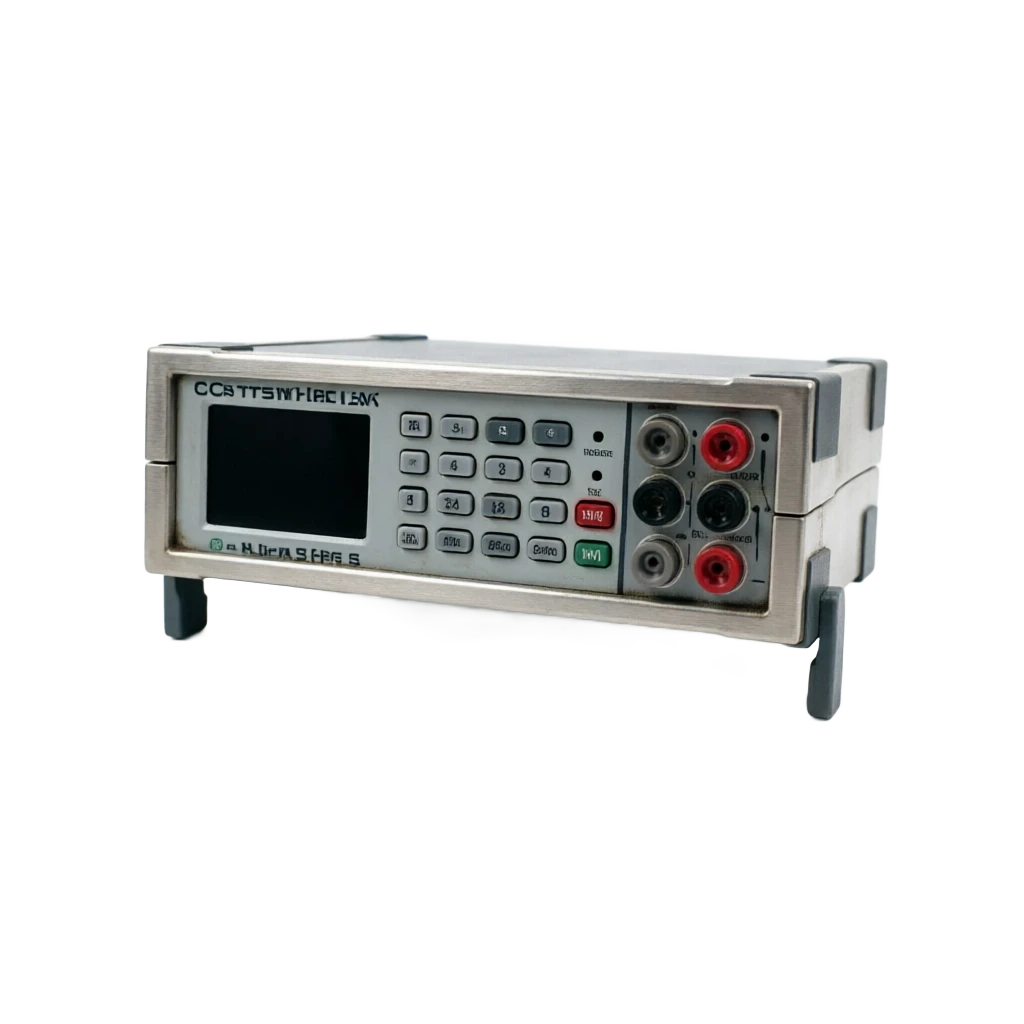
Heat gauge checker

Operating principle

Thermal instrumentation checker.

(a) The detected signal is transposed by input end-entry to network, and the front end is selected by type: the current signal flow is stimulated by 10 constant currents to eliminate the barre-back effect; Frequency signal is sent by the Schmidt trigger integer to the counter. The adjusted simulation was sampled by the 24-bitth-thirty-twirl ADC, and the CPU was amended to show the project value, ±0.02% of the measured accuracy to readable readings plus 2 words to meet the calibration ratio of 0.2 class heater secondary instrument 1:4. The output channel is cored by 16-20bit precision DAC and power level: the power output is buffered by DAC via low noise; Current output (0~24mA) is achieved by pressure-controlled current source closed loops, which are no less than 24V, and can be driven up to 1

  1. 01

    Precision sample resistance converted to voltage; voltage m-volt signal instrument amplifier magnified filter; resistance measurements are based on four-line constant current method, from 0.5 to 1

  2. 02

    1 Mission preparation • Obtaining verification task orders under the warrant to check the site number / / / grant / verification scheme

  3. 03

    2, secure quarantine.

  4. 04

    3 . Wire recognition . Identification of circuit type (two-line / four-line / active / passive) and selection of the corresponding ender . Correct connection

Thermal instrument calibration instrumentator selection support

Provide survey missions, media and installation conditions and obtain product configuration advice.

Contact us
Thermal instrumentation tester Technical note

TECHNOLOGY & APPLICATION

Understand the principles, the exact selection.

From measurement principles to field applications, the technical characteristics and selection features of the thermometer calibration are known.

01

TECHNICAL GUIDE

Overview

1.1 Product definitions

It's a multi-signalling composite calibration device for the "hotworks specialty." In the process industries of fire generation, nuclear power, metallurgical, etc., "heatman" is the generic term for the measurement and control of thermal parameters such as temperature, pressure, flow, fluid level, etc., and their overhauling. Thermal meter checking integrates the required signal sources and signals gauges for this specialized field verification: both accurate output of currents, volts, millivols, frequencies, resistance and simulation of thermal resistance/thermal electron-puncts at set values, for verification of the transducer, heat monitor, recorder and DCS/DEH input cards; It also allows for high accuracy measurements of all the above-mentioned types of signals, verification of the authenticity of the signals on site, and the completion of the validation and diagnosis of a heater return route, along with the built-in 24V circuit power and step auto-checking.

It is identical to the generic process signal simulation (No. 39) in technical principles, but it is not the same as the product ' s positioning: the thermometer calibration is designed around the operational processes and protocols of thermal engineering inspections in the power industry, emphasizing the suitability of the DL/T overhaul protocol, the heat worker protection drive test, the A/B/C grade correction programme, the more focused heater parameters (temperature and pressure signals are the main, frequency and fluid level/flow signals) and generally enhanced the Chinese interface, protocol reporting templates and data management, which are the main equipment of the heat engineering team in the domestic electricity market.

1.2 Core values

A thermometer calibration machine of 1-2 kg replaced a box of equipment such as a former signal generator, a precise number of universal meters, a standard electrical block, a direct flow steady pressure source, and reduced the time of verification of a single heater to 10-15min from 30~60 min in a combination. (a) For a fire plant installed in 2 x 600 MW, the total heat gauge is usually at 3000 ~ 5000, which rotates over the cycle and saves thousands of hours per year; The automated archiving of records, in conjunction with data management software, meets the requirement of the electrical safety monitoring to track the records of the heat instrument and also provides a verifiable quantitative basis for the heat worker protection transmission experiment.

1.3 Evolution

Table 1 - 1 Thermal gauge checker, phase four.

1.4 Boundary with adjacent verification equipment

Table 1-2 Thermal meter checking and capability boundaries of adjacent equipment

1.5 Major manufacturers

Table 1-3 Major manufacturers and representative models

Overview · Phase / PeriodCross-reference
PhasePeriodTechnical characteristicsRepresentative form
11980s-1990sPyramid + Standard Resister Box + All-time separation of jobs, manual recordingThermal test-site combination
21990s-2000sISISI, initial, 0.05% class, Chinese interfaceCounty Fenghua / Chinese Air Early
32000s-2010sAdd RTD/ TC fraction simulation, 24 V backway power, step checkConST 313 / Fluke 725
42010s To dateDouble channel for source, HART, task management, Bluetooth App, overhaul data closed loopConST 810 / Beamex MC2-IS / 726
· Equipment / Overriding ParametersCross-reference
EquipmentOverwrite ParametersTypical precisionPositioning
Heat gauge checkerHot Telecommunication (mA / V / mV / / / Hz / RTD / TC)± 0.02% LevelThermals specialize in field verification of the main power, and the appliance of the electrical protocol.
Process signal simulationFull Signal + HART+ Document Task Management±0.01%~0.02%Cross-industry full-parameter platform, high-end compliance
Temperature Validation EmulatorRTD / TC Temperature Signals Only±0.1~0.5 ℃The temperature secondary instrument is special, low price.
Pressure (vacuum) calibrationPressure / Vacuum parameters (includes occurrence)±0.02%~0.05% FSPressure transmitter field verification special.
Dry furnace / Constant TemperatureReal temperature field±0.1~0.5 ℃Thermal voltage / Thermal Resistor Body (One Shape) Validation
Overview · Vendor/ CountryCross-reference
VendorCountryRepresentative ModelCharacteristics
Const (Const)China810 / 811 / 313The domestic heater calibration pole, the power industry has a large holdings, and the Chinese protocol is complete.
The county Fung Hua instrumentChinaFHC SeriesOld-school heater calibration machine, high penetration rate at small and medium power plants
Beijing Watanabe/ YasakiChinaAE-8/HY seriesPower repair company. Price-for-money route.
Fluke.United States726 / 754International brand, 726. Classic for hot work sites, 754 with documentation.
BeamexFinlandMC2 / MC6Double-channel and ecological integrity, nuclear power plants and high-end fire users.
WIKAGermanyCPH7600Pressure and telecommunications are combined. Industrial sites are good.
AZ / Victory / EuliceJapan/ ChinaAZ-89 / VC14 / UT780Economic product lines, for small and medium users
02

MEASUREMENT PRINCIPLE

Operating principle

2.1 Signal measurement principles (table pattern)

(a) The detected signal is transposed by input end-entry to network, and the front end is selected by type: the current signal flow is stimulated by 10 constant currents to eliminate the barre-back effect; Frequency signal is sent by the Schmidt trigger integer to the counter. The adjusted simulation was sampled by the 24-bitth-thirty-twirl ADC, and the CPU was amended to show the project value, ±0.02% of the measured accuracy to readable readings plus 2 words to meet the calibration ratio of 0.2 class heater secondary instrument 1:4.

2.2 Signal simulation output principles (source mode)

Output channel cores 16-20bit precision DAC with power level

(b) The voltage output is buffered by DAC via low noise; (a) Current output (0~24mA) is performed by a pressure-controlled current power closed ring, which follows a voltage of no less than 24V and can drive a circuit load of no more than 1 k; (b) Resisting output using an electronic resistance network or a stevedial equilibrium method, with precision of up to ±0.02 times; (b) Thermal electromechanical signature is formed when the temperature electron movement is compensated by a millivolt output superheated with a cold end; The frequency output is synthesized by the CMU timer, with a range to space ratio that can be set for speed rotation, flow pulse signature simulation.

2.3 Second-line circuit and transducer simulation

(b) For 4-20 MA second-line heater circuits, the instrument provides three modes of participation: the LOP POWER mode, which incorporates 24 V DCs, which isolates the power from the circuit and simultaneously measures the output current of the transducer; (b) Transmitters simulation (irradiated) mode, where instruments are adjusted for absorption of currents as "false senders" by default, for the verification of DCS/DEH cards, separators and monitors; Active output mode, which directly injects 4-20mA into passive loads such as recorders, indicators, etc. Three models cover the entire mode of the heater ' s feeder back on the medium side and the surface side.

2.4 Conversion of temperature scales

Instrumentation contains a split table of IEC 60751 (Pt100 et al. 8 thermal resistance) and 10 IEC 60584 (S/R/B/K/N/E/J/T). (a) Inversely calibrate the resistance / mvolt to temperature during measurement; The target temperature is calculated as the resist/mv value at the time of output, and thermal voltage output is superimposed with cold end to compensate for voltage (inline sensor ±0.2 ~0.5 °C, which can close the CJC outer ice point at a high accuracy. The scale is achieved by adding linear interpolation at 1 °C intervals, which is inverse to the fact that the residual error is much less than 0.1 °C and is appropriate for the verification of thermostats such as the main vapour temperature, water temperature, etc. of the fire-resilient plant.

2.5 Step / Slipper and Hot Work Drive Test

Source mode supports automatic step (0%/ 25%/ 50%/ 75%/ 100% or custom points, each of which is 10~60s) and continuous slopes. Step output in conjunction with dual channel "one source" to automatically record the points of the calibrated transmitter and calculate the / return error/repeat error; The slope output is used for heat protection transmission tests - protection of fixed values at a controlled rate of close proximity, recording of protective action values and compound values, validation of the correctness of the warning and locking points (MFT/Main fuel escape etc.) as key applications for the thermometers as distinct from the common universal id tool.

2.6 Data recording and overhaul management

The type of mission-based operation that supports pre-downable validation missions (point number/scale/point/permission), on-site execution by wizard, as-Fund (pre-school) and As-Left (post-school) data-slending records, return management software to generate original records and verification reports using the DL/T review protocol template, and to link to the equipment desk account, forming the "Preventive-Implementation-Registration-Censorship" closed loop of thermal Inspections.

2.7 Workflow (8 steps)

Table 2-1 Thermal meter calibration 8 Step workflow

  1. 01

    Precision sample resistance converted to voltage; voltage m-volt signal instrument amplifier magnified filter; resistance measurements are based on four-line constant current method, from 0.5 to 1

  2. 02

    / mA

The working principles . Steps / linksCross-reference
StepsLinkOperation contentOutput
1Mission readiness.Obtain verification task orders under the warrant to check the point number / / / grantValidation Scheme
The working principles . Steps / linksCross-reference
StepsLinkOperation contentOutput
2Safe isolationLocked back and clear the tickets and put on a checkout.Isolation confirmed.
3Connect.Identify the type of circuit (two-line/ four-line/ active/ passive) and select the corresponding endorGetting it right.
4Loop powerTurn on 24 V. Return to the circuit power and read the transvestite static current.Static current value
5Pre-recognitionSpacing point output standard signal, synchronized log checkout output (As-Fund)Pre-school data
6AdjustmentOvertime modified by HART or zero / Quantification Adjustment BodyAdjusting Records
7Post-checkRepeat step validation, record adjusted data (As-Left)Post-school data
8Restore and ArchiveReconnect, confirm circuit and secure input, and back-to-back report.Verify Report
03

PRODUCT STRUCTURE

Product structure

3.1 Composition of the whole machine (12 components)

Table 3-1 Thermal meter calibration 12 Component Composition

3.2. Channel structure

(a) The two-channel A / B channel is a full-functional channel, which can be set separately as a measurement or output, and constitute a "one-detector source": for example, channel A provides a Pt100 analogue signal to the temperature carrier, channel B measures its 4 ~ 20 mA output in a synchronized manner, and completes the entire carrier input-output verification in a single loop; The single-channel economy is performing the same task by switching the endpoint, reducing efficiency by about half. The efficiency advantage of the two-channel type is particularly significant in the case of heat-worker sites, owing to the large number of transmitters and the concentration of the verification windows (the crew overhaul period).

3.3 Structured forms classification (6 categories)

Table 3-2 Structured forms classification

Engineering plastics case

Functional description: Hand-held shell, fall-proof side, protection IP54 key feature: 1 m fall-protective

Display

Function description: 3.5 ~5 inch colour touch / point array liquid crystal, two channels and screen key properties: Chinese interface

Keyboard

Function description: Numerical + Functional key, actionable with gloves Key properties: Silicon gel keys

Enter the modem

Function description: Scale to Switch relay + instrument amplifier + Filter network Key properties: Multi-Communication Frontend

24-bit ADC

Functional description: conversion of thorium-thirium model, 0.02% grade measurement Key properties: temperature drift less than 5 ppm/°C

DAC and Power Level

Function description: 16~20 bit numeric model conversion + voltage-controlled current source / discharge buffer Key characteristics: comply with voltage 24 V

Loop power supply

Functional description: Separation 24 V DC, restricted flow protection 25 MA Key properties: short circuit self-recovered

Connector End

Function description: Enter / Output / Returning to the power independent endpoint Key properties: Error-proof plug-in design

HART Modem

Function description: Bell 202 FSK modem (selection) Key properties: enders with simulation

Master MPU

Functional description: running scale, step control and mission engine Key properties: low-capacity design

Battery and power management

Function description: Lithium ion batteries 10~20 h, USB / Adaptor charge

Storage and communications

Function description: Internal storage + USB / Bluetooth interface Key properties: CSV / Report Export

Category

I'm not sure if you're gonna be able to get a good look at it.

Handheld Line

0.8~1.2 kg, with fewer functional access points ConST 311/ FHC-6 Daily inspection and simple circuits Verification

Handheld dual channel

1.2 ~ 1.8 kg, one-scale test ConST 810 / Fluke 726 Heat engineering major mechanics

Task-based management

Job Download / Data Relay / Report Generation of ConST 810 + Software / 754 Power Plants with Retrieval Record Compliance Requirements

Ben-Ann's blastproof.

ATEX / IECEx / CNEx Authentication MC2-IS Gas Power Plant / Chemical Explosive Field

Desktop Verify Source

Multi-channel, municipal power supply, 0.01% level Laboratory multi-purpose energy, electrometric and calibration units,

Pressure complex

Telegram + Pressure Module Interface WIKA CPH7600 Mixed Pressure with Telecommunications

04

TECHNICAL GUIDE

Advantages and disadvantages

4.1 Advantages

Table 4-1 Thermal gauge calibration 8 Great Advantages

4.2 Disadvantages and responses

Table 4-2 Thermal gauge verification 7

4.1 Advantages

Hot work signal's all over.

Note: mA / mV / V / time / Hz / RTD / TC overlayed, replacing multiple single devices

Two-channel survey source

Note: One source monoring, carrier check 10~15 min completed

Backway power supply integration.

Note: Internally isolated 24 V power, double-line circuits, one-off.

Transmutation test capability

Note: Step / Slipper approaches protection constant, quantitative recording of action values and compound values

The protocol is perfect.

Description: Chinese interface and DL/T overhaul of the report template, record direct archiving

Portable efficiency

Note: Handheld 1-2 kg, multi-shift parallel operation

Precision is reliable.

Description: ±0.02% level meets the 0.2 class heater secondary instrument 1: 4 calibration ratio

Prices are high.

Note: Nationally produced main machine 1 ~ 40000 CNY for import of the same 1 / 2 ~ 1 / 3

4.2 Disadvantages and responses

Could not close temporary folder: %s

Impact: Telecommunications simulation cannot replace real temperature / pressure

Limited coverage of bus protocols

Impact: FF / PA / Profibus bus instrument needs a dedicated tool

4.2 Disadvantages and responses

Limited inter-lane separation

Impact: cheap machine-type serial disturbance impact readings

Operation menus deeper

Impact: Multiple functions lead to slow new hands

The temperature is running short.

Impact: Reduction in battery capacity during winter repairs Response measures: backup batteries and mobile power supply security

Weak software ecology

Impact: Nationally produced management software and DCS / SIS interface customisation Response: Request for open CSV export interface

Check source cost

Impact: standard instrument to be sent for annual inspection and verification during the period

05

APPLICATIONS

Application area

5.1 Typical application scenario (12 categories)

Table 5-1 Thermal instrumentation 12 Typical applications

5.2 Industry application matrix

Table 5-2 Industry application matrix

Pressure / Pressure / Flow Transmitters Verify

Verify object: Two-line 4~20 MA Transmitter Group Signal Group: Backway Power + Current Measurement + HART Moderation

Temperature Transmitrator Validation

Verify object: Integrated Temperature Transmitters (RTD / TC input) signal combination: RTD / TC simulation + current measurement

DCS / Deh card testing

Verify object: AI card channel Signal combination: mA / V / mV / RTD signal injecting + read-number matching

Heat protection transmission test

Verify object: MFT/ lock/ alarm seter Signal combination: slope approaching fixed value, recording action and re-entry values

Check the heat monitor and log recorder

Verify object: On-site indicator / recorder signal combination: active maA output injected

Executing agencies and reconciliation valves debug

Verify object: E-Air locator / Valve Feedback Signal combination: 4~20 MA output + Feedback measurement

Separators / Security Fence Validation

Validation of object: signal separation fence Group: input output double-end source

Quick and frequency backtracking.

Verify object: / To coal machine speed chain signal combination: frequency output (1 Hz~10 kHz)

Liquid / pack water table

Verify object: Water level transmitter and display regulator Signal combination: mA source + alarm value validation

Secondary part of the analyser instrument

Verify object: Oxygen / Electroconductor output level Signal combination: mA Verify and Quantification check

Inspection and failure diagnosis

Check object: On-site back-tracking check for authenticity

Thermal metering room set

Validation object: On-site check as 0.02% standard machine Signal combination: compatible with pressure standard / dryer

Fire generation

Main verification object: Main Auxiliary Heat Transcendant, DCS card, protected circuits Usage characteristics: A/ B/ C level overhaul centralized verification, high record compliance requirements Recommended configuration: two channel task-based management

Nuclear power / conventional islands

Main verify object: Thermal meters and RPN outer channel Usage characteristics: high quality rating, document retroactive strict Recommended configuration: documentization dual channels + backup batteries

Metallurgy / Building Materials

Main verifyee: kiln temperature meters, flow and implementing agency Usability: high temperature dust environment, high frequency Recommended configuration: double industrial protective channel

petrochemicals/ chemicals

Main verification object: blast-protected area transducer and chain circuits Usability characteristics: blast-proof area operation Recommended configuration: Ben-Annian authentication type (MC2-IS, etc.)

Heat / Fumes

Main verification object: Thermal and temperature gauges

Metro Services

Main verify object: Check the various heater secondary meters at the door Use characteristics: Multi-Customer Multi-Programming Recommended configuration: Full functionality + Reporting software

06

TECHNICAL SPECIFICATIONS

Technical Parameter Table

6.1 Technical parameters for the whole machine (22 Divisions)

Table 6-1 Technical parameters for the whole machine

6.2 Comparison of accuracy of signal types

Table 6-2 Measurement of signal type / Output accuracy

Technical parameter table . Serial number / parameter itemCross-reference
Serial numberParameter ItemTypical valueRemarks
1Current measurement range0~24 mAIt's 4~20 mA
2Current measurement precision±0.02% Reader + 2 Word1 Annual indicator
3Current Output Range0~24 mARespond to voltage ≥ 24 V, load ≤ 1 k
4Pressure measurement/ output0~10 VPrecision ±0.02% Read + 2 words
5mVM / Output10~100 mVPrecision ±0.02% Read + 3 words
6Resisting Measurement / Output0~3200 ΩFour-linear, 0.01 times resolution
7Frequency measure/ output1 Hz~10 kHzBand value 0~10 V square wave
8RTD typePt10 / Pt50 / Pt100 / Pt200 / Pt500 / Pt1000 / Cu50 / Cu100IEC 60751
9Thermocouple typeS / R / B / K / N / E / J / T / C / WReIEC 60584
10Temperature precisionRTD ±0.1~0.2 ℃ / TC ±0.3~0.5 ℃The fraction number is related to the time frame
11Cold end compensation accuracyAutomatic CJC ±0.2~0.5 °CSupport for the shutdown of the outer ice point.
12Loop power supply24 V DC isolation, restricted flow 25 MAShort-circuit protection and self-rehabilitation
13Number of channels1 or 2 full functionality channelDouble channel, one source.
14Access quarantine.≥ 50 VIt's a higher-end machine.
15Step function2~11 point custom, presence 10~60 sIncluding 0/25/50/75/100% shortcut mode
16Slipper functionRate 0.01~99 mA/min availableProtect the use of fixed value transfer tests
17HART CommunicationsHART 5 / 6 / 7 (selection)Organisation / Round of inquiries / Diagnosis
Technical parameter table . Serial number / parameter itemCross-reference
Serial numberParameter ItemTypical valueRemarks
18Data Storage≥ 10000 Article ValidationAs-Fund / As-Left
19Communication interfaceUSB / Bluetooth / RS-232Task Download and Data Return
20Battery continues.Lithium 10-20 h (typical)Charging 3-4 h
21Ingress protectionIP54 (this is the same level of the Ang)1 m Drop protection
22Operating environment10 ~ 50 ℃, Humidity ≤ 90% RH No CondensationStorage -20~60°C
Technical parameter table · Signal type / Typical scaleCross-reference
Signal TypeTypical scaleMeasurement accuracyOutput AccuracyResolution
Direct current.0~24 mA±0.02% RD + 2 Word±0.02% RD + 2 Word0.001 mA
Direct current voltage0~10 V±0.02% RD + 2 Word±0.02% RD + 2 Word0.1 mV
Straight-flank.10~100 mV±0.02% RD + 3 word±0.02% RD + 3 word0.001 mV
Electrical resistance0~3200 Ω±0.02 Ω±0.02 Ω0.01 Ω
Thermal electrical resistance (Pt100)200~850 ℃±0.1~0.2 ℃±0.1~0.2 ℃0.01 ℃
Hottelescope (K type)200~1372 ℃±0.3~0.5 ℃±0.3~0.5 ℃0.1 ℃
Frequency1 Hz~10 kHz±0.005% RD±0.005% RD0.01 Hz
07

SELECTION GUIDE

Select Table

7.1 Type by functional slot (4 tranche)

Table 7-1 Functional slotting format

7.2 Select object by verification (Category 6)

Table 7-2 Selected types by verification

7.3 Select type by precision slot (3 tranche)

Table 7-3 Precision slotting formula

7.4 Data management selection (5 tranches)

Table 7-4 Data management options

Selective Table . Slotting / Signal CapabilityCross-reference
TrailSignal capabilityTypical precisionPrice RangeApply User
The economics.MA / V-detection source + circuit power±0.05%0.3 ~ 10000 CNYSmall-scale self-supply plants, heat stations
Standard Full FunctionmA / V / mV / Ω / Hz / RTD / TC±0.02%1 ~ 40000 CNYThermal unit of the fire plant.
Task-based managementFull signal + double channel + task and report management±0.02%3 ~ 80000 CNYCompliance at large, medium and large power plants
Benn/ Import High EndDetonation authentication or HART full functionality documentation±0.01%~0.02 %5 ~ 120000 CNYNuclear power / petrochemical / foreign power plants
Select Table . Verify Object / Required FunctionsCross-reference
Instruments under calibrationRequired FunctionsRecommended ChannelsAdditional recommendations
Pressure / differential / flow transporterBackway power + MA measurement + HARTOne channel is fine.Double channel for co-calibrium temperature input
Temperature Transmitter (RTD / TC input)RTD / TC Simulation + masculinityDouble channel (one source)Check the fraction number and the range overlay
DCS/ Deh AI cardMA / V / mV / RTD Multi-Communication OutputSingle channelThe backup signal is turning around.
Hot workers protection and locking back.Slipper output + logarithmicSingle channelThe conduction test requires work tickets.
Implementing agency / locatorMA Output + Valve Feedback MeasurementDual ChannelsFocus 24 V power supply
Turn speed / frequency loopFrequency output (1 Hz~10 kHz)Single channelChecking band values and pulse patterns
Selective table · Precision slotting / Typical indicatorsCross-reference
Precision SlottingTypical indicatorsPrecision level of the detectable objectTrace Method
Field level±0.05%0.2% General hot schedule and belowAnnual inspection or matching
Working level±0.02%0.1~0.2% Class Transmissors and MonitorsAnnual dispatch to measurement body
Standard Level± 0.01% and higher0.05 Class high-precision transducerAs standard instrument test
Selective Table · Data Capability / Functional DescriptionCross-reference
Data capacityFunction DescriptionApplication of compliance scenarios
Manual RecordingLive readings, manual filling out of formsNo mandatory recording requirement
Local StorageResult storage device, afterward USB exportInternal quality management
Tasks are performedTask Download, Wizard By PointMultipoint Unified Process
Report Auto GenerateOutput original records and reports by the DL/T protocol templateElectricity inspection and safety supervision
System-level integrationInterfacing with power plant SIS/ Devices billing systemDigital overhaul of the smart power plant
08

SELECTION GUIDE

Selection Guide

8.1 Ten-step selection process

Table 8 - 1 Ten-step selection process

8.2 Comparison with neighbouring programmes

Table 8-2 Comparison of the three scenarios

8.3 Selected decision tree (10 rows)

Table 8-3 Selected decision tree

8.4 Installation and use of attention (12 articles)

Table 8-4 Installation and use alerts

8.5 Maintenance cycle (6 items)

Table 8-5 Summary of maintenance cycle tables

Thermal instrumentation is based on the technical core of "All-the-heat signal detection source + one source for two channels + circuit power back-up + step / slope transfer test + DL/T protocol reporting" and compresses multiple units for heat engineering overhaul into a handheld device, which is the main on-site calibration force for the fire power/nuclear power/metal thermals. It is co-sourced with the universal process signal calibration machine but focuses more on the electrical sector ' s operating processes and compliance systems; A component inspection is still required for dryer furnaces to be accompanied by pressure standard units, which constitute a three-layer verification tool chain for "one element - heater secondary meters - full parameters". The selection follows the decision "List of Points Queue the signal over the number of channels ⁇ 1-4 ⁇ Exact Excerptation Test ⁇ bus protocol ⁇ Detonation Control Report Compliance ⁇ Work Status ⁇ Full Life Cost" , which achieves the best balance between investment and capacity.

Selection guide · Steps / ContentCross-reference
StepsContentsPoints
1Inventory of hot-work sitesType of carrier / signal formula / quantity / accuracy level, creating demand baseline
2Confirm signal overlayType of signal required by object, temperature and MA selected, frequency as required
3Determine the number of channelsTemperature adapter verify large class priority two channels
Selection guide · Steps / ContentCross-reference
StepsContentsPoints
4Check accuracy ratioValidation accuracy is better than tested 4 times (1:4 principle)
5Check the fraction number and the scaleFull coverage of common fractions and circuit loads, such as Pt100/ K/ E
6Confirming transmission test requirements.The slope function and recording capability needs to be confirmed when the fixed value is validated
7Confirm HART / bus requirementsPressing smart sender protocol to match Modem
8Confirm blast and condition.The blast zone is selected for the modulus type, with the temperature confirmation cell and the width of the temperature during the overhaul period.
9Confirmation of complianceSelect a task-based management type for DL/T template reports
10Source and full life costComparison of annual inspection costs, software, spare parts and training to total costs
Selective guide . Contrast / Thermal meter calibrationCross-reference
ComparativeHeat gauge checkerUniversal process signal calibrationSeparation of equipment combinations
Industry fitElectrical protocol template / Chinese interface / moving testCross-industry platform, HART documentation strongNo industry custom
Signal OverwriteThermal complete signal (the temperature/ mA/ frequency is the main)Full signal with HF and more protocolsSingle parameters for each device
Typical precision±0.02%±0.01%~0.02%0.05%~0.1%
Price0.3 ~ 80000 CNY1 ~ 150000 CNYTotal 2 ~ 80000
Reporting capacityDL/T protocol template goes directly to the reportGeneral Certificate (ISO framework)Manual
Typical applicationsFire / Nuclear / Thermal Thermal Work InspectionCross-practice protection and compliance verificationSporadic low frequency missions
Selective guidance .. decision-making issues / If yesCross-reference
Decision-making issuesIf yes,If "no"
1. Are blast-proof areas used?Select this type of anon authentication (MC2-IS etc.)Access 2
2. Need for a calibration adapter?Select RTD/ TC Simulation and Double ChannelAccess 3
3. Are there any protection of the motion test?Confirm slope function and loginAccess 4
4. Should the HART configuration be required?Select the built-in HART Modem modelAccess 5
5. Is a DL/T template report required?Task-based management + softwareAccess issues 6
6. Are the forms examined at level 0.1 or above?Select ±0.02% and above precision slotAccess issues 7
7. Is there a regular school DCS / Deh card?Confirm multiple signal output + turnbackAccess issues 8
8. Are there retrenchments/frequency objects?Confirm frequency function and range of rangeAccess issues 9
Selective guidance .. decision-making issues / If yesCross-reference
Decision-making issuesIf yes,If "no"
9. Over 300 checks per year?There are significant benefits from dual mission efficiencyAccess 10
10. Insufficient budget 10000 CNY?Economic primer + step-up strategyLock configuration for top 9 conclusions
Selection guide · Serial number / AttentionCross-reference
Serial numberAttentionAnnotations
1I'll lock the road and make the tickets.Hot workers protection back-to-back check requires work tickets, sidewalks and the registration of cards
2Disconnect DCS side lineIsolate before the signal is injected, preventing the mistransmission from causing a disturbance.
3Confirm the extreme power supply.LOOP PoWER polar countertime meter is not working and even calling the police.
4Check load resistance.Total current output load (wire-based resistance) not exceeding 1 k
5Four-line electrical resistance measurement connectionIncentives and measurement lines are not crossed to avoid exposure to resistance pollution readings
6Thermal doll wires compensate for the lead.Normal copper line introduction temperature differential, causing cold end error
7This Angular MatchUo / Io / Po and field-based fence parameters
8External high pressure-proofingPre-validation of circuit discharge to prevent damage to input level
9Step time settingsLonger presence when detected as blocking Nida, otherwise the log value is offset
10Pre-school data should not be skippedAs-Fund cannot be adjusted until it's completed, so that drift can be evaluated
11Recording of ambient humidityReporting is environmentally conditioned and data beyond range is invalid
12Regular verification and inspectionAnnually sent to measurement body for verification during the period of time from standard source
Selection guide · Project / CycleCross-reference
ItemCycleContents
Appearance and End CheckBefore each useCrust cracks, end-line loose, key buttons and touch screen responses
Battery maintenanceMonthlyFull-load calibration once, long-term storage maintained at 50% power.
Verification during the periodQuarterlyVerify maA/ / point 1 each with standard resistance/ standard source
Complete machine check.AnnualSend the metering agency full-scale process review and update calibration certificates
Software and protocol templatesAnnualUpdate by manufacturer, keep synchronized with DL/T protocol version
Storage environmentLong termDrying, heat-proofing, organic solvents, cable-crop relaxing.